
Understanding New Construction Plumbing Phases
New construction plumbing follows a systematic four-phase process that coordinates with other construction trades. Each phase must be completed and inspected before moving to the next stage, ensuring code compliance and system integrity.
Underground/Groundwork Phase
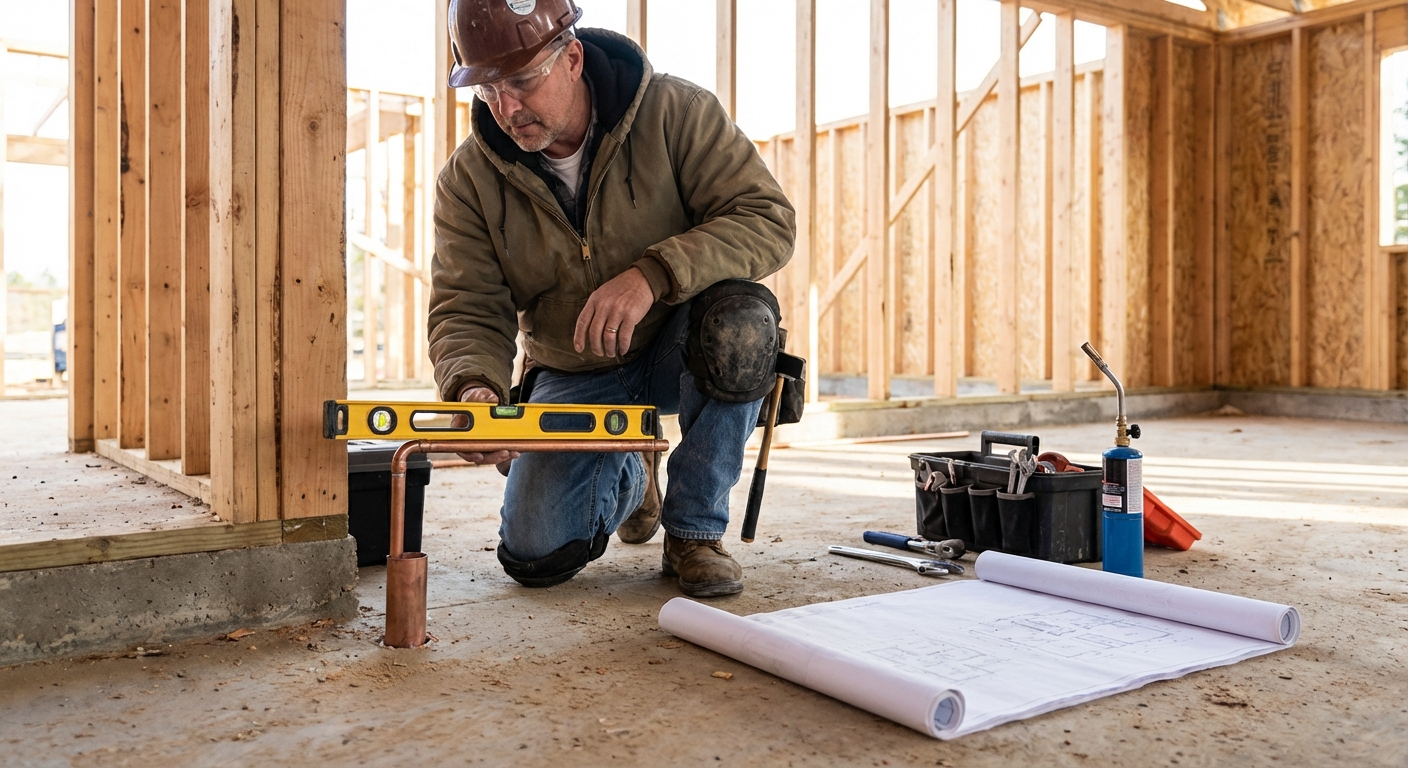
The underground phase occurs after footings are poured but before the concrete slab foundation is set. This critical first stage involves installing the main water supply line from the street connection to your home, laying sewer and drain lines that exit the building, and positioning stub-ups that will connect to future fixtures.
During this phase, plumbers install cleanout access points for future maintenance and ensure proper slope for drainage pipes (typically 1/8 inch per foot). Once pipes are positioned, they're pressure tested before the concrete slab is poured. This timing is crucial because corrections after the slab hardens become extremely expensive and disruptive. Learn more about water line leak detection methods that can identify problems early.
Rough-In Phase
Rough-in plumbing happens after framing is complete but before walls are closed with drywall. This phase typically takes 2 to 5 days for a straightforward 2-to-3 bathroom home, though complex multi-story homes can require up to a full week or more. The work involves running all hidden water supply pipes through walls and floors, installing drain, waste, and vent (DWV) pipes, positioning pipes for every fixture location, and installing gas lines if applicable.
Plumbers drill through studs and joists to route pipes, following strict code requirements for hole size and reinforcement. All pipes remain exposed during this phase for inspection. The system undergoes pressure testing to identify any leaks before walls are sealed, preventing future water damage and expensive repairs. For a deeper dive, see our plumbing rough-in guide. Many builders use PEX plumbing for supply lines due to its flexibility and ease of installation.
Top-Out Phase
The top-out phase bridges rough-in and finish work, occurring after framing but while walls remain accessible. Plumbers complete vertical drain stacks that vent through the roof, finalize connections between supply and drain systems, install additional venting as needed, and conduct comprehensive pressure testing.
This phase ensures all hidden plumbing components are properly connected and tested before insulation and drywall installation. Many jurisdictions require an inspection at this stage to verify code compliance.
Finish/Trim-Out Phase
The finish phase represents the final stage, occurring after drywall, painting, and flooring are complete. This visible work typically takes 1 to 3 days and includes installing all fixtures (toilets, sinks, faucets, tubs, showers), connecting the water heater and appliances, installing supply lines to fixtures, and final testing of all systems.
Plumbers ensure proper fixture operation, check for leaks, flush debris from lines, and verify water pressure. A final inspection confirms everything meets code requirements before you receive occupancy approval.

Find Trusted & Licensed Plumbers in Ohio
Get matched with companies for your specific needs
Cost Factors for New Construction Plumbing
Multiple variables influence the total cost of plumbing a new home. Understanding these factors helps you budget accurately and make informed decisions about where to invest and where to save.
Home Size and Square Footage
Home size directly impacts plumbing costs. In 2026, the national average for plumbing a new home runs about $4.50 to $4.55 per square foot for basic rough-in scope, with full-scope estimates (including fixtures and premium specifications) reaching $8 to $10 per square foot. Larger homes require more extensive piping, additional fixtures, and increased labor hours. Multi-story homes cost more than single-story homes of equal square footage due to complex vertical pipe runs.
| Home Size | Basic Plumbing Cost | Full-Scope (Fixtures Included) |
|---|---|---|
| 1,000 sq ft | $4,500 | $8,000 |
| 1,500 sq ft | $6,750 | $12,000 |
| 2,000 sq ft | $9,000 | $16,000 |
| 2,500 sq ft | $11,250 | $20,000 |
| 3,000 sq ft | $13,500 | $24,000 |
These estimates assume standard fixture counts and mid-grade materials. Homes with additional bathrooms, outdoor kitchens, or luxury features will exceed these baselines.
Fixture Quality and Quantity
The number and quality of plumbing fixtures significantly impact your total investment. Each bathroom adds substantial cost, while fixture grade ranges from builder basic to luxury designer models. Updated 2026 fixture pricing reflects current market conditions.
| Fixture Type | Builder Grade | Mid-Range | High-End |
|---|---|---|---|
| Toilet | $100-$180 | $200-$350 | $800-$1,800+ |
| Bathroom Sink Faucet | $60-$120 | $130-$250 | $300-$600+ |
| Kitchen Sink | $200-$500 | $500-$900 | $900-$2,000 |
| Bathtub | $400-$800 | $900-$2,000 | $2,000-$10,000 |
| Shower System | $180-$300 | $400-$900 | $1,000-$2,500+ |
| Tub Filler | $150-$400 | $300-$700 | $800-$1,600+ |
If you encounter issues with fixtures after installation, understanding common repair options like broken toilet flange repair can help you manage maintenance costs over time.
Material Selection
Pipe material choice affects both initial costs and long-term durability. Modern homes typically use PEX, PVC, or copper piping, each with distinct advantages. Updated 2026 material pricing follows.
| Material | Cost per Linear Foot (1/2") | Lifespan | Whole-House Average |
|---|---|---|---|
| PVC Pipes | $0.30-$0.60 | 30-50 years | $8,000 |
| PEX Tubing | $0.40-$0.80 | 30-50 years | $10,500 |
| Copper Pipes | $2.00-$3.50 | 50+ years | $20,000 |
PEX has become the dominant material for supply lines due to flexibility, freeze resistance, and lower installation costs. PVC remains standard for drain, waste, and vent lines. Copper, while more expensive, offers superior longevity and is still preferred in some regions for its proven track record.
Labor, Location, and Site Conditions
Labor costs vary significantly by region. In 2026, standard plumber rates range from $75 to $150 per hour nationally, with master plumbers commanding $100 to $200 per hour. In high-cost metros like Los Angeles, New York, Boston, and Seattle, rates frequently exceed $150 per hour. Total labor for new construction plumbing typically ranges from $3,000 to $8,000 for an average home.
Site conditions add complexity and cost. Homes requiring extensive excavation, dealing with rocky soil, or in areas with high water tables may incur $3,000 to $8,000 in additional underground work costs. Permits range from $50 to $500 depending on jurisdiction, and you can learn more about plumbing permit requirements before starting your project.
Timeline and Coordination Considerations
New construction plumbing follows a carefully orchestrated sequence that intersects with multiple other trades. Understanding this coordination helps prevent delays and ensures efficient project progression.
The typical plumbing installation spans 2 to 4 weeks within the broader construction schedule for a standard home. The rough-in phase takes 2 to 5 days of hands-on work, fixture installation requires 1 to 3 days, and final testing adds another day or two. Large custom homes can require several weeks of cumulative plumbing time.
Plumbers must coordinate closely with framers, who complete their work before rough-in can begin. During rough-in, plumbers work simultaneously with electricians and HVAC technicians, all installing systems before walls close. This "rough mechanicals" phase requires careful coordination to avoid conflicts, such as ensuring electrical boxes don't interfere with plumbing pipes.
After drywall installation, painters and flooring contractors complete their work before plumbers can install fixtures. Any delays from preceding trades cascade through the schedule, potentially pushing back your move-in date. Inspector availability, supply chain issues, and weather can all extend timelines, so build a 1-to-2 week buffer into your plumbing schedule for inspections and corrections.
For appliance hookups, planning a water filtration system installation during construction is much easier than retrofitting later.
Choosing Fixtures and Planning Locations
Strategic fixture selection and placement impact both your daily living experience and overall project costs. Make these decisions early in the design process to avoid expensive modifications during construction.
Fixture Selection Strategy
Choose fixtures that balance aesthetics, functionality, and budget. For new construction, you'll need to select toilets, sinks, faucets, showers, bathtubs, water heaters, and appliance connections. Consider water efficiency ratings, as low-flow fixtures reduce utility bills while often qualifying for rebates or meeting code requirements.
Current EPA WaterSense standards mandate specific flow rates: showerheads limited to 2.0 gallons per minute (down from the older 2.5 GPM standard), bathroom lavatory faucets to 1.5 GPM, and toilets to 1.28 gallons per flush. Some state codes, like California's 2025 Plumbing Code (in effect January 1, 2026), enforce even stricter requirements.
When selecting fixtures, consider future repair needs and accessible components. Comparing builder allowances with what you actually want is critical. Many accurate plumbing estimates include itemized fixture allowances you can review before committing.
Strategic Placement Planning
Fixture placement affects both functionality and cost. Grouping plumbing fixtures vertically (bathrooms stacked between floors) and horizontally (back-to-back bathrooms) minimizes pipe runs and reduces installation costs by 15-25%. Working with a thoughtful bathroom plumbing layout from the start can save thousands.
Plan for future needs when determining fixture locations. Adding a bathroom later requires extensive wall demolition and replumbing. Consider installing rough-in plumbing for potential future bathrooms, outdoor kitchens, or basement bathrooms during initial construction at a fraction of the cost compared to retrofitting. For basements, review basement bathroom plumbing options early since drainage below the sewer line requires special equipment.
Work with your plumber to identify optimal locations for water heaters. Modern energy codes increasingly push builders toward high-efficiency or heat-pump water heaters, which require 240V circuits, additional space, and condensate drainage.
Code Requirements and Inspection Stages
Building codes ensure plumbing systems function safely and efficiently. Understanding requirements helps you avoid failed inspections and costly rework.
Essential 2026 Code Requirements
Plumbing codes vary by jurisdiction but follow standards from the International Plumbing Code (IPC) or Uniform Plumbing Code (UPC). Many states are adopting the 2021 IPC or 2024 UPC during 2025 and 2026. For example, Pennsylvania adopted the 2021 International Codes effective January 1, 2026, and California enforces the 2025 California Plumbing Code (based on the 2024 UPC) for new permits starting the same date.
Key 2026 requirements for new construction include:
- Proper venting for all drains (no S-traps)
- Minimum pipe slopes of 1/8 inch per foot for drainage
- Individual shutoff valves at each fixture
- Thermal expansion tanks on closed water systems
- Thermostatic or pressure-balanced mixing valves at showers
- Lead content limits below 0.25% in pipes and fixtures
- Backflow prevention devices on irrigation and graywater connections
California and several other states enforce stricter requirements including enhanced water efficiency standards and detailed rules for recycled and graywater systems. Water heaters must meet specific venting, electrical, and condensate drain requirements, especially as heat-pump water heaters become more common.
Inspection Process
New construction plumbing undergoes multiple inspections at critical phases. The underground inspection occurs before concrete pour, verifying proper pipe installation, slope, and connections. The rough-in inspection happens before walls close, checking all hidden piping, proper venting, and pressure test results. The final inspection confirms fixture installation, proper operation, shutoff valves, and overall code compliance.
Inspectors verify pipe materials, sizes, and slopes meet code, all joints are properly sealed, adequate venting prevents drain problems, fixtures are correctly installed and functional, and pressure testing confirms no leaks exist.
Working with Builders on Plumbing Decisions
Successful new construction plumbing requires effective collaboration between you, your builder, and plumbing contractors. Clear communication and early decision-making prevent delays and budget overruns.
Selecting a Plumbing Contractor
Most builders work with preferred plumbing contractors, but you may have input depending on your contract. Verify contractors hold proper licensing, carry adequate insurance and bonding, have new construction experience, provide detailed written estimates, and offer warranties on workmanship.
Request references from recent new construction projects and verify their work passed inspections without major issues. Contractors experienced in new construction understand building sequences, inspection requirements, and coordination with other trades. For tips on comparing quotes fairly, our plumbing service cost guide covers what to look for.
Communication and Decision Points
Establish a clear decision timeline with your builder. Fixture selections typically lock in 4 to 6 weeks before installation to ensure product availability. Late changes can delay construction and incur additional fees.
Review plumbing plans carefully before construction begins. Verify fixture locations match your needs, adequate outlets exist for appliances, and water heater placement works for your space. Once rough-in begins, location changes become expensive.
Discuss allowances in your building contract, which are specified amounts for fixtures and materials. Understand what's included and costs for upgrades. Builders typically provide standard-grade fixtures, so upgrading to premium options requires additional payment. For larger projects, exploring plumbing financing options may help fund upgrades without straining your construction budget.
Request regular progress updates and photos at each plumbing phase. This allows you to verify work quality and catch potential issues early. Attend pre-rough inspection walkthroughs when possible to understand your home's plumbing layout before walls close.
If you're considering adding an ADU to your property either now or later, review the latest ADU plumbing requirements to plan stubs and connections during initial construction.
Frequently Asked Questions
How much does it cost to plumb a 2,000 square foot house in 2026?
Plumbing a 2,000 square foot house typically costs between $9,000 and $16,000 in 2026, with the national average around $4.50 to $4.55 per square foot for basic rough-in work. Full-scope estimates including fixtures and premium specifications can reach $16,000 to $20,000. Regional variations matter significantly, with high-cost states like California and New York pushing totals to the upper end of that range. Standard fixtures, PEX/PVC piping, and a straightforward layout will keep costs near the lower end.
What is rough-in plumbing in new construction?
Rough-in plumbing is the second phase of new construction plumbing that occurs after framing but before drywall installation. It involves running all hidden water supply pipes, drain and vent lines through walls and floors to each fixture location. Plumbers drill through studs and joists to route pipes, position them for future fixture connections, and pressure test the entire system. This phase typically takes 2 to 5 days for a standard 2-to-3 bathroom home and must pass inspection before walls can be closed.
Can I save money by choosing my own plumbing fixtures?
Yes, you can often save money by selecting your own fixtures, especially if you shop sales or choose builder-grade alternatives to designer options. However, verify your building contract allows independent fixture purchases and understand delivery timeline requirements, since delayed fixtures can halt construction and incur costly delays. Some builders offer fixture allowances where you can apply specified amounts toward purchases. Balance cost savings against the convenience of builder procurement, and ensure chosen fixtures meet local code requirements including WaterSense flow rates.
How long does new construction plumbing take from start to finish?
New construction plumbing typically spans 2 to 4 weeks of cumulative work within the broader construction schedule for a standard home. The rough-in phase takes 2 to 5 days, fixture installation requires 1 to 3 days, and final testing adds a day or two. Large custom homes can require several weeks of plumbing time. Timeline depends on home size, fixture quantity, inspector availability, material availability, and coordination with other construction trades.
What plumbing inspections are required for new construction homes?
New construction plumbing requires at least three inspections at critical phases. The underground inspection occurs before the concrete slab pour to verify proper pipe installation and slope. The rough-in inspection happens before drywall installation to check all hidden piping, venting, and pressure test results. The final inspection confirms proper fixture installation, operation, and code compliance before occupancy approval. Some jurisdictions require additional inspections for specific systems like gas lines, backflow prevention devices, or graywater systems. All inspections must pass before proceeding to subsequent construction phases.