
What Is a Water Heater Expansion Tank and How Does It Work?
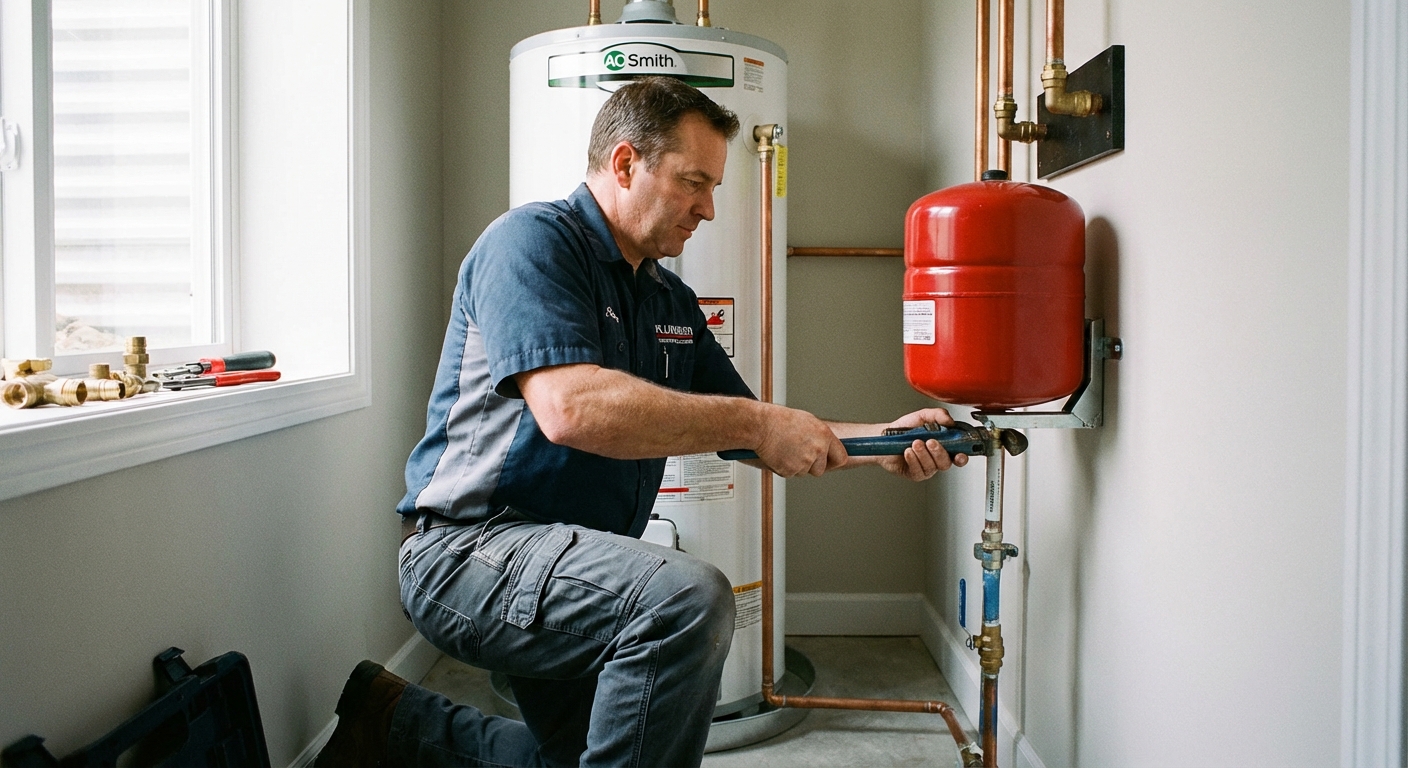
An expansion tank is a small pressurized vessel installed on the cold water inlet line near your water heater. Its primary function is to absorb the increased volume of water that occurs during the heating process, preventing dangerous pressure buildup in your plumbing system.
When water heats from cold to 140°F or higher, it expands by approximately 1 to 1.5% in volume for typical residential systems. In a closed plumbing system (one with backflow preventers, check valves, or pressure-reducing valves), this expanded water has nowhere to escape back into the municipal supply. Without an expansion tank, pressure builds to dangerous levels, potentially exceeding the 80 PSI code limit and causing significant damage to your plumbing infrastructure.
The tank contains an internal rubber diaphragm or bladder that separates two chambers: one for water and one for pre-pressurized air. As water heats and expands, it enters the tank and compresses the air chamber, which absorbs the pressure increase. When water cools or is used, the compressed air pushes water back into the system, maintaining stable pressure throughout your home.
This simple device acts as a crucial buffer in your plumbing system. Understanding water heater thermal expansion is the foundation for grasping why this small device protects your entire plumbing infrastructure from premature failure.

Find Trusted & Licensed Plumbers in Ohio
Get matched with companies for your specific needs
When Are Expansion Tanks Required by Code?
Modern plumbing codes in most US jurisdictions mandate expansion tanks for closed plumbing systems. The 2024 editions of the International Plumbing Code (IPC) and Uniform Plumbing Code (UPC) are the latest base codes in effect for 2026, and several states (including Georgia) have adopted 2026-effective amendments that further tighten thermal expansion requirements.
Conditions That Trigger the Requirement
Under IPC Section 607.3 and UPC Section 608.3, a thermal expansion control device is required whenever your plumbing system includes any device that creates a closed system:
Backflow preventers – Devices installed to prevent contaminated water from flowing back into the municipal supply. These are increasingly common as water utilities implement stricter contamination prevention measures.
Check valves – One-way valves that prevent water from flowing backward in your system. These are often installed with well pumps or recirculation systems.
Pressure-reducing valves (PRVs) – Installed when municipal supply pressure exceeds 80 PSI. These valves protect your plumbing but create a closed system. Learn more about how a pressure reducing valve works with your expansion tank to manage system pressure.
Other normally closed devices – Any device that prevents thermal expansion from dissipating back to the water main, including certain water treatment systems or recirculation pumps.
Code Specifications and Installation Requirements
When required, the expansion tank must meet specific installation criteria under the 2024 IPC and UPC:
- Installed on the cold water inlet line, downstream of all check valves, backflow preventers, and pressure-reducing valves
- Properly sized according to manufacturer specifications so system pressure stays at or below 80 PSI
- Supported independently on a wall or bracket (IPC 308.10 explicitly prohibits supporting the tank with the connecting piping)
- Accessible for inspection, testing, and eventual maintenance or replacement
- In jurisdictions that have adopted 2026 IPC amendments (like Georgia), the tank must be located a minimum of 18 inches in developed length from the cold-water inlet fitting of the water heater
Special Considerations for Tankless Water Heaters
While traditional tank water heaters in closed systems always require expansion tanks, tankless water heaters generally don't require them because they don't store large volumes of hot water. However, code requirements focus on whether the system is closed, not on the type of heater. If your tankless unit operates on a closed system with a PRV, check valve, or backflow preventer, many jurisdictions in 2026 still require thermal expansion control. A small tankless-specific expansion tank (like the Amtrol ST-1) is the standard solution. Code enforcement varies by municipality, so always check with your local building department.
Signs You Need an Expansion Tank
Several warning signs indicate your water heater system needs an expansion tank or that your existing tank has failed. Recognizing these symptoms early can save thousands in repair costs.
Dripping Temperature and Pressure Relief (T&P) Valve
The most common indicator is water weeping or dripping from the T&P valve on your water heater. This valve is an emergency safety device set to release at 150 PSI or 210°F, not for constant thermal expansion relief. If it's regularly releasing water, your system is experiencing pressure spikes that an expansion tank should be managing.
The T&P valve will wear out quickly if forced to handle daily thermal expansion. This creates a serious safety hazard, as a failed T&P valve cannot protect against dangerous pressure buildup that could rupture your water heater tank.
High or Fluctuating Water Pressure
If you notice sudden surges or drops in water pressure, particularly when using hot water, this signals that thermal expansion isn't being properly absorbed. Pressure readings consistently above 80 PSI indicate a problem requiring immediate attention.
You can test your water pressure with an inexpensive pressure gauge attached to any hose bib or outdoor faucet. Test at different times when the water heater is heating and after hot water use to identify pressure fluctuations.
Water Hammer and Plumbing Stress Indicators
Banging or knocking sounds in your pipes (water hammer) often result from pressure shocks caused by unmanaged thermal expansion. These pressure waves can damage pipe connections and fixtures over time.
Additional stress indicators include:
- Dripping faucets that won't stop completely despite replacing washers
- Running toilets with no obvious cause
- Leaking fixtures and valve connections
- Premature wear on appliances like washing machines and dishwashers
Failed Expansion Tank Signs
If you already have an expansion tank that's failing, watch for these specific symptoms:
- Water leaking around the tank or connections
- A solid or thudding sound when you tap the tank (healthy tanks sound hollow)
- No air hiss from the Schrader valve when pressed, or water coming out instead of air, indicating bladder failure
- The tank feels heavy or waterlogged when you try to move it
- Return of T&P valve dripping or pressure fluctuation symptoms
Sizing and Installing Your Expansion Tank
Proper sizing is crucial for effective thermal expansion control. An undersized tank won't provide adequate protection, while an oversized tank wastes space and money (though it's still safer than undersizing).
How to Size an Expansion Tank Correctly
Four key factors determine the right expansion tank size for your system:
Water heater capacity – Measured in gallons, typically 40 to 120 gallons for residential systems. Larger water heaters produce more expanded water volume and require larger expansion tanks.
Static supply pressure – Your cold water pressure measured at a faucet or hose bib, usually 40 to 80 PSI in residential applications. Higher supply pressure requires larger tank capacity.
Relief valve pressure – Typically 150 PSI on residential water heaters. This caps the maximum pressure the tank must keep your system below.
Temperature setting – Higher settings (140°F vs. 120°F) create more thermal expansion. Each 10-degree increase produces more expanded water that must be accommodated.
Residential Expansion Tank Sizing Chart (2026)
| Static Pressure | 40-Gal Heater | 50-Gal Heater | 60-Gal Heater | 80-Gal Heater | 120-Gal Heater |
|---|---|---|---|---|---|
| 40 PSI | 2.0 Gal | 2.0 Gal | 2.1 Gal | 2.1 Gal | 4.4 Gal |
| 50 PSI | 2.0 Gal | 2.1 Gal | 2.1 Gal | 4.4 Gal | 4.4 Gal |
| 60 PSI | 2.1 Gal | 2.1 Gal | 4.4 Gal | 4.4 Gal | 4.4 Gal |
| 80 PSI | 2.1 Gal | 4.4 Gal | 4.4 Gal | 4.4 Gal | 8.0 Gal |
Most manufacturers provide online sizing calculators where you input your exact specifications. Popular brands like Watts, Amtrol, A.O. Smith, and Wessels offer these tools to ensure accurate sizing based on your supply pressure, relief valve setting, and start and end water temperatures.
Professional Installation Process
While experienced DIYers can install expansion tanks, professional installation ensures code compliance and proper function. The process typically includes:
Location selection – Install on the cold water inlet line, downstream of any PRV, check valve, or backflow preventer. The tank should be accessible for future inspection.
Orientation and mounting – Can be mounted vertically (preferred) or horizontally near the heater. Must be supported independently on a wall bracket or stand, not by connecting pipes per IPC 308.10.
Air pre-charge adjustment – Set the air pressure in the tank to match your measured static water pressure (typically 40-70 PSI). Most tanks ship with a 40 PSI factory pre-charge that often needs adjustment before installation.
Connection installation – Use appropriate fittings (threaded, compression, or push-to-connect like SharkBite) with unions for easy future removal.
System testing – Check all connections for leaks, verify proper system pressure throughout heating cycles, and ensure the T&P valve no longer drips.
Installation Cost Breakdown (2026)
Professional expansion tank installation typically costs:
| Component | Cost Range |
|---|---|
| Expansion tank (2-5 gallon) | $50-$200 |
| Professional labor (1-2 hours) | $150-$300 |
| Additional fittings/materials | $20-$75 |
| Pressure-reducing valve (if needed) | $100-$300 |
| Total installation cost | $200-$400 |
National averages for 2026 cluster around $220 to $250 for a straightforward install, with the typical range running $200 to $400 including parts and labor. Costs vary significantly by region. For a full breakdown of related plumbing rates in your area, see our plumbing service cost guide.
DIY installation can save $150 to $300 in labor costs if you have plumbing experience, proper tools, and confidence working with water lines. However, improper installation can lead to leaks, inadequate pressure control, or failed inspections.
Consequences of Not Having a Required Expansion Tank
Operating a closed plumbing system without an expansion tank when required creates multiple serious problems that far exceed the modest cost of proper installation.
Code Violations and Legal Issues
Installing or maintaining a water heater in a closed system without an expansion tank violates IPC 607.3 and UPC 608.3, adopted by most US jurisdictions. These violations can result in:
Building code fines – Inspectors who discover missing expansion tanks can issue citations with fines ranging from $100 to $500 or more, depending on jurisdiction.
Home sale complications – Professional home inspections typically identify missing expansion tanks in closed systems. Sellers may be required to install them before closing.
Warranty voidance – Most water heater manufacturers explicitly void warranties for units installed in closed systems without proper thermal expansion control.
Insurance complications – Water damage claims may be denied or reduced if insurance adjusters determine damage resulted from code-violating installations.
Physical and Operational Damage
The physical consequences of missing expansion tanks often far exceed legal issues:
Premature water heater failure – Constant pressure stress dramatically reduces water heater lifespan from the expected 10-15 years down to 5-8 years.
T&P valve failure – The temperature and pressure relief valve wears out from repeated opening to release thermal expansion pressure. A failed T&P valve creates immediate safety concerns and can require help from a same-day plumber service.
Pipe and fitting leaks – Excessive pressure causes joints, connections, and fittings throughout your plumbing system to fail. Copper pipes can develop pinhole leaks, threaded connections may weep, and soldered joints can separate.
Burst pipes – In extreme cases, pressure spikes can rupture pipes entirely, causing catastrophic water damage.
Appliance damage – Washing machines, dishwashers, ice makers, and other water-using appliances suffer from pressure stress.
Financial Impact Comparison
The cost of installing an expansion tank ($200 to $400 in 2026) is minimal compared to potential damages:
| Consequence | Typical Cost |
|---|---|
| Expansion tank installation | $200-$400 |
| Premature water heater replacement | $1,600-$3,000 |
| Water damage repairs (minor) | $2,000-$5,000 |
| Water damage repairs (major) | $5,000-$15,000+ |
| Emergency plumbing repairs | $500-$2,000 |
| Appliance replacement | $400-$2,000 per unit |
| Increased insurance premiums | $100-$500 annually |
A single incident of water damage from a burst pipe or failed water heater can cost 10 to 50 times more than proper expansion tank installation.
Lifespan, Maintenance, and Replacement
Expansion tanks don't last forever and require periodic maintenance to function properly. Understanding their lifespan helps you plan for eventual replacement before system problems develop.
Expected Lifespan
Most residential expansion tanks last 6 to 10 years depending on several factors:
Water quality and mineral content – Hard water with high mineral content can accelerate corrosion and bladder deterioration.
System pressure levels – Consistently high pressure or extreme pressure cycling reduces tank lifespan.
Frequency of pressure cycles – Homes with high hot water usage cycle the expansion tank more frequently.
Pre-charge accuracy – Tanks installed without adjusting the factory pre-charge to match house pressure wear out faster because the bladder flexes excessively.
Manufacturing quality – Premium brands like Amtrol, Watts, A.O. Smith, and Wessels typically outlast budget options by 2 to 3 years.
Annual Maintenance Schedule
Regular maintenance extends expansion tank life and ensures proper function:
Annual pressure check – Verify the air pre-charge matches your static water pressure (typically 40-70 PSI). Low air pressure reduces the tank's effective capacity.
Visual inspection – Check for rust, corrosion, leaks around connections, and physical damage.
Tap test – Tap the tank's side with your knuckles. A healthy tank sounds hollow throughout; waterlogged tanks produce a dull, heavy thud indicating bladder failure.
Schrader valve test – Briefly press the air valve pin. If water comes out instead of air, the bladder has ruptured and the tank needs replacement.
Replacement Process and Cost
Expansion tank replacement follows the same process as initial installation, with 2026 costs ranging from $200 to $400 for professional service. The tank itself costs $50 to $200, with labor adding $150 to $300 depending on accessibility.
Some homeowners combine expansion tank replacement with water heater replacement, as both components have similar lifespans. This timing strategy can save on labor costs when a plumber is already working on your water heating system.
Frequently Asked Questions
Do all water heaters need expansion tanks?
Not all water heaters require expansion tanks. Only those on closed plumbing systems need them, meaning systems with a backflow preventer, check valve, or pressure-reducing valve on the main water line. Open systems (where heated water can expand back into the water main) don't require expansion tanks. However, most modern homes in 2026 have closed systems due to updated plumbing codes requiring backflow prevention, making expansion tanks necessary in the majority of recent installations.
Can I install an expansion tank myself?
Experienced DIYers with plumbing skills can install expansion tanks, but professional installation is recommended to ensure code compliance and proper function. The process involves working with pressurized water lines, setting correct air pre-charge pressure, and securing the tank per IPC 308.10 requirements. Improper installation can lead to leaks, inadequate pressure control, or failed inspections that cost more to fix than hiring a professional. If you're confident in your skills and have the right tools, DIY can save $150 to $300 in labor costs.
How do I know if my expansion tank has failed?
A failed expansion tank shows several clear symptoms: the T&P valve starts dripping again after previously being dry, water pressure fluctuates noticeably, or you hear water hammer in pipes. Tap the tank with your knuckles. A healthy tank sounds hollow, while a failed tank produces a dull, heavy thud indicating bladder rupture. You can also briefly press the Schrader air valve on top. If water comes out instead of air, the bladder has failed and the tank needs replacement.
What size expansion tank do I need for a 50-gallon water heater?
For a typical 50-gallon residential water heater with 40 to 60 PSI supply pressure and standard 120 to 140°F temperature settings, you'll generally need a 2-gallon expansion tank. Higher supply pressures (70 to 80 PSI) or higher temperature settings may require a 2.1 or 4.4-gallon tank. Always use manufacturer sizing calculators from brands like Watts, Amtrol, or A.O. Smith, inputting your exact static pressure, relief valve setting, and start and end temperatures to ensure proper sizing.
How much does it cost to have an expansion tank installed in 2026?
Professional expansion tank installation typically costs between $200 and $400 in 2026, with national averages near $220 to $250. This includes the tank ($50-$200), labor ($150-$300 for 1-2 hours), and additional fittings ($20-$75). Costs vary based on geographic location, local plumber rates, and installation complexity. If your water pressure exceeds 80 PSI, you may need a pressure-reducing valve installed simultaneously, adding $100 to $300 to the total but providing valuable additional system protection.