
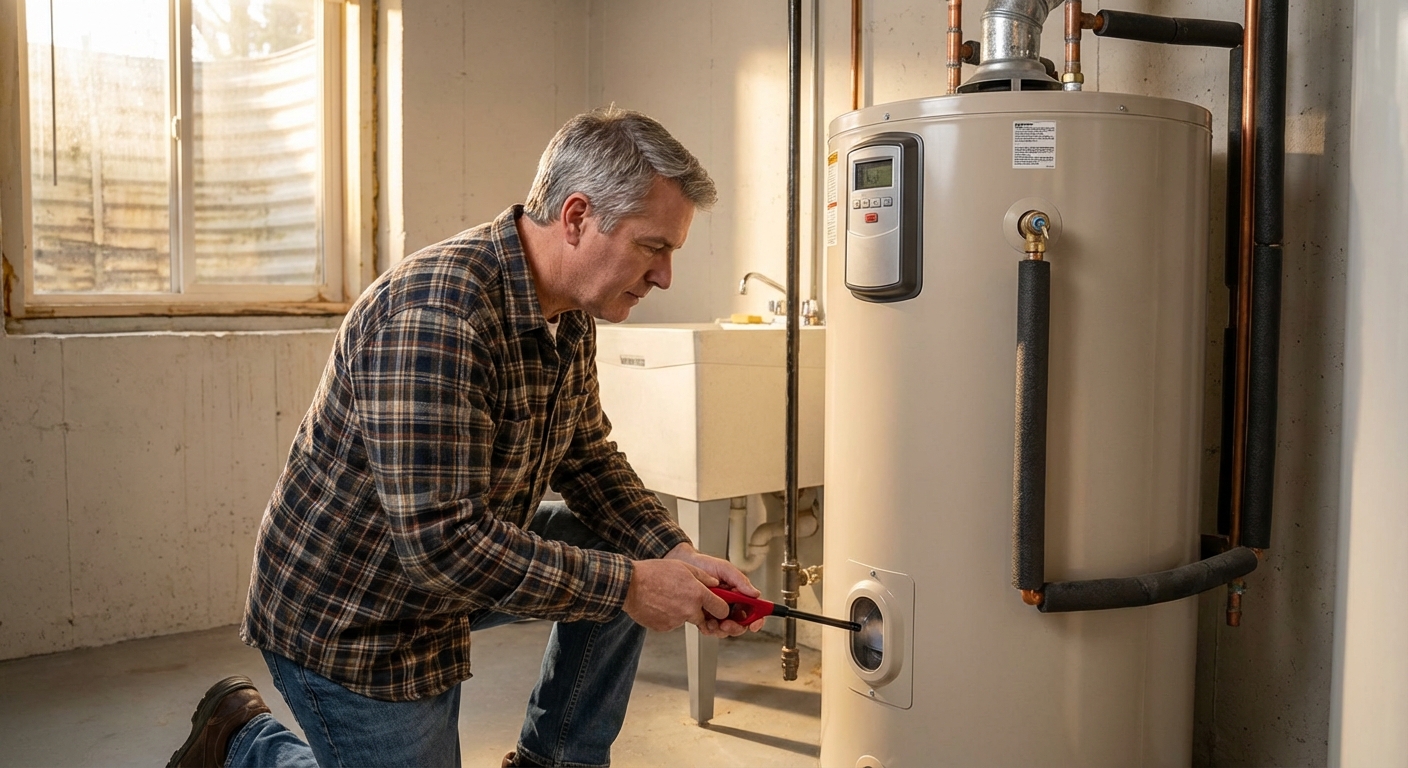
Understanding Water Heater Pilot Lights
A pilot light is a small, continuously burning flame that serves as the ignition source for your gas water heater's main burner. On traditional standing-pilot models, this tiny flame stays lit 24/7, waiting to ignite the larger gas flow when your water temperature drops below the thermostat setting.
How Pilot Lights Work
The pilot light operates through a simple but effective system with three main components: the pilot assembly, thermocouple, and gas control valve working together to provide hot water safely.
The Pilot Assembly Process
Gas flows continuously through a dedicated tube to the pilot burner, creating a small flame positioned near the main burner. When your water temperature drops below the thermostat setting, the gas control valve opens and releases gas to the main burner. The pilot flame immediately ignites this gas, heating the water in your tank. This process happens automatically whenever hot water demand triggers the heating cycle.
The Thermocouple Safety Device
The thermocouple is a critical safety component positioned next to the pilot flame. The pilot flame heats the thermocouple, which generates a small voltage that keeps the pilot gas valve open. If the pilot goes out, the thermocouple cools, stops generating voltage, and the valve closes, shutting off gas to both pilot and main burner. This fail-safe mechanism is essential for preventing carbon monoxide poisoning and potential explosions.
What's Changed in 2026
By 2026, electronic ignition has become the default on most new residential gas water heaters, while a shrinking subset of basic atmospheric models still use standing pilots. When the thermostat calls for hot water, the control uses either a spark igniter or a hot-surface igniter to light the gas, similar to modern gas furnaces. Manufacturers like A.O. Smith and Rheem now market electronic ignition as eliminating the nuisance pilot outages associated with older standing-pilot models, and many units do not require manual resetting after a power outage.
If your current heater is a standing-pilot model, it remains legal and serviceable. However, replacement units in 2026 will likely use electronic ignition with diagnostic LED error codes (often one flash every three seconds for normal operation) instead of a flame you light by hand.

Find Trusted & Licensed Plumbers in Ohio
Get matched with companies for your specific needs
Common Reasons Pilot Lights Go Out
Understanding why your water heater pilot light keeps going out helps you troubleshoot effectively and know when professional help is needed.
Faulty or Dirty Thermocouple
A malfunctioning thermocouple is consistently identified as the top cause of pilot lights that won't stay lit. The thermocouple is a safety sensor that sits in the pilot flame and generates a tiny electrical signal to keep the gas valve open. If it is worn out, corroded, dirty, bent away from the flame, or has a bad connection, it senses the flame as out and shuts the gas off, so the pilot won't stay lit.
Signs of a failing thermocouple include the pilot lighting easily but going out immediately after releasing the ignition button, or inconsistent pilot behavior that worsens over time.
Clogged Pilot Tube or Orifice
Dust, carbon buildup, rust, or spider webs can block the small pilot tube or orifice, reducing gas flow. That creates a small, yellow, or unstable flame that does not fully envelop the thermocouple, so the sensor shuts the gas off.
Hard water areas with sediment buildup in the tank often experience this issue more frequently. Cleaning the pilot tube and orifice is a standard first-line fix.
Drafts and Poor Ventilation
Air currents from nearby vents, fans, open windows, or poor ventilation can blow out your pilot light repeatedly. This is especially common in water heaters located in garages, basements, or utility rooms. Poor vent design or a damaged flue can cause backdrafting, pushing combustion gases and air back down onto the flame and extinguishing it. Persistent draft and vent issues are safety concerns because of possible carbon monoxide problems and often need professional evaluation.
On newer FVIR (Flammable Vapor Ignition Resistant) units, a clogged combustion air intake screen at the bottom of the heater is a common modern cause of unstable pilots. Lint, dust, and pet hair build up over time and starve the burner of air.
Gas Supply Issues
Problems with gas pressure or supply can prevent the pilot from staying lit. This includes partially closed gas valves, low gas pressure from your utility provider during peak demand times, an empty propane tank, or malfunctions in the gas control valve itself. If other gas appliances in your home also experience issues, contact your gas utility provider. However, if only your water heater is affected, the problem likely lies within the unit's gas control valve or gas line connection.
Moisture and Leaks
Water leaking into the burner compartment from a hidden plumbing leak can extinguish the pilot flame and cause corrosion that leads to ongoing problems. If you notice puddles or moisture near the unit, address the leaking water heater before attempting to relight.
Troubleshooting and Relighting Your Pilot Light
Before calling a professional and spending $100 to $300 on service, you can safely troubleshoot many pilot light issues yourself by following proper procedures.
Safety Precautions Before Starting
Always prioritize safety when working with gas appliances. If you smell gas, do not attempt to relight the pilot. Do not flip any light switches. Do not use your phone near the water heater. Evacuate the area and call your gas utility or fire department from outside.
Beyond that, follow these basic precautions:
- Turn off the gas control valve completely and wait at least 5 minutes for any residual gas to dissipate
- Ensure adequate ventilation in the area by opening windows or doors
- Have a long lighter or extended matches ready (never use regular matches or lighters)
- Consult your water heater's manual for model-specific instructions
- Keep a fire extinguisher nearby as a precaution
- Never smoke or use open flames until you're sure there's no gas leak
- If your unit is in a garage and is not FVIR or sealed-combustion, confirm the pilot and burner sit at least 18 inches above the floor to meet code
Step-by-Step Relighting Process
Follow these steps carefully to safely relight your water heater pilot light:
- Locate the gas control valve and pilot assembly at the base of your water heater, usually behind a removable access panel
- Turn the control knob to "Off" and wait a full 5 minutes to allow gas dissipation
- Set the knob to "Pilot" position to allow controlled gas flow to the pilot only
- Press and hold the reset button or pilot knob firmly down to start gas flow
- Use a long lighter or built-in piezoelectric igniter to ignite the pilot flame while viewing through the sight glass
- Continue holding the button for 30 to 60 seconds to adequately heat the thermocouple
- Slowly release the button while watching, the flame should stay lit steadily
- Turn the control knob to "On" position to allow normal operation
- Listen for the main burner to ignite with a soft "whoosh" sound, and check that the status LED flashes once every three seconds for normal operation
- Replace the access panel and monitor for proper operation
If the pilot won't light or immediately goes out after releasing the button, further troubleshooting is needed before attempting additional relighting.
Basic Troubleshooting Steps
Cleaning the Thermocouple
If your pilot lights but won't stay lit after holding the button, the thermocouple tip may need cleaning. First, shut off the gas and let the unit cool. Use fine sandpaper (400-grit) or steel wool to gently clean the sensor tip, removing any soot, corrosion, or buildup. Be careful not to bend the thermocouple during cleaning.
Clearing the Pilot Orifice
Use compressed air or a thin wire to carefully clear any debris from the pilot orifice opening. Be gentle to avoid damaging the small opening or making it larger, which would affect gas flow. Sometimes multiple cleanings are necessary for heavily clogged orifices.
Cleaning the FVIR Intake Screen
On modern FVIR units, vacuum the combustion air intake screen at the bottom of the heater. A clogged screen restricts airflow, causes overheating, and can trip thermal cutoffs that permanently disable the burner. Do not drill, prop open, or modify any sealed combustion components, as this violates the safety listing.
Checking for Drafts
Place your hand near the pilot area with the flame lit. If you feel air movement, identify the source and block it with cardboard temporarily or install a permanent draft shield. Check nearby vents, doors, and windows for air currents.
Verifying Gas Supply
Ensure your gas supply valve is fully open (the handle should be parallel to the gas line, not perpendicular). Check that other gas appliances are working properly to rule out utility supply issues. If you also have low water pressure, multiple home systems may need attention at once.
When to Replace vs Call a Professional
Knowing when to DIY and when to call an expert saves time, money, and prevents safety hazards while ensuring your water heater operates reliably.
DIY Thermocouple Replacement
Replacing a thermocouple is a straightforward task for homeowners with basic DIY skills and confidence working with gas appliances. The part itself is inexpensive, usually around $15 to $25 at most hardware stores. The job requires only a few simple tools like an adjustable wrench and screwdriver.
You can safely tackle this yourself if:
- You're comfortable shutting off gas supplies and following safety procedures
- The pilot lights easily but won't stay lit after releasing the button
- You've confirmed through testing that the thermocouple is the issue
- You can follow written instructions carefully and methodically
- You have adequate lighting and access to the water heater base
The replacement process takes about 15 to 30 minutes for most homeowners: shut off the gas completely, disconnect the thermocouple from the gas valve using a wrench, remove the old one from its mounting bracket, install the new thermocouple ensuring proper positioning near the pilot flame, and reconnect everything securely.
When to Call a Professional
Contact a licensed plumber or HVAC technician immediately when:
- You smell gas at any point during inspection or troubleshooting
- The pilot won't light at all despite multiple attempts
- You're uncomfortable or inexperienced working with gas appliances
- Problems persist after replacing the thermocouple yourself
- You suspect gas control valve failure (requires specialized tools)
- Water is leaking into the burner compartment from unknown sources
- An FVIR thermal cutoff has tripped (often requires full burner assembly replacement)
- Your water heater is over 10 years old and experiencing multiple issues
- You need to maintain home warranty coverage (DIY work may void claims)
For situations that escalate quickly, our plumbing emergency guide walks you through what to do before the plumber arrives.
Cost Considerations for Repairs
In 2026, typical water heater pilot light repair costs include:
| Service | Cost Range | Details |
|---|---|---|
| Thermocouple part only | $15 to $25 | Available at hardware stores, varies by model |
| Pilot relight service call only | $50 to $150 | Trip fee and inspection; no parts replaced |
| Professional thermocouple replacement | $150 to $325 | Includes labor, diagnosis, and testing |
| Pilot light or igniter repair | $100 to $300 | Includes parts and labor |
| Gas control valve replacement | $300 to $500 | More complex repair requiring expertise |
| Complete water heater replacement | $1,300 to $4,500 | Consider if repairs exceed 50% of new unit |
A plumber's service call to assess and relight the pilot light typically costs between $50 and $150 in 2026. If parts need replacement, expect $100 to $300 for a pilot or igniter repair, and $150 to $325 for a professional thermocouple swap. Gas control valve replacements have settled around a $350 to $400 national average, with most jobs falling in the $300 to $500 range.
For full replacement decisions, current 2026 tank-style gas water heater replacements run roughly $1,300 to $2,400 installed for most homeowners, while gas tankless conversions commonly run $3,000 to $5,000 installed (often about twice the cost of a tank unit due to gas line, venting, and electrical upgrades). If your unit is over 10 to 12 years old and racking up repair bills, learn more about the full tankless water heater installation process and whether it makes sense for your home.
Frequently Asked Questions
Why does my water heater pilot light keep going out?
The most common causes are a faulty thermocouple that can't sense the pilot flame properly, a clogged pilot orifice restricting gas flow, or drafts blowing out the flame repeatedly. Other reasons include gas supply issues, a clogged FVIR intake screen, moisture in the burner compartment causing corrosion, or a malfunctioning gas control valve. Start by checking for obvious problems like drafts or visible debris, then consider cleaning or replacing the thermocouple if basic troubleshooting doesn't resolve the issue.
How do I know if my thermocouple is bad?
A failing thermocouple typically allows the pilot to light successfully but won't keep it lit after you release the ignition button. You may also notice the pilot flame seems adequate in size but still goes out mysteriously within seconds or minutes. Testing with a multimeter should show 20 to 30 millivolts when the thermocouple is heated by the pilot flame, and readings consistently below this threshold indicate replacement is needed. Visible corrosion, bending, or physical damage to the sensor tip also signals it's time for a new thermocouple.
Is it dangerous if my pilot light keeps going out?
While modern water heaters have safety features that automatically prevent gas from flowing when the pilot is out, repeated pilot light failures can indicate underlying problems that need immediate attention. Never attempt to relight a pilot if you smell gas anywhere near the unit, as accumulated gas can cause an explosion or fire. If your pilot goes out frequently without obvious cause, address the issue promptly to avoid potential carbon monoxide risks, gas leaks, or complete water heater failure that could require costly emergency repairs.
Can I light a pilot light without the button?
Most modern gas water heaters require using the pilot button or reset mechanism to safely light the pilot, as this control allows gas to flow specifically to the pilot assembly while you ignite it with a lighter. Attempting to light it without using the proper controls is extremely dangerous and not recommended under any circumstances. If your ignition button, reset mechanism, or control system is broken or non-functional, call a professional plumber immediately rather than attempting workarounds that compromise safety and could violate local building codes.
How long should a pilot light stay lit on a water heater?
A properly functioning pilot light should stay lit continuously, burning 24 hours a day, 7 days a week, until the water heater is intentionally turned off or reaches the end of its service life. If your pilot light goes out regularly, whether daily, weekly, or monthly, something is wrong with the system and requires diagnosis and repair. Pilot lights are designed to burn continuously for 8 to 12 years or more without issues when all components are working correctly and the unit receives proper annual maintenance and care.
Do new water heaters still use pilot lights in 2026?
Most new residential gas water heaters sold in 2026 use electronic ignition rather than a standing pilot, especially mid and high-efficiency models. These units rely on a spark or hot-surface igniter that activates only when hot water is needed, eliminating constant gas waste and the need to manually relight after power outages. Standing-pilot models are still legal and available in some basic atmospheric tanks, but if you're replacing your unit, expect newer ignition technology with diagnostic LED error codes instead of a flame you manually light.