
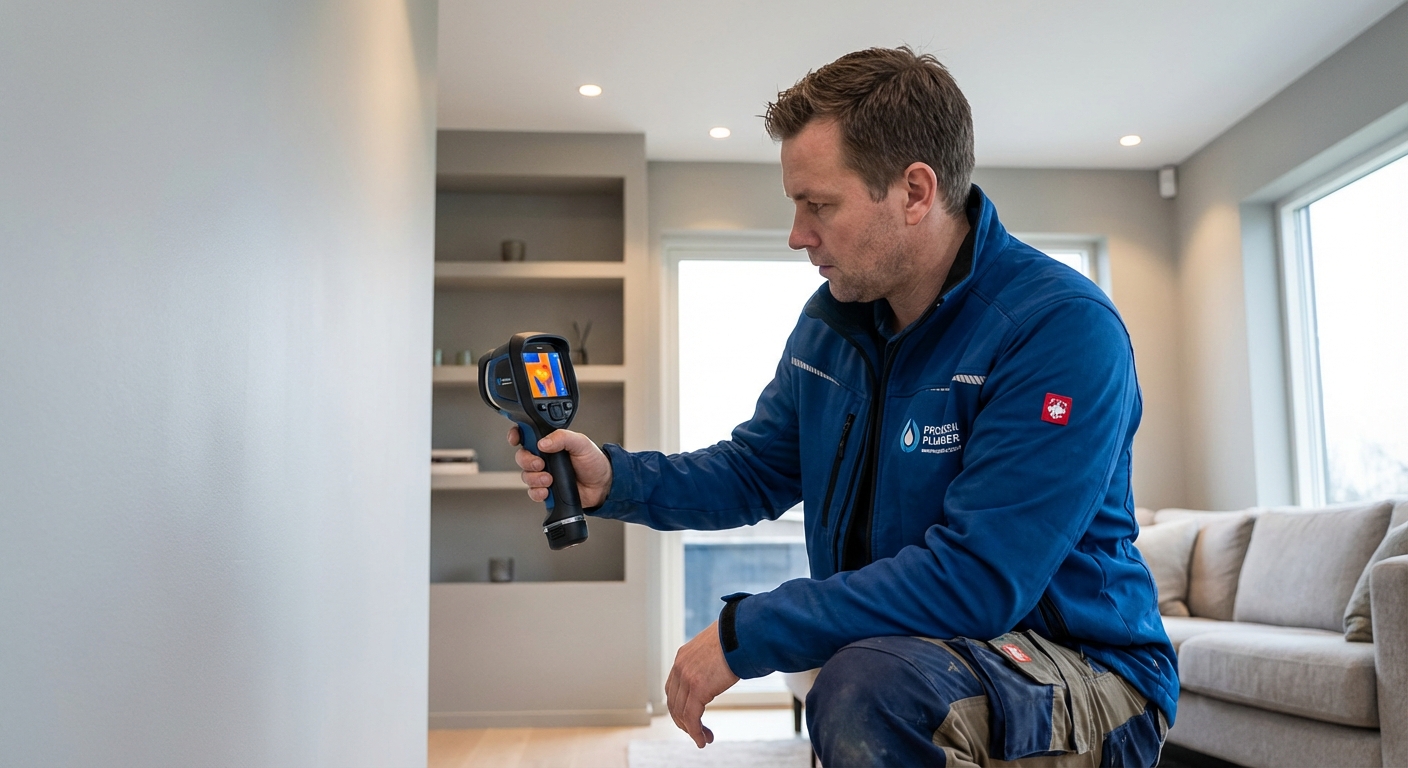
Professional Leak Detection Technologies Used by Plumbers
Modern leak detection services rely on sophisticated, non-invasive technologies that pinpoint hidden water leaks without tearing apart your walls, floors, or foundation. Professional plumbers in 2026 use four primary methods to locate leaks with surgical precision: acoustic sensors, thermal imaging cameras, video pipe inspection, and moisture meters.
Acoustic Sensors and Ultrasonic Detection
Acoustic leak detection employs highly sensitive microphones, listening discs, ground microphones, deck plates, and ultrasonic devices to amplify and isolate the sound of escaping water. These tools are commonly used in slab leak detection to "listen" for the sound of water escaping under the slab, helping narrow the leak to a small area before any concrete is opened. They work behind walls, under concrete slabs, underground, or in both plastic and metal pipes.
Professional-grade equipment like pipe probes and deck plates can detect the whispers of water escaping from pressurized lines. Technicians touch pipes, valves, angle stops, and faucets throughout your property to hone in on the precise leak location. For plastic pipes where sound doesn't travel as readily, plumbers may inject air or water bursts using pressure rigs to enhance the acoustic signature.
Ultrasonic technology analyzes high-frequency noise inaudible to the human ear, providing quick and accurate identification of even small leaks. This method works exceptionally well for pressurized water lines and can detect leaks through multiple layers of building materials. Learn more about water line leak detection methods if you suspect an issue with your supply pipes.
Thermal Imaging and Infrared Cameras
Thermal imaging cameras use infrared thermography to detect temperature variations caused by water seepage. These devices detect temperature differences in slab surfaces caused by hot or cold water leaks below, which is especially useful for hot-water slab leaks where warm areas show on the camera.
Plumbers can scan large areas like walls, floors, ceilings, roofs, and attics without any demolition. This technology proves particularly effective for detecting hot water pipe leaks, radiant heating issues, and moisture trapped under tiles or flooring. Some advanced leak detection companies even use drones equipped with thermal cameras to access hard-to-reach spots like tall buildings or expansive roof systems.
Video Pipe Inspection Technology
Video pipe inspection deploys waterproof, high-resolution cameras into drain lines, sewers, and pipes to provide real-time visual confirmation of leaks, cracks, corrosion, blockages, and root intrusion. These cameras mount on flexible cables that navigate through your plumbing system while transmitting live footage to the technician's monitor. A plumbing camera inspection is one of the most precise tools available for diagnosing pipe problems.
This method offers the most accurate internal pipe assessment and ranks among the top choices for precision leak detection. Video inspection eliminates guesswork by showing exactly what's happening inside your pipes, whether it's a hairline crack, joint separation, or tree root penetration.
The technology helps avoid extensive excavation by identifying the exact location and nature of the problem before any digging begins. This saves homeowners significant money on unnecessary exploratory work and repair costs.
Moisture Meters and Advanced Sensors
Moisture meters detect excess humidity or water presence behind surfaces by measuring moisture content in building materials. Professional plumbers use pin-type and pinless moisture meters to verify suspected leak locations identified by other detection methods.
These devices complement acoustic and thermal tools by providing quantitative moisture readings in walls, floors, cabinets, and other concealed spaces. When a thermal camera indicates a cool spot or acoustic equipment picks up a suspicious sound, moisture meters confirm whether water is actually present.

Find Trusted & Licensed Plumbers in Ohio
Get matched with companies for your specific needs
Signs You Need Professional Leak Detection Services
Recognizing the warning signs of hidden water leaks can save you thousands of dollars in repair costs. Many leaks develop slowly and remain undetected for months, causing extensive damage before becoming obvious.
Unexplained Water Bill Increases
One of the most reliable indicators of a hidden leak is a sudden spike in your water bill without any change in usage patterns. Even a small leak can waste hundreds of gallons per month. Compare your current bill to previous months. A 10-20% increase without explanation warrants investigation, and our high water bill troubleshooting guide can walk you through the next steps.
Visible Water Stains and Discoloration
Water stains on ceilings, walls, or floors appear as yellowish-brown spots that often expand over time. You might notice bubbling or peeling paint, warped baseboards, or discolored grout and caulking around tubs and showers. These visual cues indicate water has been present long enough to penetrate surface materials.
Musty Odors and Mold Growth
Hidden leaks create ideal conditions for mold and mildew growth. If you detect persistent musty or damp odors, especially in bathrooms, kitchens, basements, or laundry rooms, moisture is likely accumulating somewhere out of sight.
Mold can start forming within 48 hours of persistent moisture, and remediation typically runs $1,500 to $4,000 for a bathroom or kitchen, up to $10,000 for whole-house cases. Black, green, or white patches appearing on walls, ceilings, or in corners require immediate professional assessment.
Low Water Pressure and Strange Sounds
Unexplained drops in water pressure throughout your home may indicate a significant leak in your main water line or multiple smaller leaks. If one fixture experiences low pressure, the problem is likely localized, but whole-house pressure issues suggest a larger concern that may require main water line repair.
Listen for the sound of running water when all fixtures are turned off. Hissing, dripping, or rushing water sounds inside walls or under floors indicate active leaks. Warm or cool spots on floors, especially concrete slab floors, can signal slab leaks beneath the foundation.
When to Call a Professional vs. DIY Detection
While homeowners can perform basic leak detection checks, professional services become necessary when DIY methods fail to locate the source or when leaks occur in inaccessible areas.
You can start with simple DIY checks like inspecting under sinks, examining toilet tank components, checking washing machine hoses, and looking for moisture around the water heater. However, contact a professional leak detection service when leaks occur in basement pipes, foundation areas, concrete slabs, underground lines, or anywhere you cannot access without causing damage. For urgent situations, emergency plumber services can respond quickly with specialized equipment.
Understanding Leak Detection Service Costs in 2026
Professional leak detection service costs vary based on the leak's location, detection methods required, and your geographic area. Understanding these costs helps you make informed decisions about when to invest in professional services versus attempting DIY solutions.
Average Costs for Residential Leak Detection
The national average for plumber leak detection in 2026 is $175 to $350 for most residential jobs, with hidden leaks under slabs or walls pushing detection costs higher. Basic leak detection using acoustic or visual methods typically falls on the lower end of this range, while comprehensive multi-method investigations cost more. Some cost calculators show the basic cost to find a plumbing leak is $241 to $292 per leak as of May 2026.
Service call fees often apply even before detection work begins, usually ranging from $75 to $150. Many plumbers credit this fee toward the total cost if you proceed with repairs. Some companies offer free leak detection when you hire them for the repair work. Our complete plumbing service cost guide breaks down typical service fees in more detail.
Slab Leak Detection Costs
Slab leak detection is more expensive due to the complexity of locating leaks beneath concrete foundations. Slab leak detection commonly runs $150 to $600, with many homeowner guides listing an average around $280. For hidden or hard-to-access slab leaks, detection can rise to $300 to $600 for advanced detection and sometimes approach or exceed $1,000 when extensive testing is required.
Full slab leak detection plus repair commonly ends up in the $2,000 to $7,500 total range, with an average around $2,300 to $3,000, depending on repair method and severity. For a complete breakdown, see our guide to slab leak repair costs.
Underground Water Leak Detection Pricing
Underground leak detection for buried pipes outside your foundation typically costs $500 to $800 in 2026. These services locate leaks in water supply lines, irrigation systems, or sewer lines beneath yards, driveways, or landscaping.
Higher fees reflect the challenge of pinpointing leaks in deep or hard-to-access lines without excavation. Plumbers use acoustic listening devices, tracer gas detection, or ground-penetrating radar to map underground pipe locations and identify breach points.
| Detection Type | Average Cost (2026) | Complexity Level |
|---|---|---|
| Basic interior leak | $175-$350 | Low to Moderate |
| Slab leak detection | $150-$600 | High |
| Underground leak | $500-$800 | High |
| Emergency service surcharge | +$100-$300 | Variable |
Factors That Affect Detection Costs
Property size impacts pricing, as larger homes require more time to inspect thoroughly. The number of potential leak locations also affects costs. Detection method complexity plays a significant role: visual inspection and acoustic methods cost less than thermal imaging or video pipe inspection, which require expensive specialized equipment. Geographic location creates price variations, and emergency or after-hours service calls can add a $100 to $300 surcharge on top of standard rates.
Smart Leak Detection Systems and Prevention Technology
Smart leak detection represents the cutting edge of water damage prevention in 2026, combining sensors, artificial intelligence, and automated shutoff capabilities to protect homes 24/7. Our smart plumbing systems guide covers the full ecosystem, but here are the most important developments.
How Smart Leak Detection Systems Work
Modern smart leak detection systems integrate multiple components. The core technologies include point-of-leak spot sensors (small Wi-Fi or Bluetooth devices placed on the floor or under appliances that trigger when they touch water), whole-home water monitors mounted on your main water line that watch flow patterns to detect leaks anywhere in the plumbing, and AI-enhanced leak analytics that increasingly use machine learning to distinguish normal usage from leaks.
Smart shut-off valves are motorized valves installed on the main line that can automatically cut off water when a leak is detected. They are often paired with a smart monitor or multiple leak sensors and can be triggered automatically based on flow anomalies or manually via app when you receive an alert. Battery backup ensures protection continues during power outages.
2026 Trends in Smart Leak Detection
The smart leak detection industry has evolved significantly with several breakthrough technologies becoming mainstream:
AI and machine learning integration is now the standard. The Hydrific Droplet monitor uses dual ultrasonic sensors scanning up to 50 times per second and AI machine learning to classify water events and detect leaks as low as 0.026 gpm, monitoring an entire home from one point.
Non-invasive clamp-on sensors eliminate the need for cutting pipes during installation, making whole-home protection accessible to renters and DIY homeowners.
Layered system bundles combine spot sensors in high-risk areas, a smart main-line monitor for hidden leaks, automated shutoff valves, and freeze/temperature sensors for cold spaces, all managed through a single app.
Freeze prevention features actively monitor indoor temperatures and pipe conditions to predict burst risks. This is critical because a burst pipe can release hundreds of gallons in minutes.
Cost Savings from Smart Systems
Complete smart leak detection systems typically cost $300 to $800 installed, with individual sensors priced at $40 to $100 each. The return on investment becomes clear when you consider the alternatives. One large portfolio operator reports the average water damage incident costs $3,826, with a range of roughly $450 to $16,000 depending on severity and location.
Plumbing specialists note that hidden leaks often lead to $3,000 to $15,000 in damage if not caught early, while professional detection or smart systems that catch problems early may cost only $200 to $400.
Insurance discounts make the math even better. In 2026, most major home insurers offer premium discounts of about 3-15% for smart water leak detection systems, with the highest credits going to devices that can automatically shut off the water supply. Basic alert-only sensors earn around 3-5% off, automatic shutoff systems often earn around 10%, and flow-monitoring plus automatic shutoff systems can earn up to 15%.
Frequently Asked Questions About Leak Detection Services
How much does a leak detection service cost in 2026?
Professional leak detection services typically cost $175 to $350 for most residential properties in 2026, with cost calculators showing an average of about $241 to $292 per leak. Specialized slab leak detection ranges from $150 to $600 (averaging around $280), while underground leak detection usually runs $500 to $800. Emergency or after-hours service calls add a $100 to $300 surcharge, so schedule non-urgent work during business hours when possible.
What are the most common signs of a hidden water leak?
The most reliable signs include unexplained increases in your water bill, water stains or discoloration on ceilings and walls, persistent musty odors, low water pressure throughout your home, and sounds of running water when all fixtures are off. You might also notice mold growth, warped flooring, bubbling paint, or unusual warm and cool spots on floors. Performing a water meter test can confirm whether a leak exists before calling a professional.
Can plumbers detect leaks without damaging walls or floors?
Yes, modern leak detection technology is completely non-invasive. Professional plumbers use acoustic sensors to listen for leaks through walls, thermal imaging cameras to detect temperature variations indicating moisture, video pipe inspection that travels inside pipes, and moisture meters that read through surfaces. These methods pinpoint leak locations with precision, allowing targeted repairs that minimize damage and reduce overall costs compared to exploratory demolition.
Will homeowners insurance cover hidden water leak damage?
Insurance typically covers sudden and accidental water damage like a burst pipe, but often excludes gradual or long-term leaks classified as deferred maintenance. If your insurer decides you should have detected the leak sooner, they can deny the claim entirely. This is why proactive detection and smart monitoring systems are so valuable, and why many insurers now offer 3-15% premium discounts for installing them.
How do smart leak detection systems prevent water damage?
Smart leak detection systems use continuous monitoring sensors placed throughout your home to detect moisture, unusual water flow patterns, pressure changes, or freezing conditions. When anomalies are detected, the system sends instant alerts to your smartphone and can automatically shut off your main water supply through integrated valves. Advanced AI-driven systems like Hydrific Droplet can detect leaks as small as 0.026 gallons per minute, catching problems long before they cause visible damage.