
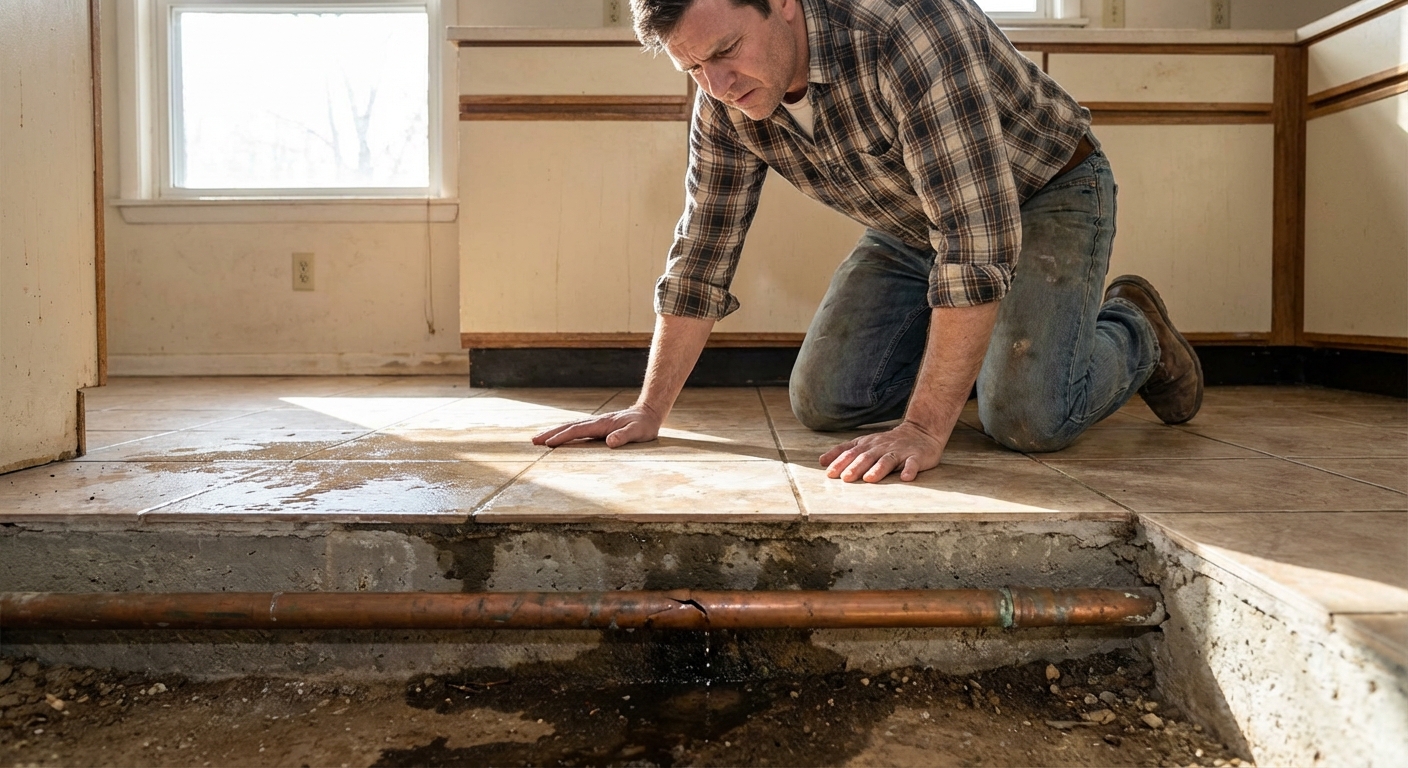
What Is a Slab Leak and Why Is It Serious?
A slab leak occurs when water pipes running beneath, or embedded within, a home's concrete foundation develop a leak. These pipes are hidden under thousands of pounds of concrete, making leaks notoriously difficult to detect without professional help. Both freshwater supply lines and wastewater removal pipes can be affected.
The most common causes are pipe corrosion (especially in older copper or galvanized steel lines), shifting soil and foundation movement, improper installation or construction damage, excessive water pressure, and water quality issues like hard or acidic water. Hot water lines are especially vulnerable because thermal expansion increases friction against the slab.
Slab leaks aren't just a minor plumbing inconvenience. Left unaddressed, they can:
- Erode the concrete slab and wash away the soil beneath it, creating cavities that compromise your home's structural integrity
- Promote mold and mildew growth as moisture seeps upward through the foundation
- Damage flooring including hardwood, tile, and carpet
- Spike your water bills with continuous, invisible water loss

Find Trusted & Licensed Plumbers in Ohio
Get matched with companies for your specific needs
Warning Signs of a Slab Leak
Because the pipes are buried underground, slab leaks rarely announce themselves with obvious pooling water. Instead, watch for these subtle but telling warning signs:
Hot or Warm Spots on the Floor
When a hot water supply line leaks, the warm water seeps upward through the slab. You may feel noticeably warm patches underfoot, especially on tile, hardwood, or laminate floors.
Unexplained High Water Bills
A sudden spike in your monthly water bill without a change in usage habits is one of the earliest indicators. A continuously leaking pipe beneath your slab can waste hundreds of gallons per day.
The Sound of Running Water
If you hear the sound of running or dripping water when all faucets, toilets, and appliances are turned off, water may be flowing beneath your slab.
Damp Floors, Wet Carpets, or Musty Odors
Water seeping upward through the concrete can saturate subflooring and carpets. Persistent musty smells may indicate mold growth driven by hidden moisture.
Foundation or Wall Cracks
As water erodes the soil beneath the slab, the foundation can shift, causing visible cracks in walls, floors, and even door and window frames that no longer close properly.
Moving Water Meter With No Usage
Shut off all water in the home and watch your water meter. If the dial continues to move, water is escaping somewhere in the system. Learn more about water line leak detection to understand what this type of test reveals.
Slab Leak Detection & Repair Options
How Slab Leaks Are Detected
Professional leak detection services use specialized tools to pinpoint leaks without tearing up your floor unnecessarily. Common methods include:
- Electronic acoustic detection. Ground microphones and electronic amplifiers listen for the high-frequency hissing or whooshing of pressurized slab leaks through concrete. This is the first-line method for most water-supply slab leaks.
- Thermal (infrared) imaging. Detects temperature differences caused by leaking hot water lines.
- Pressure testing. Isolates sections of pipe to confirm leak location and identifies whether the leak is on the hot or cold side.
- Plumbing camera inspection. A waterproof camera travels through the pipe to visually confirm damage, especially useful for drain and sewer slab leaks.
In 2026, a dedicated slab leak detection visit typically costs $150 to $600 or more, depending on region, method mix, and complexity, with simple meter and pressure checks at the low end and multi-tool, hard-to-find leaks at the high end.
Slab Leak Repair Methods
Once the leak is located, you'll have several repair options to discuss with your plumber:
Spot Repair (Open Slab)
The most direct method. A plumber jackhammers the specific section of slab above the leak, repairs or replaces the damaged pipe segment, then repours the concrete. Best for isolated, single-point leaks. If your pipes are aging, however, this may be a short-term fix.
Pipe Rerouting
Rather than digging up the slab at all, new pipes are installed above ground, through walls, or along the exterior of the home, completely bypassing the old buried lines. This is an excellent long-term solution if you have an older system with multiple vulnerabilities. For homes with widespread pipe deterioration, whole house repiping may be worth considering.
Epoxy Pipe Lining (Trenchless)
A resin-coated liner or liquid epoxy is inserted through existing access points and hardened inside the old pipe, forming a new, seamless pipe without any excavation. This trenchless method is fast (many residential projects complete in a single day), avoids slab cutting, and many liners are rated for 35 to 50 years of service or more. It works best when the existing pipe is structurally sound but has pinhole or small leaks.
Slab Leak Repair Costs, Insurance & Prevention
How Much Does Slab Leak Repair Cost in 2026?
Costs vary widely based on the repair method, leak location, and extent of damage. Here's a breakdown of what to expect in 2026:
| Repair Type | Estimated Cost Range (2026) |
|---|---|
| Leak Detection | $150 – $600 |
| Spot Repair (slab cut) | $500 – $4,500 |
| Epoxy / Pipe Lining (per linear foot) | $80 – $250 |
| Pipe Rerouting | $1,500 – $15,000 |
| Full Slab Replacement | $3,600 – $10,800 |
| Mold Remediation (if needed) | $500 – $6,000 |
| Foundation Stabilization (if needed) | $2,000 – $10,000 |
The average slab leak repair cost in 2026 is about $2,300, with a typical range of $630 to $4,400 or more depending on the extent of damage. Complex jobs that include rerouting or significant water damage can push totals well above $7,500. For comparison, similar underground pipe work like main water line repair and sewer line repair fall in comparable ranges.
Is Slab Leak Repair Covered by Insurance?
Homeowners insurance coverage for slab leaks is nuanced, and many homeowners are surprised by what's excluded. Most standard policies in 2026 may cover the damage caused by a slab leak and the cost to access the leak, but they usually do not pay to repair or replace the pipe itself, especially if the problem is due to wear and tear or age.
In short, the resulting damage (such as tearing out and replacing the slab) may be covered if it stems from a sudden, accidental event like a burst pipe. The pipe repair itself almost never is. Service line coverage is an optional endorsement that helps pay to repair or replace underground utility lines (water, sewer, or power) from the street to your home if they're damaged by a covered cause. Always review your specific policy and document all damage thoroughly before filing a claim.
Prevention Tips for Slab Homes
Preventing a slab leak is far cheaper than repairing one. Here are the most effective strategies:
- Maintain water pressure at 40 to 60 PSI. High pressure accelerates pipe wear. Install a pressure regulator if yours runs high. This can also help address low water pressure issues that may signal pipe strain.
- Schedule regular plumbing inspections. A plumbing inspection can catch early signs of corrosion and wear before they become serious leaks.
- Install a water softener. Hard water with high mineral content like calcium or iron wears down pipes faster, leading to corrosion. A softener reduces this corrosive effect.
- Direct water away from your foundation. Keep gutters clean and position downspouts at least 5 to 10 feet from the foundation to prevent soil shifting.
- Consider smart leak sensors. Water monitoring devices can detect unusual usage patterns early, long before visible damage occurs.
- Upgrade aging pipes proactively. Older copper or galvanized steel pipes are more prone to corrosion. If your home is more than 25 to 30 years old, a plumbing inspection can help you plan ahead.
Frequently Asked Questions
What is the most common cause of a slab leak?
The most common causes are pipe corrosion from hard water mineral buildup, abrasion from pipes rubbing against concrete or gravel, and high water pressure that stresses pipe walls over time. Foundation shifting due to soil movement or natural settling can also stress and crack buried pipes. Poor original installation is another contributing factor, especially in older homes built with copper or galvanized steel lines.
How long does slab leak repair take?
The timeline depends on the repair method chosen. A straightforward spot repair may be completed in one to two days, while pipe rerouting can take several days. Many epoxy lining projects on residential lines can be completed in a single day. Factor in additional time if flooring, drywall, or mold remediation work is required after the plumbing is fixed.
Can I ignore a slab leak if it seems minor?
No, even a slow, minor slab leak should be addressed promptly. Over time, continuous water loss erodes the soil beneath your foundation, potentially causing the slab to shift, crack, or settle unevenly. The longer the leak persists, the greater the risk of mold growth, flooring damage, and costly structural repairs that dwarf the original plumbing fix.
Should I repair or repipe my home when a slab leak is found?
This depends on the age and condition of your pipes. If it's an isolated leak in an otherwise healthy system, spot repair or epoxy lining may be sufficient. But if your pipes are old, corroded, or you've experienced multiple leaks, whole house repiping may be the smarter long-term investment. A licensed plumber can evaluate the full system and recommend the most cost-effective path.
Will a slab leak always show visible damage?
Not always, especially in the early stages. Many slab leaks go undetected for months because the water evaporates, drains away, or slowly saturates materials without obvious pooling. That's why monitoring your water bill, watching for hot spots on the floor, and performing periodic meter checks are so important. Professional leak detection services use acoustic and thermal tools to find leaks long before they cause visible damage.