
Warning Signs: Do You Actually Need to Repipe?
Not every plumbing problem demands a full repipe. The key is knowing whether you're dealing with an isolated issue or a systemic failure spreading through your entire plumbing system. Plumbers in 2026 consistently flag the same warning signs as indicators of system-wide pipe failure.
Signs that point to whole house repiping:
- Discolored or rusty water. Brown, orange, yellow, or murky water from multiple taps, especially after water has been sitting overnight, is a strong indicator that your pipes are corroding from the inside out.
- Persistently low water pressure. If weak flow affects multiple fixtures throughout the home, internal corrosion, mineral buildup, or numerous small leaks inside aging pipes are likely restricting flow system-wide.
- Recurring leaks in multiple locations. One leak is a spot repair. Multiple leaks per year in different parts of the house signal systemic deterioration rather than isolated damage.
- Frequent pipe repairs. If you're calling a plumber 3 to 4 times a year, the cumulative cost is creeping toward repiping territory anyway.
- Visible corrosion, flaking, or pitting on exposed pipes. Rust-colored spots, green or blue staining on copper, or dimpling on galvanized steel mean pipe walls are thinning.
- Unexplained spikes in your water bill. A bill that jumps without any change in use often points to hidden leaks from cracked or pinholed pipes inside walls or under slabs.
- Bad-tasting or foul-smelling water. A metallic taste, visible flakes, or sewage-like odors can indicate contamination from corroded or failing pipes.
When a spot repair is the right call:
Spot repairs make perfect sense when the problem is clearly isolated, like a single failed fitting, one leaking joint, or a broken supply line. If the rest of your plumbing is in good condition and there's no history of recurring issues, spending $200 to $500 on a targeted fix is smart. The problem is when homeowners keep patching an aging system that needs to be replaced wholesale. For more on identifying systemic issues, see our guide to old house plumbing problems.

Find Trusted & Licensed Plumbers in Ohio
Get matched with companies for your specific needs
PEX vs. Copper: Which Pipe Material Is Right for Your Repipe?
The two dominant choices for whole house repiping in 2026 are PEX (cross-linked polyethylene) and copper. Each has real advantages depending on your home, budget, and water conditions.
The bottom line: Most licensed plumbers in 2026 favor PEX for residential repiping projects. It installs roughly 40 to 60% faster than copper because of its flexibility and crimp-fitting system, costs significantly less per foot, and performs exceptionally well in most climates, especially in cold-weather states where frozen pipes are a concern. Copper remains the premium choice for homes with exposed piping, outdoor lines, or owners focused on maximizing long-term resale value.
For a deeper material breakdown, our copper vs PEX comparison and PEX plumbing guide cover the differences in detail.
What Does Whole House Repiping Cost in 2026?
Repiping costs vary widely based on your home's size, pipe material, foundation type, and regional labor rates. Here's a breakdown of what you can realistically expect to pay in 2026, with the national average for a 1,500 to 2,000 sq ft home landing near $7,500 for PEX.
Average Cost by Home Size (2026)
| Home Size (sq ft) | PEX Repipe Cost | Copper Repipe Cost |
|---|---|---|
| ~1,000 sq ft (1 bath) | $4,000 – $6,000 | $8,000 – $10,000 |
| 1,500 sq ft (2 baths) | $4,500 – $8,500 | $9,000 – $12,000 |
| ~2,000 sq ft (2-2.5 baths) | $8,000 – $12,000 | $15,000 – $20,000 |
| ~3,000 sq ft (3+ baths) | $12,000 – $18,000+ | $25,000 – $35,000+ |
| 3,000+ sq ft / complex layouts | $15,000 – $20,000+ | $30,000+ |
Per-square-foot rule of thumb for 2026: about $4.50 to $12.00 per square foot, depending on material and complexity.
Key Cost Factors
1. Number of Fixtures Every sink, toilet, shower, and appliance connection adds material and labor, roughly $200 to $400 per fixture.
| Fixture Count | Estimated Cost Range |
|---|---|
| Under 9 fixtures | $4,600 – $6,300 |
| 9 – 11 fixtures | $6,300 – $7,700 |
| 12 – 14 fixtures | $8,400 – $9,800 |
| 15+ fixtures | $10,500+ |
2. Foundation & Accessibility This is one of the biggest hidden cost drivers. Homes built on a slab foundation require cutting through concrete to access pipes, adding significant labor and potentially pushing total costs to $15,000 to $35,000. Homes with crawl spaces or accessible attics cost less because plumbers can route new lines with minimal wall damage. If you suspect a slab leak, our slab leak repair guide explains your options.
3. Labor Rates by Region Labor makes up roughly 70% of the total project cost, with hourly rates running $60 to $200 depending on your market. California projects can run $3,000 to $30,000 while Texas jobs average $3,000 to $11,000 for comparable homes.
4. Add-On Costs
- Water main line replacement: $600 to $2,500 (see our main water line repair guide)
- Drywall patching and painting: $500 to $2,000+
- Permits and inspections: $100 to $500
If your home has polybutylene pipes, repiping becomes even more urgent. Many 2026 insurers now require replacement as a condition of issuing or renewing a homeowners policy.
How Repiping Works: The Process & Timeline
Understanding what actually happens during a repipe helps you plan and reduces stress. Here's a realistic step-by-step overview based on how reputable repipe specialists operate in 2026.
How Long Does Repiping Take?
| Home Size | Estimated Timeline |
|---|---|
| Small home (1-2 baths) | 1 – 3 days |
| Medium home (2-3 baths) | 3 – 5 days |
| Large/multi-story (4+ baths) | 7 – 10 days |
| Drywall patching & paint | +1 – 3 additional days |
Step-by-Step Process
Step 1: Inspection & Planning A licensed plumber assesses your existing system, runs water pressure tests, checks pipe material and corrosion levels, and maps the least invasive route for new lines. A plumbing camera inspection is sometimes used to confirm the scope of failure before quoting.
Step 2: Preparation & Water Shutoff Floors and furniture are protected with drop cloths and plastic. The main water valve is shut off and lines are drained. Plumbers typically work from approximately 8 AM to 5 or 6 PM, restoring water each evening so you can use your home normally overnight.
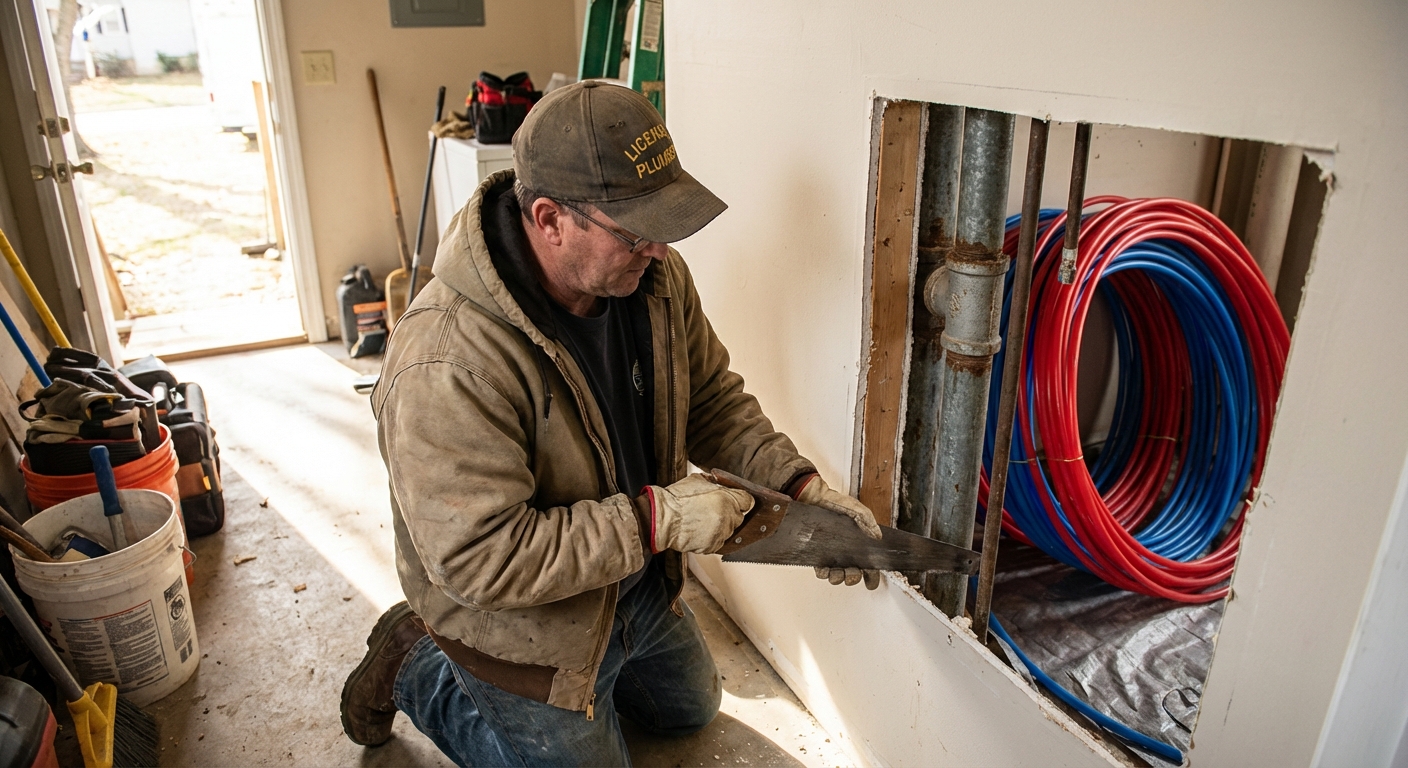
Step 3: Access Points & Old Pipe Removal Small access holes (typically 2x2 ft) are cut in walls, ceilings, or floors. In accessible homes, plumbers route through attics and crawl spaces to minimize wall damage. Old pipes are either removed or abandoned in place if removal would cause unnecessary damage.
Step 4: New Pipe Installation Main supply lines are run first (often through the attic or crawl space), followed by branch lines to each fixture: sinks, toilets, showers, tubs, dishwashers, refrigerators, washing machines, and hose bibs. New shut-off valves are typically installed at each fixture for easier future maintenance. PEX is especially efficient here because its flexibility lets it snake through existing cavities without opening every wall.
Step 5: Pressure Testing & Inspection New lines are pressure-tested for leaks, flow is verified at every fixture, and lines are flushed to clear installation debris. A municipal permit inspection is scheduled if required to confirm the work meets current plumbing code.
Step 6: Wall Repairs & Cleanup Access holes are patched with drywall, taped, mudded, sanded, and painted to match. This phase can add 1 to 3 additional days for drying time. Most repipe contractors include basic patching, but confirm exactly what's covered in your quote (some leave painting to a separate contractor).
If you've had recurring burst pipe issues or signs of corrosion, getting a thorough leak detection inspection before your repipe can ensure no problem area is missed during the project. Homeowners dealing with older systems should also review our guide on corrosion-resistant plumbing pipes.
Frequently Asked Questions
How do I know if I need a full repipe or just a spot repair?
If you have a single isolated leak with no history of recurring plumbing problems and your pipes are relatively young, a spot repair is likely sufficient at a cost of $200 to $500. However, if you're experiencing multiple leaks in different locations, discolored water, consistently low pressure across the home, or your pipes are made of aging galvanized steel or polybutylene, whole house repiping is the smarter long-term investment. Repeated spot repairs on a failing system can easily cost more than a full repipe over just a few years.
What is the cheapest way to repipe a house in 2026?
The most cost-effective approach is to choose PEX piping over copper, which alone can save you 25 to 50% on the total project cost. Getting at least three quotes from licensed plumbers is critical, as prices vary dramatically by contractor. If your home has a crawl space or accessible attic, your labor costs will be substantially lower than a slab-foundation home. Some homeowners also opt for partial repiping, but this is only advisable if the rest of the system is genuinely in good condition.
Does repiping a house add value?
Yes, repiping can meaningfully improve your home's value and marketability. Buyers and home inspectors look closely at plumbing condition, and outdated or failing pipes are a major red flag that can kill a sale or force price reductions. A freshly repiped home with modern PEX or copper signals low maintenance risk, can lower homeowner's insurance complications (especially with polybutylene removal), and can be a direct selling point. The value added often offsets a significant portion of the project cost.
Can I stay in my home during repiping?
Yes, in most cases homeowners can remain in their home throughout the repiping project. Plumbers typically restore water each evening after work hours, so you'll have normal access from approximately 5 or 6 PM through the following morning. The main inconvenience is noise and dust from wall access work. Having multiple bathrooms helps, and stocking bottled water for drinking during work hours is advisable.
Is repiping covered by homeowners insurance in 2026?
Standard homeowners insurance generally does not cover the cost of repiping itself, since it's considered a maintenance or wear-and-tear issue rather than sudden accidental damage. However, if a pipe failure causes water damage to your home's structure or belongings, that resulting damage may be covered depending on your policy. In 2026, many insurers actively flag homes with galvanized or polybutylene pipes and may refuse to renew coverage until the home is repiped. Always check your policy and consult your insurer before starting a major plumbing project.