
Signs of Underground Water Leaks
Water Bill and Meter Indicators
An unexplained spike in your water bill is often the first clue that water is escaping somewhere in your system. According to the EPA's 2026 WaterSense data, the average household wastes roughly 9,400 gallons of water annually from leaks, and fixing them can trim about 10% off your water bill. If your consumption suddenly jumps without changes like filling a pool or adding household members, hidden leaks are the likely culprit. Monitor your water meter when all fixtures are off. If the meter continues running, water is leaking somewhere in your system.
Low water pressure throughout your home or at specific fixtures can indicate leaks in your water line, as water escapes rather than reaching your taps with full force. You may also notice dirt or air in your water supply, which can signal a compromised line. Our guide on high water bill troubleshooting walks through the meter test step by step.
Visible Wet Spots and Moisture
Unusually soggy areas or puddles in your lawn when it hasn't rained recently indicate possible underground leaks. You may notice patches where grass is taller, greener, mossy, or moldy, all signs of concentrated moisture from underground leaks feeding that section of your yard.
Indoors, damp spots or moisture on carpets, rugs, and floors (especially in corners or along baseboards) point to water escaping from compromised pipes. Water-damaged floors may feel spongy, show visible warping with lifted or buckled boards, develop gaps between floorboards, or creak in areas that were previously silent.
Foundation and Structural Damage
Cracks, buckling, or leaning foundation walls can develop when water continuously seeps into concrete foundations over extended periods. Additional structural warning signs include cracks or bulges in driveways, potholes or sinkholes in lawns, doors that no longer close properly, and windows that stick.
You may also notice efflorescence (white, chalky deposits) on foundation walls, crumbling or flaking concrete, or gaps between walls and foundations. Hot spots on floors that feel noticeably warmer than surrounding areas indicate hot water pipe leaks beneath the surface, often pointing to a slab leak that needs immediate attention.

Find Trusted & Licensed Plumbers in Ohio
Get matched with companies for your specific needs
Professional Water Leak Detection Methods in 2026
Acoustic Listening Devices
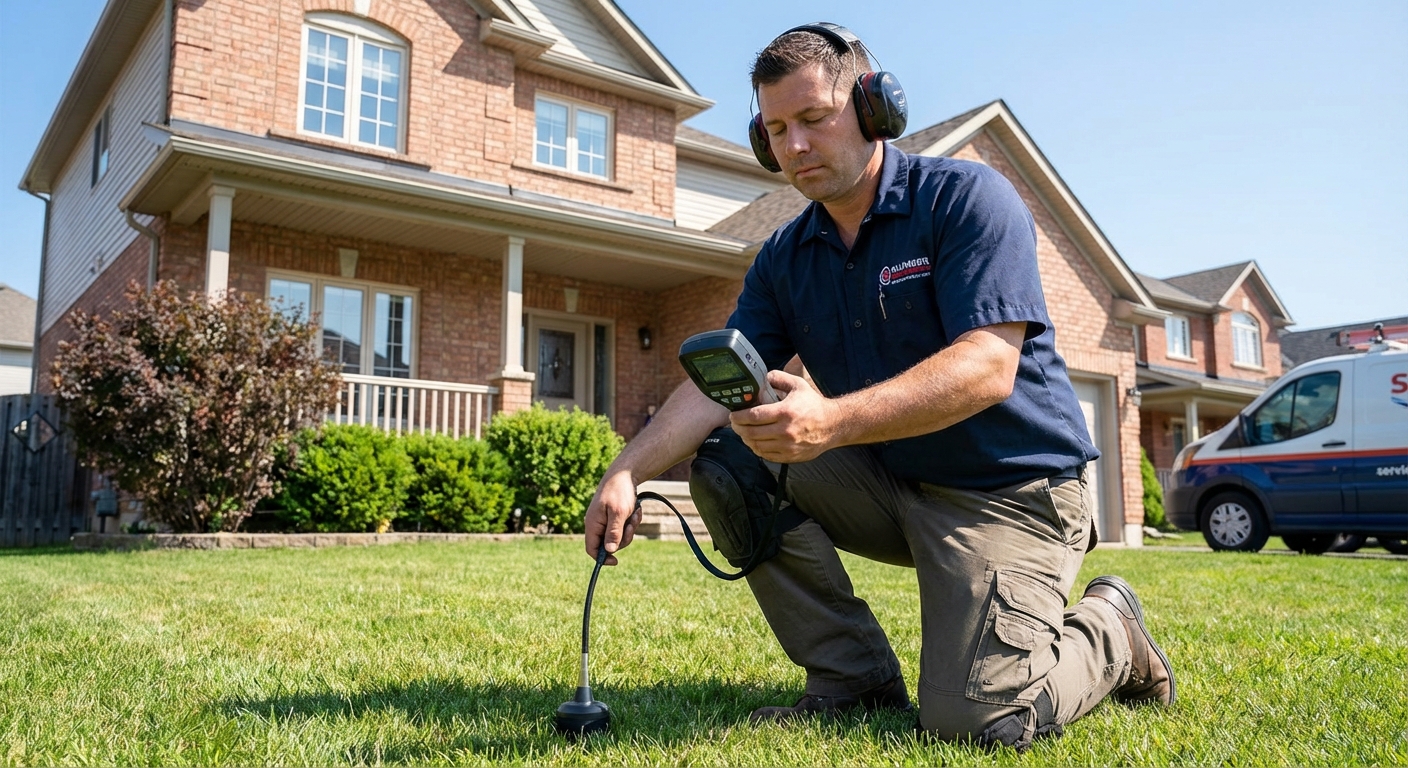
Acoustic leak detection uses highly sensitive microphones and sensors to pick up the distinctive sounds water makes when escaping from pipes. In 2026, modern units use low-noise electronics, multiple frequency filters, and digital signal processing so plumbers can distinguish leak noise from traffic, pumps, or HVAC equipment.
Different types of acoustic equipment serve specific purposes. Ground microphones locate outdoor leaks, contact microphones target pipes and fixtures, and digital correlators measure how long leak noise takes to reach two sensor points and calculate the leak location to within a few feet. Wireless noise loggers can be clipped onto valves overnight and upload data automatically the next morning.
Thermal Imaging Technology
Thermal imaging cameras detect temperature variations caused by water escaping from pipes, allowing plumbers to "see" leaks behind walls, ceilings, and floors without breaking into structures. The cameras create color-coded images where cool spots typically indicate water presence.
This method is especially useful for detecting leaks under tiled floors, identifying moisture buildup in ceilings, and finding problems in radiant heating systems or attic spaces. In 2026, drone-based thermal imaging has also become more common on large properties and municipal jobs, flying over fields and roads to detect soil temperature differences above buried leaks.
Video Camera Pipe Inspection
For leaks inside drain lines, sewer pipes, or underground systems, waterproof video cameras inserted into pipes provide real-time footage to monitors. This method allows plumbers to identify cracks, corrosion, loose joints, blockages, root intrusion, and collapsed sections. Video inspection is considered one of the most accurate methods because it provides clear visual confirmation of pipe conditions.
Pressure Testing and Tracer Gas
Pressure testing involves isolating sections of your plumbing system and monitoring pressure drops that indicate leaks. Tracer gas detection introduces a safe, non-toxic hydrogen-nitrogen mix into drained pipes that escapes through leak points and can be identified with specialized sensors at the surface. This makes it particularly effective for finding small leaks in buried or under-slab lines where acoustic methods struggle.
Ground-Penetrating and Satellite Radar
Ground-penetrating radar (GPR) scans below surfaces without digging, showing changes in soil density that indicate leaks or voids. For larger areas, the U.S. Department of Energy notes that synthetic aperture radar (SAR) satellites can now detect water leaks up to about 12 feet below the ground surface and work in all weather conditions. Utilities and contractors increasingly use satellite scans to flag suspect zones, then dispatch crews with acoustic tools to pinpoint the exact spot.
Smart Monitoring Systems
Modern leak detection increasingly incorporates IoT-based sensors and smart systems that monitor water flow and pressure in real time. Industry data shows AI-enabled leak detection adoption in the commercial sector grew roughly 45% in 2024, and the global water leakage detector market is projected to hit $5.5 billion in 2026. Advanced systems send instant alerts to smartphones and can automatically shut off the water main when a burst or freezing event is detected. Learn more about smart plumbing systems and how they integrate with whole-home shutoff valves.
Cost of Water Leak Detection Services in 2026
Average Price Ranges
Professional water leak detection services in 2026 typically cost between $175 and $400 per job, with the national average for a standard plumbing leak search landing around $241 to $292 according to Homewyse data. The final cost depends on the technology required, leak type, location accessibility, and complexity of your plumbing system.
Basic inspections using acoustic listening devices fall on the lower end of the price spectrum, while specialized methods like thermal imaging, electromagnetic locators, or hydrostatic testing command higher fees. Most standard leak detection appointments take 2 to 4 hours to complete.
Cost by Detection Method
Different leak types and detection methods have varying price points in 2026:
| Detection Method | Typical Cost Range | Best For |
|---|---|---|
| General Water Leaks | $175–$400 | Standard home plumbing, acoustic detection |
| Slab Leaks | $200–$900 | Pipes under concrete foundations |
| Hidden Wall Leaks | $250–$2,000 | Behind walls, may require access points |
| Pool Leaks | $100–$500 | Swimming pool systems, pressure testing |
| Complex/Emergency Cases | Up to $2,000 | Multi-method, after-hours, large properties |
Additional Cost Factors
Location significantly impacts pricing, with urban areas typically charging 30% more due to higher labor costs and demand, while rural areas may add travel fees. Older plumbing systems, accessibility challenges, or local regulations can increase the time and expertise required.
Diagnostic or inspection fees may range from $98 to $150, with repair costs additional. Some companies offer flat-rate pricing while others charge hourly rates ranging from $85 to $200 per hour depending on the specialist's expertise and equipment. Learn more about emergency plumber costs if you need urgent service.
Insurance Coverage Considerations
In 2026, homeowners insurance generally covers sudden and accidental water damage from a plumbing failure, but typically excludes slow leaks, gradual deterioration, and the cost to repair the failed pipe itself. Coverage for the detection service usually depends on whether the leak caused a covered loss. The good news: many carriers including Farmers, Mercury, and Travelers now offer 5% to 15% premium discounts when you install an approved smart leak detection or automatic shutoff system. Some California insurers have even begun requiring smart water leak detectors as a condition of coverage in 2026.
How Technology Pinpoints Leaks Without Excavation
Non-Invasive Detection Approach
Modern leak detection technology analyzes physical signals from escaping water without requiring excavation or property damage. Professional plumbers prioritize non-invasive techniques as the first choice, using acoustic sensors, thermal imaging cameras, and moisture meters before ever cutting into walls or digging up a yard.
Acoustic systems work like high-tech stethoscopes, with technicians walking along underground pipe routes guided by GPS-enabled maps and listening through headsets to locate leaks. The technology can survey hundreds of miles of pipeline without disturbing property.
Advanced Sensing Technologies
Thermal imaging reveals hidden moisture by detecting temperature differences that indicate water presence beneath surfaces. The cameras can pinpoint difficult leaks under roads or concrete by identifying cool spots where water accumulates.
Ground-penetrating radar scans below surfaces showing changes in soil density caused by leaks. Fiber optic sensors detect the tiniest vibrations from water leaks with extreme precision, and on critical mains they can provide continuous real-time monitoring so utilities catch problems before catastrophic failure.
Smart Meters, IoT and AI Analysis
The biggest shift in 2026 is toward always-on electronic monitoring. Smart water meters provide hourly consumption data that reveal continuous flow patterns typical of leaks, while inline flow sensors and cloud-based AI platforms can distinguish a running toilet from a pinhole pipe leak by analyzing the flow signature. Pipe failure prediction models using artificial neural networks now help utilities forecast which segments are most likely to fail based on age, material, and soil conditions.
Whole-home leak detector and auto-shutoff systems are now mainstream. Flo by Moen runs about $500 installed, while Phyn Plus with AI-powered analytics is about $700 installed. Individual spot sensors that sit under sinks or near water heaters cost as little as $10 to $50 each, with a typical 6-to-8 sensor network running $120 to $280 DIY.
Why Early Detection Saves Money on Repairs
Preventing Cost Escalation
Early water leak detection saves homeowners money by identifying and fixing small problems before they escalate into major structural damage. A minor leak that costs $200 to $500 to repair can become a multi-thousand-dollar problem if left unchecked.
According to 2026 data from Angi and other restoration sources, water damage restoration now averages $3,864 per incident nationally, with most homeowners paying between $1,383 and $6,370. Severe or long-undetected leaks routinely push costs to $10,000 to $16,000 once mold remediation, subfloor replacement, and refinishing are factored in. For burst events specifically, our burst pipe repair guide breaks down emergency response costs.
Reducing Water Waste Costs
Even small leaks waste substantial amounts of water. A dripping faucet wastes approximately 3,000 gallons per year, while a running toilet can waste 73,000 gallons annually. The EPA estimates that household leaks waste nearly 1 trillion gallons of water nationwide each year, and the average family loses about 180 gallons per week to undetected drips.
Fixing these leaks promptly reduces ongoing utility costs and lowers monthly water bills. The EPA reports that simply repairing easily corrected household leaks can save homeowners about 10% on their water bills, which often adds up to over $200 a year for typical households and far more in drought-prone regions.
Avoiding Compound Damage
Early intervention stops leaks at their inception, avoiding the need for extensive demolition, reconstruction, and remediation. Extended water exposure creates conditions for mold growth, requiring specialized remediation work that adds significantly to repair costs.
Unchecked leaks can damage flooring, drywall, cabinetry, and appliances far beyond the immediate leak area. A slow overnight leak can travel through wall cavities and affect areas far from the source, especially in older homes with absorbent building materials.
Protecting Property Value and ROI
Water damage history can impact resale value, and insurance claims are frequently denied when leaks have existed undetected for extended periods. Documented rapid response strengthens insurance arguments and preserves market value. Buyers should review our plumbing red flags when house hunting guide to spot these issues before closing.
Professional leak detection typically costs $175 to $400 in 2026, while smart detection systems range from $10 to $800 depending on type. With the average water damage claim now near $3,860 and severe claims exceeding $15,000, a $300 detection appointment or a $500 smart shutoff valve can prevent tens of thousands in repair bills, making it one of the most cost-effective home maintenance investments available.
Frequently Asked Questions
How do I know if I have an underground water leak?
Common signs include unexplained increases in your water bill, unusually wet or soggy spots in your yard, areas of grass that are greener or taller than surrounding patches, and low water pressure throughout your home. You may also notice cracks in your foundation or driveway. Check your water meter when all fixtures are off, and if it continues running, water is leaking somewhere in your system.
What is the most accurate method for detecting water leaks?
Video camera pipe inspection is considered one of the most accurate methods because it provides clear visual confirmation of pipe conditions, cracks, and leak points. However, acoustic leak detection combined with thermal imaging offers excellent accuracy for hidden leaks without requiring pipe access. Modern professionals in 2026 often combine acoustic correlators, thermal imaging, and AI-driven flow analysis for the most precise results, particularly on complex plumbing systems or hard-to-reach areas.
How much does professional leak detection cost in 2026?
Professional water leak detection services typically cost between $175 and $400 per job in 2026, with the national average around $241 to $292 for a standard plumbing leak. Basic acoustic detection falls on the lower end, while specialized methods like thermal imaging or electromagnetic location for slab leaks can run $200 to $900. Diagnostic fees of $98 to $150 are often separate from repair costs, and urban areas typically charge 30% more than rural locations.
Can water leaks be detected without digging up my yard?
Yes, modern non-invasive detection methods can pinpoint leaks without excavation. Acoustic listening devices, thermal imaging cameras, ground-penetrating radar, and even synthetic aperture radar satellites can locate underground leaks up to 12 feet deep through concrete and soil. Professional plumbers only resort to digging after precisely identifying the leak location, minimizing property disruption and restoration costs.
How much money can early leak detection save me?
Early detection can save thousands of dollars by preventing minor issues from becoming major problems. A leak caught early might cost $200 to $500 to repair, while undetected leaks now cause an average of $3,864 in water damage restoration nationally, with severe cases reaching $10,000 to $16,000. Fixing easily corrected leaks also cuts water bills by about 10% per EPA data, and a $300 detection investment typically pays for itself within months through reduced water bills and avoided damage.