
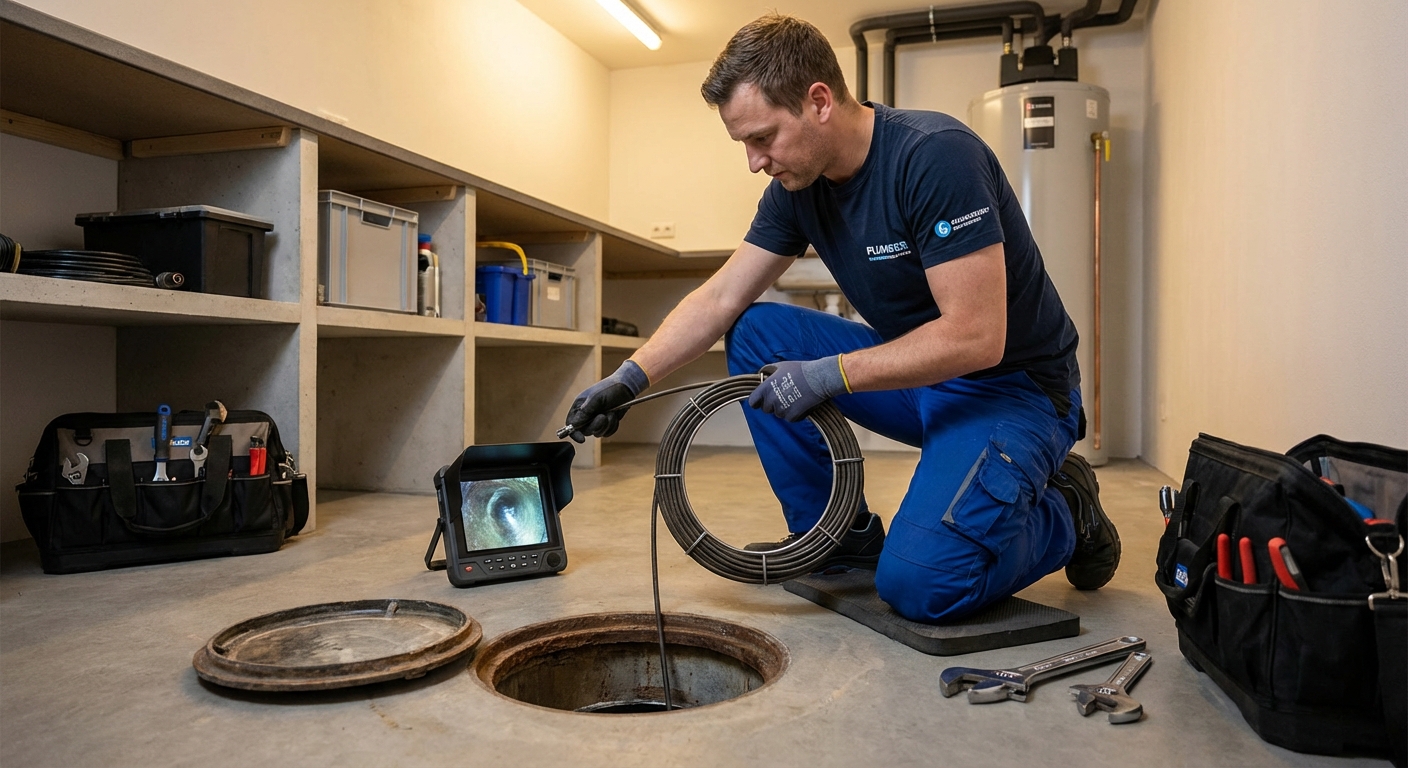
How a Plumbing Camera Inspection Works
A plumbing camera inspection, also called a sewer scope inspection or video pipe inspection, is one of the most powerful diagnostic tools a plumber has. Instead of guessing where a problem is or digging up your yard to find out, a technician feeds a small, waterproof camera mounted on a flexible cable directly into your pipes and sees exactly what's happening inside.
The Equipment
The core setup is straightforward but highly effective:
- Waterproof camera head with built-in LED lights that illuminate the pipe interior, even deep underground. Newer 2026 models offer 1080p to 4K resolution and HDR for sharper detail on cracks and roots.
- Flexible cable or rod that can extend hundreds of feet, navigating bends and turns throughout your plumbing system.
- Built-in sonde (transmitter) in the camera head so the plumber can pinpoint the camera's exact location from the surface using a handheld locator.
- Monitor or display unit that streams live video so the technician (and you) can see problems in real time.
- Recording and reporting capability. Most modern inspections are recorded, and many tools now auto-generate a digital report with snapshots and AI-tagged defects within minutes.
This equipment is non-invasive and works with virtually all pipe materials including PVC, cast iron, and clay.
The Step-by-Step Process
- Assessment. The plumber reviews your symptoms, inspects accessible areas, and selects the best entry point (usually a cleanout or drain opening).
- Camera insertion. The flexible cable is fed carefully into the pipe.
- Live monitoring. As the camera moves through the system, live footage streams to the monitor while the tech scans the pipe walls.
- Problem identification. Issues like cracks, roots, blockages, and corrosion are flagged as they appear on screen. Newer AI-equipped cameras can automatically box and label defects in real time.
- Report and recommendations. The plumber reviews findings with you, provides a written or digital report, and outlines next steps.
Most residential inspections take 1 to 2 hours, depending on pipe length and complexity.

Find Trusted & Licensed Plumbers in Ohio
Get matched with companies for your specific needs
When You Should Get a Plumbing Camera Inspection
Not every plumbing issue requires a camera inspection, but there are several situations where it's strongly recommended, and skipping it could cost you significantly more down the road.
Buying an Older Home
This is one of the most important uses of a sewer camera inspection. Standard home inspections do not include the underground sewer line, so cracked pipes, root intrusion, or deteriorating clay or cast iron piping can go undetected until after closing. A plumbing inspection paired with a sewer scope before closing can reveal problems that save you thousands in negotiating repairs or avoiding a money pit entirely.
Recurring Clogs or Sewer Backups
If you're dealing with slow drains in multiple fixtures, toilets that bubble, gurgling pipes, foul sewer odors, or wastewater backing up into sinks and tubs, something deeper may be going on. A video pipe inspection can pinpoint whether the cause is a stubborn clog, grease buildup, or a structural problem so your plumber can apply the right fix instead of running a snake repeatedly.
Tree Root Intrusion
Tree roots are naturally drawn to moisture, and older pipe joints are an easy target. A drain camera inspection confirms whether roots have entered your pipes and how extensive the intrusion is. If roots have already been cleared once but the problem keeps coming back, more frequent inspections are recommended to monitor regrowth. Learn more about sewer line repair options if roots are causing structural damage.
Pre-Repair Diagnosis
Before any major sewer line repair, a camera inspection gives the plumber a precise map of the problem, including its exact location, size, and severity. This prevents unnecessary excavation and ensures the repair is targeted rather than exploratory.
Routine Preventive Maintenance
Newer homes with PVC piping and no recurring issues usually don't need routine annual inspections. However, homes older than about 20 years, or those with clay or cast iron pipes and nearby mature trees, benefit from periodic camera checks every one to two years to catch small cracks, corrosion, or sediment buildup before they turn into emergencies.
What Plumbers Can See (And What They Can't)
What the Camera Detects
A pipe camera inspection service gives plumbers a clear view of several serious issues:
| Problem | What the Camera Reveals |
|---|---|
| Cracks & breaks | Hairline cracks, fractures, or fully collapsed pipe sections |
| Blockages | Grease buildup, hair, debris, foreign objects, partial clogs |
| Tree root intrusion | Roots growing through joints or cracks, restricting flow |
| Corrosion & rust | Deteriorating metal pipes with scaling or weakened walls |
| Pipe misalignment | Offset joints, sagging "bellied" sections, shifting due to soil movement |
| Joint deterioration | Failing seals or separated connections |
This level of detail is something leak detection services rely on to accurately diagnose hidden issues, and it's far more accurate than guesswork or symptom-based diagnosis alone. In 2026, the newest cameras pair high-resolution imaging with on-board AI that automatically detects, classifies, and timestamps defects as the inspection happens.
What the Camera Can't Detect
It's important to set realistic expectations. A camera can only see the interior of a pipe. It cannot detect:
- Leaks where water is escaping outward (external pipe leaks)
- Soil erosion or damage happening outside the pipe
- Pressurized water line failures (a separate leak detection service is better suited for that)
For comprehensive diagnosis, a plumber may pair a camera inspection with other testing methods.
Plumbing Camera Inspection Cost in 2026
Typical Price Ranges
| Inspection Type | 2026 Cost Range | Notes |
|---|---|---|
| Standard inspection (with cleanout) | $125 – $500 | Most common residential scenario |
| Without cleanout (toilet removal required) | $175 – $800 | Extra labor adds to cost |
| HD or AI-enabled camera inspection | $300 – $600 | Newer high-resolution systems |
| Specialty 360° / self-leveling cameras | $600 – $1,500+ | Used on complex or commercial lines |
| Add-on to home inspection | $100 – $250 | Often bundled during home purchase |
| DIY camera rental | $100 – $225/day | Not recommended for deep or complex lines |
Across 2026 cost guides, a standard residential sewer camera inspection typically lands between $125 and $500, with most homeowners budgeting $300 to $700 when factoring in travel, reporting, and slightly more complex jobs. Specialty equipment and difficult access can push totals to $1,000 or more.
What Affects the Price
- Pipe access. A dedicated cleanout makes insertion easier and keeps costs down.
- Pipe length and complexity. Longer runs and more bends take more time and equipment.
- Camera technology. HD, 4K, and AI-enabled cameras cost more per visit but produce more detailed findings.
- Location. Urban markets typically run 20 to 30% higher due to labor rates.
- Add-ons. Geo-locating the camera's position via sonde, GPS tagging, or a written report may add $50 to $150.
How It Saves You Money
The real value of a plumbing camera inspection is in what it prevents. Consider the cost comparison:
In 2026, sewer line repairs commonly run $150 to $3,800 for partial fixes, while a full residential sewer line replacement averages $2,000 to $10,000+, with trenchless methods priced at roughly $60 to $250 per linear foot. Catching a small crack or early root intrusion for a few hundred dollars can prevent a five-figure emergency excavation, foundation damage, or sewage backup later.
When paired with a drain cleaning service, a camera inspection ensures that cleaning is done right the first time, targeting the exact location and type of blockage rather than applying a generic solution.
Frequently Asked Questions
How long does a plumbing camera inspection take?
Most residential plumbing camera inspections take between one and two hours. The actual time depends on the length of the pipes being inspected, how many access points are needed, and how much complexity is involved. Longer runs or systems with many bends will take closer to the upper end of that range. Your plumber should be able to give you a rough time estimate before starting.
Is a sewer camera inspection worth it when buying a home?
Absolutely, especially for older homes. A standard home inspection won't examine the inside of the sewer lines, which means hidden problems like cracked pipes, root intrusion, or deteriorating materials could go undetected until after closing. A sewer scope inspection typically costs $100 to $250 as a home-purchase add-on in 2026 and can reveal issues that save you thousands in negotiating repairs.
Can a plumbing camera inspection detect all types of leaks?
No. A pipe camera inspection is limited to what can be seen inside the pipe. It's excellent for identifying internal blockages, cracks, root intrusion, and deterioration, but it cannot detect leaks where water is escaping outward through the pipe wall or joints. For supply line leaks or hidden water damage, a dedicated leak detection service using acoustic or thermal imaging tools is more appropriate.
How often should I get a sewer camera inspection?
There's no single universal schedule. Newer, problem-free homes typically don't need routine annual inspections, while homes older than about 20 years, or those with clay or cast iron pipes, may benefit from a check every one to two years. If you've had root intrusion cleared previously, annual inspections are recommended to monitor regrowth. Otherwise, schedule one whenever symptoms like backups, odors, or repeated slow drains appear.
What happens if the camera finds a serious problem?
If the inspection reveals a major issue like a collapsed pipe, severe root intrusion, or significant corrosion, your plumber will walk you through the repair options. Depending on the severity and location, solutions range from hydro-jetting and spot repairs to full sewer line replacement, which in 2026 commonly runs $2,000 to $10,000 or more. Having the recorded footage means you can get multiple quotes and make an informed decision without any pressure.