
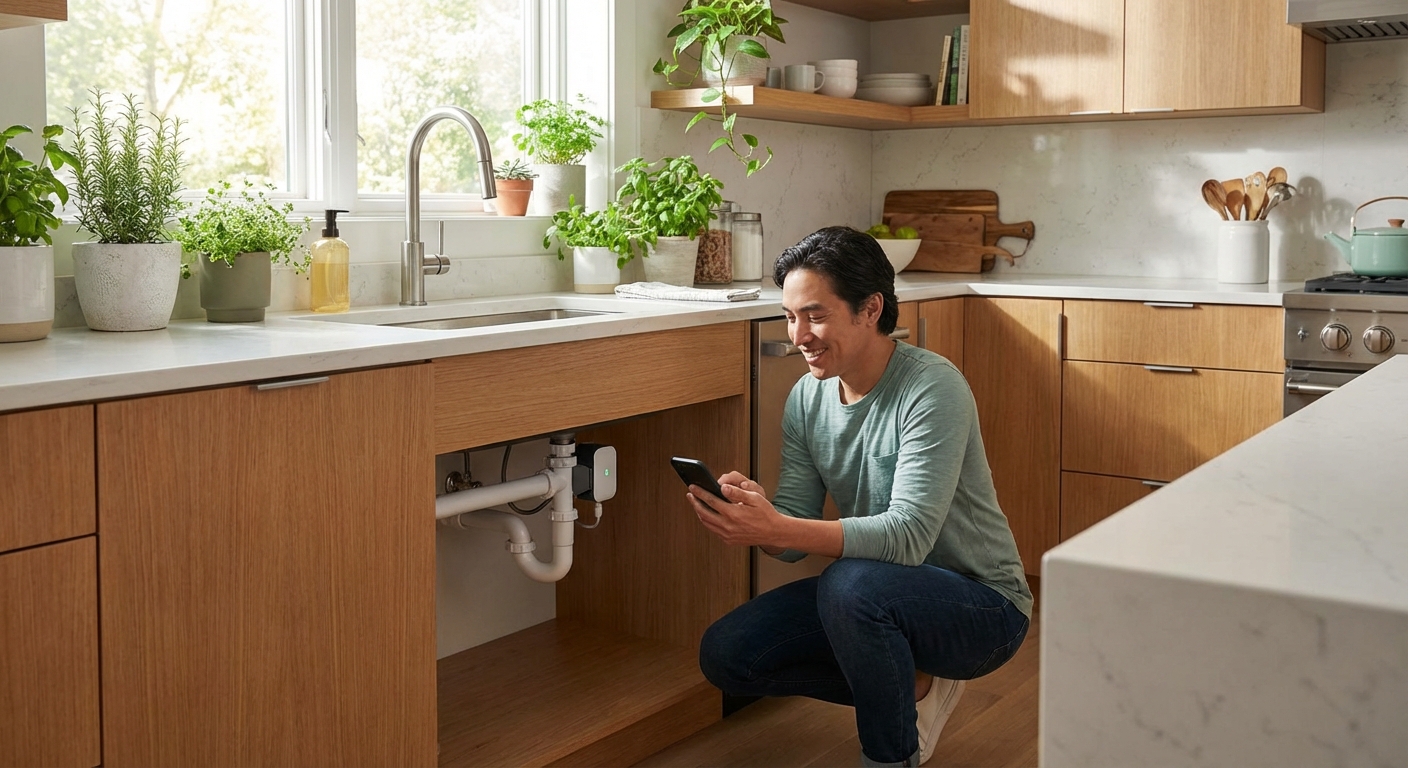
What Are Smart Plumbing Systems?
Smart plumbing systems are networks of internet-connected sensors, valves, monitors, and fixtures that work together to track water usage, detect leaks, automate controls, and optimize efficiency throughout your home. Unlike traditional plumbing that operates passively until something goes wrong, smart systems are proactive, constantly monitoring your water supply and alerting you to problems before they become expensive disasters.
At their core, these systems use a combination of electrochemical sensors, pressure monitors, flow meters, and AI-driven software to give homeowners a real-time picture of everything happening inside their pipes. They connect via Wi-Fi or smart home hubs to platforms like Amazon Alexa, Google Home, and Apple HomeKit, enabling voice commands, app controls, and automated responses that can work alongside your thermostat, security system, and other smart devices.
The appeal is straightforward: water damage is among the most common and costly homeowners insurance claims in the U.S. According to 2026 Insurance Information Institute data, the average payout per water-related property damage claim is roughly $13,954, with claim severity for water damage and freezing averaging around $15,400 per incident. Smart plumbing gives you the tools to stop problems at the source, often before you even know there's an issue. For homeowners already dealing with mysterious usage spikes, our high water bill troubleshooting guide pairs perfectly with these technologies.

Find Trusted & Licensed Plumbers in Ohio
Get matched with companies for your specific needs
Key Smart Plumbing Technologies in 2026
Smart Water Leak Detection Sensors
Leak detectors are the first line of defense in any smart plumbing setup. These small, affordable devices are placed near toilets, under sinks, beside washing machines, and next to water heaters. When moisture is detected, they instantly send an alert to your smartphone, sound a local alarm, and in more advanced setups, trigger an automatic shutoff.
Top products in 2026 include:
| Product | Key Features | 2026 Price | Best For |
|---|---|---|---|
| First Alert L1 Wi-Fi Detector | PCMag's "Best Overall" 2026, freeze detection | ~$60 to $65 | Best Overall |
| Moen Smart Water Leak Detector | TechHive top pick, fast alerts, temp & humidity | ~$50 to $60 | Moen Ecosystem |
| Govee Wi-Fi Water Leak Detector | Reviewed.com pick, loud alarm, multi-sensor kits | ~$40 to $80 | Multi-Sensor Setup |
| YoLink Starter Kit w/ Shutoff | Long-range LoRa, motorized valve included | ~$300 | DIY Auto-Shutoff |
| Aqara Water Leak Sensor T1 | Compact, HomeKit/Zigbee integration | ~$18 to $25 | Smart Home Users |
| Honeywell Home W1KS | Reliable, simple Wi-Fi setup | ~$50 | Ultra-Reliable |
Automatic Shut-Off Valves
Smart shut-off valves are installed on your main water supply line and can detect tiny anomalies before they become disasters. When a threat is identified, the valve closes automatically, even if you're on vacation hundreds of miles away. This single device can be the difference between a minor repair and a $50,000 flood restoration. Understanding how your main shut-off valve works is essential before installing any smart device.
The Flo by Moen Smart Water Shutoff (device around $500 to $800 depending on pipe size) and the Phyn Plus Smart Water Assistant + Shutoff (2nd Gen) at around $850 remain the gold standard in 2026. Both monitor pressure and flow continuously, perform daily automated system health checks, and provide detailed consumption analytics through their companion apps. Consumer Reports has named Flo by Moen the top-scoring professionally installed system, while Phyn Plus uses pressure wave analysis to detect leaks, frozen pipes, and abnormal usage patterns. A newer challenger, the Guardian by Elexa Leak Prevention System, clamps onto existing shutoff valves and is a top Consumer Reports pick for retrofits where cutting into the main line isn't practical.
If you suspect a hidden leak is already present before installing a smart system, our guide to professional leak detection explains how plumbers find water leaks inside walls and floors.
Smart Water Monitors & Flow Sensors
Whole-home water monitors attach to your main supply line and analyze flow rate, water pressure, and temperature patterns across every pipe in your house. They build a behavioral baseline over time and flag anything unusual, like water running at 3 a.m. when nobody is awake, as a potential problem. For renters or homeowners who cannot cut into the main line, the Flume 2 Smart Home Water Monitor ($200 to $250) straps to your external water meter and delivers whole-home analytics with no plumbing required. Devices like this help identify hidden leaks from a crack or loose fitting that would otherwise go unnoticed for months, which our water line leak detection guide explores in more detail.
Intelligent Irrigation Systems
Outdoor water use accounts for as much as 30% of total household consumption, and a large chunk of that is wasted through over-watering. Smart irrigation controllers change that by pulling data from local weather stations, soil sensors, and plant databases to water only when and where it's needed. According to the EPA, WaterSense-certified smart controllers save an average of 7,600 gallons per year compared with conventional timers, with CNET's multi-season testing showing about 28% less outdoor water use. Real-world savings can reach 40% to 50% on previously over-watered lawns.
Top performers in 2026:
For pro-grade installations, the Hunter Hydrawise HC series remains a top contractor choice, while Rain Bird ESP-TM2 Wi-Fi Ready controllers work well for existing Rain Bird ecosystems. Netro Sprite and Gardena Smart systems round out strong budget-to-mid-range options. All of these support weather-based scheduling and zone-level customization, the two features that drive the biggest water savings.
Benefits: What You Actually Gain
Real-Time Monitoring & Smartphone Alerts
Smart plumbing systems put a live dashboard of your entire water system in your pocket. You can see exactly how much water is being used, by which fixture, at any time of day. If your dishwasher develops a slow leak or a toilet runs continuously, you'll get a push notification immediately, not a surprise spike on your next water bill.
Automatic Emergency Shutoffs
Perhaps the most powerful benefit of smart plumbing is the ability to stop water damage before it spreads. A burst pipe left undetected for even a few hours can cause structural damage, destroy drywall, and create mold conditions that cost tens of thousands to remediate. An automatic shutoff valve stops the flow the moment an anomaly is detected. For homes in freeze-prone regions, pairing a shutoff valve with our winter plumbing tips can drastically cut burst-pipe risk.
Lower Utility Bills
Smart water heaters learn your household's schedule and heat water on demand rather than maintaining a constant temperature around the clock. Touchless plumbing fixtures, smart showerheads, and low-flow faucets reduce waste during temperature adjustment. Combined, these upgrades can meaningfully reduce both your water and energy bills month over month.
Water Damage Prevention & Insurance Discounts
Several major insurers now offer premium discounts for homes equipped with smart leak detection, recognizing that these devices dramatically reduce claim frequency and severity. Discounts commonly range from 5% to 15% in 2026, though a few carriers offer even higher credits for full flow-monitoring systems with automatic shutoff.
| Insurer | 2026 Program | Discount / Benefit |
|---|---|---|
| USAA | Connected Home | Up to 8% off (avg savings ~$133/year) |
| UPC / Tower Hill | Smart Home Water Protection | 5% sensor-only, 10% with shutoff, 15% flow-monitoring with shutoff |
| Nationwide | Smart Home discount | 10% on CA water perils, 5% all perils in WA, free LeakBot device |
| Chubb | High-value home program | Up to 8%, subsidized devices via Leak Defense, StreamLabs |
| Farmers | Smart Home Discount | 5% to 20% for qualifying devices |
| Amica | Water damage mitigation | Credit for all-in-one systems, Phyn/Moen partnerships |
| Travelers / Hippo / Liberty Mutual | Device-name programs | 5% to 13% for verified installations |
| State Farm (CA) | Mandatory in many ZIP codes | Required for renewal in higher-risk areas |
| Moen + Stand Insurance | 2026 direct partnership | Premium credits + limited water endorsement waivers |
Notification-only sensors generally qualify for the smaller discounts, while systems with automatic shutoff earn the largest credits. Always contact your insurer directly to confirm eligibility, required device brands, and any data-sharing requirements tied to discount programs.
Installation, Costs & Compatibility
What Installation Typically Involves
Most point-of-use sensors (under-sink leak detectors, toilet sensors) are completely DIY-friendly. You simply place them and connect them to your Wi-Fi network via a companion app. No plumbing experience is required.
Whole-home shutoff valves and flow monitors are a different story. These require cutting into your main supply line, which means:
- Shutting off water at the meter and draining lines
- Using pipe cutters, fittings, and adapters matched to your pipe material (copper, PEX, CPVC)
- Access to a nearby 100 to 240V AC outlet (GFCI recommended)
- A strong 2.4 GHz Wi-Fi signal near the installation point
- A licensed plumber in most jurisdictions
Real-world 2026 installation pricing for a Moen Flo or Phyn Plus with a sensor lands in the $900 to $2,500 range professionally installed, according to current cost analyses. Simple PEX installs run closer to $900 to $1,800, while copper mains typically fall between $1,000 and $2,200. Homes with old galvanized piping or difficult access can push totals to $2,500 to $3,500 or more. Regular preventive plumbing maintenance before installation can reduce surprises.
Typical Cost vs. Savings Overview (2026)
| Smart Device | Device Cost | Install Cost | Annual Savings Potential |
|---|---|---|---|
| Leak detection sensors | $18 to $80 | DIY | Prevents $1,000s in damage |
| Smart shut-off valve (Flo/Phyn) | $500 to $850 | $500 to $1,500+ | Prevents catastrophic loss |
| Whole-home flow monitor (Flume 2) | $200 to $250 | DIY | Identifies hidden waste |
| Smart irrigation controller | $100 to $240 | DIY to $300 | ~7,600 gallons/year saved |
| Smart water heater | $800 to $2,000 | $500 to $1,500 | 10% to 30% energy savings |
Compatibility with Existing Plumbing
Most smart plumbing devices are designed to retrofit onto existing plumbing systems. Compatibility depends primarily on pipe diameter (most devices support 3/4" to 1-1/4" pipes) and pipe material. Older homes with galvanized pipes may require additional adapters. For homes with pressure above 80 PSI, a pressure reducing valve should be installed first. If you're considering broader upgrades, our guide to common plumbing mistakes covers pitfalls to avoid.
For seasonal homeowners, smart plumbing is even more valuable. Our vacation home plumbing guide explains how remote monitoring protects properties that sit empty for months, and our plumbing emergency guide covers what to do when a leak alert comes through.
Frequently Asked Questions
Are smart plumbing systems worth the investment in 2026?
For most homeowners, yes. The combination of prevented water damage, reduced utility bills, and insurance discounts of 5% to 20% makes the ROI compelling, especially for larger homes, vacation properties, or older plumbing. Even a single avoided water damage event can more than pay for an entire smart plumbing setup, since the average water damage claim now runs about $13,954. Individual sensors start under $20, making it easy to start small and scale up.
Can smart plumbing work with my existing home automation system?
Most leading smart plumbing products are compatible with Amazon Alexa, Google Home, and Apple HomeKit, allowing them to integrate into your existing smart home ecosystem. Devices communicate via Wi-Fi, Zigbee, Thread, or LoRa protocols, with Matter compatibility expanding rapidly in 2026. Always verify platform compatibility before purchasing, since some products are exclusive to specific hubs (like Aqara sensors needing an Aqara hub for HomeKit).
How do smart shut-off valves detect a leak if they're on the main line?
Smart shutoff valves use highly sensitive pressure and flow sensors to establish a baseline of your home's normal water usage patterns. When a deviation occurs, such as a slow, continuous flow that doesn't match any known fixture, the system flags it as a potential leak and can automatically close the main valve. Phyn Plus uses pressure wave analysis, while Moen Flo runs daily micro-pressure tests on your supply lines to catch developing problems before they worsen.
Will my homeowners insurance actually give me a discount for smart leak detection?
Many insurers do offer discounts in 2026, but the details vary by provider, state, and device type. USAA's Connected Home program offers up to 8% off, UPC and Tower Hill offer 5% to 15% credits based on system type, and Farmers has been documented at 5% to 20% for qualifying smart tech. Some require you to share usage data from your devices as a condition of the discount, and California insurers like State Farm are increasingly requiring devices rather than just offering credits. Contact your insurer directly and ask specifically about water leak detection discount programs.
How hard is it to install a smart plumbing system in an older home?
Point-of-use sensors are easy to install in any home. Just place them and connect to Wi-Fi. Whole-home shutoff valves and flow monitors are more complex, requiring work on the main supply line and compliance with local plumbing codes. Most manufacturers and insurers now require professional installation for main-line devices, with typical all-in pricing of $900 to $2,500 in 2026. Older homes with galvanized piping may need additional adapters and can push costs to $3,000 or more, but retrofit-friendly systems like Guardian by Elexa can avoid pipe cutting entirely.