
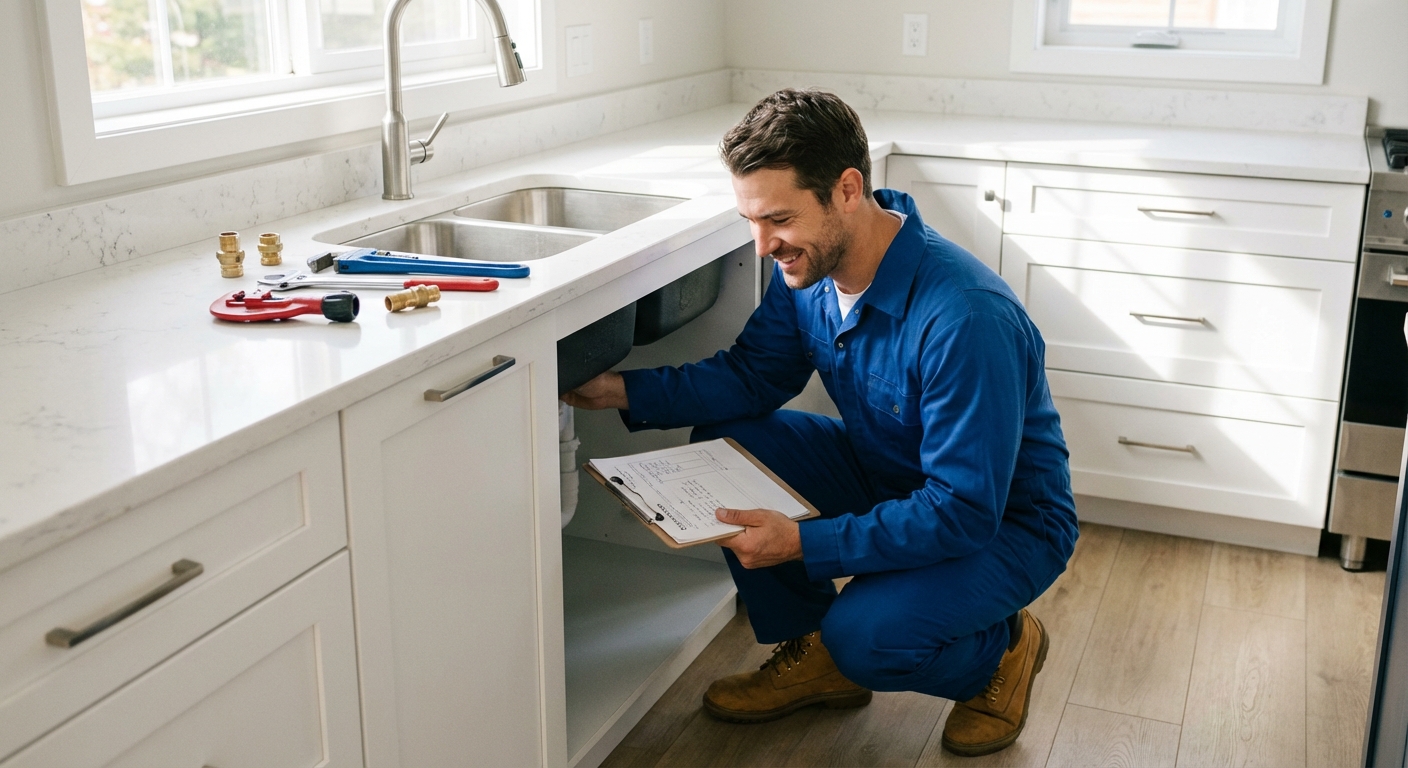
Plumbing Service Call Fees & Hourly Rates
Before any wrench is turned, most plumbing companies charge a service call fee, also called a trip charge or diagnostic fee. This covers the plumber's travel time, fuel, and the time spent assessing your situation. Multiple 2026 industry sources show that most residential plumbing companies charge a service call fee between $75 and $150, though rates can range from $50 to $200, with a national average near $100. Thumbtack still reports a wider range of $64 to $275 depending on the issue, and high-cost metro areas typically sit toward the top end.
If you proceed with the repair, many plumbers will apply the service call fee toward your final bill, and some roll it into the first 30 to 60 minutes of on-site work. Always confirm this upfront.
How Hourly Billing Works
For hourly-billed jobs, residential plumbing rates in 2026 typically range from $75 to $150 per hour, with most homeowners paying around $90 to $125 per hour. The broader national range still runs $45 to $200 per hour when you include apprentices on the low end and specialized master plumbers on the high end. The more experienced and licensed the plumber, the higher the rate:
| License Level | Typical 2026 Hourly Rate |
|---|---|
| Apprentice / Helper | $45 – $90/hr |
| Journeyman Plumber | $75 – $130/hr |
| Master Plumber | $100 – $200/hr |
| Emergency / After-Hours | $150 – $400/hr |
In high-cost urban markets like San Francisco, Los Angeles, Boston, or New York City, rates commonly exceed $150 per hour, with Yelp's May 2026 data showing typical billed rates as high as $148 per hour on average and reaching $230 per hour in dense metros. Rural and lower-cost areas often see rates closer to $75 to $90 per hour. Commercial plumbing typically starts at $100 per hour, while residential plumbing averages closer to $90 per hour.
Flat-Rate vs. Hourly Billing
One of the most common points of confusion for homeowners is whether a plumber will charge flat-rate or hourly. Here's when to expect each:
Most plumbers use flat-rate pricing for routine residential work and switch to hourly (or time-and-materials) for complex jobs like main line repairs or full repipes. You can learn more about plumber hourly rates including how license level and region affect what you pay, or compare both models in our flat rate vs hourly plumbing breakdown.

Find Trusted & Licensed Plumbers in Ohio
Get matched with companies for your specific needs
Plumbing Cost Breakdown by Repair Type
Understanding typical price ranges for common plumbing jobs arms you with the knowledge to spot fair pricing and avoid overpaying.
Common Residential Plumbing Costs (2026)
| Service | Typical 2026 Cost Range | Notes |
|---|---|---|
| Drain Cleaning (single fixture) | $100 – $350 | National average around $242 |
| Main Sewer Line Cleaning | $250 – $600 | Snaking; more if excavation needed |
| Hydro-Jetting | $300 – $900 | Best for grease and root intrusion |
| Leak Repair (accessible) | $150 – $450 | Faucet, supply line, or visible pipe |
| Leak Behind Wall | $500 – $1,200 | Includes drywall removal |
| Slab Leak Repair | $1,500 – $4,000+ | Detection costs additional $150–$400 |
| Faucet Replacement | $150 – $450 | Labor + basic fixture |
| Toilet Installation | $300 – $800 | Fixture price is separate |
| Sink Installation | $200 – $700 | Varies by sink type |
| Water Heater Replacement (tank) | $1,200 – $2,500 | 40–50 gal, gas or electric |
| Tankless Water Heater Install | $2,500 – $5,000+ | Higher upfront, longer lifespan |
| Emergency Call-Out Fee | $150 – $350 | Plus elevated hourly rate |
Fixture Installation
Fixture installation costs vary significantly by type and complexity. A standard faucet replacement runs $150 to $450 in labor, while a full toilet installation typically lands between $300 and $800 when you factor in the fixture, wax ring, and hardware. In high-cost markets like NYC or San Francisco, faucet repair alone can run $200 to $500.
Drain Cleaning
Simple drain clogs at a single fixture typically cost $100 to $300 in 2026, with the national average around $242 for standard snaking. If the main sewer line is involved, expect $250 to $600 with good access via a cleanout. Hydro-jetting, a high-pressure water cleaning method for severe blockages, generally costs $300 to $900 nationally and is far more effective for grease and root intrusion. For chronic or mysterious clogs, a plumbing camera inspection ($150 to $400) can pinpoint the source before you spend money on the wrong fix.
Emergency Plumbing
Emergency services carry a heavy premium. Expect a dispatch fee of $150 to $350 on top of elevated hourly rates that typically run $150 to $400. Weeknight evening rates typically add a 1.5× multiplier, weekends run 1.5× to 2×, and holidays can push rates 2× to 3× above standard pricing. A burst pipe, severe sewer backup, or major water heater failure are the types of issues that often require emergency plumber services. The good news: knowing what to do before the plumber arrives can reduce damage and potentially lower your repair bill. Learn those steps in our plumbing emergency guide.
Factors That Affect Your Plumbing Service Cost
Two homeowners can call for the same repair and receive very different quotes. Here's why:
1. Geographic Location
Labor rates and cost-of-living differences make location one of the biggest pricing variables. Urban markets in the Northeast and West Coast consistently show rates 30 to 50% higher than rural Midwest or Southern areas. For example, an emergency plumbing call in Seattle can run $415 to $2,250, while the same job in Indianapolis ranges from $250 to $1,275. Local licensing requirements and permit fees also add to regional differences.
2. Time of Day & Day of the Week
Scheduling a plumber outside of standard business hours triggers overtime premiums. Most companies charge 1.5 to 3× their standard rate for evenings, weekends, and holidays. Late-night calls (midnight to 6 a.m.) often carry a 2× multiplier, while holiday calls can push labor rates to $450 per hour or higher. If your issue can wait until morning, that patience alone could save $200 to $500 or more.
3. Job Complexity & Accessibility
A clogged bathroom drain that takes 30 minutes to snake is priced very differently than a slab leak repair that can run $1,500 to $4,000 and requires equipment, detection services, and concrete work. Jobs in tight crawl spaces, behind walls, or under a foundation require more labor hours and specialized tools, all of which drive up cost. Homes on slab foundations can add roughly 35% to whole-house repipe costs compared to crawlspace homes.
4. Materials & Parts
The type of materials needed significantly affects the total bill. PEX is typically about half the installed cost of copper, running roughly $3.50 to $7.00 per square foot installed versus $8.00 to $14.00 per square foot for copper. For major projects like whole-house repiping, this material choice alone is a multi-thousand-dollar decision: PEX whole-house repipes for a 1,500 to 2,500 sq ft home typically run $5,000 to $10,000, while copper runs $7,000 to $14,000. Fixture quality also ranges widely, from $100 entry-level to $6,000+ premium models.
5. Permits & Inspections
Many major plumbing jobs require a permit pulled from your local municipality. In 2026, plumbing permit costs typically range from $30 to $500, with most residential jobs clustering at $75 to $400. Water heater replacements often cost $75 to $250 in permit fees, sewer line work runs $150 to $400, and whole-house repipes are commonly $200 to $600. Some cities charge per fixture (Boston, for example, uses a $20 base plus $5 per fixture structure). A reputable plumber will include permit costs in their estimate or disclose them clearly.
How to Get a Fair Price & Spot Red Flags
Getting an accurate estimate, and knowing when you're being taken advantage of, is just as important as understanding the numbers themselves.
How to Get an Accurate Estimate
- Request an in-person inspection. A plumber cannot give you an accurate quote without seeing the problem firsthand.
- Demand an itemized written estimate. This should separate labor, materials, disposal fees, and any applicable permits.
- Ask about the service call fee upfront. Confirm whether it applies toward the final bill.
- Get multiple quotes. Especially for jobs over $300. This helps you understand your local market rate.
- Ask whether pricing is flat-rate or hourly. Know which model applies before work begins.
For a deeper walkthrough on comparing bids and reading line items, see our guide on how to get an accurate plumbing estimate or our plumbing quote vs estimate comparison. If you're evaluating a contractor, our guide on how to choose a plumber covers licensing verification and modern scam prevention. For jobs you're considering doing yourself, it's worth knowing which essential plumbing tools you'd need. A well-stocked kit costing $160 to $250 can handle minor repairs without calling a plumber at all.
Red Flags to Watch For
Other warning signs to watch for in 2026 include diagnostic fees above $150 that aren't credited toward the repair, parts marked up 300 to 400% above retail (a $180 fixture quoted at $600, for example), and quotes that triple after the technician arrives on site. Bait-and-switch schemes that upsell simple drain jobs into $4,000 to $15,000 "sewer emergencies" have become increasingly common. If you're hiring same-day plumber service, always verify reviews across multiple platforms before hiring under pressure.
Budgeting for Plumbing Services
Financial experts recommend setting aside 1 to 2% of your home's value annually for all maintenance and repairs, plumbing included. For a $400,000 home, that's $4,000 to $8,000 per year across all systems. For plumbing specifically, keeping a $500 to $1,500 emergency fund is a smart baseline since the average straightforward emergency repair now runs $300 to $700 nationally, with complex emergencies reaching $1,500 or more. If your home has older pipes or a history of issues, consider whether a plumbing service plan ($120 to $600 annually) or plumbing financing options make sense as financial backstops. Regular preventive plumbing maintenance is still the single best way to keep your annual plumbing spend low.
Frequently Asked Questions
What is a typical plumbing service call fee in 2026?
Most plumbing companies charge between $75 and $150 for a service call in 2026, with a national average near $100 and a broader range of $50 to $200. In high-cost metro areas, this fee can reach $275 or more, and some companies add extra trip charges for homes more than 10 miles away. Many plumbers will apply the service call fee toward your final repair bill if you proceed with the work, so always confirm this before booking.
How do I know if a plumbing quote is fair?
The best way to gauge fairness is to get 2 to 3 quotes for any job over $300 and compare them against national averages for your specific repair type. A fair quote will be itemized, separating labor, parts, and any fees like permits or disposal. If a plumber refuses to provide a written, itemized estimate, quotes one lump sum with no breakdown, or marks up parts 300%+ over retail, treat those as major red flags.
When should I expect flat-rate pricing vs. hourly billing?
Flat-rate pricing is most common for routine residential repairs like drain cleaning, faucet replacements, and toilet installations, and typically runs $100 to $400 per job. Hourly (or time-and-materials) billing is used for complex, unpredictable jobs such as main line repairs, full repiping, or diagnostic work where the scope isn't known upfront. Always clarify the billing model before a plumber starts work.
Are emergency plumbing rates significantly higher?
Yes, emergency and after-hours plumbing calls routinely cost 1.5 to 3 times the standard rate. On top of the elevated hourly rate ($150 to $400 per hour), most companies also charge a separate dispatch fee of $150 to $350. Holiday calls can push hourly rates to $450 or higher, so for non-urgent issues, waiting until the next business day can save you $300 to $800 or more on the same repair.
What plumbing jobs require a permit and how does that affect cost?
Major plumbing work, including water heater replacements, sewer line repairs, new fixture installations that require moving pipes, bathroom and kitchen remodels with relocated plumbing, and whole-house repiping, typically requires a permit from your local municipality. Permit costs range from $30 to $500 depending on your location and project scope, with water heater permits often $75 to $250 and repipe permits reaching $200 to $600. A licensed plumber should factor permit costs into their estimate; if they suggest skipping a required permit to save money, that's a serious red flag for both quality and legality.