
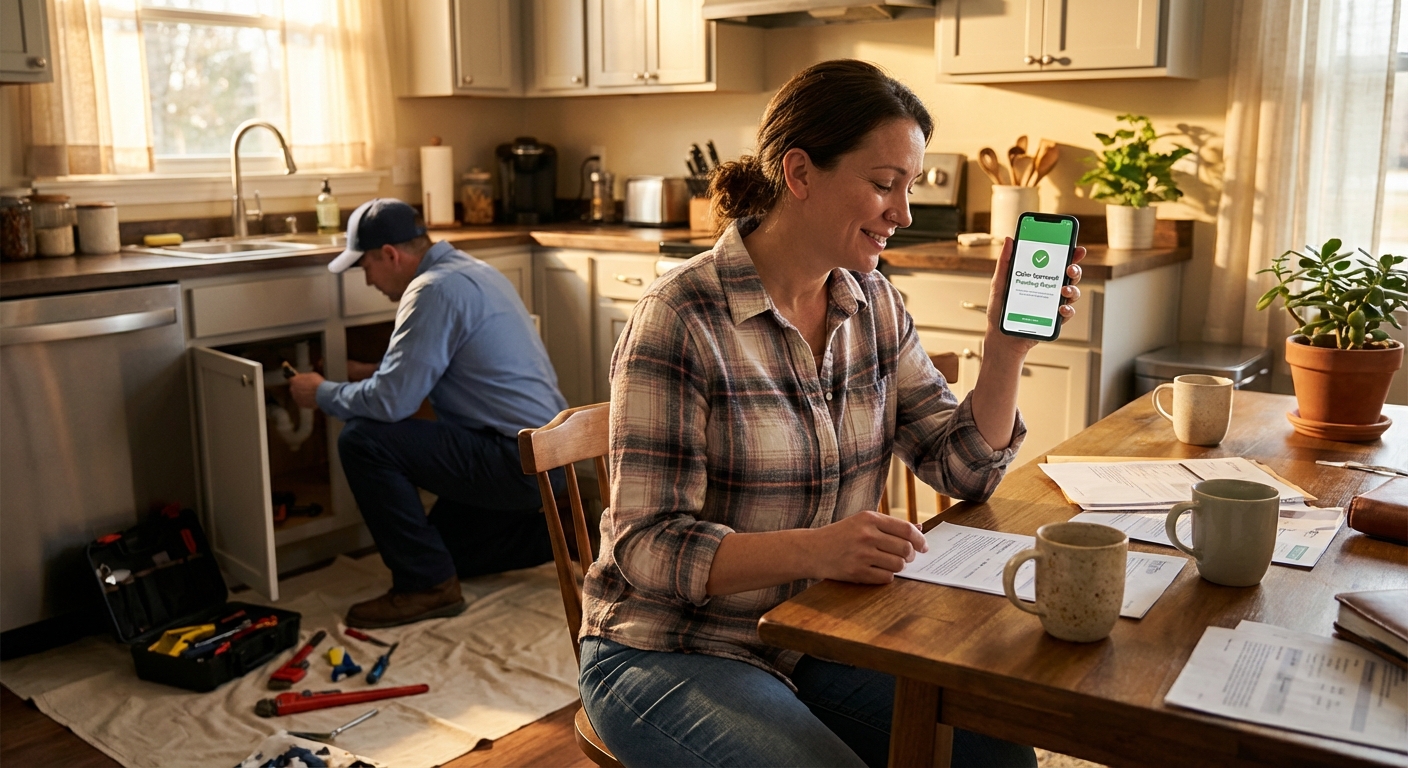
What Plumbing Does a Home Warranty Typically Cover?
Home warranties are designed to cover interior plumbing systems that fail due to normal wear and tear. Most standard 2026 plans cover interior water, drain, gas, waste, and vent lines that leak or break inside the covered home, stoppages that can be cleared with a standard sewer cable, gas and electric water heaters (including many tankless units), toilet tanks, bowls, and mechanisms, faucets and shower fixtures, valves and pressure regulators, permanently installed groundwater sump pumps, and garbage disposals. Some plans also cover instant hot water dispensers, circulating hot water pumps, and whirlpool bathtub motors and pumps.
| Covered Item | What's Included |
|---|---|
| Interior water/drain lines | Leaks, breaks, and pipe failures inside the home's foundation |
| Clogged drains & stoppages | Blockages cleared via standard sewer cable (typically within 100-125 feet) |
| Water heaters | Gas, electric, and many tankless unit repairs |
| Toilets | Tank mechanisms, bowl, wax ring seals, flanges |
| Faucets & valves | Repair or replacement due to wear |
| Garbage disposals | Motor and mechanical failures |
| Shower fixtures | Heads, arms, and valve assemblies |
| Sump pumps | Permanently installed units (groundwater-only) |
| Whirlpool/jetted tubs | Motors, pumps, and air switches |
Most plans also cover the cost of access, meaning cutting through unobstructed walls, ceilings, or floors to reach a covered pipe, and returning the opening to a rough finish rather than a full cosmetic repair. Access through concrete slabs, walls, or ceilings is usually capped, and American Home Shield pays up to $1,000 per plan agreement term toward accessing lines that require cutting through concrete. Coverage limits vary widely between providers. Many 2026 plans cap total plumbing payouts per year in the $500 to $5,000 range for all covered plumbing issues during a 12-month contract. A few higher-tier plans do not set a specific plumbing cap but impose a global annual limit (for example, up to $50,000 total across all repairs in 12 months).
For a deeper look at how plumbing warranties are structured, read our full guide on plumbing warranty coverage options.

Find Trusted & Licensed Plumbers in Ohio
Get matched with companies for your specific needs
Common Home Warranty Plumbing Exclusions
Understanding what is not covered is just as important as knowing what is. Recent 2026 industry surveys show that plumbing claims are most often denied for pre-existing conditions, items not covered by the plan, lack of maintenance, repair costs exceeding coverage caps, and improper installation or code violations.
Pre-Existing Conditions
Any plumbing issue that existed before your policy started, such as corroded pipes, slow leaks, or known clogs, will typically not be covered. Among denied claims in 2026 industry surveys, the most common reasons were pre-existing conditions and items not covered under the plan, each cited by nearly 29% of respondents. Older homes may benefit from researching providers that cover undetectable pre-existing conditions.
Lack of Maintenance
Damage resulting from neglect is a frequent denial trigger. Other reasons for denial included repair costs exceeding coverage limits (20%) and items disqualified due to lack of maintenance (13%). Frozen pipes from an uninsulated crawl space, scale buildup in a water heater that was never flushed, or leaks caused by ignored warning signs can all be denied on the grounds of poor upkeep. Following a preventive plumbing maintenance routine and keeping records is one of the best ways to protect your claim eligibility.
Improper Installation & Code Violations
If your plumbing was installed incorrectly or without proper permits, the warranty company can decline the claim. This includes DIY repairs and unpermitted work done by previous owners. Warranties also typically pay to fix the failing component but not the cost of bringing systems up to current code, such as adding new shutoff valves or backflow prevention.
Exterior & Underground Lines
Root intrusion in drain and sewer lines is typically excluded, and stoppages caused by collapsed, damaged, or broken drain, vent, or sewer lines outside the home's main foundation are not covered. Septic tanks, well pumps, water softeners, and water filtration systems are commonly excluded or only available as optional add-ons.
Other Common Exclusions
- Septic tanks and septic system components (add-on required)
- Water softeners and filtration systems
- Toilet seats, lids, and cosmetic items
- Secondary water damage to floors, walls, or ceilings (homeowners insurance covers this)
- Root intrusions and damage from tree roots
- Sewer line collapses or damage from shifting soil
- Bathtubs, shower enclosures, sinks, and base pans (fixtures themselves)
- Repair costs exceeding your plan's per-item or annual cap
Builder Warranty vs. Third-Party Home Warranty
If you own a newly built home, you likely received a builder's warranty at closing. Understanding how it differs from a third-party home warranty helps you avoid gaps in coverage, especially for plumbing.
Under the FTC's guidance on new-home warranties, coverage for HVAC, plumbing, and electrical systems is generally two years, while some builders provide up to 10 years for major structural defects. This is part of the industry-standard "1-2-10" structure: one year for workmanship and materials, two years for mechanical systems like plumbing, and up to ten years for major structural defects.
Some states extend or modify these terms. In Texas as of 2026, the standard structure is still one year workmanship/materials, two years mechanical systems (including plumbing/electrical/HVAC), and 6 to 10 years structural, though some builders have shortened structural coverage to 6 years under House Bill 2024. New Jersey codifies a 10-year scheme with defined year-1, year-2, and years-3–10 responsibilities. Third-party home warranties pick up where builder warranties leave off, covering breakdowns from age and regular use. Many new homeowners overlap both, relying on the builder warranty for early defects and then transitioning to a third-party plan for long-term wear-and-tear protection.
How to File a Plumbing Claim With Your Home Warranty
Filing a plumbing claim is straightforward if you follow the right steps:
- Identify the issue and confirm it appears caused by normal wear and tear, not an excluded cause like neglect or root damage.
- Review your contract for plumbing coverage caps and confirm your service fee. A home warranty costs $73 a month on average in 2026, but the price of a plan can range from as low as $28 to as high as $191 per month, according to NerdWallet's analysis. Service fees can add to the cost, averaging $108.45 per service call.
- Submit your claim online through the provider's portal, app, or 24/7 claim line. Describe the issue clearly and note when it started.
- Pay your service fee when the technician arrives, not upfront at filing.
- Meet the technician for diagnosis. Simple repairs may be completed same-day.
- Track your claim. If coverage is disputed, request a written explanation and escalate if necessary.
If you experience a burst pipe, shut off your main water supply immediately. Then contact your home warranty provider and your homeowners insurance company, since water damage to your home's structure is typically covered by insurance, not your warranty. Avoiding common plumbing mistakes like attempting unauthorized DIY repairs before the technician arrives is critical, since it can void your claim. For sudden failures, our plumbing emergency guide walks through what to do in the first 30 minutes.
Is Additional Plumbing Coverage Worth the Cost?
Most major home warranty companies sell add-on coverage for exterior sewer lines, septic systems, and well pumps. In 2026, septic add-ons typically run $4 to $15 per month, well pump add-ons $3 to $10 per month, and exterior sewer or utility line coverage is often bundled into higher-tier plans. Cinch Home Services, for example, offers septic system and pumping coverage as a low-cost add-on at just $4.58 per month. Some providers, like AFC Home Warranty, offer well pump and sump pump add-ons for $3.33 per month, with spa or septic system coverage at $5.83 per month. Are they worth it?
Repair Cost Reality Check (2026)
| Plumbing Issue | Average Repair Cost | Typical Warranty Coverage |
|---|---|---|
| Faucet repair | $150 – $350 | Fully covered (most plans) |
| Water heater repair | $225 – $600 | Fully covered (most plans) |
| Burst pipe repair | $400 – $2,000+ | Covered up to plan cap |
| Sewer line repair | $1,300 – $5,000+ | Interior covered; exterior requires add-on |
| Septic tank repair | $600 – $3,000+ | Add-on required ($4-$15/month) |
| Well pump replacement | ~$1,600 average | Add-on required; caps often $500-$2,000 |
HomeAdvisor reports the average cost to repair a burst pipe is $500, with most jobs ranging from $200 to $3,000. Jobs behind walls, underground, or under a slab can climb to $1,000 to $4,000, and full sections of repiping cost even more. For most homeowners, one major plumbing event per year typically makes the warranty pay for itself.
Add-on coverage is especially worth it if:
- Your home is more than 20 years old with original pipes
- You have a septic system or well
- Your home sits on a lot with large trees (root intrusion risk)
- You've had recurring plumbing issues in the past
If you're shopping for a home, a pre-purchase plumbing inspection can help you spot risks before closing, and knowing the plumbing red flags to watch for while touring can save you from buying into expensive problems. For older properties, understanding old house plumbing problems helps you decide which add-ons are essential.
Alternatives to Home Warranty Plumbing Coverage
If a full home warranty isn't the right fit, consider these options:
- Plumbing service plans offered by local plumbers or utilities. Learn whether a plumbing service plan is worth it for your situation.
- Sewer line warranties as standalone or add-on policies targeting blockages and pipe breaks, often with $7,000 to $10,000 annual caps
- Homeowners insurance riders which rarely cover wear-and-tear plumbing but may cover sudden bursts
- Manufacturer warranties which are free with new fixtures but expire quickly (usually 1-3 years)
- Financing options for large out-of-pocket repairs. See our guide to plumbing financing options for details.
Frequently Asked Questions
Does a home warranty cover plumbing leaks?
Yes, most home warranties cover interior plumbing leaks caused by normal wear and tear, including leaks in water supply lines, drain pipes, and waste lines inside your home's foundation. However, leaks caused by neglect, improper installation, or pre-existing conditions are typically excluded. Always review your specific policy's terms and any coverage caps, which in 2026 often range from $500 to $5,000 per year.
Does a home warranty cover sewer lines?
Standard home warranty plans usually cover interior sewer stoppages that can be cleared with a standard cable tool, typically within 100 to 125 feet of an access point. However, exterior sewer lines beyond your home's foundation, and clogs caused by tree roots, are almost always excluded from base plans. Many providers offer sewer line coverage as an add-on or as part of a higher-tier plan, which is highly recommended for older homes or properties with large trees nearby.
What emergency plumbing situations are covered by a home warranty?
Most home warranties cover plumbing emergencies such as burst interior pipes, sudden drain backups, and toilet overflows caused by mechanical failure. Coverage applies to leaks or breaks in interior water, waste, gas, and vent lines. Emergency situations involving exterior lines, root damage, or flooding caused by natural disasters are typically not covered. Always call your warranty provider before hiring an emergency plumber to ensure the repair will be authorized.
How long does a new home plumbing warranty last?
A builder's warranty on plumbing systems typically lasts one to two years from the date of closing, following the industry-standard 1-2-10 structure. During this period, construction defects in materials and workmanship are covered at no cost to you. Once the builder's warranty expires, you'll need a third-party home warranty to continue protecting your plumbing against wear-and-tear breakdowns. Purchase a third-party plan before your builder's warranty runs out to avoid coverage gaps.
Can a home warranty claim be denied for a plumbing issue?
Yes, in 2026, plumbing claims are commonly denied due to pre-existing conditions, lack of maintenance documentation, improper installation, code violations, or repair costs that exceed your plan's coverage cap. Recent industry surveys show pre-existing conditions and uncovered items each account for nearly 29% of denials, with another 20% denied for exceeding coverage limits and 13% for inadequate maintenance. To reduce the risk of denial, document all plumbing maintenance, take photos or video of issues when they occur, and always file your claim before authorizing any outside repairs.