
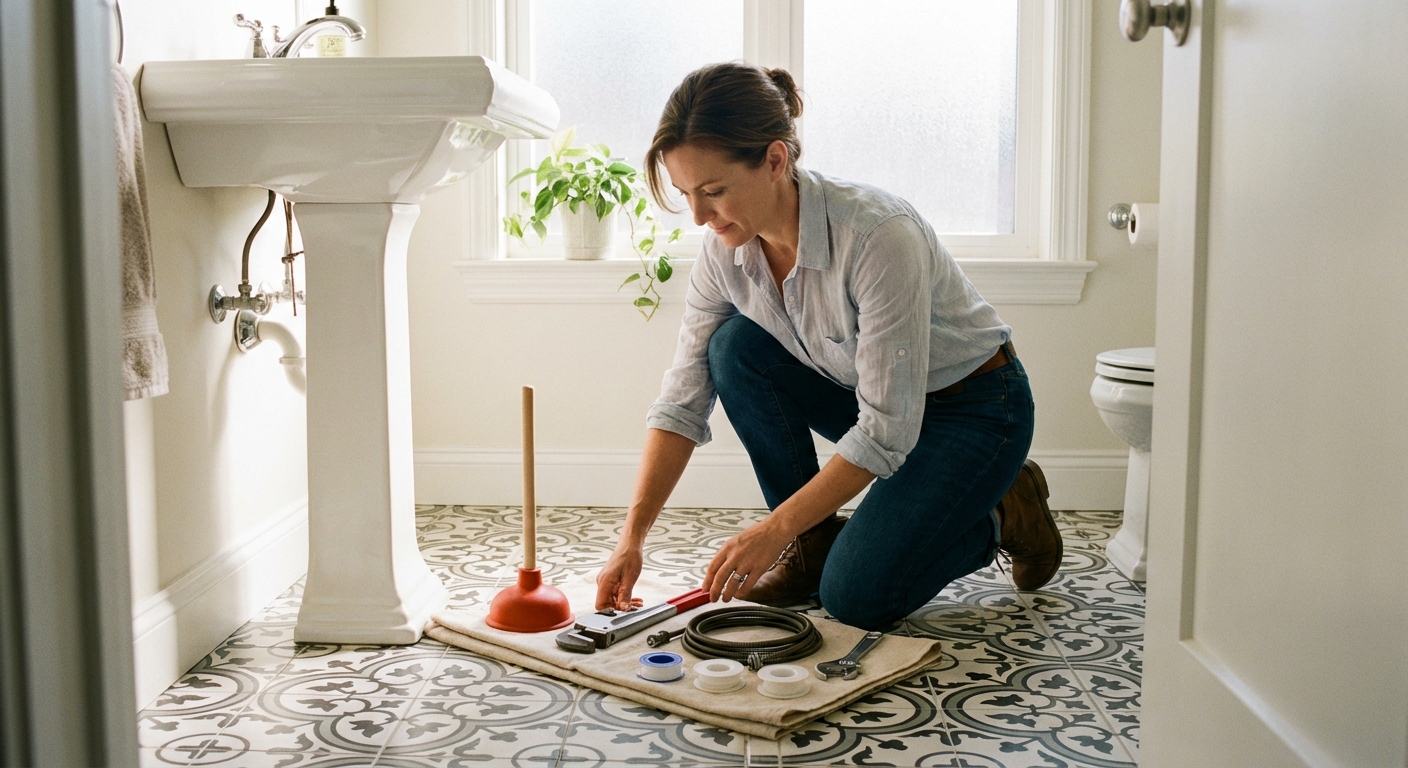
The 7 Essential Plumbing Tools Every Homeowner Needs
Owning the right basic plumbing tools can be the difference between a quick five-minute fix and a costly service call. With most residential plumbers charging $80 to $130 per hour in 2026, and emergency or after-hours calls often reaching $150 to $300 per hour, even small repairs add up fast. From a dripping faucet to a stubborn clogged drain, most everyday plumbing headaches are surprisingly manageable with just a handful of the right tools. Below is a breakdown of the seven must-have tools, what they do, and how to use them properly.
The Core 7: Tool-by-Tool Breakdown
| Tool | Primary Use | Average 2026 Cost |
|---|---|---|
| Plunger (flange/cup) | Clear drain & toilet clogs | $7 to $22 |
| Adjustable Wrench | Tighten/loosen nuts & supply lines | $15 to $30 |
| Pipe Wrench | Grip, turn & remove pipes | $15 to $65 |
| Plumber's Tape (PTFE) | Seal threaded pipe joints | $2 to $10 |
| Drain Auger / Snake | Break up deep-seated clogs | $20 to $50 |
| Basin Wrench | Reach faucet nuts behind sinks | $15 to $45 |
| Tubing / Pipe Cutter | Make clean cuts on copper or PVC | $25 to $40 |
Plunger
There are two types you should own: a cup plunger (flat bottom, best for sinks and tubs) and a flange plunger (extended rubber lip, designed specifically for toilets). To use one properly, submerge the rubber cup in water to ensure a tight seal, then pump firmly 10 to 15 times in a push-pull motion and release sharply. Repeat until the clog breaks free, then flush with hot water to confirm.
Adjustable Wrench
This is your go-to for tightening or loosening nuts, bolts, and supply line connections on sinks and toilets. Unlike a pipe wrench, its smooth jaws won't mar soft metal fittings. Always turn clockwise to tighten and counterclockwise to loosen, and never over-tighten, as that can crack fittings or strip threads. Overtightening fittings, bolts, or supply lines can crack seals, strip threads, and lead to future leaks, so use steady pressure rather than force.
Pipe Wrench
Designed with serrated, self-tightening jaws, the pipe wrench grips rounded pipes firmly. For best results, use two wrenches simultaneously, one to hold the pipe steady and one to turn the fitting. Pull toward the heel of the jaw for maximum grip. Keep the jaws clean to prevent slippage, and choose an aluminum model for lighter weight on longer jobs.
Plumber's Tape (PTFE / Teflon Tape)
This thin white tape wraps around the threaded end of pipe fittings to create a watertight seal and prevent leaks. Start the tape on the second thread from the end of the pipe and hold it still, then wrap in the same direction the pipe will turn, pulling it tightly. For most water lines, use 2 to 3 wraps for thicker tape and 4 to 5 for thinner options, keeping the tape taut so it seats fully into the threads. Each wrap should overlap the previous one by about half the tape width. Avoid covering the very first thread, and never use PTFE tape on compression fittings, as it's not designed for that application. Use yellow tape for gas lines and white tape for water lines.
Drain Auger / Snake
When a plunger won't cut it, a hand drain auger (also called a plumber's snake) is your next line of defense. Insert the coiled cable end into the drain opening, then crank the handle clockwise while pushing forward to advance through bends. When you feel resistance, you've found the clog. Rotate to hook and pull the debris back out. Run water to flush the line before fully retracting the cable to avoid splashing. A snake is also a much safer alternative to chemical drain cleaners, which can damage pipes and create toxic fumes.
Basin Wrench
This oddly shaped tool with its long handle and rotating jaw is specifically designed to reach into the tight space beneath a sink to tighten or loosen the mounting nuts that hold faucets in place. Without it, faucet replacement is nearly impossible without removing the entire cabinet. It's not a daily-use tool, but the one time you need it, nothing else will do.
Tubing Cutter / Pipe Cutter
For cutting copper, PVC, or aluminum pipe cleanly and squarely, a tube cutter beats a hacksaw every time. Clamp the tool around the pipe at your cut mark, then rotate it around the pipe while tightening the blade slightly after each rotation. A clean square cut ensures fittings seat properly, preventing future leaks.

Find Trusted & Licensed Plumbers in Ohio
Get matched with companies for your specific needs
DIY vs. Professional: Know the Difference
Knowing when to use your tools, and when to put them down and pick up the phone, can save you from turning a small problem into an expensive disaster. For a deeper look at this trade-off, our guide on plumber vs handyman breaks down who handles what.
Repairs You Can Safely DIY
The most common safe DIY plumbing repairs are fixing a dripping faucet, unclogging a drain, repairing a running toilet, and replacing a showerhead. Plunging a toilet, swapping a showerhead, or replacing a flapper are fine if you shut the water off first, and these tasks are well within reach with basic tools.
Before tackling anything bigger, it's worth reviewing the most common plumbing mistakes so you don't accidentally turn a $20 repair into a $2,000 disaster. Knowing how to choose the right plumber matters just as much when the job outgrows your toolkit.
When Specialized Tools Mean Calling a Pro
Professionals carry equipment that most homeowners have no need (or budget) to own outright. These include pipe inspection cameras that travel inside drains to locate hidden breaks and blockages, electronic leak detectors and infrared thermal cameras that find concealed moisture behind walls without demolition, and moisture meters that map water intrusion in flooring. When your problem involves hidden leaks, low water pressure throughout the home, sewer line backups, or gas line proximity, those tools aren't optional, they're essential for safe diagnosis. Our emergency plumbing kit guide explains what to keep on hand for the moments before a pro arrives.
Recommended Brands & Where to Buy
You don't need to spend a fortune on professional-grade tools for home use. Here's how homeowner-friendly brands stack up in 2026:
Homeowner-Grade vs. Professional-Grade
A 2026 pro-tool survey found that RIDGID and Milwaukee clearly dominate plumber voting, with RIDGID slightly ahead in overall votes and Milwaukee close behind. RIDGID is strongly associated with pipe wrenches, pipe cutters, and drain equipment, while Milwaukee is the leader in cordless plumbing tools like M12 pipe cutters, press tools, and inspection cameras. For occasional homeowner use, Husky and Crescent remain strong budget picks that deliver reliable performance under $50 per tool.
Brand Quick-Reference Guide (2026)
| Tool | Budget Pick | Mid-Range Pick | Where to Buy |
|---|---|---|---|
| Plunger | HDX Bellows (~$7) | Korky Beehive Max (~$16) | Home Depot, Amazon |
| Pipe Wrench | HORUSDY aluminum set | RIDGID 14-inch | Home Depot, Amazon |
| Adjustable Wrench | Husky 10-inch | Crescent / Milwaukee | Lowe's, Home Depot |
| Drain Snake | 25 ft handheld ($20 to $40) | RIDGID K-3 | Amazon, Home Depot |
| Basin Wrench | Husky telescoping | RIDGID | Home Depot, Amazon |
| Plumber's Tape | Generic PTFE (3-pack) | Oatey | Walmart, Amazon |
| Tubing Cutter | Thinkwork | RIDGID RC-2375 | Amazon, Home Depot |
Build Your Starter Plumbing Kit on a Budget
You don't need to buy everything at once. Build your kit in stages based on the repairs you're most likely to face. For a deeper, repair-ready setup, see our emergency plumbing kit essentials.
Phase 1: Start Here ($55 to $90)
These four items cover the vast majority of plumbing emergencies:
- ✅ Flange plunger + cup plunger combo
- ✅ Adjustable wrench (8 to 10 inch)
- ✅ 3-pack PTFE plumber's tape
- ✅ Hand drain auger / snake
Phase 2: Expand Your Kit ($90 to $160 total)
Once you've tackled basic clogs and drips, add:
- ✅ Pipe wrench (14-inch adjustable)
- ✅ Basin wrench
- ✅ Channel-lock pliers (tongue-and-groove)
- ✅ Flathead and Phillips screwdrivers
Phase 3: Full Starter Kit ($160 to $250 total)
For homeowners who want to handle more advanced repairs:
- ✅ Tubing/pipe cutter
- ✅ Needle-nose pliers
- ✅ Bucket and shop towels
- ✅ Hex key (Allen wrench) set
- ✅ Plumber's putty
Total estimated cost for a complete Phase 3 starter kit: $160 to $250, depending on brand choices.
By comparison, hiring a plumber in 2026 costs an average of $315 to $340 for a typical job, and most residential plumbers charge $80 to $130 per hour, with a service call fee tacked on before any work begins. For a deeper breakdown, see our plumbing service cost guide. Your entire toolkit often pays for itself after just one DIY repair. Pairing your toolkit with preventive plumbing maintenance is the single best way to avoid emergencies altogether, and following an annual maintenance checklist keeps small issues from turning into big ones.
Frequently Asked Questions
What is the single most important plumbing tool a homeowner should own?
A flange plunger is the single most valuable tool for any homeowner. Clogged toilets and slow drains are the most common household plumbing issues, and a quality flange plunger resolves the majority of them in minutes. It costs as little as $7 in 2026, requires no skill to use effectively, and eliminates the need for a service call on the most frequent plumbing problem homeowners face.
Can I use the same plunger for sinks and toilets?
Technically you can, but it's not recommended for hygiene reasons, and the wrong type won't work as effectively. A cup plunger (flat bottom) works best on sinks, tubs, and showers, while a flange plunger (with an extended rubber flap) creates the proper seal inside a toilet bowl. Owning both types costs under $20 as a combo pack and is the right approach.
How many layers of plumber's tape should I use on a pipe joint?
For most water line connections, 2 to 3 wraps of thicker PTFE tape or 4 to 5 wraps of thinner tape applied in the direction the fitting will tighten (usually clockwise) is the standard recommendation. Overlap each wrap by about half the tape width, and start on the second thread from the end. Wrapping in the wrong direction or overwrapping can cause leaks or make fittings hard to engage, so keep tension light and steady.
What's the difference between a drain snake and a drain auger?
The terms are often used interchangeably, but technically a hand auger (also called a plumber's snake) is a smaller, manually operated cable tool ideal for sink and tub drains. A full-sized drain auger is a larger, often motorized version used for toilet drains and deeper main line clogs. For most homeowners, a compact hand auger handles 90% of situations and costs $20 to $40 in 2026.
Is it worth buying cheap plumbing tools, or should I invest in quality?
For most homeowners, mid-range tools (brands like Husky, Korky, Crescent, or HORUSDY) offer the best value. They're durable enough for occasional use without the professional-grade price tag. However, don't cheap out on plumber's tape or washers, as low-quality sealing materials fail quickly and can cause leaks. Invest in a RIDGID pipe wrench if you expect real pipe work, since it will last decades, and save on consumables by buying multi-packs.
Do I need a permit for basic plumbing repairs I do myself?
Most minor like-for-like repairs (fixing leaks, replacing a faucet or showerhead, clearing clogs, repairing a toilet flapper) do not require a permit anywhere in the U.S. However, new fixture installations, fixture relocations, water heater replacements, and any gas line work almost always require a permit and inspection. When in doubt, call your local building department or hire a licensed plumber to keep the work code-compliant.