
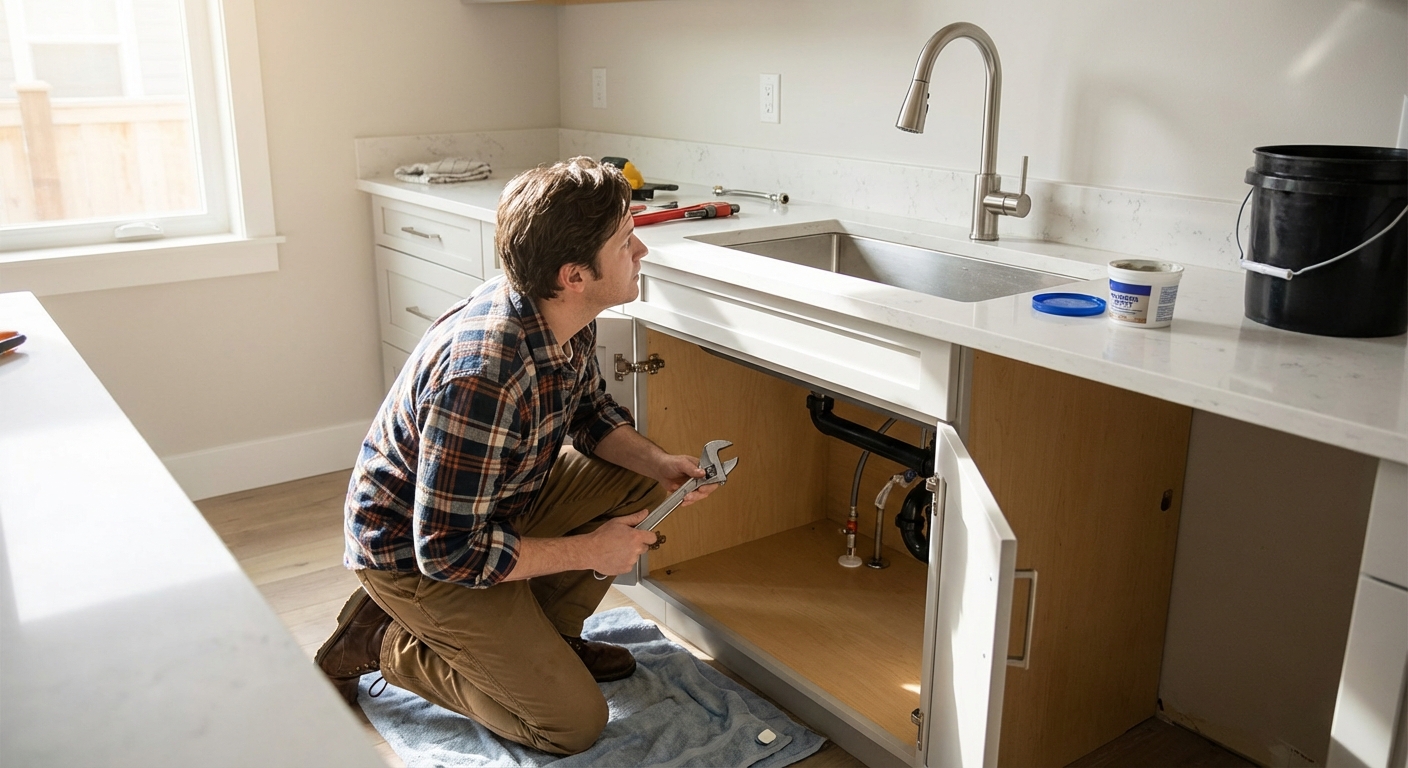
Cost by Location: Kitchen, Bathroom & Beyond
Not all faucet replacements are created equal. Where your faucet lives in your home has a significant impact on both material and labor costs. Kitchen faucets tend to cost more due to their complexity, while outdoor faucets are simpler but often overlooked. Here's a breakdown of what you can expect to pay in 2026 across every location.
| Faucet Location | Materials | Labor | Total Estimated Cost |
|---|---|---|---|
| Kitchen | $70–$900 | $260–$480 | $262–$900+ |
| Bathroom Sink | $50–$400 | $130–$350 | $511–$717 (avg.) |
| Bathtub | $100–$400 | $200–$500 | $600–$900 |
| Outdoor/Hose Bib | $10–$40 | $150–$400 | $190–$415 |
Kitchen faucets remain the most expensive to replace in 2026. Features like pull-down sprayers, touch activation, and multiple spray modes drive up material costs, while the complexity of under-sink connections raises labor fees. According to current industry data, most homeowners pay an average of around $262, with the typical range landing between $162 and $364 for a standard professional install. Premium smart faucets with complex plumbing modifications can push that figure past $800.
Bathroom sink faucets are generally straightforward, but 2026 cost calculators show the basic cost to replace a bathroom faucet now ranges from $511 to $717 per faucet under normal conditions. A basic single-handle swap can still come in lower if you provide your own faucet, while designer or touchless models can push totals well past $800. Learn more about related shower valve replacement costs if your bathroom needs a full plumbing refresh.
Bathtub faucets fall in the middle of the range. Because they're often tied to a valve system behind the wall, even a simple spout replacement can turn into a bigger job that requires drywall or tile work. Check out our guide on shower cartridge replacement, a repair that's commonly needed at the same time.
Outdoor faucets (hose bibs) are the most budget-friendly. National 2026 averages put hose bib replacement at around $360, with most homeowners spending between $190 and $415. Materials themselves are typically just $10 to $40, meaning labor accounts for the lion's share of the bill. Frost-free and anti-siphon models cost slightly more but are worth the upgrade in colder climates.

Find Trusted & Licensed Plumbers in Ohio
Get matched with companies for your specific needs
Labor vs. Materials: Where Your Money Actually Goes
Understanding the split between labor and materials helps you identify where you can trim costs, and where cutting corners could cost you more in the long run.
Labor Costs
In 2026, standard residential plumbers typically charge $75 to $150 per hour, with apprentices billing as little as $45 and master plumbers commanding up to $200 per hour. Most straightforward faucet swaps take between 30 minutes and 2 hours, depending on accessibility and whether any plumbing modifications are needed.
- Bathroom faucet labor: $130–$350
- Kitchen faucet labor: $260–$480
- Old faucet removal: Add $30–$100
- Plumbing modifications: $2.50–$15 per linear foot of new pipe
If a plumber discovers corroded shutoff valves or outdated supply lines during the job, those extras can add $50–$200 to your final bill. That's why many homeowners bundle faucet replacement with other nearby plumbing fixes. For larger jobs, understanding emergency plumber costs can help you plan for unexpected scenarios.
Material Costs
Faucet prices span a wide range based on brand, finish, and features:
| Faucet Tier | Price Range | Examples |
|---|---|---|
| Budget | $40–$150 | Plastic body, basic chrome finish |
| Mid-Range | $150–$350 | Pull-down/pull-out, brushed nickel |
| Premium | $350–$900 | Delta, Moen, Kohler with tech features |
| Luxury | $900+ | Designer brass, touchless, smart controls |
Don't forget to factor in accessories: a matching soap dispenser adds $75–$150, deck plates run $15–$75, and new supply lines or shutoff valves can add another $30–$100 to materials.
What Factors Affect Your Total Cost?
Several variables can push your faucet replacement cost up, or keep it down. Understanding these before you call a plumber puts you in a stronger negotiating position.
Key Cost Factors
Faucet type & configuration: Switching from a centerset (4-inch) to a widespread (8-inch) setup typically adds $200–$400 in modification costs. Staying with the same hole configuration keeps things simple and affordable.
Plumbing compatibility: If your new faucet doesn't match existing supply lines, valves, or pipe diameters, modifications are needed. This is especially common in homes older than 20–30 years. A plumbing inspection before replacement can prevent costly surprises.
Finish and materials: Solid brass bodies outperform plastic significantly in longevity, but they cost more. Specialty finishes like oil-rubbed bronze or matte gold add $200–$500 over standard chrome.
Geographic location: Labor rates in major metro areas run 20–50% higher than rural areas. In cities like New York, San Francisco, or Chicago, a $250 plumbing bill elsewhere may easily double.
Permits: Large-scale plumbing changes may require a permit costing $100–$250. A simple like-for-like faucet swap rarely requires one.
DIY vs. Professional Faucet Installation
This is where many homeowners try to save money, and sometimes succeed. The key is knowing which jobs are safe to DIY and which ones need a licensed plumber.
Which Option Is Right for You?
DIY is a great option if you're replacing a standard kitchen or bathroom faucet in a home with accessible shutoff valves and standard plumbing. The job takes 60–120 minutes with a wrench, pliers, and a basin wrench. You'll save $150–$450 in labor.
Hire a plumber if your home is older, the existing shutoff valves are stuck or corroded, or you're switching faucet types that require new hole drilling or pipe modifications. Mistakes from DIY on tricky jobs often cost more to fix than a plumber would have charged. Knowing how to fix low water pressure beforehand can also help you identify if the faucet is really the issue.
Smart Upgrades to Make During Replacement
Whether you're DIYing or hiring out, faucet replacement day is the ideal time to upgrade nearby components:
- Supply lines: Replace old braided or rubber lines with stainless steel braided lines ($10–$25 each) to prevent future bursting
- Shutoff valves: Swap worn gate valves for quarter-turn ball valves for fast, reliable water control
- Aerators: Add a 1.5 GPM low-flow aerator to cut water use by 30% or more, and check for local utility rebates
- Drain assembly: Match the new faucet's finish for a polished look and fresh seal
- Soap dispensers: A great add-on while the area is already open and accessible
Related: If you're doing bathroom work, review our bathtub drain repair guide for bundling repairs that save on labor.
How to Choose a Quality Faucet That Lasts
Buying a cheap faucet to save upfront often means replacing it again in 3–5 years. Investing in a quality fixture can last 15–20 years with minimal maintenance.
Top Faucet Brands for Durability in 2026
| Brand | Key Feature | Warranty |
|---|---|---|
| Moen | LifeShine & Spot Resist finishes, WaterSense certified | Limited Lifetime |
| Delta | Diamond Seal cartridge (2x industry lifecycle) | Limited Lifetime |
| Kohler | MasterClean sprayface, corrosion-resistant finish | Limited Lifetime |
| Grohe | StarLight chrome, EcoJoy water-saving tech | Limited Lifetime |
| Hansgrohe | German engineering, premium build quality | Limited Lifetime |
| Pfister | Pforever Seal, great mid-range value | Pforever (Lifetime) |
| American Standard | Reliable classics, wide availability | Lifetime on brass |
| Brizo | Delta's luxury line with designer finishes | Limited Lifetime |
Features That Add Longevity
- Solid brass body: Resists corrosion far better than zinc or plastic internals, the single most important durability factor
- WaterSense certification: WaterSense-labeled bathroom faucets are about 30% more efficient than standard models and may qualify for utility rebates
- Ceramic disc cartridges: Outlast rubber washers by decades and virtually eliminate drips
- Corrosion-resistant finishes: Look for Spot Resist (Moen), StarLight (Grohe), or PVD-coated finishes to keep the faucet looking new
- Lifetime warranty: Only offered when the brand is confident in their product's longevity, so always prioritize it
If you're doing a larger kitchen overhaul, also review kitchen sink installation costs to understand the full scope of what a sink upgrade might involve alongside your new faucet.
Frequently Asked Questions
How much does it cost to replace a kitchen faucet in 2026?
The average kitchen faucet replacement in 2026 costs around $262, with most jobs falling between $162 and $364 including labor. Materials alone range from $70 for a basic model to over $900 for a premium smart faucet, while professional labor typically adds $260 to $480. DIY installation saves most of the labor cost if your setup is straightforward.
What is the average labor cost for a plumber to install a faucet?
In 2026, plumbers charge $75 to $150 per hour for standard residential work, with master plumbers billing up to $200 per hour. Total labor for a faucet install typically lands between $130 and $480 depending on faucet type and complexity. Old faucet removal adds another $30 to $100, and corroded shutoff valves can tack on another $50 to $200.
Is it worth hiring a plumber to replace a faucet, or can I DIY?
For modern homes with accessible plumbing and a like-for-like faucet swap, DIY is a perfectly viable option that can save $150 to $450 in labor. However, if your home is older, your shutoff valves are corroded, or you need to change the faucet hole configuration, a licensed plumber is the safer choice. Botched DIY installs can result in leaks or water damage that cost far more than a plumber's fee.
How long does faucet installation take?
A straightforward faucet replacement typically takes 30 minutes to 2 hours for a professional plumber. DIY installations may take longer, especially for first-timers working in tight cabinet spaces. Jobs that require plumbing modifications, new hole drilling, or valve replacements can extend the timeline to half a day.
What should I look for when buying a replacement faucet?
Prioritize a solid brass body, ceramic disc cartridge, and a corrosion-resistant finish like PVD or spot-resist coating. Choose a reputable brand such as Moen, Delta, Kohler, Grohe, or Hansgrohe, and look for a limited lifetime warranty as a sign of quality. WaterSense certification is also valuable, since it cuts water use by about 30% and may qualify for $15 to $50 in local utility rebates.