
What Are Shower Valves and How Do They Work
Shower valves are the control mechanisms behind your bathroom wall that regulate water temperature and flow to your showerhead. These essential plumbing components mix hot and cold water to deliver a comfortable shower experience while preventing dangerous temperature spikes that could cause scalding injuries.
The valve contains internal components including cartridges, seals, and pressure-balancing or thermostatic elements that respond to water pressure changes throughout your home. When you turn your shower handle, you're operating these internal mechanisms that control both water volume and temperature simultaneously.
Modern shower valves perform a critical safety function by compensating for pressure fluctuations. When someone flushes a toilet or starts the dishwasher, the valve automatically adjusts the hot-to-cold water ratio to maintain consistent temperature. Without a properly functioning valve, these everyday activities could result in sudden blasts of scalding hot or uncomfortably cold water.

Find Trusted & Licensed Plumbers in Ohio
Get matched with companies for your specific needs
Warning Signs Your Shower Valve Needs Replacement
Temperature fluctuations are among the most common indicators of valve failure. If you experience sudden blasts of hot or cold water, especially when other fixtures in your home are used simultaneously, your valve's pressure-balancing mechanism may be failing. This isn't just inconvenient, it's a safety hazard that can cause serious burns.
Persistent leaking from the showerhead when the water is turned off signals worn internal seals or cartridges. A showerhead leaking at just 10 drips per minute wastes more than 500 gallons per year, and EPA data shows the average household's leaks can waste nearly 10,000 gallons of water every year. Fixing these easy leaks can typically trim around 10% off your annual water bill.
Water damage or dampness around your shower area suggests leaks behind the wall that require immediate attention. These hidden leaks can cause structural damage, mold growth, and thousands in repair costs if left unaddressed. Learn more about leak detection services to identify hidden problems early.
Difficulty adjusting temperature or turning the handle on and off often results from internal corrosion or mineral buildup. If you notice reduced water pressure isolated to your shower while other fixtures work normally, debris or mineral deposits may be clogging the valve. A shower pressure booster might help in some cases, but a failing valve usually needs replacement.
Unusual noises like whistling, screeching, or banging indicate improper pressure regulation within the valve assembly. No hot water reaching your shower while other fixtures work normally could mean a complete valve failure or blocked hot water line within the valve.
When to Repair vs. Replace
Minor issues like worn O-rings or clogged components can often be addressed through simple repairs. However, extensive corrosion, persistent temperature problems, or frequent failures indicate full replacement is necessary. If your valve is over 15 years old or lacks modern safety features, replacement makes more financial sense than repeated repairs. Consider shower cartridge replacement for less severe issues.
Types of Shower Valves and Their Features
Understanding the different valve types helps you make informed decisions about replacements and upgrades. Each type offers distinct advantages depending on your household needs and budget.
Pressure Balance Valves
Pressure balance valves control the ratio of hot to cold water using a single handle mechanism. These valves contain a sliding disc or spool that automatically adjusts when water pressure changes anywhere in your plumbing system. When a toilet flushes and cold water pressure drops, the valve reduces hot water flow proportionally to maintain consistent temperature.
These valves maintain temperature within ±3 degrees Fahrenheit, providing adequate protection for most households. They're significantly more affordable than thermostatic alternatives, often costing half as much, and easier to retrofit into existing installations. Pressure balance valves are simpler for children and those with limited dexterity to operate since they use a single control.
Thermostatic Valves
Thermostatic valves offer superior temperature control by regulating actual water temperature rather than just the ratio of hot to cold water. These feature two separate controls, one for temperature and one for volume, allowing independent adjustment of each function.
The thermostatic element contains a wax component that expands or contracts with heat changes, maintaining temperature within ±1 degree Fahrenheit compared to ±3 degrees for pressure balance valves. You can set a maximum temperature output regardless of your water heater setting, for example, keeping shower output at 100°F even if the heater is set to 140°F. Many 2026 thermostatic valves ship with a 38°C (about 100°F) safety stop button that requires a deliberate override before delivering hotter water.
Thermostatic valves allow you to adjust volume independently, enabling water conservation features without affecting temperature. They're particularly advantageous in homes with significant water pressure fluctuations, where pressure balance valves may struggle to maintain consistency. Modern thermostatic mixing valves are also evolving to include digital temperature displays, programmable presets, and smart-home integration.
Mixing and Diverter Valves
Traditional mixing valves blend hot and cold water but lack the automatic pressure compensation of modern valves, making them less safe and less common in new installations. Diverter valves direct water flow between different outlets like a tub spout and showerhead, often integrated into modern multi-function valve assemblies.
Shower Valve Replacement Process Explained
Replacing a shower valve is a complex undertaking that requires accessing plumbing hidden behind your bathroom wall. Understanding the process helps you appreciate the work involved and set realistic expectations for timing and costs.
Preparation and Wall Access
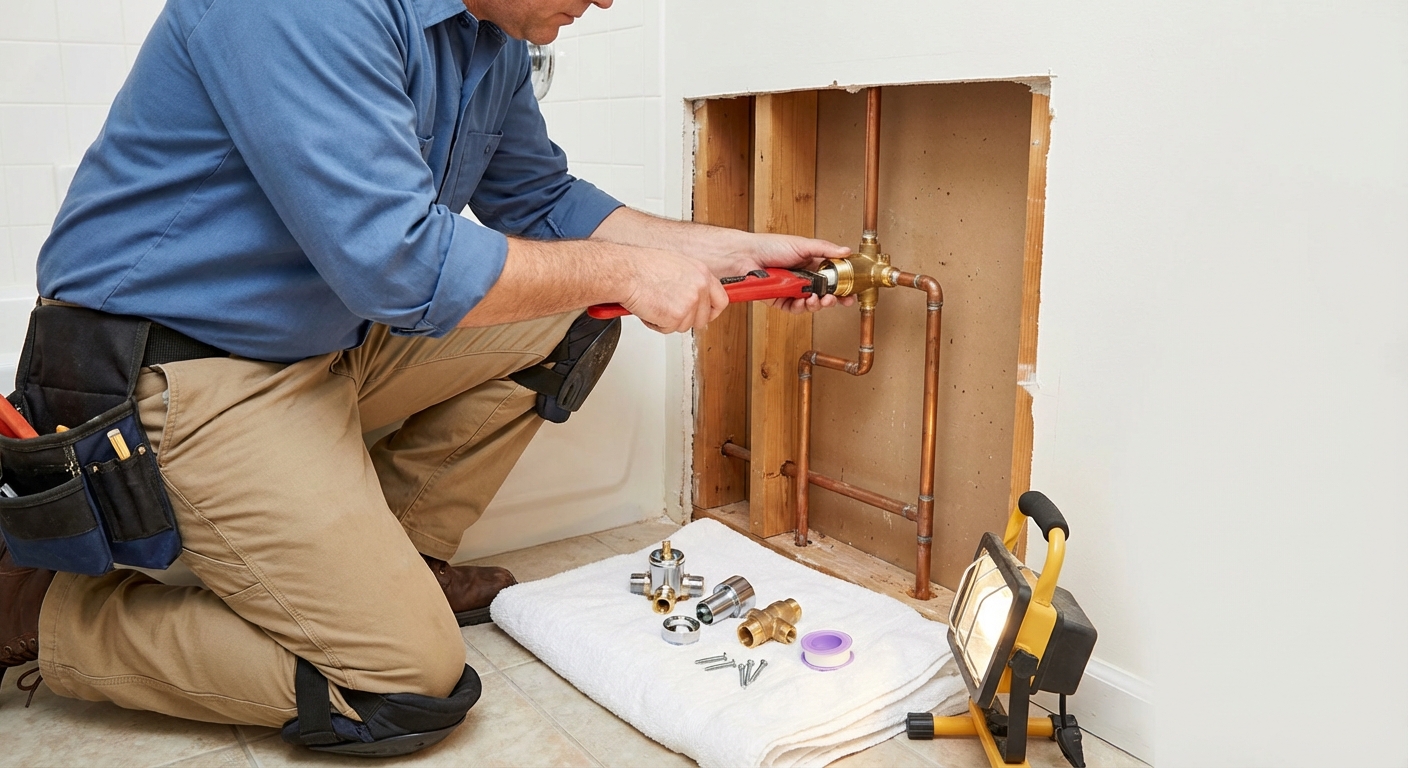
The process begins with shutting off your home's main water shut-off valve and draining remaining water from the pipes to prevent flooding during the work. Wall access typically involves removing tiles or cutting into drywall to expose the valve assembly. This is often the most invasive and time-consuming part of the project.
After removing the handle, trim plate, and cover plate, the plumber must measure the center-to-center distance between hot and cold ports to ensure proper valve compatibility. This measurement is critical because improper sizing can lead to installation failures and leaks. Having a bucket and towels ready for residual water prevents mess and water damage.
Valve Removal and Installation
The old valve is disconnected from supply pipes using adjustable wrenches, with care taken not to damage surrounding plumbing. Corroded connections may require additional time and specialized tools to remove safely. If pipes are damaged during removal, repair or replacement adds to project scope and cost.
Installing the new valve requires precise alignment and securing mounting brackets according to manufacturer specifications. Pipes must be reconnected, either through soldering for copper pipes or crimping for PEX systems. Each connection must be properly sealed with thread tape or pipe dope to prevent leaks.
After installation, the water supply is restored gradually to check for leaks at all connections. The valve is tested for proper temperature control and adequate flow rate. Professional plumbers flush the lines after installation to remove debris that could affect shower performance, a step easily overlooked in DIY projects.
Wall Repair and Finishing
Finally, the wall must be repaired and refinished, which can involve patching drywall, retiling, or installing new wall panels. This finishing work significantly impacts total project costs and requires skills beyond basic plumbing. Waterproofing the repaired area prevents future moisture problems that could lead to mold or structural damage.
The entire process typically takes 2 to 4 hours for straightforward replacements, but can extend to a full day if complications arise or extensive wall repair is needed.
Replacement Costs: What to Expect in 2026
Understanding the full cost breakdown helps you budget appropriately and recognize when quotes are reasonable. Shower valve replacement costs vary significantly based on valve type, labor rates, and project complexity.
Material Costs
In 2026, basic pressure-balancing valves typically run $45 to $95, while thermostatic or smart digital valves range from $150 to $600, with high-end ¾" multi-output designer models exceeding $1,000. The cartridge or valve body itself represents the primary material expense, but you'll also need thread seal tape, pipe dope, mounting brackets, and potentially new trim plates or handles. If pipe modifications are required, factor in costs for copper fittings, PEX connectors, flux, and solder.
| Valve Type | Material Cost | Total with Labor |
|---|---|---|
| Pressure Balance | $45-$300 | $150-$575 |
| Thermostatic | $150-$600 | $250-$900 |
| Diverter | $40-$200 | $225-$575 |
| Mixing | $30-$150 | $225-$575 |
Labor Costs (2026)
The average U.S. plumber hourly rate in 2026 is $45 to $200 per hour, with most residential work falling between $80 and $130 per hour. The installation itself takes 1.5 to 3 hours for straightforward replacements with easy wall access. Most plumbers also charge a separate service-call or trip fee of roughly $75 to $150 on top of hourly labor.
Geographic location significantly impacts labor costs. In high-cost metros like New York City, contractors commonly quote $300 to $700 for a shower valve replacement, including labor and typical materials. Emergency or after-hours service can run 1.5x to 2x the standard rate.
Additional Expenses
Wall access and repair costs add $50 to $300 to the project, depending on whether you have a simple drywall cutout or need tile removal and replacement. Service call fees range from $75 to $150, though many plumbers waive this if you proceed with the work.
Potential plumbing modifications significantly increase costs if existing pipes are corroded, incompatible with the new valve, or don't meet current code requirements. Repiping sections of supply lines can add $200 to $800 to the total. Reviewing a plumbing service cost guide can help you compare quotes fairly before booking work.
Most 2026 shower valve replacements fall in the $225 to $575 range, with a national average around $350 to $400. Complex installations involving extensive wall repair or multiple valves can push costs toward $900 or higher.
DIY vs Professional Installation: Making the Right Choice
Deciding whether to tackle shower valve replacement yourself or hire a professional depends on your skills, tools, and comfort level with plumbing work. This decision significantly impacts both costs and outcomes.
When DIY Makes Sense
DIY shower valve replacement is possible for experienced homeowners with plumbing knowledge and the right tools. You'll need pipe wrenches, adjustable wrenches, screwdrivers, soldering equipment for copper pipes or crimping tools for PEX, and precision measuring tools.
The project requires patience and attention to detail. Rushing through critical steps like measuring port distances or sealing connections leads to leaks and callbacks. You must feel comfortable shutting off water supplies, working in confined spaces behind walls, and troubleshooting if problems arise during installation.
DIY installation saves $100 to $300 in labor costs, making it attractive for budget-conscious homeowners with the necessary skills. However, consider that mistakes can cost significantly more to repair than professional installation costs upfront. Reviewing common plumbing mistakes can help you avoid the most expensive DIY pitfalls.
When to Hire a Professional
Professional installation is recommended for most homeowners due to the complexity and potential risks involved. Professionals accurately identify compatible valve replacements, ensuring your new valve matches existing plumbing configurations and meets current code requirements.
Licensed plumbers properly seal all connections using appropriate methods for different pipe materials, preventing leaks that could cause water damage behind walls. They flush lines after installation to remove debris that could affect performance, a step easily overlooked by DIYers. If you need help vetting candidates, see our guide on how to choose a plumber.
Professionals spot and fix underlying plumbing issues before they become costly problems. They notice corroded pipes, inadequate venting, or outdated components that could fail soon after valve replacement. This comprehensive approach prevents future repairs and additional wall openings.
Risks of DIY Installation
The primary risks of DIY installation include water damage from improperly sealed connections, which can cause structural damage, mold growth, and thousands in repair costs. Even small leaks within walls may go unnoticed for weeks, allowing extensive damage to occur. A shower pan leak following a botched valve install can compound damage further.
Reduced water pressure from installation errors frustrates users and wastes water as people compensate by running showers longer. Debris left in pipes from cutting or soldering compromises shower performance and can damage the new valve cartridge.
If your DIY installation fails later, you'll pay not only for valve replacement but also for tearing out tile, fixing water damage, and reinstalling wall panels, potentially costing thousands compared to a few hundred for professional installation initially.
Most experts recommend hiring professionals unless you have prior plumbing experience and proper tools. The investment in professional installation provides peace of mind and typically includes warranties protecting your investment.
When to Upgrade to Anti-Scald Valves
Anti-scald valves prevent dangerous temperature spikes that can cause serious burns in seconds. Understanding when to upgrade protects your family and may be required by building codes in your area.
Safety Benefits and Code Requirements
Anti-scald valves, which include both pressure-balancing and thermostatic types, are essential safety features that prevent water temperature from exceeding safe limits. Water heated above 120°F can cause third-degree burns in children and elderly individuals within seconds.
Modern plumbing codes, including IPC Section 424.3, require that individual shower and tub-shower combination valves be balanced-pressure, thermostatic, or combination balanced-pressure/thermostatic valves. These valves must be listed to ASSE 1016 and limit the maximum outlet temperature to about 120°F (49°C). Check with your local building department to understand which code edition applies in 2026.
For California, the 2025 California Plumbing Code adds a new Section 408.4.3 clarifying that temperature-actuated flow reduction devices (such as showerheads that reduce flow when water gets too hot) may not be used alone as a substitute for required balanced-pressure, thermostatic, or combination shower valves. In other words, an anti-scald valve at the fixture is still mandatory.
Beyond code compliance, anti-scald valves provide liability protection for homeowners. If a guest or tenant suffers scalding injuries due to inadequate temperature control, you could face legal consequences. Installing proper safety valves demonstrates due diligence in maintaining a safe property.
When Upgrading Makes Most Sense
You should strongly consider upgrading if your current valve is over 15 years old and lacks pressure-balancing features. Older mixing valves without automatic compensation pose serious safety risks, especially in homes with multiple fixtures competing for water pressure.
Homes with young children or elderly family members particularly benefit from thermostatic valves' superior temperature control. These populations are most vulnerable to scalding injuries and may have difficulty quickly responding to sudden temperature changes.
Properties with significant water pressure fluctuations, such as homes on wells or in older buildings with dated plumbing, particularly benefit from thermostatic valves. These systems maintain consistent temperature despite pressure changes that overwhelm basic pressure-balance valves. For homes with chronic pressure issues, a water pressure reducing valve is also worth evaluating.
If you're already replacing a failed valve, upgrading to an anti-scald model adds minimal additional cost, often just $50 to $150 more, while providing long-term safety benefits. The investment typically pays for itself through improved reliability, reduced risk of injury, and increased home value.
Consider upgrading during bathroom remodeling projects when walls are already open and plumbing modifications are more cost-effective. Coordinating valve replacement with other improvements saves significantly on labor costs compared to addressing them separately. Following a preventive plumbing maintenance schedule can also help you spot aging valves before they fail.
Modern anti-scald valves also offer improved durability compared to older models. Ceramic disc cartridges in premium valves can last 20+ years with minimal maintenance, significantly longer than the 10-15 year lifespan of older brass cartridges.
Frequently Asked Questions
How long does a shower valve typically last before needing replacement?
Shower valves generally last 15 to 20 years with proper maintenance, though this varies based on water quality and usage patterns. Hard water with high mineral content accelerates wear on internal components like cartridges and seals. Heavily used showers in large families experience faster deterioration than those in single-person households. Installing a water softener and performing regular maintenance can extend valve lifespan toward the upper end of this range.
Can I replace just the cartridge instead of the entire valve assembly?
Yes, cartridge replacement is often sufficient for addressing minor issues like dripping, temperature inconsistency, or stiff handles. Cartridges cost $20 to $150 for parts plus $100 to $200 for professional labor in 2026, making them a cost-effective first solution. However, if the valve body itself shows corrosion, if you experience persistent problems after cartridge replacement, or if your valve lacks modern safety features, full valve replacement becomes necessary and more economical long-term.
Do I need a permit to replace a shower valve in my home?
Permit requirements vary by location, but many jurisdictions require permits for plumbing work involving opening walls and modifying supply lines. Professional plumbers typically handle permit acquisition as part of their service, including the cost in their quote. DIY homeowners should check with their local building department before starting work, as unpermitted plumbing modifications can complicate home sales and may void insurance coverage if problems arise.
What's the main difference between repairing and replacing a shower valve?
Repairs address specific worn components like O-rings, seals, or cartridges and work well for minor issues in otherwise healthy valves. Replacement involves installing an entirely new valve assembly and is necessary when there's extensive corrosion, the valve body is damaged, you experience persistent problems despite repairs, or you're upgrading to modern safety features like pressure-balancing or thermostatic controls. Valves over 15 years old typically benefit more from replacement than continued repairs.
How can I prevent future shower valve problems and extend its lifespan?
Regular maintenance significantly extends valve life and prevents costly failures. Clean mineral deposits from showerheads and handles quarterly, install a water softener if you have hard water, avoid using excessive force when operating handles, and address small leaks promptly before they worsen. Annual plumbing inspections identify potential issues before they require emergency repairs. Additionally, flushing your water heater annually reduces sediment that can clog valve cartridges and damage internal components.