
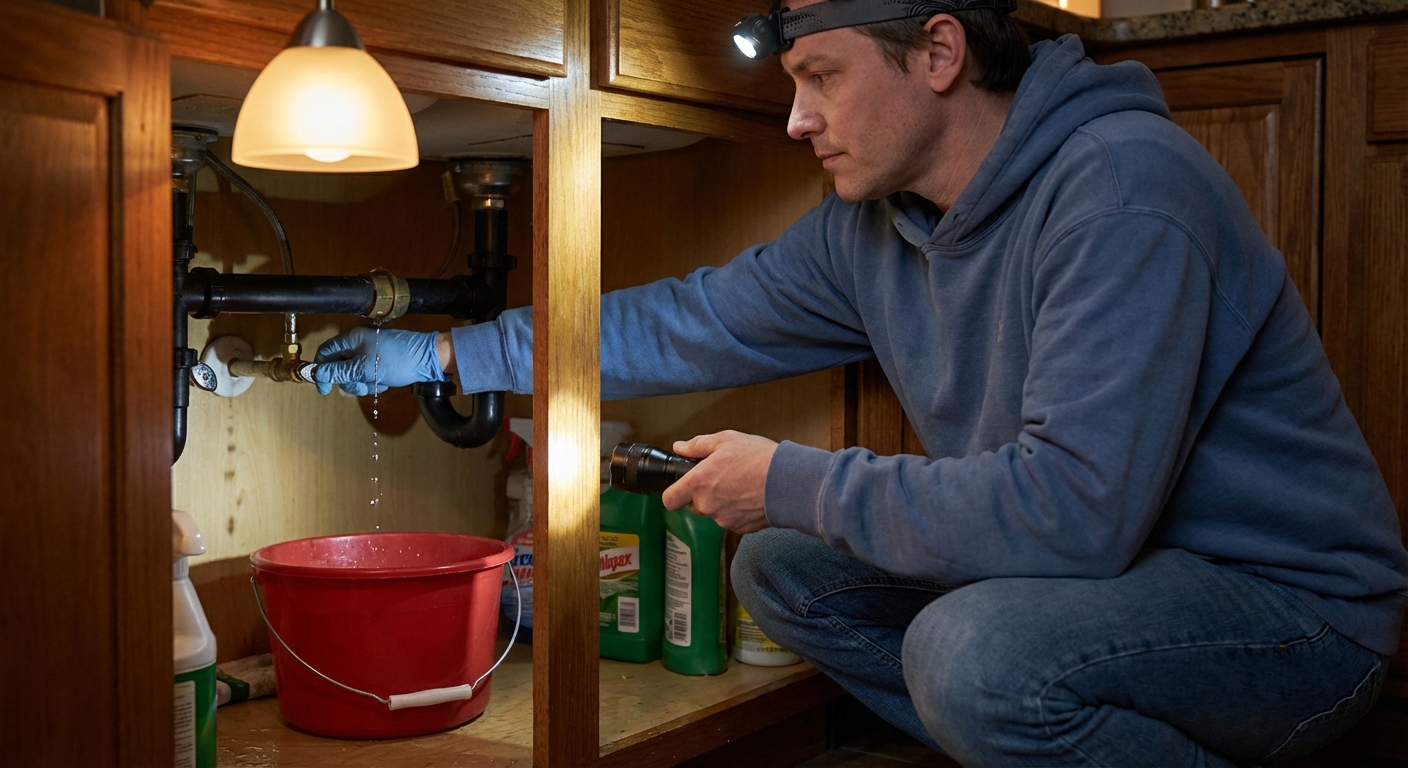
True Plumbing Emergency vs. Urgent But Can-Wait Issues
Not every plumbing problem demands a panicked 2 a.m. phone call, but some absolutely do. Understanding the difference between a true plumbing emergency and an urgent-but-schedulable issue is the first step to protecting your home and your wallet.
What Qualifies as a True Plumbing Emergency?
A true plumbing emergency is any situation that poses an immediate risk of water damage, health hazard, safety threat, or complete loss of essential water service. These situations require action within hours, not days.
| True Emergency 🚨 | Urgent But Can Wait ⏳ |
|---|---|
| Burst or cracked pipes with active flooding | Dripping faucets or minor sink leaks |
| Raw sewage backing up into fixtures | Single slow-draining sink or tub |
| Gas leak (smell of rotten eggs, hissing sounds) | Low water pressure (non-sudden) |
| Ceiling leaks or major structural water intrusion | Minor pipe corrosion or surface rust |
| Complete loss of water (not a utility outage) | Mold or mildew development |
| Overflowing toilet that won't stop | A single clogged toilet (try plunging first) |
| Sump pump failure during active rainstorm | Noisy pipes (banging or rattling) |
| Water heater rupture or gas valve failure | Faulty pressure regulator |
For a deeper decision framework, our emergency plumber decision guide walks through how to triage almost any plumbing problem.
Gas Leaks: Always Call 911 First
If you smell rotten eggs, hear hissing near a gas line, or feel dizzy or nauseous indoors, this is a life-threatening emergency. Do not flip light switches, use your phone indoors, or attempt any repair. Evacuate immediately, then call 911 and your gas utility company from outside. A plumber handles the repair only after the gas company has confirmed it's safe to enter.

Find Trusted & Licensed Plumbers in Ohio
Get matched with companies for your specific needs
Emergency Response: Step-by-Step Before the Plumber Arrives
Acting quickly and correctly in the first few minutes of a plumbing emergency can prevent thousands of dollars in damage. Follow these steps in order.
Step 1: Prioritize Your Safety
Stay out of standing water near electrical outlets, appliances, or circuit panels, because this is an electrocution risk. If water is near your electrical panel, turn off the breaker only if it is safe to access. When in doubt, call an electrician before entering the area.
Step 2: Shut Off the Water Supply
This is the single most important action in any water-related plumbing emergency.
- For a localized issue (leaking sink, overflowing toilet): Turn the individual fixture shut-off valve, located under the sink or behind the toilet, clockwise to close.
- For a major leak or burst pipe: Turn off the main water shut-off valve for the entire home. Turn it clockwise (or use a quarter-turn for ball valves).
- If valves are stuck: Open the lowest faucet in the house to relieve pressure and contact your utility company to shut off at the street.
Learn more about burst pipe emergency response to understand what happens after you shut off the water.
Step 3: Turn Off the Water Heater
Once the main supply is off, protect your water heater from overheating or pressure damage.
- Electric water heater: Flip the dedicated breaker in your electrical panel.
- Gas water heater: Close the gas supply valve on the unit.
If you already see water pooling around the unit, our water heater leaking response guide walks through what to do next.
Step 4: Contain the Damage
While waiting for your plumber, minimize further damage:
- Place buckets and towels under active drips
- Move valuables, electronics, and furniture away from water
- Apply plumber's tape or a pipe repair clamp to small visible leaks (temporary only)
- Mop up standing water to prevent mold growth
- Open nearby drains and lower faucets to relieve residual pressure
- Do NOT plunge or flush an overflowing toilet, as it will make the situation worse
Step 5: Document Everything
Take photos and video of all visible damage before cleaning up. This documentation is critical for homeowner's insurance claims and helps your plumber diagnose the problem faster. This matters even more in 2026, since many carriers now apply water damage sublimits of $5,000 to $25,000 (particularly on older plumbing materials like polybutylene, galvanized steel, cast iron, or old PEX), and some endorsements explicitly cap all water damage during the policy term at a maximum such as $5,000 including tear-out. Mold sublimits typically run $1,000 to $10,000 with $5,000 as the common default, so thorough documentation is essential to maximize your payout.
Locating Your Shut-Off Valves
Knowing exactly where your shut-off valves are before an emergency is one of the highest-value things you can do as a homeowner. Every adult in your household should know these locations.
Main Water Shut-Off Valve
The main shut-off valve controls all water entering your home. Common locations include:
| Home Type | Most Likely Location |
|---|---|
| Basement or crawlspace home | Near the front foundation wall, where the water line enters |
| Slab-on-grade home | In the mechanical room near the water heater, or under the kitchen sink |
| Garage or utility room | Along the wall where the water line enters |
| Warm climates | Outside near the foundation or close to an outdoor faucet |
| All homes | Near the water meter box, at or near the curb (may require a shutoff key) |
Two types of main valves:
- Gate valve: Round handle. Turn clockwise about 6 full rotations to fully close.
- Ball valve: Lever handle. Turn 90° (perpendicular to the pipe) to fully close.
For a full walk-through of finding and replacing this critical component, see our main water shut-off valve guide.
Individual Fixture Shut-Off Valves
These small valves let you isolate one fixture without affecting the rest of your home:
- Toilets: Behind or beside the base of the toilet
- Kitchen/bathroom sinks: Inside the cabinet, on the supply lines going up to the faucet
- Dishwasher: Under the kitchen sink, on a dedicated supply line
- Washing machine: On the wall behind the unit (two valves: hot and cold)
- Water heater: On the cold water inlet pipe at the top of the unit
- Refrigerator ice maker: Behind the fridge or under the sink
Your Plumbing Emergency Kit
Being prepared with the right tools means you can take meaningful action the moment a problem strikes and potentially save hundreds of dollars before a plumber even arrives. Store your kit in a labeled bin near your main water shut-off valve.
Bonus prep items:
- A printed diagram of your home's shut-off valve locations
- Your plumber's contact number and an after-hours emergency plumber number
- Your homeowner's insurance policy number and claims contact
Check out our guide to essential plumbing tools for detailed guidance on building your kit and 15 must-have items to keep on hand.
When to Call 911 vs. an Emergency Plumber
| Situation | Call 911 | Call Emergency Plumber |
|---|---|---|
| Gas leak (smell, hissing, dizziness) | ✅ Yes, evacuate first | After gas company clears the scene |
| Burst pipe with major flooding | Only if life-threatening | ✅ Yes, immediately |
| Sewage backup with contamination risk | If health hazard is imminent | ✅ Yes, stop all water use |
| No water (not a utility outage) | No | ✅ Yes |
| Dripping faucet or slow drain | No | Schedule routine appointment |
After-hours emergency plumber costs in 2026 are meaningfully higher than they were a year ago. Thumbtack reports a national average of $361 for emergency plumbing services in 2026, while a 2025 to 2026 city-level analysis pegs the average at about $425 per incident, climbing to $750 or more for evenings, weekends, or holidays. Expect emergency labor to run $150 to $400 per hour, with $200 to $300 per hour typical for nights and weekends, plus a service or dispatch fee of $150 to $300. Weeknight after-hours calls tend to be cheaper than overnight, weekend, or holiday emergencies, which can push totals toward $600 to $750 or more, while simple clogs or minor leaks may stay near the low end of $250 to $400. Review our full breakdown of emergency plumber costs to know what to expect before you call.
Plumbing Emergency Prevention Strategies
The best plumbing emergency is the one that never happens. Routine maintenance can reduce your risk significantly and cut water bills by up to 30%. Our preventive plumbing maintenance guide covers a complete annual checklist, and our annual maintenance schedule breaks it down month by month.
Annual & Seasonal Maintenance
- Schedule a professional plumbing inspection every 1 to 2 years (annually for older homes) to catch corrosion, aging pipes, and failing water heaters before they fail
- Insulate exposed pipes in garages, crawlspaces, and attics before winter
- Run a slow trickle of water through faucets during hard freezes to prevent bursting
- Test your sump pump before rainy season by pouring water into the pit. It should activate immediately, and the discharge line should direct water 10 to 20 feet from your foundation.
- Flush your water heater annually to remove sediment buildup
For region-specific timing, our seasonal plumbing problems guide and winter plumbing tips break down what to watch for at every time of year. If you already have a frozen pipe, our safe thawing guide shows exactly what to do (and what to avoid).
Monthly DIY Checks
- Listen and look for slow drains, unusual sounds, or dripping under sinks
- Check under all sink cabinets for moisture or water stains
- Inspect visible pipes for rust, corrosion, or mineral deposits
- Look for soft spots in walls or ceilings near plumbing lines, a common sign of a slow hidden leak
- Avoid the common plumbing mistakes like overusing chemical drain cleaners that quietly damage your pipes
Smart Home Upgrades Worth Considering
Smart leak detection has become significantly more capable in 2026, with AI-powered systems that monitor pressure, flow, and temperature to predict failures before they happen. On the sensor side, the Flo by Moen Smart Water Leak Detector is a top-rated point sensor at about $54.87, while the First Alert L1 at around $49.99 is a popular value pick recognized for simple installation. Budget multi-packs like the Govee Water Leak Detector 4-pack run about $38, and Aqara sensors sell for roughly $19 to $22 each for HomeKit users.
For whole-home protection, the Moen Flo Smart Water Monitor & Shutoff runs about $499 plus installation and is one of the few devices that actually stops a leak instead of just alerting you. The Phyn Plus 2nd Gen runs about $580 plus installation as a premium whole-home shutoff option. Budget-friendly whole-home options include the iSpring LS43 at about $121, the only sub-$200 system with a built-in automatic water shutoff, and the YoLink DIY Automatic Water Leak Detection and Shut-Off Starter Kit at about $299.99.
Insurance discounts for these systems have expanded significantly in 2026. USAA members who qualify for the Connected Home discount save an average of $133 per year and up to 8% on their homeowners insurance. Farmers Insurance offers 5 to 20% off for qualifying smart home tech, and VYRD applies approximately 40% off a portion of your premium when water sensors are activated and reporting. Notification-only sensors qualify for zero premium discounts from many major carriers in 2026, while the Flo by Moen system is named specifically in State Farm, Travelers, Hippo, Lemonade, and Liberty Mutual discount programs at 5 to 13% annual premium reduction. At Hippo, Openly, Chubb, and Travelers, automatic shutoff devices can earn 5 to 15% off annual premium, and combining multiple qualifying devices can reach 10 to 20% total off your annual premium. UPC and Tower Hill offer tiered credits of 5% for sensors, 10% for automatic shutoff, and 15% for flow-monitoring shutoff systems on non-hurricane premium.
Building these habits now means far fewer emergency calls and far less stress. For issues that do come up, knowing how to find same-day plumber service quickly is your best backup plan, and our plumber hiring guide helps you vet a pro before you need one.
Frequently Asked Questions
What is considered a plumbing emergency?
A plumbing emergency is any situation that poses an immediate threat of property damage, health risk, or complete loss of water service. This includes burst pipes, sewage backups into your home, gas leaks related to plumbing lines, major flooding from a water heater rupture, or a complete loss of water with no utility explanation. If the situation is rapidly worsening and cannot be safely contained, it is an emergency.
How do I shut off water in a plumbing emergency?
For a localized issue like a leaking toilet or sink, turn the individual shut-off valve clockwise. It's located behind the toilet tank or under the sink cabinet. For a whole-home emergency like a burst pipe, locate your main shut-off valve (typically in the basement, utility room, or near the water meter) and turn it clockwise or rotate the lever 90 degrees. Acting within the first few minutes dramatically reduces water damage.
What should I do if I suspect a gas leak?
If you smell rotten eggs, hear hissing near a gas line, or feel dizzy or nauseous indoors, evacuate everyone immediately and do not use any switches, flames, or electronics inside. Once outside, call 911 and your gas utility company. Do not re-enter the property until the gas company declares it safe. Only then should you contact a plumber for repairs.
How much does an after-hours emergency plumber cost in 2026?
Thumbtack reports a national average of $361 for emergency plumbing services in 2026, with typical after-hours visits totaling $300 to $600 (labor at $200 to $300 per hour plus a $150 to $250 dispatch fee). Complex late-night, weekend, or holiday jobs in high-cost metros can run $750 to $1,000 or more. While it sounds expensive, acting fast almost always costs less than the structural repairs, mold remediation, and damaged belongings that result from delaying. See our full emergency plumber cost guide for a detailed breakdown.
Does homeowners insurance cover plumbing emergencies?
Standard homeowners insurance typically covers sudden and accidental water damage from burst pipes or appliance failures, including drywall, flooring, and personal belongings. However, it usually does not pay to replace the broken pipe itself, and it excludes damage from long-term leaks, neglect, or failure to maintain heat in winter. Many 2026 policies now apply water damage sublimits of $5,000 to $25,000 for higher-risk plumbing or older pipe materials like polybutylene, galvanized steel, cast iron, or old PEX, plus separate mold sublimits (commonly $1,000 to $10,000), and require a water backup endorsement for sewer or sump pump failures, so review your policy carefully.
How can I prevent plumbing emergencies?
The most effective prevention steps are scheduling a professional inspection every 1 to 2 years, insulating pipes before winter, testing your sump pump before rainy season, and building a plumbing emergency kit so you're ready to act fast. Monthly DIY checks under sinks and around visible pipes can catch slow leaks before they become disasters. Smart leak detection devices with automatic shutoff now offer an extra layer of protection and may earn you a 3% to 15% homeowners insurance discount from participating carriers.