
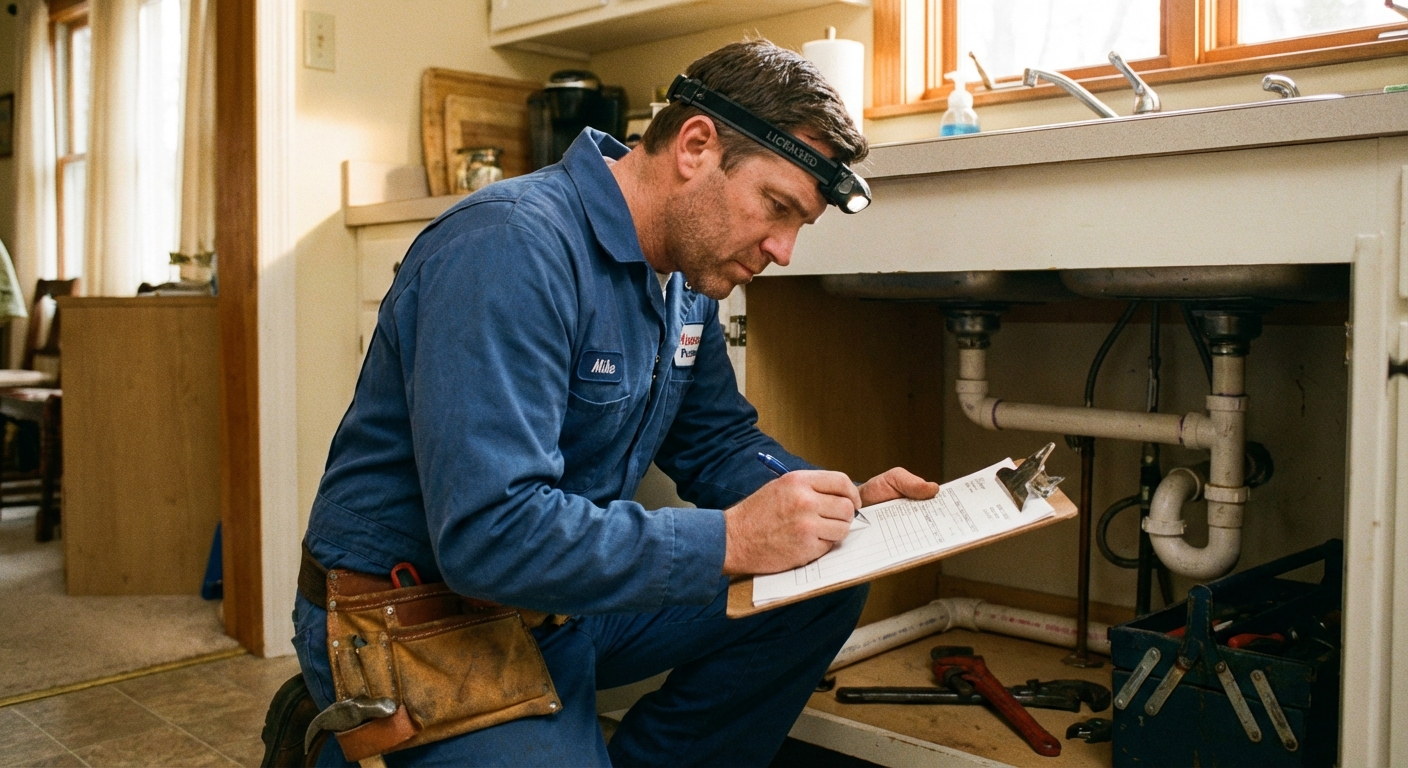
National & Regional Plumber Hourly Rates
The national average plumber hourly rate in 2026 ranges from $45 to $200 per hour, with most residential jobs falling between $75 and $150 per hour and homeowners paying around $90 to $100 per hour on average once travel, call-out fees, and basic materials are included. Where you fall in that range depends heavily on your location, the type of plumber you hire, and when you need the work done.
Rates have also crept up compared to prior years thanks to a structural plumber shortage. Industry forecasts point to a gap of roughly 550,000 plumbers by 2026 to 2027, driven by a wave of retirements (more than 1 in 5 plumbers is over 55) and a sharp drop in apprenticeship enrollment (down about 49% between 2020 and 2022). The Bureau of Labor Statistics also projects about 44,000 openings per year for plumbers, pipefitters, and steamfitters through 2034, and because labor accounts for 40 to 50% of a typical residential job (and 60%+ on commercial work), higher wages are being passed straight through to customer pricing.
Average Plumber Hourly Rate by License Level
Your plumber's credentials are one of the biggest cost drivers. Here's a breakdown of what you can typically expect to pay based on experience and licensing:
| License Level | Hourly Rate Range | Experience |
|---|---|---|
| Apprentice Plumber | $45 – $80/hr | 0-4 years, supervised work |
| Journeyman Plumber | $75 – $130/hr | 4-8 years, works independently |
| Master Plumber | $100 – $200/hr | 8+ years, can pull permits & supervise |
Company size also matters. Solo or small-shop plumbers often bill $75 to $125 per hour, mid-size companies charge $100 to $165 per hour, and large franchise brands like Roto-Rooter or Mr. Rooter frequently run $150 to $250+ per hour. For more on how credentials affect what you pay, see our guide on licensed plumber requirements.
Plumber Cost Per Hour by Region
Location plays a significant role in what plumbers charge. High cost-of-living states with strong labor unions and strict licensing naturally command higher rates.
| State / Region | Hourly Rate Range | Notes |
|---|---|---|
| California | $100 – $200/hr | High demand & strict licensing |
| Hawaii | $110 – $180/hr | Island logistics drive costs up |
| New York | $95 – $195/hr | NYC significantly elevates rates |
| Alaska | $110 – $175/hr | High labor costs statewide |
| Oregon | $85 – $165/hr | Portland pulls the top end |
| Washington | $90 – $175/hr | Seattle metro pulls the top end |
| Massachusetts | $90 – $150/hr | Among top-paying states |
| Illinois | $85 – $135/hr | Strong union market |
| Texas | $75 – $150/hr | Competitive but growing |
| Florida | $70 – $140/hr | Moderate growth market |
| Midwest (avg.) | $65 – $125/hr | More affordable labor market |
| Southeast (avg.) | $55 – $110/hr | Lower cost of living |
| West Virginia | $48 – $85/hr | Among the lowest nationally |
Pro Tip: Metropolitan areas generally cost 30 to 50% more than rural rates. For example, San Francisco Bay Area, NYC, and Seattle plumbers routinely charge $130 to $200/hr, while rural markets often stay in the $55 to $85/hr range.

Find Trusted & Licensed Plumbers in Ohio
Get matched with companies for your specific needs
What Affects Plumber Hourly Rates
Understanding the factors behind plumber pricing helps you anticipate costs and avoid surprises on your invoice.
Experience & Licensing
A plumber's credentials and years of experience significantly influence their rates. Apprentices and entry-level plumbers typically charge between $45 and $80 per hour, while master plumbers with advanced skills and certifications may cost $100 to $200 or more per hour. Specialized licenses, such as gas fitting, backflow prevention, or remodeling certifications, increase a plumber's value and allow them to command premium rates. Learn more about how to choose a plumber to make sure you're hiring the right credential level for your job.
Job Complexity & Accessibility
The intricacy of the task directly impacts pricing. Simple repairs like fixing a leaky faucet generally stay near the base hourly rate, while complex tasks requiring special tools, permits, or hours of labor increase overall costs. Hard-to-reach pipes (like those inside walls, under slabs, or in tight crawl spaces) also justify higher charges. Older homes with mixed materials or past DIY repairs also carry more uncertainty, which is one reason plumbers often quote hourly for these jobs.
Time of Day, Weekends & Holidays
Emergency and after-hours services command premium pricing. Plumbers typically charge 1.5x the standard rate on weeknights, 1.5x to 2x on weekends, and 2x to 3x on holidays. That means a plumber charging $100/hr during the week could bill $150 to $200/hr on a Saturday and $200 to $300/hr on Thanksgiving or Christmas.
Overhead & Operating Costs
Overhead is a big part of how plumbers set their prices. Insurance, vehicle costs, tools, licensing fees, and ongoing training all add up, and those costs are passed on to you as the customer. This is also why licensed, insured plumbers cost more than unlicensed handymen, but they also come with far less financial and legal risk for the homeowner. For a side-by-side breakdown, see our guide on plumber vs handyman work.
Hourly Rate vs. Flat-Rate Pricing: Which Is Better?
Most plumbers use one of two pricing models, and knowing the difference can help you budget smarter. Flat-rate pricing has become the dominant model for residential plumbing in 2026 because homeowners strongly prefer knowing the total cost before any wrench turns. Industry data shows flat-rate shops earn 15 to 25% higher revenue per job (with average tickets 20 to 35% larger), see about 35% fewer billing disputes, and roughly 92% of homeowners say they prefer flat-rate quotes over hourly billing. Despite that preference, fewer than 30% of contractors currently offer true flat-rate pricing, so it pays to ask.
Flat-rate billing charges a fixed price for a specific job, regardless of how long it takes. Hourly pricing charges based on the actual time spent on the job, plus parts.
When Hourly Billing Makes More Sense
Hourly billing tends to be the better deal when:
- The scope of the job is unknown or unpredictable
- You need a quick, simple fix (like replacing a valve or toilet flapper)
- The main work is diagnostic, like tracing a hidden leak or intermittent drain issue
- The plumber doesn't charge excessive minimum hour requirements
When Flat-Rate Makes More Sense
Flat-rate pricing is generally better when:
- The job is clearly defined (drain cleaning, water heater installation, toilet replacement)
- You're dealing with an emergency and don't want escalating hourly surprises
- You want to compare quotes from multiple plumbers easily
For predictable, standard services like a drain unclog or fixture installation, flat rates typically run $150 to $500, and top-performing residential shops now average $500 to $700 per visit. The average homeowner spends about $315 on a typical plumber visit in 2026, with most calls falling in the $180 to $450 range. For a deeper comparison, see our breakdown of flat rate vs hourly plumbing pricing.
Service Call Fees, Trip Charges & Emergency Premiums
Beyond the hourly rate, there are additional fees that catch many homeowners off guard.
Service Call / Trip Charge
Most plumbers charge a service call fee ranging from $75 to $200 for a scheduled weekday visit in 2026, with the broader national range running from about $50 on the low end up to $250 to $300 in major metros and premium franchise brands. This fee typically covers travel time, vehicle costs, the initial assessment of your plumbing issue, and often the first 30 to 60 minutes on site. Some plumbers waive this fee if you proceed with the repair, while others apply it toward the first hour of labor. For a deeper look at how these charges appear on your invoice, see our plumbing service cost guide.
| Fee Type | Typical Range | Notes |
|---|---|---|
| Service Call / Diagnostic Fee | $75 – $250 | May be applied toward labor |
| Trip Charge | $50 – $150 | Travel-only fee, separate from labor |
| Permit Fee | $75 – $400 | Required for certain jobs |
| Flat Emergency Fee | $150 – $500 | Charged as a fixed call-out fee |
Emergency Plumber Rate Premiums
Emergency plumbing services (nights, weekends, and holidays) typically cost 1.5x to 3x the standard hourly rate, with total emergency rates commonly landing in the $150 to $350 per hour range and reaching $400 to $500 per hour in high-cost markets or on holidays. Layered on top is a flat emergency trip fee of $125 to $500, which pushes many contained weekend jobs into the $300 to $1,200 total range (with $500 to $700 being common for a typical contained problem). Learn more about emergency plumber costs before you're caught in a crisis.
How to Get Accurate Plumber Estimates & Save Money
Getting an accurate estimate doesn't have to be complicated. Follow these steps before you hire anyone. For a deeper dive, see our guide on how to get an accurate plumbing estimate and the difference between a plumbing quote vs estimate.
1. Get At Least 3 Quotes
Don't rely on a single estimate. Rates can vary dramatically between plumbers, even in the same zip code. When comparing quotes, look beyond the bottom line and evaluate what each one actually covers to ensure you're making an apples-to-apples comparison.
2. Request an Itemized Breakdown
A good estimate should clearly separate labor costs, material costs, overhead, permit fees, and any additional charges. Avoid quotes that just give you one lump sum with no explanation.
3. Look for Free Estimates
Check if the plumber offers free estimates for standard jobs. This signals transparency, and plumbers who charge for estimates may be using that fee to pad their income.
4. Describe the Problem in Detail
Before calling, try to identify the source of the issue. The more detail you can provide, the more accurate your estimate will be. Inform the plumber about hard-to-reach pipes, slab work, older systems, or prior repairs, as these factors justify higher quotes and help prevent "scope creep" billing.
5. Confirm Licensing and Insurance
Always verify that your plumber is licensed for your state and carries general liability insurance. This protects you if damage occurs during the job. Reviewing their reviews and references takes only a few extra minutes and can save you thousands.
6. Ask About Minimum Hour Policies
Some plumbers charge a minimum of 1 to 2 hours even for a 20-minute job. Always ask about minimums upfront so there are no billing surprises when it comes time to pay. You can also reduce overall costs over time by investing in preventive plumbing maintenance and stocking the essential plumbing tools every homeowner should have.
Frequently Asked Questions
What is the average plumber hourly rate in 2026?
The national average plumber hourly rate in 2026 is between $45 and $200 per hour, with most homeowners paying around $90 to $100 per hour for standard residential work. Your specific rate will depend on your location, the plumber's experience level, the time of day, and the complexity of the work. Urban areas and high cost-of-living states like California, Hawaii, New York, and Massachusetts tend to fall at the upper end of the range.
Why are plumbers so expensive in 2026?
Plumbers charge what they do because of the combination of labor, overhead, and risk involved. They invest years in apprenticeships and licensing, carry expensive insurance, maintain trucks and tools, and assume liability for their work. On top of that, a nationwide shortage forecast at roughly 550,000 plumbers has intensified wage competition, and BLS data shows about 44,000 openings per year for the trade through 2034, keeping upward pressure on service rates.
What is a plumber service call fee?
A service call fee (sometimes called a trip charge or diagnostic fee) is a flat charge, typically between $75 and $200 for a weekday visit in 2026, that a plumber charges just to come to your home. It covers their travel time, initial assessment, and often the first 30 to 60 minutes on site. Some plumbers apply this fee toward the cost of the repair if you hire them, so it's always worth asking upfront.
How much more does an emergency plumber cost?
Emergency plumbing services typically cost 1.5 to 3 times the standard hourly rate, meaning you could pay $150 to $500 per hour for after-hours or weekend calls. In addition to the higher hourly rate, many plumbers charge a flat emergency call-out fee ranging from $125 to $500. Planning ahead and addressing non-urgent issues during regular business hours is the best way to avoid these premiums.
Is hourly or flat-rate pricing better when hiring a plumber?
It depends on the job. Flat-rate pricing is the dominant model for residential work in 2026 because you know the total cost upfront and won't face surprise charges if the job takes longer, and about 92% of homeowners now prefer it. Hourly billing can be advantageous for small, quick repairs or diagnostic work where the scope is genuinely unknown. Always ask which model your plumber uses and request a written estimate before any work begins.