
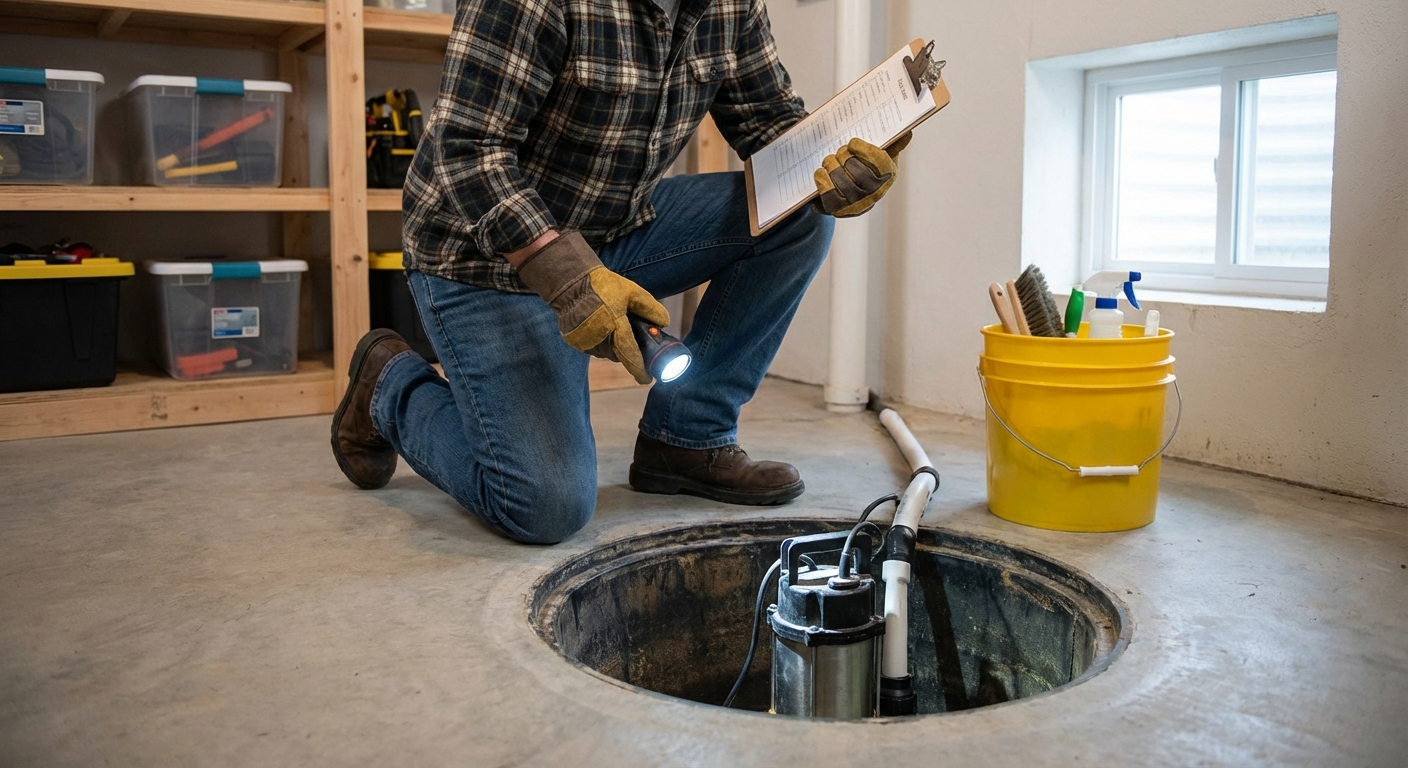
Essential Sump Pump Maintenance Tasks
Regular sump pump maintenance is the key to preventing costly basement flooding. By performing routine checks and cleaning tasks, you can ensure your system operates reliably when you need it most. Here are the critical maintenance tasks every homeowner should master.
Testing Pump Operation
Testing your sump pump should be done quarterly, with additional tests before storm season and after heavy rainfall. Insurance carriers and plumbing pros now recommend at least an annual functional test before the wet season, and quarterly checks if your basement sees frequent water or supports a washing machine discharge.
Pour 5 gallons of water slowly into the sump pit and observe the pump's behavior. The float switch should rise as water fills the pit, triggering the pump to activate within seconds. The pump should drain water efficiently until the pit is nearly empty, then shut off automatically when the float descends.
Listen carefully during operation for unusual sounds like grinding, rattling, or excessive vibration. These noises often indicate a damaged impeller or worn bearings that require immediate attention. Check that water discharges completely through the outlet pipe and doesn't back up into the pit.
After testing, verify the float switch returns to its resting position without sticking. A stuck float is the most common cause of sump pump failure, leading to continuous running or failure to activate when needed.
Cleaning the Inlet Screen and Sump Pit
Debris accumulation is a leading cause of sump pump malfunction. Monthly cleaning prevents clogs that restrict water flow and strain the motor.
Start by unplugging the pump for safety. Remove any visible debris from the sump pit, including dirt, silt, gravel, leaves, and other materials that may have washed in. Use a shop vacuum or bucket to remove sediment that settles at the bottom.
Clean the inlet screen or intake area using a garden hose or damp cloth. Remove buildup that could block water entry to the pump. For stubborn deposits, use a soft brush to gently scrub the screen without damaging it.
Wipe down the pump exterior to remove dirt and check for visible rust or corrosion. While minor surface rust may not be critical, significant corrosion indicates the pump may need replacement soon. Also check for iron bacteria, which appears as reddish-brown slimy deposits that can clog components.
Checking the Float Switch
The float switch controls when your pump turns on and off, making it one of the most critical components to inspect. Float switch problems cause the majority of sump pump failures.
Manually lift the float to ensure it moves freely without sticking or binding. The switch should click audibly when the float reaches the activation point. If the float feels sluggish or doesn't move smoothly, it may be jammed by debris or mechanically worn.
Check for proper positioning. The float should have adequate clearance to rise and fall without hitting the pit walls or discharge pipe. Misaligned floats may get stuck against obstructions, preventing activation during flooding.
Inspect the float for cracks or damage that could allow water inside, causing it to sink and fail. Replace damaged floats immediately, as they cannot be repaired effectively. Newer 2026 systems often use electronic or dual-float switches that eliminate many of the mechanical failure points found in older single-float units.
Testing Battery Backup Systems
Power outages often occur during severe storms, exactly when you need your sump pump most. A battery backup system provides essential protection but requires regular maintenance to function when needed.
Test your battery backup quarterly by unplugging the primary pump and letting water fill the pit. The backup system should engage automatically when the main pump loses power. Verify it pumps water effectively and runs for several minutes without issues.
Check battery charge levels using the system's indicator lights or display. Most backup batteries need replacement every 3 to 5 years, regardless of apparent condition. Batteries gradually lose capacity and may fail without warning when you need them most.
Inspect battery terminals for corrosion, which appears as white, blue, or green crusty deposits. Clean corroded terminals with a wire brush and baking soda solution, then ensure connections are tight and secure.
Consider the battery's age when planning replacements. Even properly maintained batteries deteriorate over time. Mark installation dates on new batteries to track replacement schedules. In 2026, a replacement deep-cycle battery alone runs about $100 to $400, while a full battery backup system with professional installation typically costs $600 to $1,200 (average around $900). Smart battery backup units now include charge-level monitoring and Wi-Fi alerts that warn you when the battery is weak before a storm hits. If your system fails unexpectedly, review emergency plumber costs so you know what to expect after-hours.
Inspecting the Discharge Line
Your sump pump's discharge line carries water away from your foundation, making its condition critical for preventing basement flooding. Regular inspection catches problems before they cause system failure.
Walk the entire length of the discharge pipe, checking for leaks, cracks, or disconnected joints. Water escaping near the foundation defeats the pump's purpose and can cause settlement issues or wall damage.
Verify the discharge point directs water away from your home, ideally 10 to 20 feet from the foundation. Water should flow downhill from the discharge point to prevent pooling near your house.
Check for blockages inside the pipe by running water through the system during testing. Sluggish flow or backpressure indicates potential clogs from debris, mud, or even small animals that enter through the outlet. For homes with persistent drainage issues, learning about professional drain cleaning methods can help keep your entire system flowing freely.
In cold climates, inspect for freezing risk. Frozen discharge lines create dangerous backpressure that can burn out the pump motor or cause pipe ruptures. Consider installing a freeze-resistant discharge line or heat tape for winter protection.
Examine the check valve, which prevents water from flowing back into the pit after the pump stops. A faulty check valve forces your pump to re-pump the same water repeatedly, causing excessive wear and short cycling. Listen for a distinct "thunk" when the pump stops to confirm the check valve is closing properly.

Find Trusted & Licensed Plumbers in Ohio
Get matched with companies for your specific needs
Smart Sump Pump Technology in 2026
Smart sump pumps and Wi-Fi monitoring modules have become a mainstream upgrade, turning a once-invisible appliance into a connected device that can warn you before water damage occurs.
Modern systems from brands like Liberty Pumps, Basement Watchdog, Zoeller, and Wayne now offer:
- Wi-Fi alerts sent by app, text, or email when the pump activates, water rises too high, or AC power fails
- Battery health monitoring that flags a weak or disconnected backup battery before the next storm
- Run-time and cycle tracking so you can see how hard the pump worked during the last heavy rain
- AI-style diagnostics that detect early signs of impeller wear, short cycling, or motor strain
- Smart home integration with platforms that can trigger a smart shutoff valve if water keeps rising
You do not necessarily need a brand-new pump to get these benefits. Add-on Wi-Fi alarm modules can be wired into many existing sump systems for under $200, providing the same alerts and history. Smart leak monitoring is a natural complement, and you can read more about hidden water leak detection to round out your home's flood protection.
Maintenance Frequency and Professional Service
Understanding the right maintenance schedule protects your investment and prevents failures. Different tasks require different frequencies, from monthly checks to annual professional inspections. For a broader view of year-round plumbing tasks, see our annual plumbing maintenance guide.
Quarterly Testing Schedule
Every three months, perform a comprehensive DIY test of your entire sump pump system. This schedule aligns with seasonal changes and ensures your pump remains ready throughout the year.
Spring preparation is especially critical. Before the spring thaw and rainy season, test operation, clean the pit thoroughly, and verify discharge lines aren't damaged from winter freezing. Spring storms bring heavy rainfall that can overwhelm neglected systems.
Summer checks should focus on heavy thunderstorm season. Many regions experience intense rainfall during summer months, making this testing window essential. Verify battery backups are fully charged before storm season peaks.
Fall maintenance prepares your system for winter. Clear fallen leaves and debris from the pit, ensure discharge lines are positioned correctly, and test float switches before they're hidden under seasonal debris.
Winter monitoring in cold climates requires special attention to freezing risks. Check discharge lines regularly during freeze-thaw cycles and ensure the pump hasn't frozen if located in unheated areas. Our breakdown of seasonal plumbing problems covers what to watch for in each season.
After any major storm or flooding event, conduct an immediate test even if it isn't your scheduled quarterly date. Storms can introduce debris, damage discharge lines, or reveal capacity issues that need addressing before the next weather event.
Annual Professional Service
While DIY maintenance handles routine tasks, professional service provides expertise and specialized equipment that homeowners lack. Schedule annual professional inspection to complement your quarterly testing.
Professional plumbers perform comprehensive evaluations including component testing, electrical connection inspection, and motor assessment that goes beyond basic homeowner checks. Typical annual service includes:
| Service Component | What Professionals Check | Why It Matters |
|---|---|---|
| Complete disassembly | Internal components, impeller condition | Identifies wear not visible externally |
| Electrical testing | Wiring, connections, voltage, amperage | Prevents motor failure and fire hazards |
| Flow rate verification | Pumping capacity, discharge efficiency | Ensures adequate capacity for your needs |
| Pit and basin inspection | Proper sizing, liner condition, drainage | Prevents structural issues |
| Discharge system | Check valve, pipe integrity, outlet position | Confirms water removal effectiveness |
In 2026, a sump pump maintenance plan or annual professional service averages $100 to $250 per year, while individual repairs typically run $200 to $870 (with the national average around $530). That is a small fraction of what a single flood event costs. To better understand professional pricing, see our plumbing service cost guide.
If your pump is approaching 7 to 10 years old, annual inspections become even more important. Replacing a primary submersible pump in 2026 typically costs $500 to $1,500 installed, while a full system upgrade with battery backup runs $1,000 to $1,800.
Before Storm Season Preparation
Storm season demands additional preparation beyond routine quarterly testing. Two to four weeks before your region's typical storm season, conduct a thorough preparation routine.
Start with a complete cleaning of the sump pit, removing all debris accumulated since your last maintenance. Test the pump multiple times with larger volumes of water, 10 to 20 gallons instead of the standard 5 gallons. This stress test verifies the system can handle the increased flow rates that occur during heavy rainfall.
Charge or replace battery backup batteries before storm season begins. Don't wait until weather forecasts predict storms because batteries need time for a full charge cycle, and replacement orders may face delays.
Install or test a sump pump alarm if you don't already have one. Modern Wi-Fi alarms send notifications to your phone the moment water rises above a safe level, even when you are away from home. Clear vegetation and debris from around your discharge outlet, since storm-driven materials can block the outlet and cause dangerous backpressure.
Signs of Sump Pump Problems and Failure
Recognizing warning signs early allows you to address problems before they result in basement flooding.
Common Warning Signs
Strange noises like grinding or rattling suggest debris jamming the impeller. Excessive humming or buzzing typically indicates motor strain from a stuck impeller or electrical issues.
Continuous running means your pump never shuts off, even after draining the pit. Common causes include a stuck float switch, a missing or broken check valve, or an undersized pump unable to keep up with water inflow.
Failure to activate is perhaps the most dangerous symptom. Check for power issues first, then float switch problems, which are the next most common culprit.
Excessive vibration during operation suggests mechanical imbalance, often a bent impeller or loose mounting.
Visible rust or corrosion indicates moisture damage that weakens components. Iron bacteria (reddish-brown slimy deposits) creates similar problems and may also affect other plumbing throughout your home.
Cycling too frequently means the pump turns on and off in short intervals. Causes include improperly adjusted float switches, pumps positioned too high in the pit, or check valve failures.
When to Call a Professional
Some situations require professional expertise rather than DIY troubleshooting. Contact a professional immediately if you notice motor burning smells, which indicate serious electrical problems or fire risks.
Persistent problems after DIY troubleshooting mean underlying issues require professional diagnosis. Pumps older than 7 to 10 years showing any symptoms should receive professional evaluation. Electrical issues, sparking, or repeatedly tripped breakers also require licensed professionals. Knowing when to call an emergency plumber versus waiting until business hours can save hundreds of dollars in after-hours fees.
If your basement has flooded despite a seemingly operational pump, drainage problems may extend beyond the pump itself. Understanding sewer line repair options helps if the underlying issue is a damaged or blocked sewer connection. For homes with basement bathrooms or laundry, sewage ejector pump problems can mimic sump pump failures and require different repairs.
Consequences of Neglecting Maintenance
Failing to maintain your sump pump creates risks far beyond the cost of the pump itself.
Basement Flooding and Water Damage
In 2026, flooded basement cleanup averages $4,000, with most projects ranging from $2,000 to $7,000. Severe events with significant contamination or structural damage can reach $12,000 to $30,000 or more. These costs include water extraction, structural drying, mold remediation, and replacing damaged belongings, flooring, drywall, and insulation.
Water damage progresses alarmingly fast:
| Time Period | Damage Progression | What Happens |
|---|---|---|
| Within 24 hours | Water absorption begins | Drywall, wood, and fabrics absorb water; metal begins rusting |
| 24-48 hours | Mold growth starts | Spores germinate in damp conditions; odors develop |
| 48-72 hours | Structural concerns | Wood swelling, warping; increased contamination risk |
| 1 week+ | Major damage | Extensive mold growth; structural weakening; serious health hazards |
Foundation and Structural Damage
Basement flooding doesn't just damage belongings, it threatens your home's structural integrity. Hydrostatic pressure from saturated soil can bow or buckle foundation walls inward, requiring expensive structural repairs that typically cost $5,000 to $15,000 or more.
Mold and Health Hazards
Mold begins growing within 24 to 48 hours of water exposure. Professional mold remediation costs $480 to $2,995 on average in 2026, with typical basement jobs running $1,500 to $4,000 and severe whole-house cases reaching $10,000 to $15,000.
Insurance and Property Value Impacts
Basement flooding history significantly affects home insurance and property value. Standard homeowners insurance generally does not cover flooding from outside water sources, so a separate flood policy is usually required. The average federal flood insurance premium in 2026 is about $976 per year, but homes with basements often pay well above that average because below-grade space is treated as higher risk. Properties with multiple flood claims can be classified as Severe Repetitive Loss, leading to sharply higher premiums and fewer insurer options.
When selling, you must disclose basement flooding history in most states, which can reduce both buyer interest and final sale price.
Cost Comparison: Prevention vs. Repair
The financial case for regular maintenance is overwhelming when compared to flooding repair costs:
A comprehensive five-year maintenance program (annual professional service, quarterly testing, and battery replacements) totals roughly $800 to $1,500. A single basement flooding event can easily cost 5 to 20 times that amount, plus the immeasurable loss of personal possessions and peace of mind. For broader savings strategies, see our preventive plumbing maintenance guide.
Frequently Asked Questions
How often should I test my sump pump?
Test your sump pump every three months as a minimum standard. Pour 5 gallons of water into the pit and verify the pump activates automatically, drains the water completely, and shuts off properly. Increase testing before spring and fall rainy seasons, and conduct additional tests after major storms or if your pump is older than 7 years.
What is the average cost of sump pump maintenance in 2026?
Annual professional sump pump maintenance plans cost $100 to $250 in 2026, while individual repairs average about $530 nationally, with a typical range of $200 to $870 depending on the problem. Battery backup replacement costs $100 to $400 for the battery alone, or $600 to $1,200 for a full system. DIY quarterly testing and cleaning is free except for your time. These costs are minimal compared to flooded basement cleanup, which averages $4,000.
What are the most common signs that my sump pump is failing?
The most common warning signs include strange noises like grinding or rattling, the pump running continuously, failure to activate when water enters the pit, excessive vibration, and visible rust or corrosion. Other indicators include short cycling, water remaining in the pit despite the pump running, and burning odors. If you notice any of these symptoms, troubleshoot immediately by checking the float switch, cleaning debris, and verifying power before calling a professional.
Can I perform sump pump maintenance myself or do I need a professional?
You can perform most routine maintenance yourself, including quarterly testing, monthly pit cleaning, float switch inspection, and visual checks of discharge lines. These DIY tasks require only basic tools and safety equipment. Schedule annual professional service for comprehensive electrical testing and capacity evaluation. Always call professionals immediately for electrical problems, motor issues, or pumps older than 7 years showing symptoms.
How long does a typical sump pump last with proper maintenance?
A well-maintained sump pump typically lasts 7 to 10 years, with insurers and contractors treating 10 years as the safe upper limit for planning replacement. Pumps that run infrequently in dry climates may reach 12 to 15 years, while pumps handling heavy water volumes may need replacement after 5 to 7 years. A primary submersible replacement in 2026 typically costs $500 to $1,500 installed, depending on capacity and whether you add a battery backup.