
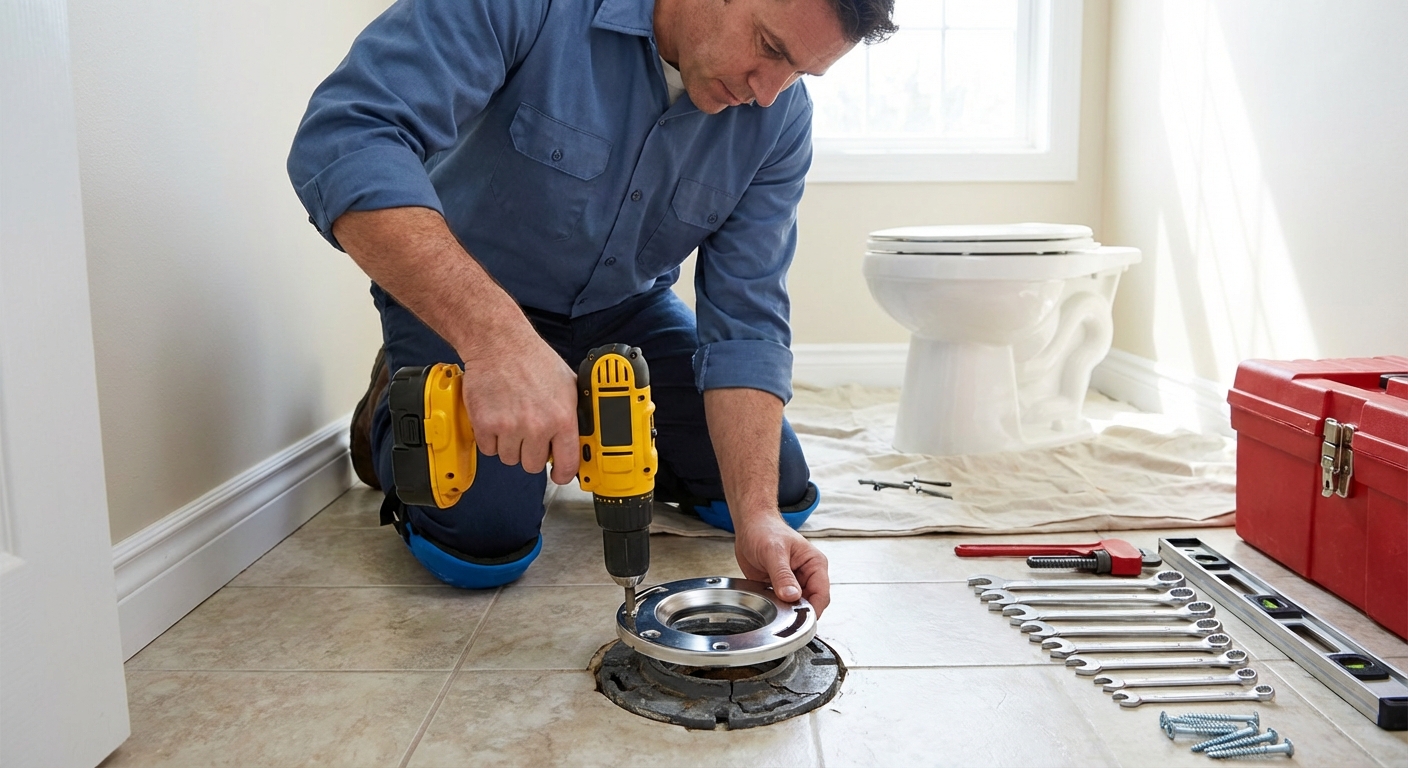
What is a Toilet Flange and What Does It Do?
A toilet flange is the circular fitting that connects your toilet to the drain pipe and secures it to your bathroom floor. This critical plumbing component serves multiple essential functions beyond simply holding the toilet in place. The flange creates a watertight seal between the toilet and the sewer line, preventing leaks and containing sewage gases that could otherwise escape into your home.
The flange works in conjunction with a wax ring or wax-free seal that sits between the toilet base and the flange surface. When the toilet is properly bolted down through the flange's mounting holes, this compression creates an airtight seal. Without a functioning flange, even a brand-new toilet cannot maintain proper sanitation or stability.
Proper flange installation and maintenance protects your home from water damage, prevents costly repairs, and ensures your bathroom remains safe and functional. Understanding how this component works helps you recognize problems early and take appropriate action.

Find Trusted & Licensed Plumbers in Ohio
Get matched with companies for your specific needs
Common Signs of a Broken or Damaged Toilet Flange
Identifying flange damage early can save you from costly repairs and prevent structural damage to your bathroom. Several telltale signs indicate your toilet flange may need attention.
Rocking or Wobbling Toilet
The most noticeable sign of flange damage is a toilet that moves when you sit on it or stand up. A properly functioning flange should hold your toilet completely stable. If you feel any movement, the flange may be cracked, corroded, or the mounting bolts may have broken through weakened sections.
Water Leaking at the Base
Water pooling around the base of your toilet is a serious warning sign that shouldn't be ignored. This leakage typically indicates a compromised seal between the flange and toilet, which can result from corrosion, flange cracks, broken bolts, or a flange positioned at the wrong height. Left unaddressed, these leaks can cause extensive subfloor damage, rot, and mold growth.
Sewer Odors
Foul sewage smells emanating from around the toilet base suggest sewer gases are escaping due to a broken seal. A properly installed flange with an intact wax ring creates a complete barrier against these odors. If you notice persistent sewage or rotten-egg smells near the toilet base, the flange integrity has likely been compromised.
Visible Damage and Floor Issues
Physical inspection may reveal cracks in the flange itself, often near the mounting bolt locations. You might also notice loose or damaged floor tiles, discoloration on flooring materials, soft or spongy spots indicating water damage, or a toilet that appears sunken compared to the surrounding floor level. In upstairs bathrooms, brown water stains, bubbling paint, or sagging drywall on the ceiling below are strong indicators of a long-running flange or wax ring leak.
Types of Toilet Flanges and Repair Methods
Understanding the different flange types and repair solutions helps you choose the right approach for your specific situation. Similar troubleshooting principles apply to other common toilet repairs like running toilets and fill valve issues.
Flange Materials and Types
Standard Flanges
Standard flanges are the most common type, fitting directly over or into drain pipes. These work well for most installations where the toilet placement doesn't need adjustment and the flange height aligns properly with the finished floor.
Offset Flanges
Offset flanges shift the toilet position by approximately 2 inches, useful when you need to avoid obstacles like walls, cabinets, or existing plumbing. These are available in various materials including PVC, ABS, cast iron, and brass.
Material Comparison
| Material | Best For | Pros | Cons |
|---|---|---|---|
| PVC | Modern homes with PVC drain systems | Affordable, lightweight, corrosion-proof, easy DIY install | Can crack if over-tightened |
| ABS | Homes with ABS plumbing (common in 1970s) | Durable, budget-friendly, similar to PVC | Limited to ABS pipe systems |
| Cast Iron | Older homes with cast iron stacks | Extremely strong, supports heavy toilets | Heavy, prone to rust without maintenance |
| Brass | Older homes with lead pipes | Rust-resistant, malleable, long-lasting | Higher cost, can oxidize |
| Stainless Steel Ring | High-moisture areas or PVC reinforcement | Premium corrosion resistance, rigid | Most expensive option |
Flange Repair Rings and Kits
Repair rings are one of the most popular and effective solutions for damaged flanges. These metal rings bolt over the existing flange to provide a new, stable mounting surface.
Popular 2026 Repair Kit Options
Danco HydroSeat Flange Fixer: A stainless steel repair plate with a built-in funnel that installs as a one-piece unit over the existing flange. Heavily reviewed at major retailers and ideal for broken, cracked, or corroded flange ears where the pipe itself is still sound.
Oatey Fix-It Repair Ring: A universal metal ring designed to repair cracked or broken flange rings on PVC, ABS, or cast iron flanges. Installs over the existing flange with four screws and requires no cement or special tools.
Oatey Set-Rite Flange Extension Kit: Specifically designed for height adjustment when flooring has been added. Uses four stackable spacers to raise a flange from 1/4 inch up to 1-5/8 inches, with a gasket and screws for a watertight seal.
Oatey Twist-N-Set Replacement Flange: A drop-in replacement that expands inside cast iron pipes, eliminating the need to break out and re-lead an old flange. Top choice when a cast iron flange body is too far gone for patching.
3D Plumbing Products Flange Repair Kit: A premium kit specifically designed to repair broken bolt rails on cast iron, PVC, or ABS flanges. Works on both 3-inch and 4-inch flanges.
One-n-Done Toilet Flange Repair Kit: Combines a self-adjusting wax-free seal with 3.5-inch zinc closet bolts, lock nuts, retaining nuts, and washers in a single all-in-one package.
These kits typically allow for repairs in 30 minutes or less and work well when the flange has broken bolt slots, minor cracks, or corrosion but the main structure remains intact.
Cast Iron Flange Repair
Cast iron flanges present unique challenges due to their age and corrosion susceptibility. For cast iron repairs, metal repair rings that bolt to the subfloor work best. Some specialized kits use a two-piece design that clamps around the outside of corroded cast iron pipes, eliminating the need to remove the damaged flange entirely. This approach works well in older homes where sewer line issues may also be a concern.
Height Extenders for Low Flanges
When a flange sits too low relative to the finished floor (often after tile installation or floor replacement), height extenders provide the solution. These spacer rings stack on top of the existing flange to raise it to the proper level, ideally 1/4 inch above the finished floor. Using extenders prevents rocking and ensures proper wax ring compression instead of stacking multiple wax rings.
When to Repair vs. When to Replace
Determining whether to repair or replace your toilet flange depends on the extent and type of damage.
Repair Scenarios
Choose repair when:
- The flange structure is mostly intact with minor damage
- Only the bolt slots or rails are broken
- The flange is at the wrong height but otherwise undamaged
- Small cracks exist that can be reinforced with a repair ring
- The wax ring has failed but the flange is sound
Replacement Scenarios
Choose replacement when:
- Extensive cracks compromise the entire flange structure
- Severe corrosion has weakened the flange beyond reinforcement
- The flange is misaligned or improperly installed
- Subfloor damage requires floor repairs anyway
- Previous repair attempts have failed
- The flange material doesn't match your drain pipe
Cost of Toilet Flange Repair and Replacement in 2026
Understanding typical costs helps you budget appropriately and evaluate whether DIY or professional installation makes sense. For broader context on plumbing pricing, our plumbing cost guide breaks down service call fees and hourly rates in detail.
Professional Repair Costs
According to 2026 industry data, professional toilet flange replacement averages $145 to $165, with most projects costing less than $200 total. The typical national range runs from about $60 to $200 for standard jobs. When subfloor damage, pipe issues, or extensive leaking are uncovered, costs can climb to $350 or higher.
Labor accounts for the bulk of the bill, typically $45 to $150 for a straightforward job. Many plumbers bill flange replacement as a flat rate equivalent to roughly two hours of labor.
2026 Plumber Hourly Rates
| Service Level | Hourly Rate (2026) |
|---|---|
| Standard plumber | $75 - $150/hr |
| Master plumber | $100 - $200/hr |
| Toilet repair (national avg) | $50 - $175/hr |
| Service call / minimum | $75 - $150 |
Urban and high-cost-of-living markets like Los Angeles, where toilet repair runs $125 to $350 with flange issues pushing toward the higher end, sit at the top of the range.
Material Cost Breakdown
| Material Type | Price Range | Best Application |
|---|---|---|
| PVC Flanges | $5-$20 | Standard modern homes |
| Stainless Steel Ring | $15-$30 | Corrosion-prone or reinforcement |
| Brass Flanges | $30-$75 | Older homes with lead pipes |
| Repair Kits | $10-$40 | Minor damage, DIY fixes |
| Wax Rings | $3-$8 | Seal replacement |
DIY Cost Savings
A capable DIYer can often replace a flange for around $20 or less in parts if no hidden damage exists. Total DIY materials for a simple repair typically run $20 to $60, while a full flange replacement with new hardware costs $30 to $80. However, improper installation risks leaks, water damage, and additional repair costs.
DIY Considerations and Professional Help
Many homeowners can successfully tackle toilet flange repairs with proper preparation, but knowing your limits prevents costly mistakes.
DIY-Friendly Repairs
You can likely handle the repair yourself if:
- You're comfortable removing and reinstalling a toilet (typically 70-100 lbs)
- The damage is visible and straightforward (broken bolt slots, minor cracks)
- You have basic tools (adjustable wrench, screwdriver, putty knife, drill)
- The repair involves installing a simple repair ring or replacing a wax ring
- The subfloor is solid and undamaged
Basic DIY Steps
- Turn off the water supply at the shutoff valve and flush to empty the tank
- Disconnect the supply line and remove toilet mounting nuts
- Lift the toilet carefully and set it aside on cardboard or towels
- Plug the drain temporarily with a rag to block sewer gas
- Scrape the old wax from the flange with a putty knife
- Install the repair ring per kit instructions, securing to the subfloor with screws
- Apply a new wax ring (never reuse the old one) and carefully reset the toilet
- Secure with new bolts, alternating sides a few turns at a time so you don't crack porcelain
- Reconnect water and test by flushing several times, checking the base for leaks
Similar DIY skills apply to other bathroom repairs like a running toilet fix or replacing internal tank components.
When to Call a Professional
Professional help is recommended when:
- Extensive subfloor damage requires carpentry skills
- The flange is embedded in concrete and needs cutting
- Cast iron pipe work is involved
- You see signs of mold, sewer gas, or recurring leaks
- Previous DIY attempts have failed
- You lack experience with plumbing connections
Professional plumbers bring specialized tools, experience identifying hidden issues, and warranties on their work. If you're already considering a full toilet replacement, it often makes sense to address the flange at the same time.
The Importance of Proper Flange Installation
A properly installed and maintained toilet flange is critical to preventing both immediate problems and long-term damage to your home.
Preventing Leaks and Water Damage
The flange creates the primary seal preventing wastewater from escaping. When this seal fails, water seeps into the subfloor with every flush, causing rot, mold growth, and structural damage. These problems often remain hidden until extensive damage has occurred, similar to the way a shower pan leak can silently destroy framing before you notice it.
Maintaining Structural Integrity
Beyond leaks, a stable flange prevents toilet movement that can stress connections, crack porcelain, and damage flooring. The constant rocking motion gradually loosens bolts, widens cracks, and worsens existing damage.
Health and Safety Concerns
Failed flanges allow sewer gases containing methane and hydrogen sulfide to enter your home. These gases present health hazards and indicate that raw sewage exposure is possible. Proper flange function protects your family's health by maintaining the sanitary barrier between your home and the sewer system.
Protecting Your Investment
Addressing flange issues promptly prevents minor repairs from becoming major renovations. A $145-$200 repair today prevents potential thousands in subfloor replacement, tile work, and related damage repairs later. Regular maintenance and quick response to warning signs maximize your home's value and minimize repair costs.
Frequently Asked Questions
How do I know if my toilet flange is broken?
Common signs include a rocking or wobbling toilet, water leaking around the base, foul sewage odors near the toilet, and visible cracks in the flange when inspected. You might also notice loose floor tiles, soft spots in the flooring, mold along grout lines, or brown water stains on the ceiling below an upstairs bathroom. Any of these symptoms warrant immediate inspection to prevent water damage and structural issues.
Can I repair a toilet flange myself or should I hire a plumber?
Simple repairs like installing a flange repair ring or replacing a wax ring on an intact flange are DIY-friendly if you're comfortable removing and reinstalling a toilet. You should hire a professional for extensive damage, subfloor repairs, concrete-embedded flanges, or cast iron pipe work. Improper installation can cause thousands in water damage, making professional service worthwhile for complex situations.
What's the difference between a flange repair ring and complete replacement?
A repair ring bolts or clamps over the existing damaged flange to provide a new mounting surface, working well for broken bolt slots or minor cracks. Complete replacement involves removing the old flange entirely and installing a new one, necessary when damage is extensive or corrosion is severe. Repair rings cost $10-$30 and take 30 minutes to install, while replacement averages $145-$165 and requires 1-2 hours of professional labor.
How much does it cost to fix a broken toilet flange in 2026?
Professional flange replacement averages $145 to $165 nationally in 2026, with most projects under $200 total. DIY repairs cost as little as $20 in materials if you have basic tools. Complex situations involving subfloor damage or difficult access can push costs to $350 or even $500+. Hourly plumber rates run $75-$150 for standard plumbers and $100-$200 for master plumbers.
What happens if I don't fix a broken toilet flange?
Ignoring a broken flange leads to continuous water leaks that cause subfloor rot, mold growth, and structural damage extending well beyond the bathroom. Sewer gases continue escaping into your home, creating health hazards and unpleasant odors. The toilet instability may eventually crack the porcelain or damage the drain pipe connection. What starts as a $150 repair can escalate to $2,000-$5,000 in structural damage if left unaddressed.