
The Full Winterization Checklist: Every System That Needs Protection
A proper plumbing system winterization service isn't just about turning off the water. It's a multi-step process that protects every component of your home's water system from freeze damage. Whether you're locking up a lake cabin, heading south for the winter, or parking your RV, the same core principle applies: water left in pipes expands when it freezes, and that expansion can crack or burst even the sturdiest pipes. Use this checklist as your starting point.
Shutting Off the Water Supply
Your first move is always to locate and close the main water shutoff valve, typically found near the water meter, in a basement, or at the utility entry point. For municipal water service, the shutoff may be at the street level. Once the main valve is closed:
- Open every faucet (hot and cold) throughout the home to drain residual pressure
- Flush all toilets multiple times to empty the tanks and bowls
- Disconnect hoses from washing machines, dishwashers, and ice makers
- Drain all water from those appliances completely
For step-by-step guidance on identifying and operating shut-off valves, see our main water shut off valve guide, or our full plumbing emergency guide.
Draining the Water Heater
The water heater is one of the most overlooked components in winterization. Here's how to properly drain it:
- For gas water heaters, set the thermostat to "vacation" or "pilot" mode, or shut off the gas supply entirely
- For electric water heaters, switch off the breaker before draining to prevent dry-fire damage
- Attach a garden hose to the drain valve at the bottom of the tank
- Route the hose to a floor drain or outside and open the valve to empty the tank
- Leave the drain valve open for the winter
Learn more about preventive plumbing maintenance to keep your water heater in top shape year-round.
Adding Antifreeze to Drains & Fixtures
After draining, residual water remains in the P-traps beneath every sink, shower, and toilet. These small pockets of water can still freeze. Use non-toxic, propylene glycol-based RV antifreeze (never automotive antifreeze) and pour:
- 1 to 2 cups into each sink and shower drain
- 1 to 2 cups into each toilet bowl and tank after flushing out remaining water
- A small amount into floor drains and any other trap you can access
Blowing Out Pipes with Compressed Air
For a truly thorough winterization, especially in properties that will sit vacant for months, professionals use an air compressor to blow residual water out of supply lines. Set the compressor to 30 to 50 PSI for residential plumbing, work from the highest fixtures down, and open one cold line at a time until only air exits. This step is highly recommended and is a standard part of any professional plumbing winterization service call.

Find Trusted & Licensed Plumbers in Ohio
Get matched with companies for your specific needs
Protecting Outdoor Plumbing: Faucets & Irrigation Systems
Outdoor plumbing is the most exposed and vulnerable part of your system. A single frozen hose bib or sprinkler head can mean hundreds of dollars in repairs come spring.
Winterizing Outdoor Faucets
Follow these steps for every exterior spigot on the property:
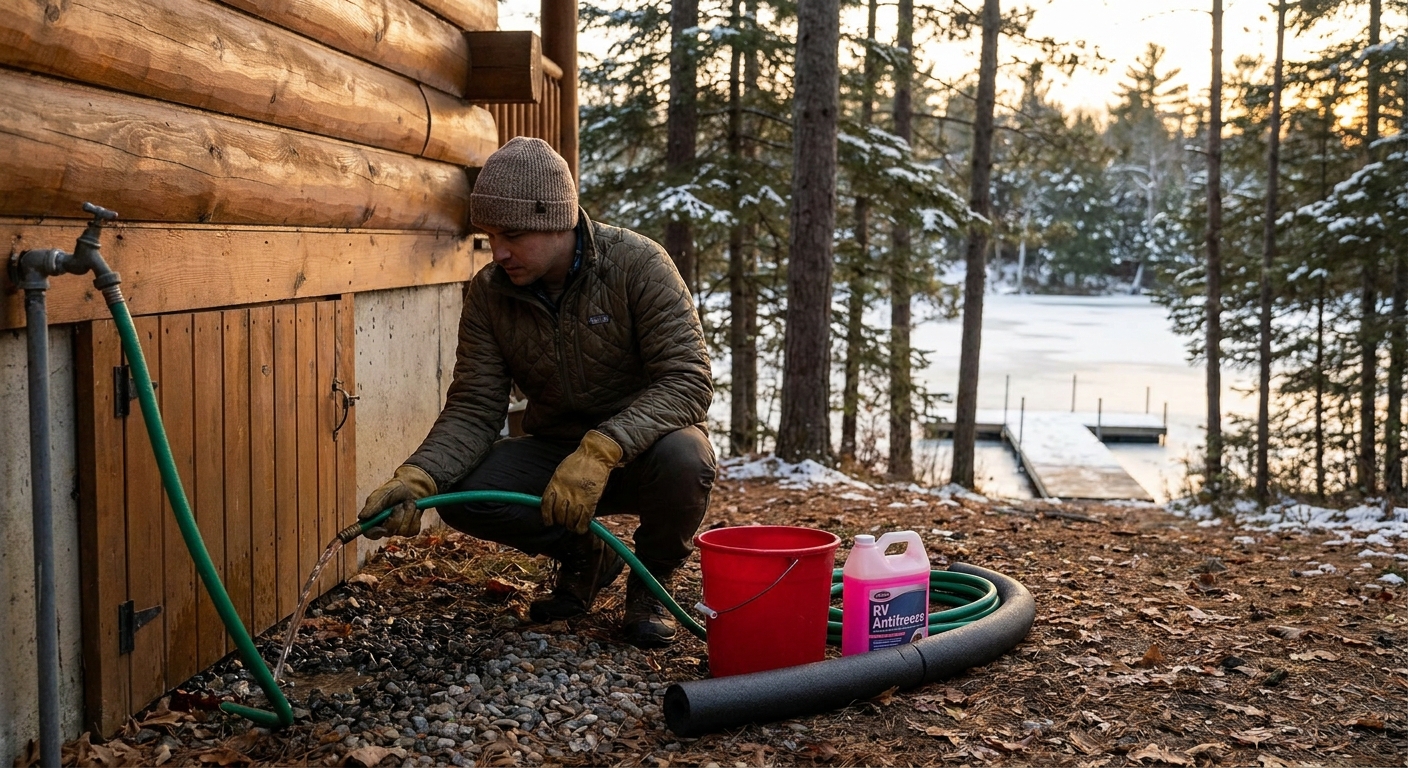
- Disconnect and drain all garden hoses. Never leave a hose attached to an outdoor faucet, even frost-free models
- Locate the indoor shutoff valve that feeds each outdoor faucet and close it
- Open the outdoor faucet to drain the line completely (some plumbers recommend leaving it slightly open through winter so residual moisture can expand safely)
- Bleed the line at the interior shutoff if it has a small drain cap, catching the water in a bucket
- Install an insulated foam faucet cover ($5 to $15 each) for added protection and caulk any gaps where the pipe enters the wall
Learn more about outdoor faucet repair and what to watch for when you re-open the property in spring.
Winterizing Irrigation & Sprinkler Systems
The winterization method for irrigation depends on your climate and pipe material:
| Method | Best For | Recommended PSI |
|---|---|---|
| Blowout (PVC pipes) | Northern states with deep ground freezing | 50 to 80 PSI (never exceed 80) |
| Blowout (Polyethylene) | Flexible black pipe systems | 30 to 50 PSI |
| Manual Drain | Mild climates with shallow freezing | Open manual drain valves at low points |
| Automatic Drain | Systems with auto-drain valves installed | Valves drain automatically when pressure drops |
For the blowout method: turn off the irrigation controller and main water supply, connect an air compressor to the blowout port, and blow out one zone at a time. Also drain and insulate your backflow preventer, leaving the test cocks slightly open to allow for ice expansion.
Based on 2026 pricing data, professional sprinkler winterization averages around $80 to $100 for a typical residential system. HomeAdvisor pegs seasonal blowouts at $56 to $137, while Angi's 2026 data puts the range at $60 to $150 with an $85 average for most homes (up to 12 zones), plus $5 to $10 per additional zone. Blowout-specific service can run $85 to $235 for larger systems. That's still a worthwhile investment before a $500-plus repair bill.
For more guidance, see our article on outdoor plumbing installation, which covers backflow prevention and freeze protection requirements in detail.
RV Plumbing Winterization: A Separate Process
RVs require their own winterization approach since their plumbing systems are more compact and entirely exposed to the elements. There are two main methods:
Step-by-Step RV Winterization
- Drain all tanks: empty the fresh water, gray, and black tanks completely
- Drain the water heater: open the exterior drain valve and remove the anode rod if applicable; set the heater to bypass mode
- Open low-point drains: locate the red/blue underbelly drain valves and open them
- Open all faucets: turn on hot and cold at every sink, shower, outdoor shower, and toilet
- Blow out lines (if using air method): use a blowout adapter at the city water inlet at 30 to 40 PSI; never exceed 50 PSI to avoid damage
- Pump antifreeze through the system: use RV antifreeze via the water pump's siphon tube; run each faucet until steady pink antifreeze flows
- Pour antifreeze into P-traps: add antifreeze to every sink, shower drain, and toilet bowl to protect residual trap water
Most RVs need 2 to 6 gallons of antifreeze depending on size, with 2 to 3 gallons enough for a typical travel trailer or Class C. In 2026, standard pink RV antifreeze commonly runs $5 to $15 per gallon (with $8 to $10 being typical at Walmart, farm supply, and big-box retailers), and premium brands running higher.
Professional vs. DIY Winterization: 2026 Costs & What's Worth It
Understanding the cost difference between hiring a pro and doing it yourself helps you make the smartest decision for your property.
2026 Cost Breakdown
| Service | DIY Cost | Professional Cost |
|---|---|---|
| Basic plumbing winterization | $20 to $50 (supplies) | $150 to $400 |
| Vacant home full winterization | $20 to $100 (supplies) | $300 to $800 |
| Outdoor faucet protection | $5 to $20 per faucet cover | $75 to $150 |
| Sprinkler/irrigation blowout | $30 to $60 (compressor rental) | $60 to $150 (avg $85) |
| RV winterization (standard) | $20 to $50 (antifreeze + supplies) | $120 to $200 typical |
| RV winterization (mobile/large) | $30 to $100 (antifreeze + supplies) | $250 to $450+ |
| Pipe insulation (if needed) | $1 to $11 per linear foot | $200 to $500 for full home |
When to hire a professional:
- The home has been vacant and you're unsure of the pipe layout
- Your property has a well system, radiant heat, or older galvanized pipes
- You're winterizing for the first time and aren't comfortable with the process
- The home is in a region with extreme cold (Northeast, Upper Midwest, Mountain West)
When DIY makes sense:
- You've winterized the property before and know the system well
- The home is relatively new with straightforward plumbing
- You have the right tools (air compressor, antifreeze, insulation)
Even a modest annual plumbing maintenance schedule can catch vulnerabilities before winter arrives. It's also smart to review our winter plumbing tips alongside winterization to protect your home all season long.
Insurance Considerations for Vacant Homes
Most homeowners policies restrict coverage once a property has been "vacant" (empty of occupants and largely stripped of furniture) for 30 to 60 consecutive days. After that threshold, many carriers reduce or exclude water damage (including frozen pipe losses), theft, and vandalism claims. Standard HO-3 policies also carry a specific freezing exclusion: coverage is void unless you either maintained heat in the dwelling (generally interpreted as 55°F or higher) or shut off the water supply and drained the system. Some carriers also require a "competent person" to check the property at defined intervals during cold weather.
Before leaving your property empty for the winter, notify your insurer and ask about a vacancy endorsement. Keep documentation of your winterization steps (thermostat logs, utility bills, plumber invoices, photos), because insurers routinely deny claims where the homeowner cannot show reasonable care was taken. For a deeper dive on seasonal properties specifically, see our vacation home plumbing guide.
De-Winterization in Spring
When temperatures stabilize above freezing (typically late March through May depending on your region), it's time to reverse the process:
- Close all faucets and drains you opened during winterization
- Reinstall any removed drain plugs, anode rods, or hose connections
- Slowly turn on the main water supply: do not open it all at once; gradual pressure helps identify leaks before they become floods
- Inspect every fixture for leaks, including under sinks, behind toilets, and at the water heater
- Flush antifreeze from all drains and toilets by running water through each fixture until the water runs clear
- Restore hot water heater power: refill the tank completely before switching on the electric or relighting the gas
Learning how to prevent frozen pipes going into next season is just as important as the winterization itself. And if you do encounter issues during de-winterization, our guide on how to thaw frozen pipes safely can save you thousands.
Frequently Asked Questions
When should I winterize my vacation home's plumbing?
Aim to complete winterization before nighttime temperatures in your area consistently drop below 40°F (4°C), typically October through November for most of the northern United States. Don't wait until after the first freeze. If your property sits vacant for more than a week during cold months, winterization is strongly recommended regardless of whether it's "officially" winter.
Can I use regular antifreeze from the auto parts store in my plumbing?
Absolutely not. Automotive antifreeze contains ethylene glycol, which is toxic to humans, pets, and the environment. Always use non-toxic, propylene glycol-based RV or marine-grade antifreeze (the pink kind) for any plumbing application. It's safe for drains, toilets, and P-traps, and it won't contaminate your water lines.
What happens if I skip winterization and a pipe bursts?
According to State Farm's January 2026 report, the average frozen pipe insurance claim payout exceeded $30,000 from 2024 through mid-2025, with the carrier processing over 20,000 claims totaling $628 million in paid losses. Beyond the pipe repair itself, you're facing potential water damage to walls, flooring, ceilings, insulation, and personal belongings, plus emergency plumbing service, mold remediation, and temporary housing costs. Many homeowners insurance policies also reduce or deny claims for freeze damage in vacant homes where heat wasn't maintained or the system wasn't drained. Review our guide on common plumbing mistakes to avoid other costly oversights.
Do frost-free outdoor faucets still need to be winterized?
Yes, with one important caveat. Frost-free faucets are designed to drain automatically when the water pressure is released, but only if no hose is attached. A connected garden hose traps water in the faucet body, defeating the frost-free design entirely. Always disconnect and drain hoses before winter. In extremely cold climates, adding an insulated cover is still a good idea even on frost-free models.
How do I know if my home's pipes froze over the winter?
Common signs include no water flow when you turn on a faucet after restoring service, visible frost or bulging on exposed pipes, unusual sounds (banging or cracking) when the heat comes on, and unexplained water stains on walls or ceilings. If you suspect a pipe has burst, locate your main shutoff valve immediately and call a licensed plumber. For more guidance, see our full article on how to safely thaw frozen pipes and what to do during a burst pipe emergency.