
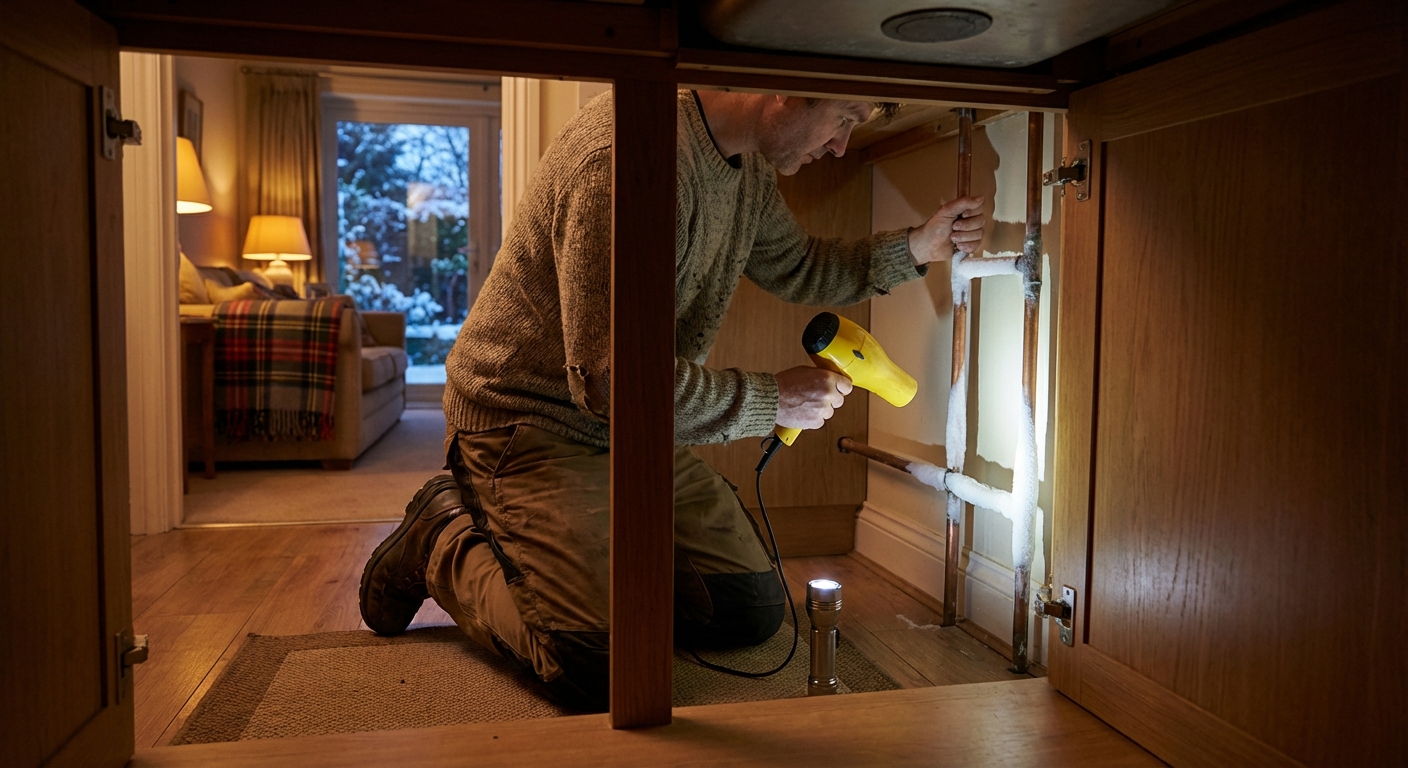
How to Identify a Frozen Pipe
The first step to solving a frozen pipe problem is recognizing you have one. Catching it early can be the difference between a minor inconvenience and a costly repair. Pipes are at risk any time temperatures fall below 32°F, but the real danger zone begins around 20°F, where unprotected pipes can freeze in as little as 3 hours.
Common Warning Signs
Reduced or No Water Flow, The most telling sign is turning on a faucet and getting nothing but a trickle, or nothing at all. Ice forming inside the pipe wall is blocking water from getting through.
Visible Frost on Pipes, Check any exposed pipes in unheated areas like basements, garages, crawl spaces, and under-sink cabinets. A white or icy coating on the outside of the pipe is a near-certain indicator.
Strange Sounds, Unusual noises like whistling, banging, gurgling, or bubbling when you turn on taps are signs that unfrozen water is trying to push through an ice blockage.
Odd Odors, A strong smell from drains can mean ice is blocking waste gases from escaping your plumbing.
Frozen Pipe vs. Burst Pipe: Know the Difference
| Sign | Frozen Pipe | Burst Pipe |
|---|---|---|
| Water flow | Reduced or none | None, or flooding |
| Visible damage | Frost or condensation | Cracks, bulges, or splits |
| Wall/ceiling | Normal | Staining, bubbling, sagging |
| Water meter | Still | Moving with all fixtures off |
| Sound | Gurgling/bubbling | Running water behind walls |

Find Trusted & Licensed Plumbers in Ohio
Get matched with companies for your specific needs
Safe Methods to Thaw Frozen Pipes
Always start with two critical steps before applying any heat: shut off the main water supply valve if there's any chance the pipe will leak once thawed, and open the affected faucet (both hot and cold handles). Opening the faucet relieves pressure and lets melting ice drain out as you work. Keep towels and buckets nearby.
Then, apply heat starting at the section closest to the faucet and work your way outward toward the frozen area. Never start in the middle, and never concentrate heat on a single spot.
The Safest DIY Thawing Methods
1. Hair Dryer
A standard household hair dryer is widely considered the safest and most effective DIY tool for thawing exposed pipes, and it's the top method recommended by both the American Red Cross and licensed plumbers in 2026. Hold it several inches from the pipe and move it back and forth in a steady sweeping motion, starting near the faucet. Use the lowest heat setting first and increase gradually if needed. Never leave it unattended, and avoid using it while standing in water.
2. Electric Heating Pad or Heat Tape
Wrap an electric heating pad or a UL-listed heat tape around the frozen section. These are especially useful for pipes under sinks or in tight cabinet spaces. They deliver slow, consistent, safe heat directly to the pipe.
3. Hot Towels
Soak towels in hot (not boiling) water, wring them out, and wrap them around the frozen section. Re-soak and replace them as they cool. This method requires no electricity and works well for localized freezes. Combining hot towels with a hair dryer speeds up the process considerably.
4. Space Heater or Heat Lamp
For pipes in larger unheated spaces like garages or utility rooms, positioning a space heater or heat lamp nearby can warm the ambient air enough to thaw the pipe. Keep the heater at least 3 feet from any flammable materials and never leave it unattended.
Thawing Method Comparison
What NOT to Do When Thawing Frozen Pipes
Using the wrong method can turn a frozen pipe into a disaster. Some approaches are genuinely dangerous to your home, your pipes, and your safety.
Dangerous Methods to Avoid
Why Open Flames Are Especially Dangerous
Open flames, blowtorches, and propane heaters deliver extreme, uncontrolled heat that can ignite nearby insulation, wood framing, and materials in tight spaces. Every major safety authority (the American Red Cross, the U.S. Fire Administration, and licensed plumbers) explicitly bans open-flame thawing. Beyond fire risk, rapid intense heat causes ice to melt too quickly, building pressure that can burst the pipe before the entire blockage clears.
Unattended Electrical Devices
According to the U.S. Consumer Product Safety Commission, portable heaters (including electric space heaters) are involved in an average of 1,600 fires, 70 deaths, and 160 injuries per year. Space heaters account for only about 3% of home heating fires but cause 41% of fatal ones. Never walk away from any electrical heat source placed near a pipe. If you need to leave the area, turn it off.
Accessing Pipes in Walls, Crawl Spaces & Underground
Some frozen pipes aren't easily reachable, and these situations require a different approach.
Pipes in Walls
You can't apply direct heat to a pipe sealed inside a wall, so your options are indirect:
- Raise your thermostat to increase the ambient temperature throughout the home, letting heat slowly penetrate the wall cavity.
- Use an infrared lamp directed at the section of wall where the pipe is located.
- As a last resort, cut into the drywall to gain direct access. This is typically a job for a professional, as improperly cutting into walls can damage wiring, insulation, or the pipe itself.
Pipes in Crawl Spaces
Crawl spaces are cold, confined, and potentially hazardous. If safe to enter:
- Use a space heater or heat lamp in the space to raise ambient temperature
- Apply heat tape directly to accessible pipe sections
- Insulate the pipe after thawing to prevent a recurrence
Learn more about preventing frozen pipes in vulnerable areas like crawl spaces and exterior walls.
Underground Pipes
Frozen underground pipes are almost always a job for a professional plumber. They have access to specialized thawing machines that send controlled electrical current or steam through underground lines, often resolving the freeze in under 10 minutes. DIY methods simply cannot reach these pipes safely or effectively.
When to Call a Professional
| Situation | DIY or Pro? |
|---|---|
| Exposed pipe under sink | DIY |
| Pipe in accessible basement | DIY |
| Pipe inside a wall | Pro recommended |
| Pipe in deep crawl space | Pro recommended |
| Underground pipe | Pro only |
| Pipe is already burst or leaking | Pro only |
| DIY methods fail after 1 to 2 hours | Call a Pro |
| Can't locate the frozen section | Call a Pro |
If your pipe has already ruptured, review our burst pipe repair guide for emergency response steps and 2026 repair cost estimates.
What to Do If a Pipe Bursts and How to Prevent It Next Winter
If a Pipe Bursts While Thawing
Even with careful technique, a pipe can burst. Here's what to do immediately:
- Shut off the main water supply valve. This is the single most important action.
- Open all faucets to relieve remaining pressure and drain the lines.
- Avoid the area if electrical hazards are present. Water and electricity are deadly.
- Begin cleanup with buckets, towels, or a wet-dry vacuum to limit water damage.
- Use fans and dehumidifiers to dry the area quickly and prevent mold growth.
- Call a licensed plumber. Do not attempt to repair a burst pipe yourself.
Will Insurance Cover the Damage?
Standard homeowners policies typically cover "sudden and accidental" water damage from a burst pipe, including structural repairs, personal property damage, and even hotel stays if your home is uninhabitable. However, insurers usually exclude the cost of repairing the pipe itself, and claims can be denied if you failed to take reasonable precautions, such as letting the home go unheated or keeping the thermostat below the policy's minimum (often 55°F). Vacancy clauses can also void coverage if the home was empty for 30 to 60 days or more without proper winterization.
Prevention Strategies for Next Winter
The best way to handle frozen pipes is to make sure they don't freeze in the first place. Review our complete winter plumbing tips guide for a full seasonal checklist, and see our plumbing winterization service guide if you own a vacation or seasonal property.
Top Pipe Freeze Prevention Tips:
- Insulate exposed pipes. Foam pipe sleeves cost roughly $0.50 to $2.00 per linear foot in 2026 and take only minutes to install. Use them on pipes in basements, garages, crawl spaces, and near exterior walls.
- Let faucets drip. On nights below 20°F, allow cold-side faucets to drip slowly. Moving water is much harder to freeze.
- Open cabinet doors. Under-sink pipes near exterior walls benefit from warm air circulation.
- Seal air leaks. Gaps around pipes where they pass through walls or foundations let in freezing cold air. Use caulk or spray foam to seal them.
- Install heat tape or heating cables. UL-listed heat cables typically run $2 to $5 per linear foot and keep pipes above freezing automatically in problem areas.
- Know your shut-off valve location. Make sure every adult in your home knows where the main shut-off valve is and how to use it. Every second counts in an emergency.
- Keep your thermostat consistent. Avoid turning heat way down at night or when you leave. Maintaining at least 55°F throughout the home keeps pipes safe (and satisfies most insurance requirements).
Frequently Asked Questions
How long does it take to thaw frozen pipes?
The time depends on how long the pipe has been frozen, how accessible it is, and what method you use. A hair dryer on an accessible pipe under a sink can thaw a frozen section in as little as 20 to 30 minutes. Pipes that have been frozen for extended periods or that are located in walls or crawl spaces can take several hours. If you've been working at it for more than 1 to 2 hours with no results, it's time to call a professional plumber.
Is it safe to use a space heater to thaw frozen pipes?
Yes, but with important precautions. A space heater can effectively warm a garage, utility room, or other enclosed space where frozen pipes are located. However, you must keep it at least 3 feet from flammable materials and never leave it unattended. Portable heaters cause an average of 1,600 fires per year according to the CPSC, so constant supervision is essential.
Can I thaw frozen pipes with boiling water?
Boiling water is not recommended by the American Red Cross or licensed plumbers. While hot water can work in some situations, boiling water delivers extreme heat that can crack or warp plastic pipes like PVC and PEX and even damage rubber fittings. If you use water as a heat source, use hot (not boiling) water, and apply it using soaked towels wrapped around the pipe rather than pouring it directly.
What happens if I can't find the frozen section of pipe?
If you can't locate the frozen section, do not continue applying heat randomly. Turn off the main water supply to prevent flooding if the pipe bursts, then call a licensed plumber. Professionals can use thermal imaging or thawing machines to pinpoint the freeze location, even inside walls or underground, and safely thaw it in as little as 10 minutes using specialized equipment.
Will homeowners insurance cover a burst pipe from freezing?
In most cases, yes, but with conditions. Standard homeowners insurance typically covers "sudden and accidental" water damage, which includes a burst pipe. However, if your insurer determines the damage resulted from negligence (such as leaving your home unheated during a cold snap or letting the thermostat fall below the policy minimum), your claim may be denied. Coverage also typically does not include the cost of repairing the pipe itself, only the resulting water damage. Always review your policy and document all damage thoroughly before filing a claim.