
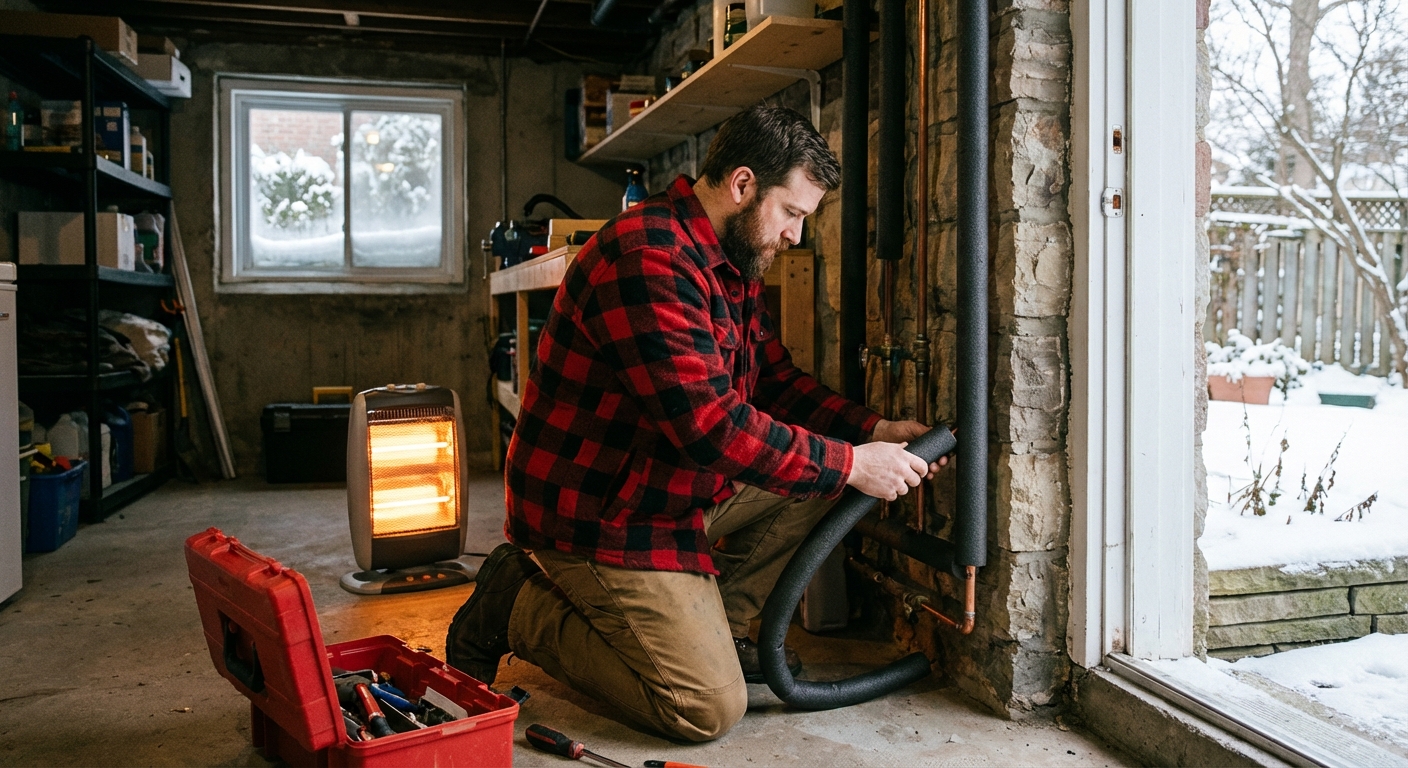
Insulate Exposed Pipes Before the Cold Hits
Pipes located in unheated or poorly insulated areas (basements, crawl spaces, attics, garages, and along exterior walls) are the first to freeze when temperatures plummet. The good news is that insulating them is a straightforward and affordable DIY task that can save you thousands.
Best Pipe Insulation Materials
| Insulation Type | Best For | 2026 Cost | Avg. Lifespan |
|---|---|---|---|
| Foam pipe sleeves | General residential pipes | $1 to $3 per 6-ft sleeve | 5-10 years |
| Rubber foam sleeves | Higher durability, hot pipes | $0.90 to $1.45 per linear ft | 10-15 years |
| Fiberglass wrap | Hot water pipes, extreme cold | ~$1.50 per linear ft | 15-20 years |
| Heat cable (electric) | Freeze-prone, hard-to-reach pipes | $2 to $4 per ft ($30 to $80 per cable) | Varies |
| Spray foam | Gaps, cracks, hard-to-reach areas | $1.25 to $1.50 per sq ft | Long-term |
Foam pipe sleeves remain the most popular option because they are lightweight, inexpensive, and snap right onto your pipes. In 2026, standard 6-foot self-sealing foam sleeves from major brands like Frost King, Everbilt, and Tundra run about $1 to $3 each at big-box stores. Insulating 50 feet of exposed 3/4-inch pipe usually costs just $15 to $30 in materials. For pipes in extremely cold areas or those that run along exterior walls, consider pairing self-regulating electric heat cable underneath a foam or fiberglass layer for added protection.
Ensure insulation fits snugly with no exposed sections, and seal any gaps with foil HVAC tape (about $7 per 65-foot roll). For hard-to-reach places like inside wall cavities, spray foam is your best bet since it expands to fill gaps and creates an airtight seal. A thickness of 1 inch is the standard recommendation for most residential pipes. For a deeper dive on prevention gear, our guide on how to prevent frozen pipes breaks down smart leak detectors, automatic shutoff valves, and 2026 pricing.

Find Trusted & Licensed Plumbers in Ohio
Get matched with companies for your specific needs
Your Winter Plumbing Maintenance Checklist
Good preventive plumbing maintenance goes well beyond pipe insulation. Use this checklist to cover all your bases before the first hard freeze of the season.
🌡️ Maintain Adequate Indoor Heat
Keep your thermostat set to at least 55°F at all times, even when you are away or sleeping. The American Red Cross and State Farm both recommend a minimum of 55°F, and many plumbers suggest 65°F or higher in older homes with pipes running along exterior walls. Pipes are at risk when temperatures drop below 32°F, and uninsulated pipes in poorly heated spaces can freeze even earlier, especially in southern states where homes often have less pipe insulation.
- Open cabinet doors under kitchen and bathroom sinks to let warm air circulate around pipes
- Keep interior doors open to distribute heat evenly throughout the home
- Keep garage doors closed if any water lines run through the garage
- Keep the thermostat at the same temperature day and night during cold snaps
💧 Drip Faucets During Extreme Cold
When temperatures drop dangerously low (20°F or below), let your faucets drip slowly, especially those connected to pipes along exterior walls. Running water, even at a trickle, relieves pressure buildup and significantly reduces the chance of a pipe freezing solid. Focus on the faucet farthest from your main water valve first, as that section of pipe is most vulnerable.
🚰 Shut Off and Drain Outdoor Faucets
Outdoor faucets are among the most vulnerable points in your plumbing system. Follow these steps before the first freeze:
- Disconnect all garden hoses. Water left in a connected hose can back-freeze into the spigot and supply line
- Locate the indoor shut-off valve for each outdoor faucet (check the basement, crawl space, or utility closet)
- Shut off the water supply to the outdoor faucet using the interior valve
- Open the outdoor spigot and let all remaining water drain out, then leave it slightly open through winter
- Install a foam faucet cover over each spigot to create a thermal barrier against freezing air
Learn more about outdoor faucet repair and winterization to ensure your hose bibs are in good shape before you shut them down for the season.
🔧 Check Your Water Heater Settings
Cold weather forces your water heater to work harder. Set the water heater thermostat to 120°F, the standard recommended setting that balances energy efficiency with adequate hot water supply. While you are at it:
- Flush the tank to remove sediment buildup (this improves efficiency and extends tank life)
- Inspect the pressure relief valve to make sure it is functioning properly
- Check for any visible rust, corrosion, or leaks around the tank
- Consider adding a water heater insulation blanket if the unit is in an unheated basement or garage
🍂 Clear Your Gutters
Clogged gutters trap water and ice during freeze-thaw cycles, leading to ice dams that can force water back under your roof and into your walls, directly threatening the pipes within. Before winter sets in, clear all leaves and debris from gutters and ensure downspouts direct water at least 3 to 5 feet away from your foundation.
For a full month-by-month schedule, see our annual plumbing maintenance guide or review common plumbing mistakes that quietly cause winter damage.
Regional Considerations & Vacation Home Winterization
Regional Plumbing Risks Vary Widely
Homeowners in the South and Southwest face a unique risk because freezing temperatures are rare, so homes in these regions are often built without the freeze-protection features standard in northern climates. Winter Storm Fern (January 23 to 27, 2026) spread damaging ice, snow, and deep freeze across more than half of U.S. states, and Verisk's updated Winter Storm Model identified 14 states from Texas to Massachusetts each expected to exceed $50 million in insured losses. Karen Clark & Company pegged Fern's privately insured loss at $6.7 billion, while Verisk estimated closer to $4 billion, ranking Fern as one of the costliest U.S. winter storms on record. If you live in a region where hard freezes are infrequent, be especially vigilant when temperatures are forecast to drop below 28°F. State Farm's most recent multi-state data (January 2024 through June 2025) ranked Illinois, Oregon, Washington, Texas, and Tennessee as the top five states by total frozen pipe claim costs.
Winterizing a Vacation Home or Seasonal Property
If you are leaving a property vacant for an extended period, simply setting the thermostat to 55°F may not be enough. The safest approach for a vacant home is a full plumbing drain-down. Our full vacation home plumbing guide walks through the drain-vs-antifreeze debate and remote monitoring options in more detail.
- Shut off the main water supply at the street-level valve or main house shutoff
- Open all faucets (hot and cold) to drain lines, working from the top floor down
- Flush all toilets and drain the tanks
- Drain the water heater by turning off gas or electricity first, then attaching a hose to the drain valve and emptying the tank completely
- Pour non-toxic propylene glycol RV antifreeze (about 12 oz per fixture) into all sink, tub, and floor drains to protect P-traps from freezing and evaporating
- Disconnect and drain all outdoor hoses and irrigation lines
For properties with well pumps or complex irrigation systems, consider a professional plumbing winterization service to ensure all components are fully winterized.
What to Do If Your Pipes Freeze or Burst
Even the best preparation cannot guarantee against an unexpected deep freeze. Here is what to do if the worst happens. For a full breakdown, see our burst pipe repair guide.
If a Pipe Is Frozen (But Not Yet Burst)
- Turn on the faucet. Even a trickle tells you it is frozen, and keeping it open relieves pressure as the ice melts
- Apply gentle heat to the frozen section using a hair dryer, heating pad, or warm towels. Never use an open flame or propane torch
- Work from the faucet back toward the wall so melting water has an escape route
- Check all other faucets because multiple pipes may be affected simultaneously
- Call a plumber if the frozen section is inaccessible or if pressure does not return within 30 minutes
For step-by-step instructions and safe thawing techniques, see our detailed guide on how to safely thaw frozen pipes.
If a Pipe Has Burst
| Step | Action |
|---|---|
| 1 | Shut off the main water valve immediately to stop flooding |
| 2 | Open all faucets to drain remaining water from the system |
| 3 | Turn off electricity in any wet areas before touching anything |
| 4 | Use towels or a wet/dry vacuum to remove standing water |
| 5 | Call a licensed plumber, do not attempt pipe repairs yourself |
| 6 | Document all damage with photos for your homeowners insurance claim |
According to State Farm's latest data (January 2024 through June 2025), more than 20,000 frozen pipe and winter water damage claims were filed, totaling over $628 million in paid losses, with average payouts above $30,000. In 2026, professional burst pipe repairs typically run $150 to $5,000 for the plumbing work alone, with $500 as a common national average and hourly labor rates between $119 and $213. Once you add water extraction and drying ($1,000 to $4,000), structural repairs ($1,500 to $20,000+), and possible mold remediation ($500 to $6,000), total losses on a single burst can easily reach $10,000 to $50,000 or more. Knowing your main shutoff valve location before an emergency can be the difference between minor damage and a catastrophic loss.
Frequently Asked Questions
At what temperature do pipes start to freeze?
Pipes are at risk of freezing when outdoor temperatures drop below 32°F, and damage becomes much more likely below 20°F. Pipes in uninsulated spaces like exterior walls, crawl spaces, and garages can freeze even at slightly higher temperatures. In southern states, problems can occur earlier because homes are often built without freeze-protection features. The key variables are pipe location, material, and how well insulated the surrounding space is.
Should I let my faucets drip all night during a cold snap?
Yes, allowing a slow drip from faucets fed by exposed or vulnerable pipes is a proven and inexpensive prevention method. Even a trickle of running water helps relieve pressure inside pipes and dramatically reduces the chance of freezing. Focus on faucets along exterior walls and the faucet farthest from your main shutoff valve. The cost in water usage is minimal (typically just a few cents) compared to hundreds or thousands of dollars in potential repairs.
How do I know if my pipe is frozen?
Common signs of a frozen pipe include little to no water flow from a faucet, visible frost or a bulge on an exposed pipe, or unusual sounds when you turn on a tap. If multiple faucets have reduced pressure simultaneously, especially on a particularly cold morning, suspect frozen pipes in a shared supply line. Act quickly because a frozen pipe that is not thawed promptly can burst and cause serious water damage. Our seasonal plumbing problems guide covers other winter warning signs to watch for.
Is it safe to leave my vacation home empty in winter without draining the pipes?
If you maintain the thermostat at 55°F or above and the heating system is reliable, it is possible to leave a vacation home without draining pipes, but it carries risk. The safest and most recommended approach for extended absences is to fully drain the plumbing system and add non-toxic propylene glycol RV antifreeze to all P-traps. For added peace of mind, install a Wi-Fi connected thermostat and a smart water shutoff so you can act remotely if temperatures drop or a leak begins.
Does homeowners insurance cover frozen pipe damage?
Most standard homeowners policies cover sudden and accidental water damage caused by frozen and burst pipes, including drywall, flooring, and personal property, but they typically exclude the cost of the failed pipe itself. In late 2025, a Texas federal court in Barona v. State Farm Lloyds enforced the freezing exclusion and upheld a claim denial, ruling that the duty to maintain heat or drain plumbing is a condition of coverage, not a suggestion. Many policies also contain vacancy clauses that reduce or void coverage if a home is empty for 30 or more days (some as short as 14 days) without proper winterization. Always review your policy language before winter, keep heat at 55°F or higher, and document every preventive step you take.