
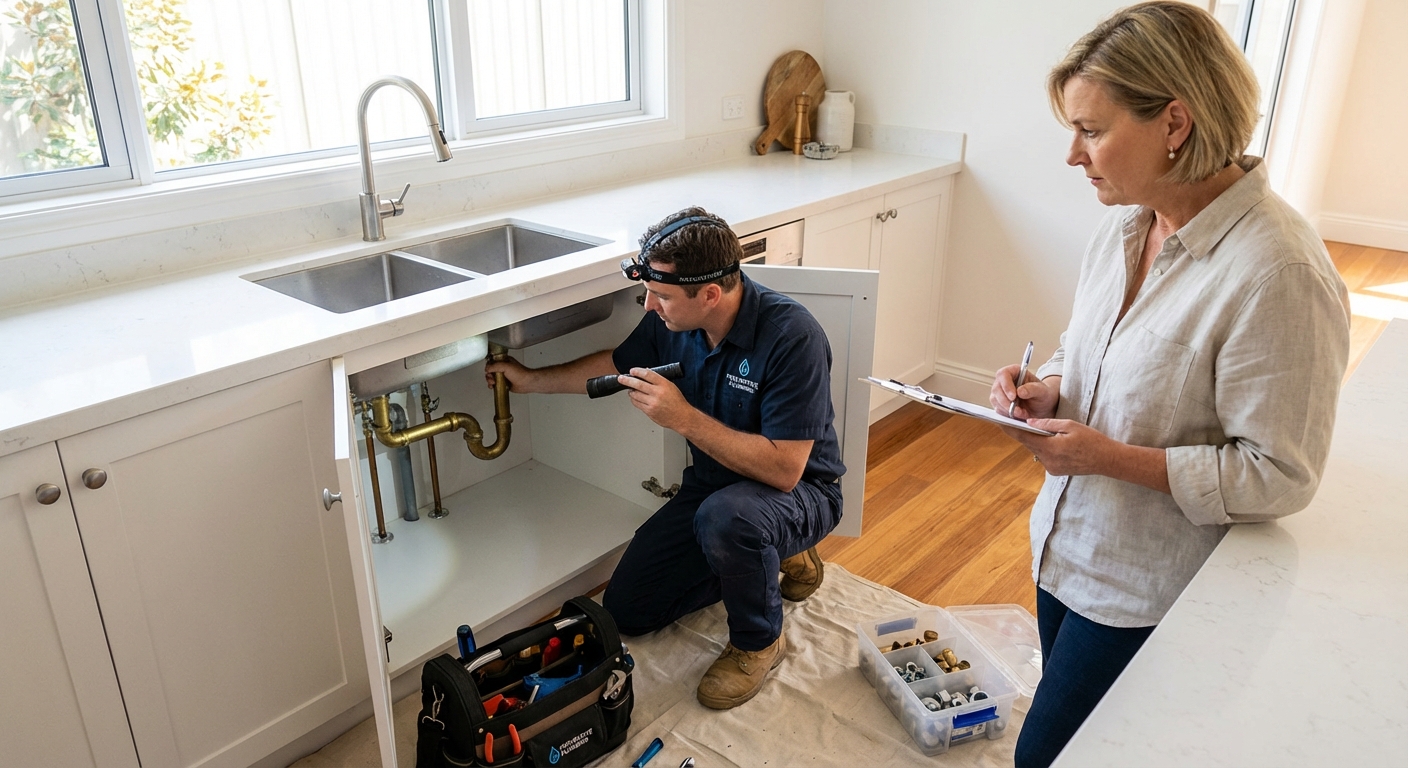
What Is Preventive Plumbing Maintenance?
Preventive plumbing maintenance is the practice of regularly inspecting, cleaning, and servicing your home's water systems before minor issues escalate into expensive disasters. Instead of waiting for a pipe to burst or a drain to back up completely, preventive care addresses the early warning signs (slight pressure drops, slow drains, or corroded valves) weeks or even months before they become emergencies.
The financial case is compelling. A routine professional plumbing inspection in 2026 averages $250 to $300, with basic visual inspections starting at $100 to $200 and comprehensive full-system inspections running $200 to $500. Compare that to the cost of a burst pipe repair (around $500 for the pipe itself, but $1,000 to $6,000 once you factor in water damage cleanup) or a failed water heater ($1,200 to $2,500 for tank replacement, $1,400 to $4,000 for tankless). The average water damage insurance claim payout now sits between $10,234 and $12,514 nationally, with burst-pipe claims specifically averaging $10,000 to $15,000, and severe multi-floor events climbing to $30,200 or more. Homeowners who commit to preventive maintenance typically save 15 to 20% on annual plumbing repair costs compared to those who only call a plumber when something breaks.

Find Trusted & Licensed Plumbers in Ohio
Get matched with companies for your specific needs
Your Preventive Plumbing Maintenance Checklist
A solid maintenance routine breaks down into monthly habits, seasonal tasks, and annual professional service. Here's what each looks like in practice. For a deeper week-by-week breakdown, our annual plumbing maintenance guide lays out the full schedule.
Monthly Habits (DIY-Friendly)
These quick checks take 15 to 30 minutes and can be done by any homeowner:
- Check faucets and toilets for drips, running water, or unusual sounds
- Run water in rarely used drains (basement, laundry room) to prevent sewer gas return
- Look under sinks for moisture, mold, or soft cabinetry, which are signs of a slow leak
- Pour baking soda and vinegar down drains to break up organic buildup (safer than chemical cleaners, which can corrode pipes)
- Inspect exposed pipes in basements, garages, and crawl spaces for corrosion or moisture
Annual Tasks: What to Schedule Every Year
| Task | DIY or Pro? | Estimated 2026 Cost |
|---|---|---|
| Flush water heater tank | DIY | $0 (your time) |
| Test water pressure (should be 40 to 80 PSI) | DIY | $10 to $20 for a gauge |
| Inspect all shutoff valves | DIY | $0 |
| Check washing machine hoses; replace if over 5 years old | DIY | $15 to $30 |
| Professional plumbing inspection | Pro | $250 to $300 |
| Professional drain cleaning | Pro | $186 to $549 |
| Sewer camera inspection | Pro | $300 to $1,100 |
| Water heater anode rod inspection | Pro | $75 to $200 |
Seasonal Checklist
Spring
- Inspect the sump pump before storm season by pouring water into the pit to confirm it activates
- Clear gutters and downspouts to prevent water from pooling near your foundation
- Check outdoor hose bibs for freeze damage from winter
Summer
- Test your irrigation system for leaks, clogged heads, and pressure inconsistencies
- Inspect outdoor spigots and hose connections for drips or corrosion
- Clean showerhead and faucet aerators with vinegar to remove mineral deposits that restrict flow
Fall
- Disconnect and drain garden hoses before the first freeze
- Install insulating covers on outdoor faucets (hose bib covers cost about $3 to $8 each)
- Seal any drafts or gaps near exposed interior pipes using caulk or foam insulation
Winter
- Maintain a minimum indoor temperature of 55°F even when away from home
- Open cabinet doors under sinks on very cold nights to let warm air circulate around pipes
- Let faucets fed by exposed pipes drip slightly during freezing temperatures to keep water moving
For a complete year-round breakdown, see our guide to seasonal plumbing problems and prevention. If you ever experience a burst or frozen pipe, knowing the exact emergency steps can save you thousands in water damage before the plumber arrives.
Smart Leak Detection: The Best 2026 Upgrade
One of the biggest shifts in preventive plumbing is the rise of affordable, smart leak detection technology. Modern systems now combine whole-home water monitors with point sensors placed near appliances, water heaters, and under sinks. Many insurance companies (including USAA, Farmers, State Farm, Travelers, Hippo, and Chubb) now offer premium discounts of 3 to 20% for homes with qualifying smart shutoff systems installed. Moen Flo is recognized for insurance discounts by more carriers than any other detector on the market in 2026.
| Device Type | 2026 Price Range | Best For |
|---|---|---|
| Wi-Fi puck sensors (Govee, Aqara, First Alert) | $10 to $65 each | Spot detection at fixtures |
| Whole-home monitor, no plumber (Flume 2) | $199 to $300 | Renters and DIY homeowners |
| Smart shutoff valve (Moen Flo, Phyn Plus) | $499 to $700 + install | Maximum protection, insurance discounts |
Pairing a whole-home shutoff with a few point sensors creates the strongest defense against catastrophic leaks. Moen Flo detects leaks in under 15 seconds and delivers alerts through six independent channels, making it the top-rated auto-shutoff pick in 2026 roundups. Our deep dive on winter plumbing tips covers smart shutoff installation, compatibility, and ROI in detail.
DIY Maintenance vs. Hiring a Professional
Knowing where your limits are is just as important as staying on schedule. Attempting the wrong task without training can void warranties, violate local codes, or cause serious water damage.
When it's time to bring in a professional, understanding plumber pricing in 2026 helps you budget accurately. Standard plumber hourly rates now range from $75 to $150 per hour (with most homeowners paying $80 to $130), while master plumbers command $100 to $200 per hour. Service call fees typically run $75 to $150, and emergency after-hours service multiplies standard rates by 1.5x to 3x, often landing at $150 to $300 per hour with an additional $150 to $350 dispatch fee. Our breakdown of emergency plumber costs in 2026 shows the full pricing picture, while our decision guide on when to call an emergency plumber helps you avoid unnecessary after-hours fees.
Are Plumbing Maintenance Plans Worth It?
Plumbing maintenance plans (also called service agreements or service contracts) are subscription programs offered by plumbing companies that provide scheduled annual inspections, priority service access, and discounts on repairs, all for a recurring fee.
What Maintenance Plans Typically Cover
- Annual plumbing inspection (valued at $250 to $300): Covers fixtures, drains, water heaters, pipes, pressure, flow rate, and leak detection
- Water heater flush and tune-up: Often included in mid-tier and higher plans
- Priority scheduling: Jump to the front of the line for service calls, including 24/7 access
- Repair discounts: Members typically receive 10 to 15% off parts and labor on covered repairs
- Waived diagnostic or trip fees: Common at higher membership tiers
Typical 2026 Costs
The 2026 market anchor for a single-home annual plan is $179 to $199, with most residential plans falling between $149 and $249 per year.
| Plan Type | Annual Cost | Value Included | Best For |
|---|---|---|---|
| Basic membership | $149 to $199 | 1 inspection + water heater flush + 10% repair discount | Newer homes (built after 2000) |
| Comprehensive plan | $249 to $449 | Inspection + heater flush + drain cleaning + 15% discount + priority scheduling | Older homes or frequent issues |
| Home warranty w/ plumbing | $49+/month + $75 to $125 service fee | Broader appliance + plumbing repair coverage | Homeowners wanting all-in-one protection |
Is It Worth It?
For most homeowners with homes built before 2000, yes. The annual inspection alone is typically valued at $250 to $300, which often covers or nearly covers the plan's yearly cost. Add in repair discounts and priority access, and the math usually works in your favor, especially if your plumbing system has a history of small issues. Our full plumbing service plans guide walks through how to compare providers.
For newer homes with minimal plumbing problems, a standalone annual inspection may be more cost-effective than a monthly subscription. It's also worth comparing maintenance plans to pay-per-visit plumbing costs, which takes a different approach by covering repair costs on demand rather than through preventive visits.
If a major plumbing issue does slip through despite your best prevention efforts, understanding burst pipe repair costs and emergency response will help you act fast and minimize damage. And if you own a vacation home, our seasonal property plumbing guide covers remote monitoring and winterization unique to those properties.
Frequently Asked Questions
How often should I schedule professional plumbing maintenance?
For most homes, a professional inspection every one to two years is sufficient. However, if your home was built before 2000, has older galvanized or polybutylene pipes, or has a history of recurring issues, an annual inspection is strongly recommended. Older systems are significantly more vulnerable to corrosion, buildup, and sudden failures that a professional can spot before they escalate. Learn more about how to prevent frozen pipes if your home is at risk in winter.
What happens if I skip annual plumbing maintenance?
Skipping maintenance doesn't guarantee a problem, but it dramatically increases your risk exposure. Small issues like minor leaks, sediment buildup in water heaters, or slowly corroding pipe joints go undetected and worsen over time. What might cost $150 to fix during a routine visit can turn into a $10,000 to $15,000 insurance claim if a pipe eventually fails. Emergency repair rates in 2026 also run 1.5x to 3x higher than scheduled service.
Can I flush my own water heater?
Yes, flushing your water heater is one of the most impactful DIY maintenance tasks you can do. Turn off the power or gas supply, connect a garden hose to the drain valve, and drain the tank until the water runs clear. Do this once a year (every 6 months if you have hard water) to remove sediment that reduces efficiency and shortens the heater's lifespan. If your heater is over 10 years old, watch for signs of a leak and have a professional inspect it during the flush for rust or a failing anode rod.
What is the ideal water pressure for a home?
Residential water pressure should fall between 40 and 80 PSI. Pressure below 40 PSI signals a potential blockage or supply issue, while anything above 80 PSI puts excessive stress on pipes, joints, and appliances, increasing your risk of leaks and fixture damage. You can test pressure yourself with an inexpensive gauge ($10 to $20) attached to an outdoor hose bib. If pressure is consistently outside this range, a plumber can install or adjust a pressure regulator.
How do I protect my pipes from freezing in winter?
The most effective strategies are insulating exposed pipes in unheated spaces (attics, basements, garages) with foam sleeves, maintaining a minimum indoor temperature of 55°F at all times, and allowing a slow drip from faucets fed by exterior-facing pipes during extreme cold snaps. Before winter arrives, disconnect and drain all garden hoses and install hose bib covers. Our guide on how to safely thaw frozen pipes walks through what to do if prevention fails.