
Common Outdoor Faucet Problems (And What Causes Them)
Your outdoor faucet, also called a hose bib or spigot, takes a beating year-round. From summer garden hose use to freezing winter temperatures, it's one of the most overlooked plumbing fixtures until something goes wrong. The most common outdoor faucet problems are leaks, worn washers and O-rings, loose connections, faulty packing nuts, failed anti-siphon or vacuum breakers, worn hose threads, low or irregular water pressure, and freeze or burst damage in cold weather.
Leaking Faucet
A dripping outdoor faucet is usually caused by a worn-out rubber washer inside the valve stem. Over time, temperature swings and mineral deposits degrade the washer, preventing it from fully sealing when the handle is closed. Leaks can also occur at the anti-siphon or vacuum breaker device, which is a common leak point and is often replaced rather than repaired.
Faucet Won't Shut Off (or Turn On)
If the handle spins but water keeps running, or won't flow at all, the culprit is usually a stuck or corroded valve, a loose packing nut, or a badly worn washer. Rust and mineral scale build up after long periods of disuse, jamming the internal stem. A shot of penetrating lubricant like WD-40 can free a stuck valve, but a worn washer needs replacement.
Handle Problems
A loose, spinning, or broken handle is typically held in place by a single screw. Corrosion on the stem or a stripped screw makes the handle wobble or fall off entirely. Handle replacement is one of the simplest and cheapest outdoor faucet repairs you can do yourself.
Freeze Damage
This is the most serious and costly outdoor faucet problem. Water expands approximately 9% when it freezes, which can crack the faucet body, split the pipe behind the wall, or cause a hidden leak that you won't discover until spring. The most common cause? Leaving a garden hose attached through the winter, which traps water inside the faucet and prevents it from draining.

Find Trusted & Licensed Plumbers in Ohio
Get matched with companies for your specific needs
Standard vs. Frost-Free Faucets: What's the Difference?
Not all outdoor faucets are built the same. Knowing which type you have is critical before attempting any repair.
How a Frost-Free Faucet Works
A frost-free (or freeze-proof) faucet features an elongated stem, typically 8 to 12 inches long, that pushes the shut-off valve deep into the warm interior of your home. When you turn the handle off, it also opens a small drain path that allows the water remaining in the outdoor portion of the pipe to drip out, leaving nothing behind to freeze. Most frost-free models also include a vacuum breaker to prevent contaminated water from being siphoned back into your home's supply.
Important: A frost-free faucet only works as designed if you remove your garden hose before winter. A connected hose blocks the drain path, trapping water inside and defeating the entire purpose of the frost-free design.
DIY Outdoor Faucet Repair: Step-by-Step
Many outdoor faucet repairs are beginner-friendly and require only basic tools. Here's how to handle the most common fixes yourself. For a broader look at what faucet replacement costs across different fixture types, check our full breakdown.
What You'll Need
- Adjustable wrench and pipe wrench
- Flathead and Phillips screwdrivers
- Replacement rubber washers (assortment kit)
- Plumber's (Teflon) tape
- Wire brush
- Penetrating lubricant (WD-40)
Fix 1: Washer Replacement (Stops Dripping from the Spout)
This is the most common outdoor faucet repair and takes about 20-30 minutes.
- Shut off the water at the interior shutoff valve supplying the outdoor faucet.
- Open the outdoor faucet fully to drain residual pressure and water.
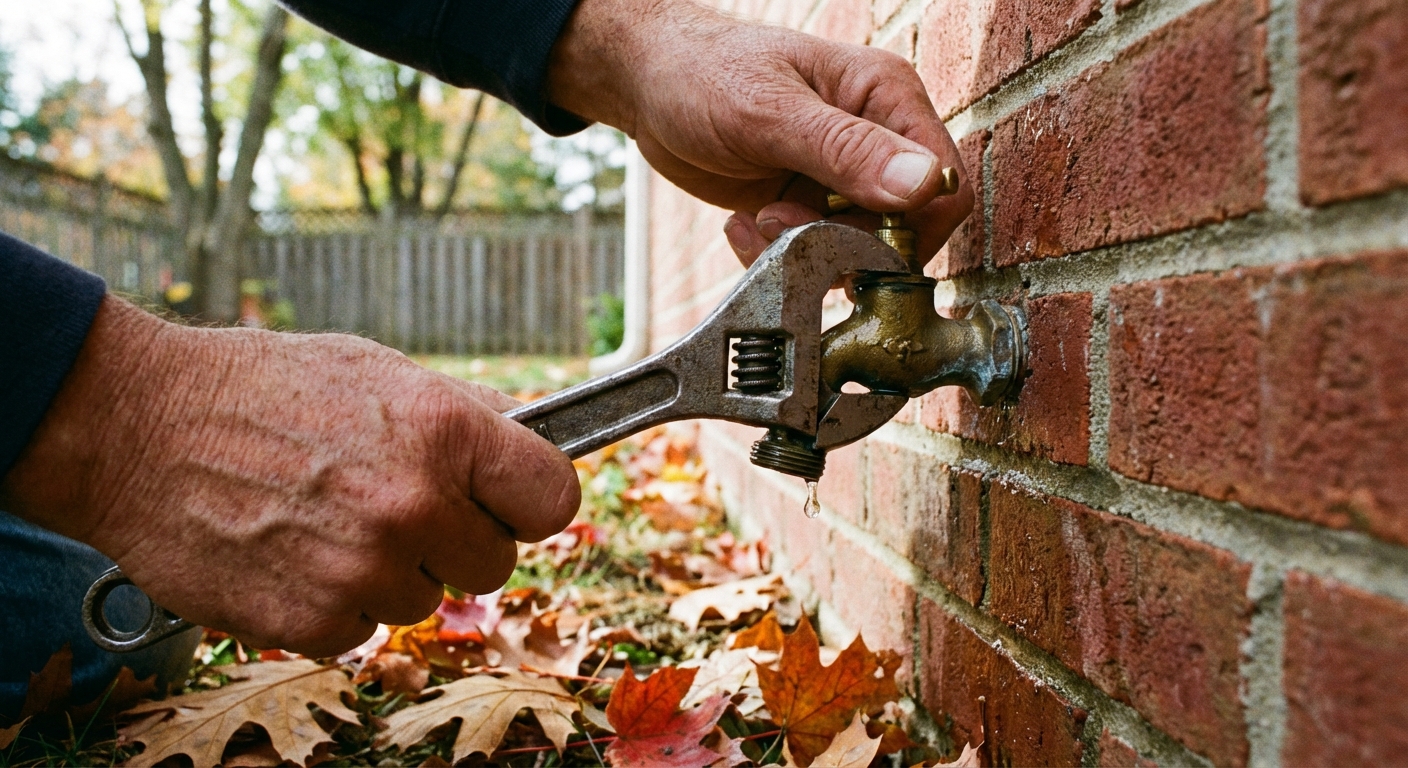
- Use a pipe wrench on the faucet body for stability and an adjustable wrench to loosen the packing nut (counterclockwise).
- Unscrew and pull out the valve stem assembly.
- At the bottom of the stem, remove the screw holding the old rubber washer.
- Fit a new washer of the same diameter and secure it with the screw, hand-tight only.
- Clean the valve seat inside the faucet body with a wire brush.
- Wrap the stem threads with plumber's tape, reinsert the stem, and tighten the packing nut.
- Turn the water back on and test for leaks.
Fix 2: Packing Nut Adjustment (Stops Leaks Around the Handle)
If water is seeping out around the handle stem rather than the spout, the packing nut just needs tightening.
- Shut off the water supply.
- Locate the packing nut, the hex-shaped nut just behind the handle.
- Brace the faucet body with one wrench and use another to turn the packing nut clockwise, just a quarter turn at a time.
- Turn the water back on. If the leak stops, you're done.
- If it persists, the internal packing material is worn out and needs replacement (proceed with full washer replacement as above).
Fix 3: Handle Replacement
- Shut off the water.
- Remove the screw securing the handle (usually under a decorative cap).
- Pull the old handle straight off the stem.
- Clean any corrosion from the stem with a wire brush.
- Slide on the new handle, align it, and secure with the screw.
When DIY Isn't Enough
Call a licensed plumber if you encounter any of the following:
- Cracked faucet body or split pipe (freeze damage)
- Leaks inside the wall after a freeze/thaw cycle
- Faucet won't stop leaking after washer replacement
- You're replacing a standard faucet with a frost-free model (requires modifying interior plumbing)
If you suspect a hidden leak, a leak detection service can pinpoint the problem without tearing open walls. You can also get a full plumbing inspection to assess the overall condition of your outdoor plumbing.
Outdoor Faucet Repair & Replacement Costs in 2026
Here's what you can expect to pay in 2026, whether you go the DIY route or hire a professional. The national average cost to repair a faucet in 2026 is $269–$324 per faucet, with a realistic professional repair range for an outdoor hose bib of about $200–$325 when accessible and not frozen inside the wall.
| Service | DIY Cost | Professional Cost (2026) |
|---|---|---|
| Washer/seal replacement | $5–$15 (parts only) | $125–$275 |
| Packing nut tightening | Free | $100–$175 |
| Handle replacement | $10–$25 (parts only) | $100–$200 |
| Standard hose bib replacement | $20–$60 (parts only) | $150–$350 |
| Frost-free hose bib installation | $40–$80 (parts only) | $250–$400 |
| Freeze damage / burst pipe repair | Not recommended | $500–$3,000+ |
A frost-free part typically costs $35–$45 for the faucet itself, with installed cost around $250–$400 for a frost-free exterior faucet. For burst pipes, repairs typically cost between $150 and $5,000, with most homeowners paying around $500, and water damage restoration can easily push the total higher.
Plumber labor rates for hose bib work in 2026 typically run $100–$200 per hour for residential service calls, with most outdoor faucet jobs completed in one to two hours. Many plumbers charge a flat service call fee of $75–$150, which is applied toward the total repair cost. If you need same-day or emergency service, expect to pay a premium. Emergency plumber rates can be 50–100% higher than standard rates.
Winterization Tips to Prevent Outdoor Faucet Damage
Prevention is far cheaper than repair. When pipes freeze and burst, the resulting water damage can be costly, so winterizing before freezing temperatures is critical. Follow these steps before the first hard freeze (below 32°F) each fall to protect your outdoor faucets.
Step-by-Step Winterization Checklist
- Locate and close the interior shutoff valve, usually in the basement, utility room, or crawlspace behind the faucet. Turn it fully off.
- Disconnect all garden hoses, drain them and store indoors. A hose left on traps water and blocks drainage on frost-free faucets.
- Open the outdoor faucet, turn the handle fully on and let it run until water stops completely. This drains the exposed pipe section.
- Leave the outdoor handle slightly open through winter to allow any remaining moisture to escape and equalize pressure.
- Install an insulated faucet cover, foam dome-style covers cost $3–$10 and add a meaningful layer of cold protection.
- Seal gaps around the faucet base using exterior-grade caulk to block cold air from penetrating the wall cavity.
- Insulate exposed supply pipes, any pipe in an unheated garage, crawlspace, or exterior wall should be wrapped with foam pipe sleeves.
If your pipes have frozen and burst before, consider upgrading to a frost-free hose bib or having a plumber assess whether your outdoor pipes need additional insulation. Persistent low water pressure after winter could also indicate partial freeze damage or a pipe issue worth investigating.
Frequently Asked Questions
Why is my outdoor faucet dripping when turned off?
A dripping outdoor faucet is almost always caused by a worn or deteriorated rubber washer at the base of the valve stem. Every time you turn the faucet on and off, the washer compresses against the valve seat, causing gradual wear. Replacing the washer (a $5–$10 DIY repair) solves the problem in most cases. If the drip continues after washer replacement, the valve seat itself may be damaged and need resurfacing or professional replacement.
How much water does a leaky outdoor faucet waste?
A faucet leaking once per second wastes over 3,000 gallons per year, and a faster drip or steady trickle can waste 7,000 to 10,000 gallons annually. Even a slow drip can quietly add hundreds of gallons to your water bill over the course of a year, plus the moisture can saturate soil near your foundation and cause longer-term damage. Fixing it promptly with a $5 washer is almost always the smarter financial move.
How do I know if I have a frost-free outdoor faucet?
The easiest way to tell is by looking at the length of the faucet. A frost-free (freeze-proof) hose bib has a noticeably longer body, typically 8 to 12 inches, compared to the short 2-3 inch body of a standard faucet. You can also look for a small anti-siphon cap on the side of the faucet head, which is standard on most frost-free models. If you're still unsure, check the manufacturer's label or consult your home's original plumbing documentation.
Can I repair a frozen and burst outdoor faucet myself?
Minor cracks in the faucet body can sometimes be addressed with a replacement faucet, but if the pipe behind the wall has burst, DIY repair is not recommended. A burst pipe inside the wall requires opening the wall cavity, cutting and rejoining the pipe, and ensuring there are no secondary leaks, all of which require professional tools and expertise. Attempting this repair incorrectly can lead to mold growth, structural damage, and higher long-term costs.
Is it cheaper to repair or replace an outdoor faucet in 2026?
For minor issues like a worn washer or loose packing nut, repair is almost always cheaper, often under $20 in parts. However, if the faucet body is cracked, the valve seat is severely corroded, or it's a very old standard faucet prone to freezing, full replacement at $150–$400 professionally installed is often the smarter long-term investment. Replacing an aging standard faucet with a frost-free model pays dividends over time by eliminating costly freeze-related repairs.