
The Real Cost of Frozen Pipes and Why Prevention Pays
Frozen pipes are one of winter's most destructive and expensive surprises. According to the most recent State Farm claims data covering January 2024 through June 2025, more than 20,000 frozen pipe claims were filed, total paid losses exceeded $628 million, and the average claim payment topped $30,000. The five states with the highest total claim costs were Illinois, Oregon, Washington, Texas, and Tennessee, a reminder that freeze damage isn't just a problem for the coldest regions.
Industry-wide, average residential frozen pipe claims still range from roughly $10,000 to $15,000, but severe cases routinely exceed $50,000, and a single eighth-inch crack in a pipe can leak up to 250 gallons of water per day. With repair and reconstruction costs climbing into 2026, prevention has never been more valuable.

Find Trusted & Licensed Plumbers in Ohio
Get matched with companies for your specific needs
Temperature Thresholds: How Cold Before Pipes Freeze?
Understanding the physics of frozen pipes helps you know exactly when to act.
The Key Numbers to Know
While water technically freezes at 32°F (0°C), your pipes rarely reach that threshold instantly because indoor heat and insulation provide a buffer. The real danger begins when outdoor temperatures fall below 20°F (-6.7°C), especially for pipes in unheated or uninsulated spaces. At that point, ice can expand inside a pipe with up to 2,000 psi of pressure, enough to split copper, PVC, or PEX.
According to current plumbing industry estimates, insulated pipes exposed to 20°F can freeze in about 6 hours, while unprotected pipes may freeze in as little as 3 hours. In some cases, damage develops after just 2 to 6 hours in vulnerable areas during severe cold.
| Temperature | Risk Level | Recommended Action |
|---|---|---|
| 32°F to 20°F | Low to Moderate | Let faucets drip; open cabinet doors |
| 20°F to 10°F | High | Add heat tape; insulate exposed pipes |
| Below 10°F | Critical | All of the above plus space heaters in vulnerable areas |
| Extended cold below 0°F | Extreme | Shut off outdoor lines; monitor continuously |
Important: Wind chill is a major factor. Even at 25°F, strong wind blowing across an uninsulated crawl space can cause pipes to freeze. Always factor wind chill into your risk assessment.
Your Indoor Thermostat Threshold
Never let your thermostat drop below 55°F, even when you're away from home for extended periods. During extreme cold events, setting it to 60°F or higher provides a meaningful additional buffer, especially for older homes with less insulation.
Most Vulnerable Areas in Your Home
Not all pipes are equally at risk. Knowing where your plumbing is most exposed lets you prioritize your prevention efforts.
High-Risk Zones to Inspect
Crawl Spaces. Crawl spaces combine exposed plumbing with cold air entering through foundation vents and moisture buildup, making them prime freeze zones. Cold air flows freely beneath uninsulated floors, and temperature swings can be severe. Consider insulating crawl space pipes with foam sleeves and sealing foundation vents during the coldest months.
Pipes Along Exterior Walls. Pipes running through exterior walls (especially behind kitchen sinks, bathroom vanities, and laundry rooms) have minimal insulation separating them from the cold. North-facing walls are particularly vulnerable. These pipes can freeze even when the rest of your home feels warm.
Outdoor Faucets (Hose Bibs). Your outdoor faucet is one of the first things to freeze during a cold snap because it's directly exposed to the elements and connected to your interior plumbing. Always shut off the interior supply valve and drain the line before winter sets in. For new builds or replacements, frost-free hose bibs offer built-in protection.
Attics and Unheated Garages. Attics can reach outdoor temperatures when insulation traps heat below. Garages face direct cold exposure every time the door opens. If you have a water line running through either area, it needs to be insulated or heated.
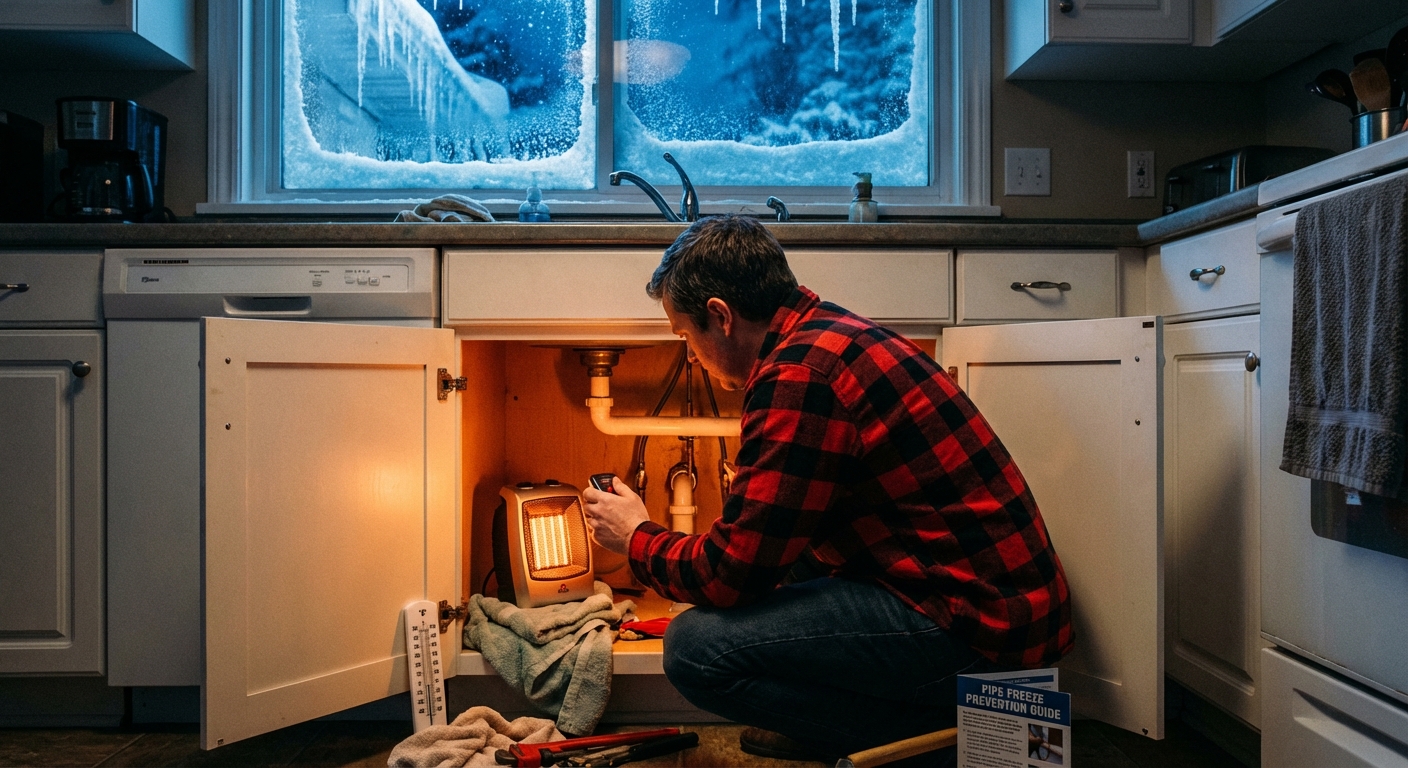
Under-Sink Cabinets on Exterior Walls. Enclosed cabinet spaces block warm air from reaching pipes located on cold exterior walls. Opening those cabinet doors is one of the simplest and most effective prevention tips you can use.
Frozen Pipe Prevention Methods That Actually Work
There's no single silver bullet. The most effective strategy layers multiple methods together. A solid program of preventive plumbing maintenance makes winter freeze prep much easier.
1. Pipe Insulation (Best Long-Term Fix)
Foam pipe sleeves are one of the simplest, most affordable, and most permanent solutions available. They run $1 to $3 per linear foot at any hardware store and wrap around exposed pipes in crawl spaces, attics, garages, and along exterior walls. Self-sealing foam sleeves take just minutes to install and can last for years. This is especially valuable if you have PEX plumbing, which has some natural freeze resistance but still benefits from insulation. Professional installed pipe insulation typically runs $285 to $411 in many markets.
2. Heat Tape and Heating Cables
For pipes in extremely cold areas where insulation alone may not be enough, electric heat tape (also called pipe heating cables) provides active, consistent warmth. Look for self-regulating, thermostatically controlled options that automatically adjust output based on temperature. They're safer and more energy-efficient than constant-wattage varieties. Always use products rated for outdoor or unheated-space use, choose UL-listed cables, and plug them into a GFCI outlet.
3. Dripping Faucets
Moving water is much harder to freeze than standing water. During a cold snap, let the faucet that's farthest from your main shutoff valve drip at a slow but steady trickle (approximately pencil-thickness). Do this for both hot and cold lines where both run through exterior walls. This is particularly important for pipes in crawl spaces or against north-facing exterior walls.
4. Open Cabinet Doors
A simple but highly effective tip: open the cabinet doors under sinks located on exterior walls. This allows your home's warm air to circulate around the pipes inside, dramatically reducing freeze risk. It costs nothing and takes two seconds.
5. Smart Home Tech and Automatic Shutoff
One of the biggest 2025-2026 shifts in frozen pipe prevention is the rise of smart leak detectors with freeze alerts and automatic shutoff valves. Smart sensors monitor temperature and moisture, sending instant alerts to your phone the moment conditions become dangerous. When paired with an automatic shutoff valve, the system can cut water supply the instant a leak is detected, dramatically limiting damage even if a pipe does fail.
6. Maintain Indoor Heat
Setting your thermostat consistently (never below 55°F, and higher during extreme cold) is the single most foundational prevention measure you can take. Keep interior doors open throughout the home to allow heat to circulate, and consider using a space heater in areas like an unheated basement or utility room.
Special Considerations: Mobile Homes & Vacation Properties
Mobile Homes
Mobile homes present unique challenges. Their elevated designs expose the underside of the home to cold air, and thinner walls mean pipes along exterior walls have far less insulation than a traditional stick-built home. Here's what to prioritize:
- Insulated skirting: Install or repair vinyl or metal skirting around the base of the home to block wind from reaching underside pipes. Seal all gaps thoroughly.
- Wrap exposed pipes: Focus especially on joints and fittings, which are more vulnerable to cracking. Use outdoor-rated foam insulation or heat tape on all accessible pipes underneath the home.
- Drip both hot and cold lines: During extreme cold, run a slow trickle on both the hot and cold sides of faucets throughout the home.
- Seal drafts at plumbing entries: Where pipes enter the floor or walls, use caulk or weatherstripping to eliminate cold air intrusion.
If a pipe does freeze or burst, expect significant emergency repair costs. In 2026, emergency plumbers typically charge $100 to $350 per hour, plus a $150 to $250 after-hours call-out fee. A typical burst frozen pipe repair runs $700 to $1,500 total, and hidden or complex breaks can push $2,000 to $5,000 or more. See our full guide on burst pipe repair costs for a complete breakdown.
Vacation & Second Properties
Unoccupied properties are among the highest-risk situations for frozen pipe damage. When no one is home to notice a drop in temperature or the sound of running water, a burst pipe can leak for days before anyone finds it. Detailed vacation home plumbing strategies can keep your property safe through every cold snap.
Key strategies for vacation homes:
- Never fully shut off the heat. Maintain a 55°F minimum at all times.
- Install a smart thermostat with remote monitoring and low-temperature alerts sent to your phone.
- Ask a trusted neighbor or property manager to check the property during cold weather events.
- Consider a smart water leak sensor with automatic shutoff placed near vulnerable pipes. These devices alert you to moisture and can cut the water supply before damage spreads.
- For winter-long vacancies, use a professional plumbing winterization service to fully drain and protect the system.
What to Do If Your Pipes Do Freeze
Acting quickly and safely is critical once you suspect a pipe has frozen. For a deeper walkthrough, see our complete step-by-step thawing guide.
Step-by-Step: Thawing Frozen Pipes
Step 1: Shut off the main water supply. Find your main shutoff valve (usually near your water meter) and close it. This prevents water from flooding your home when the ice melts.
Step 2: Open all faucets. Open both hot and cold taps inside and outside the home. This relieves pressure in the lines and gives melting water a place to go.
Step 3: Locate the frozen section. Look for pipes that have visible frost, feel extremely cold to the touch, or are slightly bulging. Reduced or no water flow from a specific faucet is a strong indicator.
Step 4: Apply gentle heat. Work from the faucet side toward the frozen section. Safe thawing methods include:
- Hair dryer (most common and effective)
- Electric heating pad wrapped around the pipe
- Warm towels soaked in hot water
- Space heater aimed at the frozen area
⚠️ Never use open flames, propane torches, or a heat gun at high settings. These can crack pipes, melt plastic fittings, or start a fire inside your walls.
Step 5: Slowly restore water. Once flow returns, gradually reopen the main valve while checking all visible pipes and connections for leaks or cracks.
When to Call a Plumber Immediately
- You cannot locate or access the frozen section
- The pipe is inside a wall, ceiling, or inaccessible crawl space
- You see any cracks, leaks, or bulging after thawing
- No improvement after 30 to 60 minutes of gentle thawing
- Persistent low water pressure that doesn't resolve after thawing, which can signal hidden damage
Knowing when to call an emergency plumber versus when to wait can save you hundreds of dollars on after-hours fees. A follow-up inspection is wise to catch any hidden leaks before they cause mold, structural damage, or a spike in your water bill.
Frequently Asked Questions
How cold does it have to get before pipes freeze?
Pipes are most at risk when outdoor temperatures fall below 20°F (-6.7°C), particularly for uninsulated pipes in exposed areas like crawl spaces, attics, or exterior walls. At 20°F, insulated pipes can freeze in about 6 hours while unprotected pipes may freeze in as little as 3 hours. Wind chill can accelerate freezing even at temperatures above 20°F, so it's wise to take preventive action any time temperatures approach the freezing mark of 32°F.
Does dripping a faucet actually prevent pipes from freezing?
Yes, it's one of the most effective emergency measures available. Moving water is significantly harder to freeze than standing water because it continuously relieves pressure buildup from any ice forming in the line. For best results, let the faucet farthest from your main water shutoff drip at a slow but steady trickle, on both the hot and cold sides if both run through a vulnerable area.
What is the best way to insulate pipes in a crawl space?
Foam pipe sleeves are the most practical and cost-effective option for most homeowners, running about $1 to $3 per linear foot, with professional installation averaging $285 to $411. For extremely cold crawl spaces or areas with significant wind exposure, pair foam insulation with self-regulating heat tape for added protection. You should also seal foundation vents during the coldest months and consider adding rigid foam board insulation to the crawl space walls to reduce temperature swings.
How do I protect outdoor faucets from freezing?
Start by shutting off the interior supply valve that feeds the outdoor faucet and draining any remaining water from the line. Disconnect and store garden hoses, since a connected hose traps water and can cause even frost-free faucets to freeze. You can also install an insulated faucet cover (also called a bib cover), which costs just a few dollars and provides an additional layer of wind protection.
What should I do if a pipe bursts in my home?
Immediately shut off your main water supply valve to stop the flow of water, then call a plumber, since burst pipes require professional repair. Emergency repairs typically cost $700 to $1,500 in 2026, with complex cases running $2,000 to $5,000 or more. While waiting, move valuables away from the affected area, place buckets to catch water, and document the damage with photos for your homeowner's insurance claim. Follow our plumbing emergency guide for the exact steps to take before help arrives.