
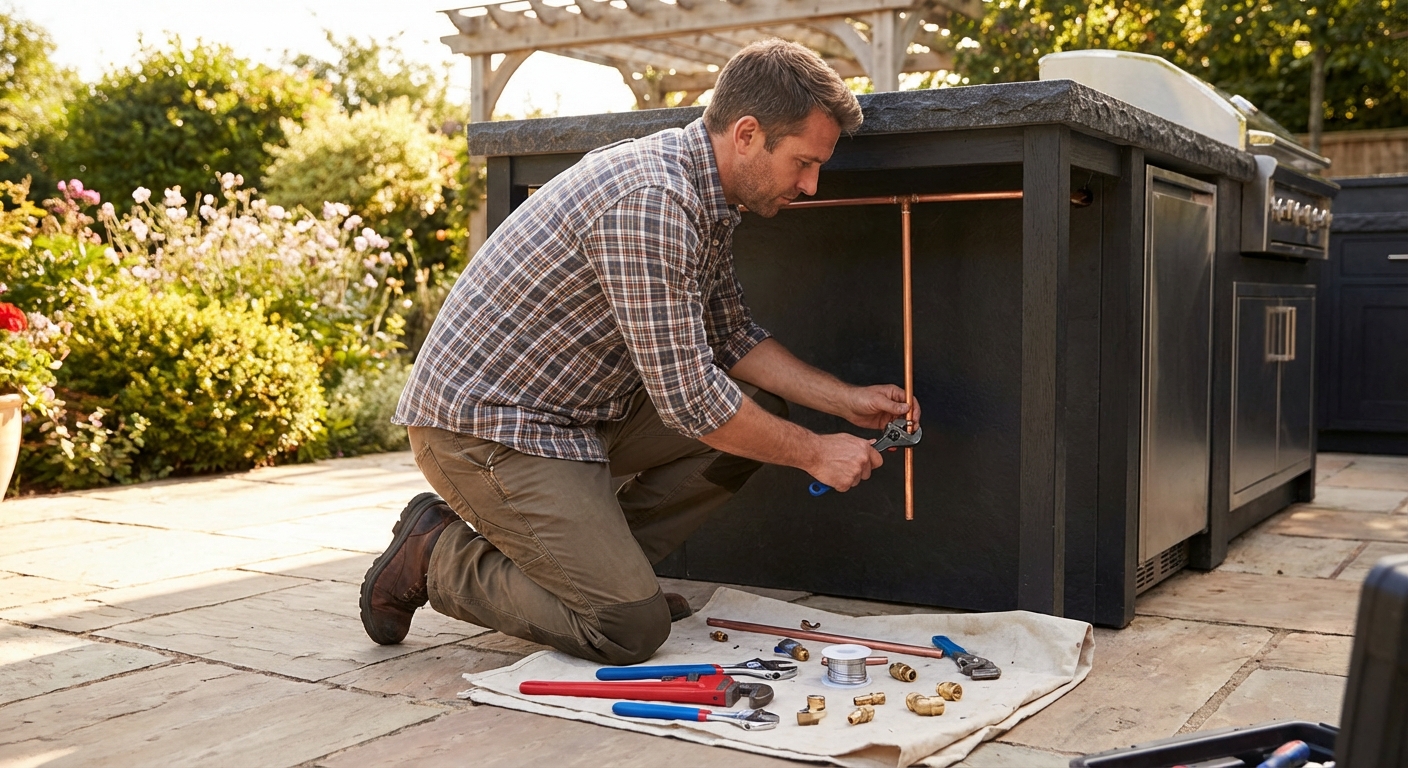
Outdoor Plumbing Projects and What They Cost in 2026
Whether you are adding a simple hose bib or building a full outdoor kitchen, understanding the scope and cost of your project upfront can save you thousands. Outdoor plumbing installation costs vary significantly based on project complexity, materials, local labor rates, and frost-proofing requirements. Below is a breakdown of the most common residential outdoor plumbing projects in 2026.
Common Project Types and Cost Ranges
| Project Type | Typical Cost Range (2026) | Key Notes |
|---|---|---|
| Hose Bib / Outdoor Faucet | $150 – $500 | National average around $300; frost-free models add $30 – $100 |
| Yard Hydrant | $1,000 – $1,400 | Best for distant outbuildings or gardens |
| Outdoor Kitchen Plumbing (fixture only) | $800 – $2,000 | Gas line adds $500 – $1,500 |
| Full Outdoor Kitchen Build | $15,000 – $35,000 | Mid-range: grill, fridge, plumbed sink, counters |
| Utility / Outdoor Sink | $215 – $1,500 | Includes plumbing connections |
| Irrigation System (¼-acre) | $2,500 – $5,000 | Includes backflow preventer and controller |
| Outdoor Shower | $1,500 – $6,000 | National average $3,500; luxury builds top $10,000 |
Homeowners typically spend between $150 and $500 on a new outdoor spigot, with national averages clustering around $300. Labor generally runs $75 – $150 per hour nationally for licensed plumbers, with gas line specialists charging up to $200 per hour. Most outdoor kitchen projects that include plumbing land between $15,000 and $35,000 for a mid-range build, with premium setups reaching $35,000 to $80,000+ when you add multiple appliances, stone counters, and full utility trenching. Permit fees for water and gas line work generally fall in the $50 – $500 range, and per-fixture surcharges of $19 to $27 are now common in cities like Mercer Island, WA and King County, WA.
Learn more about outdoor faucet repair costs to better understand what drives labor and materials pricing in your region.
Outdoor Kitchen and Shower Plumbing Requirements
For outdoor kitchens, you will need cold water supply lines (and optionally hot), a drainage connection to your home's wastewater system or a permitted dry well, and shut-off valves. Adding plumbing typically runs $800 to $2,000, and adding a gas line runs $500 to $1,500, both requiring permits and licensed trade contractors. In USDA hardiness zones 6 and above, frost-proof valves are mandatory for proper winterization. If you are planning bigger changes, our plumbing for home additions guide covers the full picture.
Outdoor showers have similar requirements. An outdoor shower runs $1,500 to $6,000 installed on average, with a national average around $3,500. A basic cold-water hose setup can be under $500 in materials, and a custom hot-water shower with a stone enclosure reaches $8,000 to $10,000. Cold supply is standard, with hot water often added via a tankless water heater for detached setups. Gray water drainage must comply with local codes; in most jurisdictions, soapy shower runoff must connect to the sewer or an approved subsurface system (French drain or dry well) rather than discharge freely onto the ground.

Find Trusted & Licensed Plumbers in Ohio
Get matched with companies for your specific needs
Weatherproofing, Freeze Protection, and Backflow Prevention
Getting outdoor plumbing installed is only half the job. Protecting it from the elements is the other half. Three critical areas demand your attention: freeze protection, backflow prevention, and choosing the right materials.
Freeze Protection and Frost-Free Fixtures
A frost-free hose bib (also called a freeze-proof spigot or sillcock) is designed to shut off water flow deep inside the conditioned wall space, rather than at the exposed spout. This design significantly reduces the risk of freezing even if residual water remains in the outer pipe section. Frost-free models cost roughly $30 to $100 more than standard bibs, but they are one of the smartest investments for cold-climate homeowners, especially given that State Farm data showed average frozen pipe payouts above $30,000 in 2024-2025.
Beyond frost-free fixtures, here are the most effective freeze protection strategies for each outdoor system:
| Component | Freeze Protection Methods |
|---|---|
| Hose Bibs | Install frost-free model; shut off interior valve each fall; remove hoses; leave bib slightly open |
| Irrigation Systems | Blow out lines with compressed air; drain backflow preventers and valves |
| Outdoor Showers | Shut off supply valve; drain lines completely; insulate any exposed pipes |
| Outdoor Kitchens | Install master shutoff indoors; drain all supply lines before first freeze |
For comprehensive winter prep, refer to our guides on seasonal plumbing problems and winter plumbing tips if you want to prevent damage before the first hard freeze.
Backflow Prevention: Why It's Required
Backflow occurs when contaminated water reverses into your home's clean water supply due to pressure changes. For outdoor plumbing (especially irrigation systems), this can introduce fertilizers, pesticides, or lawn chemicals into your drinking water. That is why all U.S. plumbing codes and most local water utilities mandate backflow prevention devices on outdoor irrigation connections.
| Device Type | Best For | Protection Level |
|---|---|---|
| Hose Bib Vacuum Breaker | Outdoor faucets | Backsiphonage only |
| Atmospheric Vacuum Breaker (AVB) | Simple irrigation lines | Backsiphonage only |
| Pressure Vacuum Breaker (PVB) | Residential irrigation systems | Backsiphonage + limited backpressure |
| Reduced Pressure Zone (RPZ) Assembly | High-hazard or commercial use | Full protection (both directions) |
The 2024 IPC is now the basis for most state codes, with Georgia's amendments taking effect January 1, 2026 and Oklahoma's package effective September 14, 2026. Under IPC Section 608.17.5 and state amendments (Georgia, NCTCOG in Texas, New York's 2025 code), the potable water supply to lawn irrigation systems must be protected against backflow by an atmospheric vacuum breaker, pressure vacuum breaker, double-check backflow prevention assembly, or reduced pressure principle backflow preventer. If fertilizers or chemicals are injected into the system, an RP assembly is required, and valves may not be installed downstream from an atmospheric vacuum breaker. Outdoor enclosures for backflow devices must also comply with ASSE 1060 for freeze protection and access.
A basic residential backflow preventer runs about $235 to $400 installed. An RPZ assembly with plumber tie-in typically lands between $350 and $900. Testing frequency varies by state: Florida generally requires homeowner testing every two years, Utah requires annual testing on all backflow assemblies, and many water purveyors now require annual certified testing regardless of state. Failure to comply can result in fines or water service termination. For a deeper dive, see our plumbing code compliance guide.
Best Materials for Outdoor Plumbing
Choosing the right pipe material for outdoor use is crucial. Exposure to UV rays, temperature swings, soil pressure, and moisture creates challenges that indoor plumbing never faces.
PEX vs. Copper vs. CPVC vs. PVC
| Material | Freeze Resistance | Lifespan | UV Exposure | Best For |
|---|---|---|---|---|
| PEX | ⭐⭐⭐⭐⭐ Excellent (expands without bursting) | 40-50 years | ❌ Must be shielded or buried | Cold climates; underground supply lines |
| Copper | ⭐⭐ Poor (cracks when frozen) | 50-70+ years | ✅ Excellent (outdoor-safe) | Exposed runs in mild climates |
| CPVC | ⭐⭐⭐ Fair (more brittle than PEX) | 25-50 years | ❌ Degrades without protection | Hot water lines in mild climates |
| PVC | ⭐ Poor (brittle in cold) | 25-50 years | ❌ Degrades quickly | Drain/waste lines only; avoid for pressurized supply |
PEX remains the top recommendation for most outdoor plumbing in 2026. Its flexibility means it can expand up to three times its diameter when water freezes inside, then contract back, making it dramatically more burst-resistant than rigid copper or CPVC. In 2026, PEX material costs roughly $0.40 to $1.20 per linear foot for common ½ to ¾-inch tubing, while Type L copper runs $1.50 to $4.00 per foot (2 to 3 times as much). Installed cost for PEX runs about $2 to $5 per foot, and copper installs at $5 to $12 per foot.
For sun-exposed runs, copper is the better choice because PEX has poor UV resistance and is generally rated for only limited above-ground sunlight exposure. A common pro approach is a hybrid system: PEX inside walls and underground, with short copper runs only where exposed to weather and protected from freeze. For outdoor kitchens and showers in coastal areas, 316-grade marine stainless steel remains the preferred material for sinks, faucets, and hardware due to superior corrosion resistance.
Learn more about PEX plumbing pros and costs if you are considering it for your outdoor project.
Permits and Code Requirements
Almost all outdoor plumbing projects that connect to your home's water supply, drainage, or sewer system require a plumbing permit. Any new irrigation or sprinkler system connected to potable water requires a plumbing permit because it is a modification to your water-distribution system. Permits are issued at the local level based on your state's adopted version of the IPC or UPC.
Key code requirements that commonly apply in 2026:
- Backflow prevention on all irrigation and potable outdoor connections (AVB, PVB, SVB, or RP depending on hazard level)
- Testing of installed testable backflow assemblies at installation and on the schedule set by your local water authority (typically annually or biennially)
- Proper drainage and slope to prevent pooling and freeze damage
- Frost line compliance with supply lines buried below the local frost depth
- Approved materials including PEX, CPVC, and copper, verified with your local authority
- ASSE 1060-compliant enclosures for outdoor backflow assemblies exposed to freezing
Working without a permit can result in fines, stop-work orders, failed home inspections, and denied insurance claims. Learn more about plumbing permits and when they're required before starting your project.
DIY vs. Hiring a Licensed Plumber
One of the most common questions homeowners ask is: "Can I do this myself?" The honest answer depends on the scope of the project and your local licensing laws.
What You Can Safely DIY
- Replacing an existing outdoor faucet with a same-size frost-free model
- Attaching a hose bib vacuum breaker to an existing spigot
- Installing a basic drip irrigation kit connected to an existing hose bib
- Insulating exposed pipes and adding faucet covers before winter
- Winterizing your system each fall (shutoff, drain, disconnect, insulate)
What Requires a Licensed Plumber
- Running new supply lines from your home's main water system
- Connecting outdoor drainage to your home's sewer or septic system
- Installing gas lines for outdoor kitchen appliances
- Any work that requires a permit and inspection
- Backflow preventer installation and certified annual testing
- Projects involving trenching below the frost line
Improper outdoor plumbing installation can cause burst pipes, water damage, code violations, and even contaminated water supplies. Licensed plumbers carry liability insurance (typically $500,000 minimum) and warranty their work, protections you simply do not get with DIY. Explore our annual plumbing maintenance guide to keep your outdoor systems running smoothly year after year.
Frequently Asked Questions
How much does it cost to add an outdoor water spigot in 2026?
Adding a basic outdoor hose bib costs between $150 and $500 installed, with the national average around $300. Frost-free models, which are strongly recommended in cold climates, add $30 to $100 to the hardware cost. Complex installations involving long pipe runs, wall penetrations, or trench work can reach $600 or more. Getting multiple quotes from local plumbers will help you find the best price.
Do I need a permit to install outdoor plumbing?
In most cases, yes. Any outdoor plumbing that connects to your home's water supply or drainage system, including outdoor kitchens with sinks, showers, irrigation systems, and utility sinks, requires a plumbing permit in nearly all U.S. jurisdictions. Permit fees typically range from $50 to $500 depending on the scope, and many cities charge a per-fixture surcharge of $19 to $27. Check with your city or county building department before starting any project, since working without a permit can result in fines and complications when selling your home.
What is a frost-free hose bib and do I need one?
A frost-free hose bib is a specialized outdoor faucet that shuts off water flow deep inside the warm wall of your home, rather than at the exposed outdoor spout. This design prevents freezing during cold snaps, even if water remains in the outer pipe section. If you live in a climate that experiences freezing temperatures, a frost-free hose bib is strongly recommended and in some areas required by code. Expect to pay $30 to $100 more for the fixture itself versus a standard hose bib.
How do I winterize my outdoor plumbing?
Winterizing outdoor plumbing involves five key steps: (1) Locate and shut off the interior supply valve for all outdoor lines. (2) Open all outdoor faucets to let residual water drain by gravity, then leave them slightly open all winter. (3) Disconnect and drain all garden hoses and store them indoors. (4) Blow out irrigation lines with a compressed air attachment. (5) Add insulated covers to all exposed outdoor faucets and seal gaps around pipe penetrations with foam or caulk. Complete this before your area's first consistent freeze, typically mid-to-late fall.
Should I use PEX or copper for outdoor plumbing in 2026?
For most outdoor plumbing applications, PEX is the better choice when the pipe is buried or run inside walls. It resists freezing far better than copper (expanding rather than bursting when temperatures drop) and installs significantly faster at roughly one-third to one-half the cost. Copper has a longer lifespan (50 to 70+ years vs. 40 to 50 for PEX) and excellent UV resistance, making it ideal for short, exposed above-ground runs. Many pros now recommend a hybrid approach: PEX everywhere indoors and underground, with copper used only where sunlight exposure is unavoidable.