
Monthly Plumbing Tasks Every Homeowner Should Do
Consistent monthly upkeep is the foundation of any solid plumbing maintenance plan. The good news? These tasks take as little as 15-30 minutes and can be done without professional help. Set a recurring reminder on the first of each month so these checks become second nature. For a broader look at year-round care, see our preventive plumbing maintenance guide.
Check for Leaks
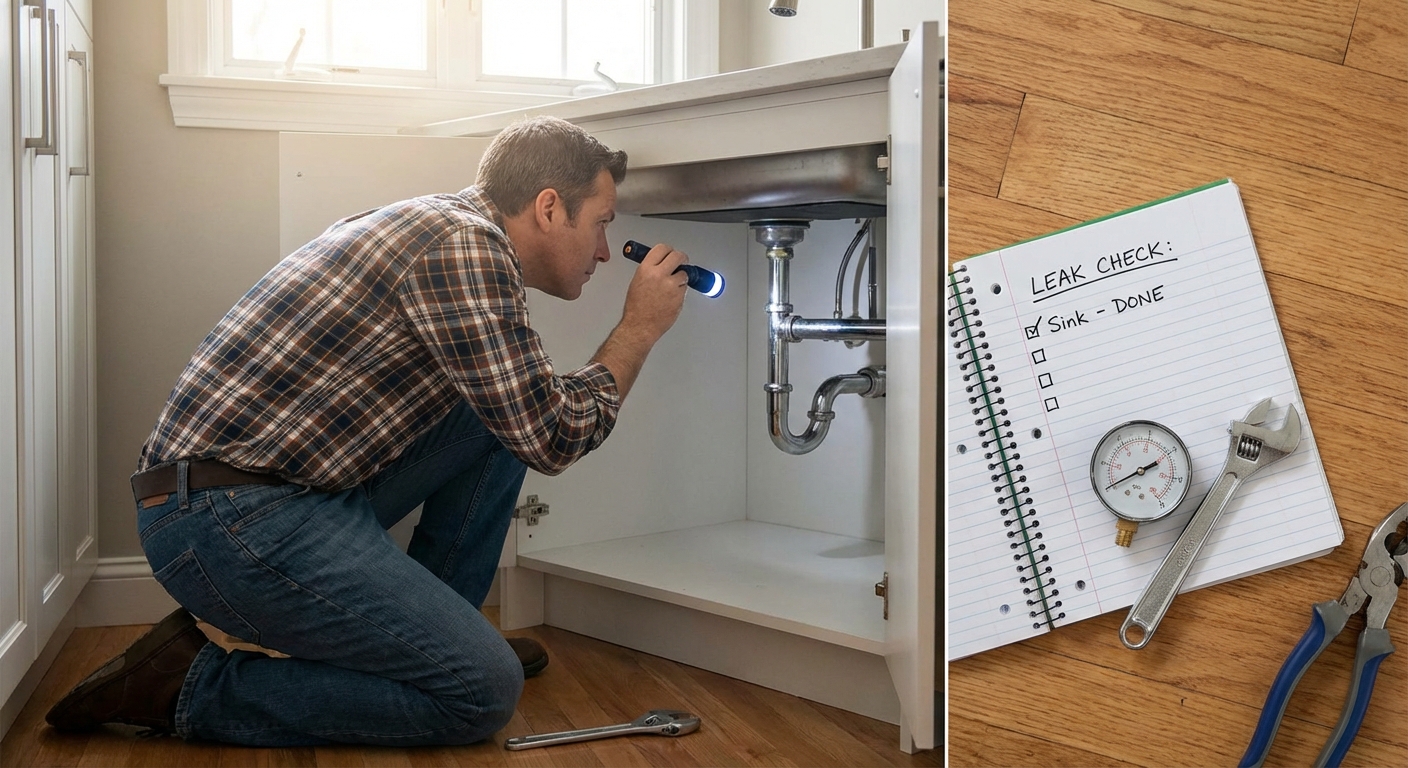
Inspect all visible pipes under sinks, around toilets, and in your basement or utility room. Look for drips, moisture stains, or puddles. For toilets, add a few drops of food coloring to the tank. If color appears in the bowl within 30 minutes without flushing, your flapper is leaking and wasting hundreds of gallons of water per month. The EPA reports that the average household's leaks account for more than 9,300 gallons of water wasted every year, and a showerhead leaking at just 10 drips per minute wastes more than 500 gallons per year.
Test Your Water Pressure
Healthy residential water pressure sits between 40-60 PSI. You can pick up a simple pressure gauge at any hardware store for under $15. Pressure that's consistently above 80 PSI puts serious stress on your pipes and appliances, shortening their lifespan considerably.
Clean Your Drains
Pour a mixture of hot water, baking soda, and vinegar down sinks, showers, and tubs monthly. Let it sit for 15 minutes, then flush with hot water. Clean strainer covers to remove hair and debris buildup. This simple habit prevents the slow clogs that eventually turn into full backups. For a deeper dive into what not to do, review the common plumbing mistakes most homeowners make.
Exercise Shut-Off Valves
Operate the shut-off valves under your toilets, sinks, washing machine, and dishwasher once a month. Valves that are never turned can seize up over time. The last thing you want during a plumbing emergency is a valve that won't budge. Learn more about handling plumbing emergencies before they escalate.

Find Trusted & Licensed Plumbers in Ohio
Get matched with companies for your specific needs
Quarterly and Semi-Annual Plumbing Maintenance
Some tasks don't need to happen every month, but skipping them entirely is how small problems become expensive disasters. Build these into your routine every 3-6 months.
Quarterly Tasks (Every 3 Months)
Inspect Your Water Heater
Check for rust-colored water, unusual noises (popping or rumbling), or moisture around the base. Most experts recommend flushing your tank water heater once a year, or every six months if you have hard water or heavy use. Sediment insulates the heating element and forces your unit to work harder, driving up energy bills and shortening its life. Also test the temperature and pressure relief valve annually to confirm it's functioning safely, and inspect the anode rod every 2-3 years. Tankless units should be professionally descaled about once a year. If your unit shows any signs of failure, our water heater leaking guide walks through the immediate steps to take.
Test Your Sump Pump
Pour water directly into the sump pit to trigger the float switch and confirm the pump activates. Clear any debris from the discharge pipe and verify the battery backup (if equipped) is charged and operational. Sump pump failures during heavy rain events are one of the leading causes of basement flooding, and are one of the most common seasonal plumbing problems in spring.
Inspect Pipes for Corrosion
Walk through your basement, crawl space, and any exposed pipes in utility areas. Look for green or white mineral deposits, rust staining, or damp spots on walls and floors. In 2026, burst pipe repairs cost $400 to $2,000 on average, including materials and labor, with the national average around $1,200. Complex cases involving significant water damage can push totals past $10,000, so catching early-stage corrosion can save thousands. Older homes should also review our old house plumbing problems guide.
Semi-Annual Tasks (Every 6 Months)
Check Outdoor Faucets and Hose Bibs
Twice a year, in spring and fall, inspect outdoor faucets for cracks, drips, or freeze damage. In spring, reconnect hoses and test flow. In fall, disconnect all hoses, drain the lines, and shut off the interior supply valve before temperatures drop. A frozen outdoor faucet can crack the pipe behind the wall, causing interior water damage that's far more expensive to fix. For detailed winter prep, see our guide on protecting pipes from freezing, or check our outdoor faucet repair walkthrough for common issues.
Inspect Washing Machine Hoses
Washing machine hoses are one of the most overlooked sources of home flooding. Check both the hot and cold supply hoses for cracks, bulges, kinking, or loose connections. Standard rubber hoses should be replaced every 3-5 years; braided stainless steel hoses offer longer durability. Don't wait for a visible leak. A burst washing machine hose can release up to 500 gallons per hour.
Clean Gutters and Downspouts
Blocked gutters force water to pool near your foundation, which can lead to basement seepage and pipe stress. Clean them in spring and fall as part of your semi-annual plumbing routine.
Seasonal Plumbing Maintenance Schedule
Breaking your plumbing care down by season makes it easier to remember and prioritize the right tasks at the right time.
🌱 Spring
| Task | Why It Matters |
|---|---|
| Inspect outdoor faucets and hose bibs for freeze damage | Cracks from winter can cause leaks when water flow resumes |
| Flush water heater and check for rust or corrosion | Removes sediment and extends heater lifespan |
| Test sump pump and clean pit | Spring rain increases flood risk significantly |
| Check sprinkler/irrigation systems for clogs | Prevents uneven watering and line damage |
| Clean gutters and downspouts | Directs water away from foundation |
☀️ Summer
| Task | Why It Matters |
|---|---|
| Inspect washing machine hoses | Higher laundry use increases stress on hoses |
| Clean garbage disposal (ice cubes + cold water) | Removes buildup and sharpens blades |
| Clear slow drains from daily use | Prevents buildup from showers and sinks |
| Check outdoor hoses for leaks | High usage season increases wear |
🍂 Fall
| Task | Why It Matters |
|---|---|
| Drain and winterize outdoor faucets | Prevents frozen and cracked pipes |
| Insulate exposed pipes in unheated spaces | Critical for homes in cold-weather climates |
| Flush water heater (second flush in hard-water areas) | Removes mid-year sediment buildup |
| Clean gutters of leaf debris | Prevents water backup near foundation |
| Schedule sewer line camera inspection | Catches tree root intrusion before winter |
❄️ Winter
| Task | Why It Matters |
|---|---|
| Open cabinet doors under sinks during cold snaps | Allows warm air to circulate around pipes |
| Monitor water bills for sudden spikes | Can signal a hidden leak under the slab |
| Inspect all indoor faucets and toilets for drips | Cold weather can worsen existing weak points |
| Keep thermostat at 55°F+ even when away | Prevents frozen pipes in unoccupied homes |
If a leak sneaks past your seasonal routine, our high water bill troubleshooting guide walks you through diagnosing hidden leaks using your water meter. Homeowners looking to cut water usage can also review our water conservation plumbing guide for upgrades that pay for themselves.
Annual Professional Plumbing Inspection
No matter how diligent your DIY maintenance routine is, a licensed plumber's annual inspection catches what you can't see. Hidden slab leaks, corroded pipe interiors, sewer line root intrusion, and failing pressure regulators are nearly impossible for a homeowner to detect without professional tools.
What a Pro Inspection Covers
- All exposed and hidden pipes for leaks, corrosion, and joint integrity
- Water heater including pressure relief valve, anode rod, connections, and energy efficiency
- All fixtures and appliances including faucets, toilets, showerheads, dishwasher, and washing machine connections
- Sump pump operation and battery backup
- Main shut-off valve tested for functionality
- Water pressure checked system-wide, not just at one faucet
- Sewer line visual or camera inspection for backups, root intrusion, or damage
2026 Inspection Pricing
A basic visual plumbing inspection typically costs $100 to $200, a camera or video inspection runs $300 to $1,100, and a combination inspection of both types costs $400 to $1,300. Plumbing inspections typically cover fixtures, water and sewer lines, water heaters, toilets, pumps, drains, and appliances. According to Thumbtack data, the national average cost of a plumbing inspection is $287, though homeowners spend anywhere from $122 to $672 depending on labor and materials. A basic whole-home visual check is enough for most homes; camera scoping is worth the extra cost for older homes, properties with mature trees near sewer lines, or before buying a house. For a full breakdown of what plumbers charge, see our plumbing service cost guide.
How Often Should You Schedule One?
| Home Age | Recommended Inspection Frequency |
|---|---|
| Under 10 years | Every 2 years |
| 10-20 years | Annually |
| 20-40 years | Annually |
| 50+ years | Twice per year |
| Rental properties | Before each new tenant |
| Vacation/seasonal homes | Spring and fall |
Is a Plumbing Service Plan Worth It?
If you find yourself booking annual inspections anyway, a plumbing service plan may save you money in the long run. In 2026, plumbing-only maintenance memberships typically run $7 to $10 per month (about $80 to $120 per year), while whole-home HVAC-and-plumbing bundles run $21 to $30 per month. Members typically get an annual visit, a reduced trip charge (for example, from $99 down to $79), 20% off labor, and priority scheduling. A single avoided emergency dispatch fee of $150 to $350 more than covers the full year. These plans work best for older homes or homeowners who prefer predictable costs over pay-per-visit pricing.
Building a solid emergency response plan alongside your maintenance routine is equally important. Review our guide on when to call an emergency plumber so you know exactly what to expect if something goes wrong between inspections. It's also smart to keep an emergency plumbing kit ready at all times.
Frequently Asked Questions
How much can preventative plumbing maintenance really save me?
Preventative maintenance typically costs $200 to $500 per year, including a professional inspection. Contrast that with 2026 emergency repair bills: burst pipes average around $1,200 (but easily climb past $5,000 for hidden pipes), tank water heater replacements run $1,600 to $2,500, tankless replacements run $2,400 to $5,500, and sewer line repairs can exceed $10,000. Homeowners who follow a consistent maintenance schedule can save 50 to 80% compared to those who only call a plumber when something breaks. See our burst pipe repair guide for a full cost breakdown.
How do I know if my water pressure is too high?
Pick up a water pressure gauge at any hardware store for under $15 and attach it to an outdoor hose bib or laundry faucet. Normal residential pressure is 40 to 60 PSI, while readings above 80 PSI can damage pipes, appliances, and fixtures over time. If your pressure is consistently high, a plumber can install a pressure-reducing valve to protect your system.
What's the easiest plumbing task most homeowners skip?
Exercising shut-off valves is one of the most overlooked tasks. If these valves are never turned, they can seize up with mineral deposits, meaning you can't shut off the water during a leak or burst pipe. Simply open and close each valve under your sinks, toilets, and appliances once a month to keep them functional.
When should I replace my washing machine hoses?
Standard rubber washing machine hoses should be replaced every 3 to 5 years regardless of visible condition, since rubber degrades from the inside out. If you have standard hoses, consider upgrading to braided stainless steel hoses, which are significantly more durable and burst-resistant. Inspect them semi-annually for bulging, kinking, or loose connections at both the machine and wall ends.
Do I really need a professional plumbing inspection if nothing seems wrong?
Yes, many of the most costly plumbing problems show no outward signs until they've already caused significant damage. Slab leaks, internal pipe corrosion, and early-stage sewer line root intrusion are nearly invisible to the untrained eye. An annual professional inspection using pressure tests, camera tools, and hands-on evaluation catches these issues while repair costs are still manageable, protecting both your home and your wallet.