
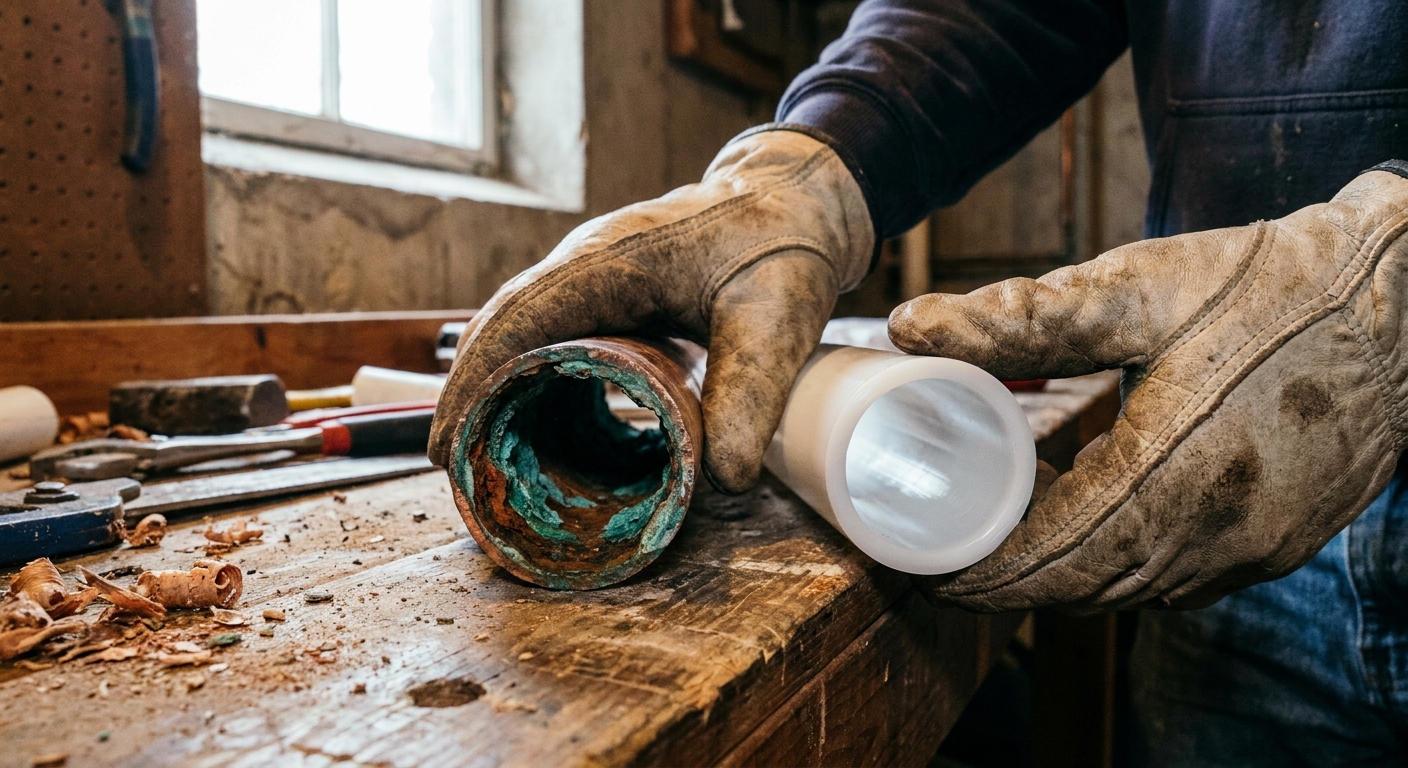
What Causes Pipe Corrosion?
Pipe corrosion is the gradual chemical breakdown of your plumbing system, and it doesn't happen overnight. Understanding the root causes is the first step to stopping it before it drains your wallet with repairs, water damage, or contaminated drinking water.
Water Chemistry: The #1 Culprit
The chemistry of the water flowing through your pipes has a massive impact on how quickly corrosion sets in.
- Low pH (acidic water): Water with a pH below 7.0 is chemically aggressive toward metal pipes. It dissolves protective oxide layers on copper and iron, accelerating internal erosion.
- High pH (alkaline water): On the other end, water above pH 8.5 can trigger scale deposits and contribute to corrosion in copper under certain conditions.
- High oxygen content: Excess dissolved oxygen fuels oxidation, the same reaction that turns iron into rust. This is especially harmful in iron and steel pipes.
- Hard water minerals: High concentrations of calcium and magnesium create scale buildup inside pipes. That scale traps corrosive agents against the pipe wall and accelerates degradation.
- Chlorine and chloramine: Municipal water treatment relies on these disinfectants, but elevated levels can chemically attack certain pipe materials over time. The Plastics Pipe Institute's revised 2025 TN-53 guide formalized chlorine resistance ratings (1, 3, and 5) that now appear on most 2026 PEX product prints, so consumers can match pipe grade to their disinfection profile.
Galvanic Corrosion: When Metals Fight Each Other
Galvanic corrosion occurs when two dissimilar metals, such as copper and galvanized steel, are connected in the presence of water. This creates an electrochemical reaction where one metal acts as an anode (it sacrifices itself) and the other acts as a cathode (it is protected). The result is accelerated corrosion in the weaker metal.
This is a common problem in older homes where DIY repairs may have connected incompatible pipe materials without a dielectric union or fitting designed to prevent galvanic reaction. If your home has a mix of copper and galvanized steel pipes, galvanic corrosion is almost certainly occurring somewhere in your system. Learn more about galvanized and aging pipe risks in our old house plumbing guide.
Pipe Age and Material Degradation
Older pipes, especially galvanized steel pipes common in homes built before 1980, have a zinc coating that eventually depletes. Once the zinc is gone, raw iron is exposed to water and oxygen, and rust follows quickly. Industry estimates in 2026 suggest that over 50% of homes built before the 1960s still have galvanized pipes in some form. Even copper pipes, which resist corrosion better, can fail over decades in acidic water conditions.
| Pipe Material | Average Lifespan | Corrosion Risk |
|---|---|---|
| Galvanized Steel | 20-50 years | Very High (post zinc depletion) |
| Copper | 50-70+ years | Moderate (pH-dependent) |
| CPVC | 25-50 years | Very Low |
| PEX | 40-60+ years | Very Low |
| PVC | 50-100 years (drains) | Virtually None |

Find Trusted & Licensed Plumbers in Ohio
Get matched with companies for your specific needs
Best Corrosion-Resistant Piping Materials
Choosing the right pipe material is the most powerful long-term defense against corrosion. Here's how today's most common options compare in 2026.
PEX (Cross-Linked Polyethylene)
PEX has become the default choice for residential plumbing because it's virtually immune to corrosion, rust, and scale buildup. It handles both hot and cold water, is flexible enough to snake through walls, and costs significantly less than copper. In 2026, PEX material runs about $0.40 to $2.00 per linear foot for common ½ to ¾ inch sizes, compared to $2.00 to $8.00 per linear foot for copper. On installed cost, PEX averages $3.50 to $7.00 per square foot of house area, roughly 25 to 35% cheaper than copper per foot. PEX is freeze-resistant, which is a bonus in cold climates, and PEX-A is now considered the 2026 industry standard for residential repiping.
Best for: Full-house repiping, retrofits, cold climates, homes with acidic or hard water.
Explore a detailed copper vs PEX comparison to see which is right for your home.
Copper
Copper has decades of proven performance and remains a gold standard for water supply lines. It offers natural antimicrobial properties and boosts resale value. The downside: copper is vulnerable to acidic water (pH below 7.0) and carries the highest upfront cost of any common pipe material. In 2026, copper installed costs run about $8 to $14 per square foot, and whole-home copper repipes often run 40 to 70% higher than the same job in PEX. Copper is also susceptible to galvanic corrosion when improperly connected to other metals.
Best for: Visible supply lines, high-pressure systems, homes with neutral pH water.
CPVC (Chlorinated Polyvinyl Chloride)
CPVC offers the same corrosion immunity as PVC but can handle temperatures up to 200°F, making it suitable for hot water supply lines. It's affordable at roughly $0.50 to $2.00 per linear foot (material only), easy to work with, and resists rust, scale, and chemical attack. Installed CPVC typically lands between $4 and $8 per square foot, often between PEX and copper on total project cost. The main drawback: CPVC can become brittle with age, especially in cold climates or when exposed to UV light.
Best for: Hot water lines, budget-conscious homeowners, areas with hard or aggressive water.
PVC (Polyvinyl Chloride)
PVC is completely immune to rust and corrosion and features a smooth interior surface that minimizes buildup over time. However, it's limited to drain, waste, and vent (DWV) systems because it warps when exposed to hot water above roughly 140°F. At $0.30 to $0.80 per linear foot, it's the most budget-friendly option for drain lines.
Best for: Drain lines, vent stacks, and cold water irrigation only.
Stainless Steel and PE-RT
Stainless steel offers the highest corrosion resistance of any metallic pipe material. It performs exceptionally well in harsh environments including coastal homes with salt air exposure, high-chlorine water, and industrial applications. Grade 316 stainless is generally preferred where chloride levels are high, to reduce pitting and crevice corrosion. The trade-off is cost, as stainless steel is premium-priced (generally above copper per foot) and less commonly used for standard residential plumbing.
PE-RT (polyethylene of raised temperature resistance) is a newer non-metallic option gaining traction in 2026. Like PEX, PE-RT is immune to electrochemical corrosion, resists chemical scaling, and can be fusion-welded, making it a strong alternative in hydronic and domestic hot water systems.
Best for: Coastal homes, high-chlorine environments, specialty or commercial applications.
For homeowners with aging infrastructure, understanding whole house repiping costs can help you budget for upgrading. A typical 2026 whole-home repipe runs $4,000 to $15,000, with a national average near $7,500 for PEX. If your home has polybutylene pipes, those also deserve immediate attention as they are prone to internal failure.
Signs of Pipe Corrosion & When Water Quality Accelerates It
Warning Signs You Shouldn't Ignore
Catching corrosion early can be the difference between a minor fix and a full pipe replacement. Here are the most common warning signs:
- Discolored water: Brown, red, or yellow-tinted water, especially after your water has sat in the pipes overnight, signals rust and metal leaching from corroded pipe walls.
- Metallic taste or odor: A metallic taste or smell coming from your tap water is a strong indicator that corrosion is actively dissolving pipe material into your water supply.
- Reduced water pressure: Gradual or sudden pressure drops are often caused by internal scale and rust buildup (called "tuberculation") narrowing the interior of your pipes.
- Frequent leaks: Multiple pinhole leaks or recurring leaks in different areas of your home suggest corrosion has weakened the pipe walls broadly, not just in one spot. These often lead to a burst pipe emergency if left unaddressed.
- Visible corrosion: Green or blue staining (verdigris) on copper pipes, flaking rust on steel, or white powdery deposits around joints are visible red flags.
- Damp spots or water stains: Condensation, damp patches, or staining near pipe joints may indicate slow seepage from early corrosion damage.
Water Quality Factors That Speed Up Corrosion
Certain water conditions are especially aggressive. If your home has any of the following, your pipes are at elevated risk:
| Water Condition | Effect on Pipes | Solution |
|---|---|---|
| pH below 7.0 (acidic) | Dissolves metal pipe walls aggressively | Install a pH neutralizer |
| High chlorine/chloramine content | Breaks down pipe materials chemically | Whole-house filter, higher-rated PEX |
| Hard water (high mineral content) | Scale buildup traps corrosives | Water softener |
| High dissolved oxygen | Accelerates iron oxidation and rust | Aeration control, material upgrade |
| High TDS (Total Dissolved Solids) | Increases water conductivity and corrosion rate | Reverse osmosis or whole-house filtration |
If you notice signs of corrosion early, a professional plumbing inspection or a water quality test can give you a clear picture of what you're dealing with. Water heater corrosion is a related issue that can shorten your system's lifespan and damage connected supply lines.
Corrosion Prevention, Repair vs. Replacement & Choosing the Right Pipe
How to Prevent Pipe Corrosion
Prevention is far cheaper than replacement. Here are the most effective strategies:
Water Treatment:
- Install a whole-house water softener to eliminate hard water minerals that accelerate scale and corrosion, particularly in copper and galvanized pipes.
- Add a pH neutralizer to balance acidic water and reduce its corrosive impact on metal pipes.
- Use a whole-house chlorine or chloramine filter if your municipal water has high disinfectant levels that can degrade pipe materials.
Physical Pipe Protection:
- Apply epoxy coatings or cured-in-place pipe (CIPP) linings to existing metal pipes to create a barrier between the water and the pipe wall. Newer 2026 low-styrene and UV-cured formulations cure faster and offer improved chemical resistance versus older resin systems.
- Stabilize your pipes with proper clamps and straps. Pipes that vibrate or rub against framing create entry points for corrosion to develop.
- Insulate pipes in cold areas to prevent freeze-thaw cycles that create stress cracks and accelerate oxidation.
Maintenance:
- Test your water pH annually and schedule a professional plumbing inspection every few years.
- Flush your water heater annually to remove sediment that can harbor corrosive bacteria.
- Avoid chemical drain cleaners, which can directly attack metal pipe walls and joints over time. This is one of the most common plumbing mistakes homeowners make.
When to Repair vs. Replace Corroded Pipes
Not every corroded pipe needs to be torn out and replaced. Here's how to decide:
Repair makes sense when:
- Corrosion is isolated to a single small section or joint
- The pipe is otherwise in good condition with no other signs of systemic damage
- The pipe is relatively young (under 30 years old)
- A pinhole leak or surface rust is the only visible issue
Replacement is the better choice when:
- Corrosion is widespread or found in multiple locations throughout your system
- Your pipes are over 40 years old, especially if galvanized steel
- You're experiencing discolored water from more than one fixture
- Leaks are recurring despite repeated repairs
- You have lead or "galvanized requiring replacement" (GRR) service lines, which EPA now requires utilities to replace at an average rate of 10% per year, with most systems completing replacement by roughly November 1, 2037
For cast iron pipe replacement, spot repairs are rarely a lasting solution. Full replacement with PVC or PEX is typically the most reliable long-term approach.
Choosing the Right Pipe Material for Your Water Conditions
Use this guide to match the right pipe material to your specific water situation:
| Water Condition | Best Pipe Choice | Avoid |
|---|---|---|
| Acidic water (pH < 7) | PEX, CPVC | Copper, galvanized steel |
| Hard water (high minerals) | PEX, CPVC, PVC | Copper, galvanized steel |
| High chlorine/chloramine | PEX (rated 3 or 5), stainless steel | Copper (long-term) |
| Neutral water (pH 7-8.5) | Copper, PEX, CPVC | Galvanized steel |
| Hot water recirculation lines | CPVC, copper, PEX-A rated 5 | PVC |
| Coastal/salt air environments | Stainless steel (316), PEX | Galvanized steel, copper |
Understanding PEX plumbing pros, cons, and installation costs can help homeowners budget for a full repiping project using corrosion-resistant materials.
Frequently Asked Questions
What is the most corrosion-resistant plumbing pipe available in 2026?
For non-metallic options, PEX-A and CPVC remain the top choices in 2026, as they are virtually immune to rust, scale, and chemical corrosion. The Plastics Pipe Institute's revised 2025 TN-53 guide added clearer chlorine resistance ratings (1, 3, and 5) so buyers can match PEX to their disinfectant load. Among metals, 316 stainless steel offers superior resistance, especially in high-chloride or coastal environments. For most homeowners, PEX-A is the best all-around value combining corrosion resistance, flexibility, and affordability.
How does water pH affect pipe corrosion?
Water with a pH below 7.0 is acidic and chemically aggressive toward metal pipes, particularly copper and galvanized steel. It dissolves protective oxide layers and erodes pipe walls from the inside out. Water above pH 8.5 (alkaline) can cause scale buildup that indirectly damages pipes. The ideal pH range for protecting metal pipes is between 7.0 and 8.5, and a pH neutralizer can bring aggressive water into a safe range.
Can I mix different pipe materials in my home's plumbing?
Yes, but you must use dielectric unions or fittings specifically designed to prevent galvanic corrosion when joining dissimilar metals. For example, connecting copper to galvanized steel without protection creates an electrochemical reaction that rapidly accelerates corrosion in the weaker metal. Mixing non-metallic pipes (like PEX and CPVC) using proper transition fittings is generally safe and common during repairs or upgrades. Local plumbing code compliance and permit reviews may require documentation of pipe materials used.
How do I know if my pipes need to be replaced rather than repaired?
Replace your pipes if corrosion is found in multiple sections, if your pipes are galvanized steel over 40 years old, or if you're experiencing discolored water from multiple faucets. A single isolated pinhole leak in an otherwise healthy pipe can often be repaired. If your home is on a lead or "galvanized requiring replacement" service line, EPA's LCRI now requires utilities to replace them within roughly 10 years of the compliance date, with most systems finishing by around November 1, 2037. Scheduling a professional camera inspection gives you an accurate picture of internal corrosion before deciding.
Does homeowners insurance cover pipe corrosion damage?
Generally, homeowners insurance does not cover damage from gradual corrosion or wear and tear, as it's considered a maintenance issue. However, if corroded pipes cause sudden and accidental water damage (like a burst pipe flooding your basement), that secondary damage may be covered under your policy. In 2026, more insurers are restricting or non-renewing coverage on older homes with galvanized, polybutylene, or cast iron pipes, and some now require full replacement as a condition of coverage. Optional service line endorsements can add coverage for buried lines that fail due to rust or corrosion, so review your policy carefully.