
The Most Common Old House Plumbing Problems
Homes built before 1980 are charming, often well-built, and full of character, but their plumbing systems can be a completely different story. Decades of use, outdated materials, and building standards that no longer meet current codes create a recipe for expensive surprises. Understanding what you're dealing with is the first step toward protecting your home and your budget.
Galvanized Steel Pipes
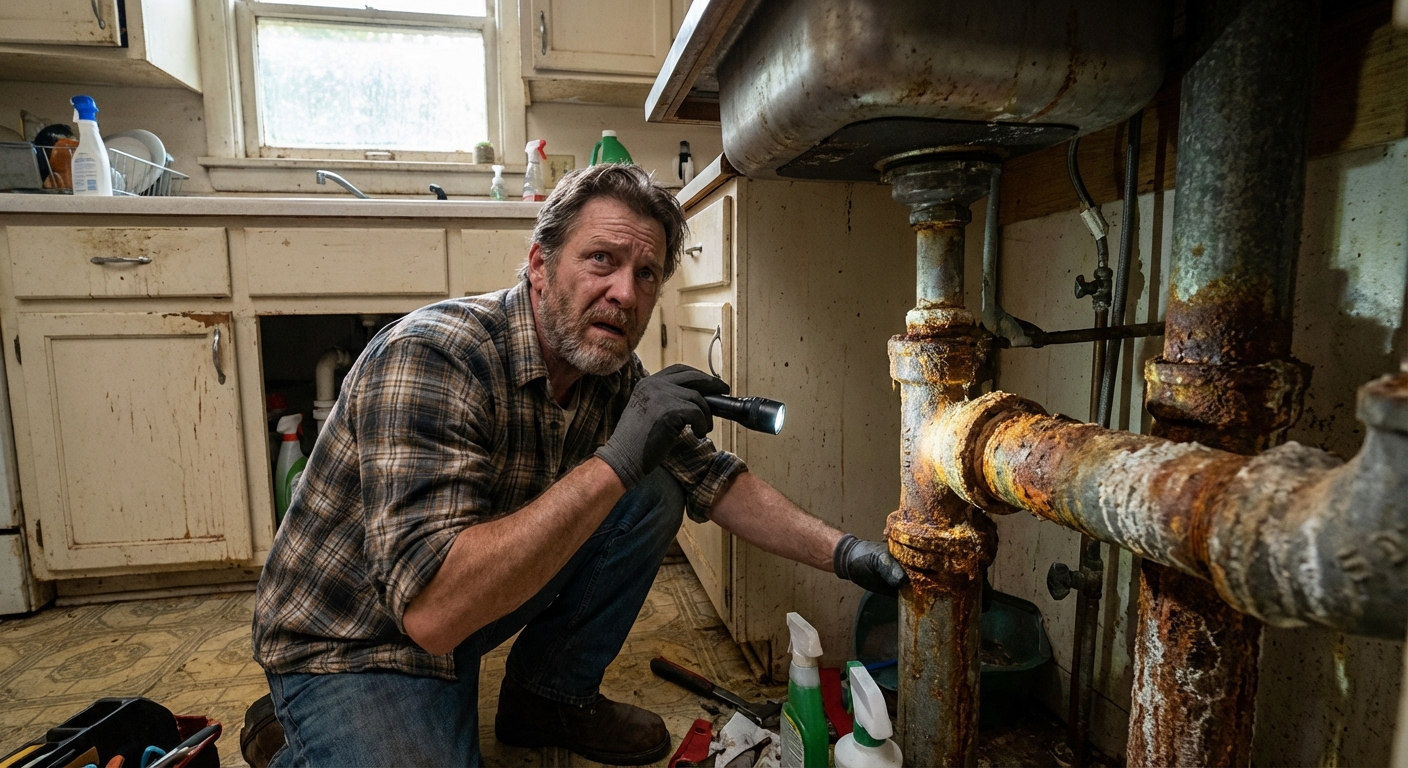
Galvanized steel pipes were the standard in most American homes through the 1950s and into the 1960s. These pipes are coated in zinc to resist corrosion, but over time (typically 40 to 70 years) that zinc coating breaks down from the inside out. What's left is an increasingly narrow, rust-choked pipe that restricts water flow, discolors your tap water, and eventually fails with leaks or full breaks.
Signs of failing galvanized pipes include:
- Brown or rust-colored water coming from the tap
- Noticeably low water pressure throughout the house
- Visible orange or white mineral scale on exposed pipe sections
- Recurring leaks near joints and fittings
If your home still has its original galvanized supply lines, replacement isn't optional. It's a matter of when, not if. Learn more about low water pressure causes and how corroded pipes are often at the root of the problem.
Cast Iron Drain Lines
Cast iron was widely used for drain, waste, and vent lines in older homes, and while it's a durable material, it's not immortal. After 50 to 75 years, cast iron pipes begin to corrode, crack, and sometimes collapse entirely, especially in areas with shifting soil or root intrusion. Slow drains, gurgling sounds, and foul sewer odors inside the home are red flags that your cast iron drain system is failing. Our cast iron pipe replacement guide goes deeper into inspection, costs, and modern replacement materials.
Lead Pipes and Solder
Homes built before 1978 may contain lead pipes, lead goosenecks connecting to the water main, or lead solder on copper pipe joints. Lead leaches into drinking water silently. There's no taste, color, or smell, making it one of the most dangerous issues in pre-1980 homes. The EPA's maximum contaminant level goal for lead in drinking water is zero, reflecting that no amount of exposure is considered safe, especially for children under 6 and pregnant women.
Under the EPA's Lead and Copper Rule Improvements (LCRI) finalized in 2024, your local water system must now publish a service line inventory and notify you if your home is served by a known or potential lead service line. Community water systems are required to replace all lead service lines by November 1, 2037, and a lower lead action level takes effect November 1, 2027. If you suspect lead in your plumbing, get a water test immediately and check your utility's inventory.
Outdated Fixtures and Code Violations
Beyond the pipes themselves, older homes frequently have fixtures, connections, and configurations that violate current plumbing codes. Common violations include:
- No shut-off valves on individual fixtures, or original compression valves that no longer turn
- Incorrect pipe sizing, contributing to poor pressure and drainage
- Unvented drain lines causing gurgling and sewer gas backflow
- Improper or unpermitted DIY repairs done over decades
- Polybutylene pipes installed during the late 1970s through the mid-1990s, which are known to fail from the inside out
Our plumbing code compliance guide covers how to identify and resolve these issues without overspending.

Find Trusted & Licensed Plumbers in Ohio
Get matched with companies for your specific needs
Warning Signs Your Plumbing Needs Updating
Knowing the warning signs of failing plumbing can save you from a catastrophic water damage event or a hefty emergency repair bill. Here's what to watch for in any home built before 1980:
| Warning Sign | What It May Indicate |
|---|---|
| Rust-colored or discolored water | Corroded galvanized steel or cast iron pipes |
| Low water pressure throughout the home | Internal pipe corrosion or mineral buildup |
| Frequent leaks or recurring pipe repairs | Widespread pipe deterioration, time to repipe |
| Slow drains in multiple areas | Failing or bellied drain lines |
| Gurgling sounds from drains | Venting issues or blocked sewer lines |
| Sewage odors indoors | Cracked drain lines or dried-out trap seals |
| Water stains or soft drywall near pipes | Hidden leaks causing long-term water damage |
| Visible corrosion on exposed pipes | Immediate replacement needed |
| Shut-off valves that won't turn or leak when used | Original compression valves at end of life |
If you're hearing unusual sounds from your pipes, our noisy pipe diagnosis guide can help you pinpoint the cause.
Health and Safety Concerns
Old plumbing isn't just an inconvenience. It poses real health and safety risks that shouldn't be ignored:
- Lead contamination from pipes or solder can cause irreversible neurological damage, especially in children under 6
- Bacteria and mold growth thrive in damp areas created by hidden leaks
- Sewer gas exposure from cracked or improperly vented drain lines can cause nausea, headaches, and in extreme cases, fire risks
- Scalding water from pressure fluctuations caused by corroded pipes can create inconsistent hot water temperatures
Repair vs. Replacement: What Does It Actually Cost in 2026?
One of the most common questions homeowners face is whether to patch problem areas or commit to a full system upgrade. The answer depends on how widespread the deterioration is, but here's a realistic breakdown of 2026 costs based on the latest contractor pricing data.
Partial Repairs vs. Whole-House Repiping
2026 Cost Breakdown by Project Type
| Project | Average Cost (2026) |
|---|---|
| Single pipe section repair | $400 – $2,200 |
| Partial repiping (one area or floor) | $1,500 – $5,000 |
| Whole-house repiping with PEX | $4,000 – $9,000 |
| Whole-house repiping with copper | $9,000 – $20,000+ |
| Sewer line spot repair | $1,500 – $4,000 |
| Full sewer line replacement | $2,000 – $10,000 (up to $15,000+ in high-cost markets) |
| Trenchless sewer lining (CIPP) | $4,000 – $10,000 |
| Camera sewer line inspection | $175 – $400 |
For a 1,500 sq ft home, a full PEX repipe typically runs $4,500 to $8,500, while copper for the same home runs $9,000 to $12,000 or more. The national average for whole-home PEX repiping in 2026 sits near $7,500. For a deeper look at the repiping process and what drives costs up or down, see our guide on whole house repiping.
Should You Repipe Partially or All at Once?
If inspection reveals that corrosion is isolated to one section, partial repiping is a reasonable short-term fix. However, if the original galvanized or lead pipes run throughout the home, piecemeal repairs tend to cost more over time than a single whole-house replacement. In most cases, a licensed plumber will recommend full repiping when the material itself is the problem, not just one failed section. Choosing corrosion-resistant pipe materials like PEX or copper for the replacement is critical to avoiding a repeat problem.
Homeowners Insurance in 2026: A Critical Cost Factor
In 2026, insurers have become significantly stricter about old plumbing. Many national carriers now flag galvanized steel, polybutylene, and aging cast iron sewer lines as high-risk materials that drive expensive water damage claims. Expect one of three outcomes:
- Higher premiums with larger water damage deductibles
- Replacement required within a set window (often 12 months) before binding or renewing coverage
- Outright refusal to write a new policy on homes with polybutylene or visibly failing galvanized pipes
Most policies also exclude gradual leaks and age-related corrosion, meaning the failing pipe itself isn't covered, only the sudden water damage if a burst occurs. If you're shopping coverage, our home warranty plumbing coverage guide explains how warranties differ from insurance and where the gaps lie.
How to Inspect Old Plumbing Before Buying a Home
Buying a pre-1980 home without a dedicated plumbing inspection is a significant financial risk. A standard home inspector will note obvious issues, but they won't pressure-test your lines or run a camera through your sewer. Our pre-purchase plumbing inspection guide covers the full process, but here's a condensed checklist:
Pre-Purchase Plumbing Inspection Checklist
Step 1 – Identify the pipe materials Ask the seller or check exposed pipes in the basement, crawl space, or utility room. Look for galvanized steel (dull gray, magnetic), lead (soft, dark gray, non-magnetic), or orange cast iron. Any of these in a pre-1980 home are immediate red flags. For more visible warning signs during walkthroughs, see our plumbing red flags guide.
Step 2 – Test water pressure and flow Run every faucet, shower, and toilet simultaneously. Weak pressure, slow fills, or major drops when multiple fixtures run at once indicate serious pipe restriction.
Step 3 – Check for visible corrosion and leaks Look under every sink, behind the toilet, inside cabinets, and in the basement. Water stains, mold, rust, or mineral deposits indicate ongoing or past leaks.
Step 4 – Request a camera sewer line inspection This is non-negotiable for homes built before 1980. A camera inspection costs $175 to $400 in 2026 and can reveal root intrusion, pipe bellies, cracks, or near-total collapses in the main sewer line.
Step 5 – Test the water for lead If the home was built before 1978, request a lead water test and check the local water utility's service line inventory (required under the EPA's LCRR). Results can be a powerful negotiating tool or a deal-breaker.
Step 6 – Review permits and repair history Unpermitted plumbing work is extremely common in older homes and may not meet current code. Ask for documentation of any plumbing repairs or improvements.
What to Prioritize First
If you already own an older home, here's the order in which to address plumbing issues:
- Lead pipes or solder (health risk, fix immediately)
- Active leaks or burst pipes (prevent water damage, see our burst pipe repair guide)
- Failing sewer or main drain lines (avoid sewage backups)
- Galvanized supply pipes (before they fail completely)
- Low water pressure issues (often resolved with repiping)
- Outdated fixtures and code violations (improve efficiency and safety)
For ongoing protection, a solid annual plumbing maintenance routine can significantly extend the life of your plumbing system after repairs are made.
Frequently Asked Questions About Old House Plumbing Problems
How long do galvanized pipes last before they need to be replaced?
Galvanized steel pipes have a typical lifespan of 40 to 70 years, meaning most pipes installed before 1980 are already at or past their expected service life. Once the internal zinc coating degrades, rust and mineral buildup accelerate and water quality quickly suffers. If your home still has original galvanized supply lines, a licensed plumber should assess them immediately, even if you haven't noticed obvious symptoms yet.
Is it safe to drink water from a home with old plumbing?
It depends on the pipe materials. Homes with lead pipes or lead solder (common before 1978) present a serious health hazard since lead leaches silently with no taste or odor. The EPA considers zero the only safe level. Homes with corroded galvanized steel can also have elevated iron content and bacteria. Have your water tested by a certified lab and check your water utility's service line inventory under the EPA's LCRR rules.
Can I get homeowners insurance on a home with old galvanized or polybutylene pipes?
In 2026, many insurers are increasingly reluctant to cover homes with galvanized, polybutylene, or lead plumbing due to the elevated risk of water damage claims. Some will offer coverage at a higher premium with larger water damage deductibles, while others require proof of full replacement before issuing a policy. Disclose the pipe material upfront when shopping for coverage and factor repiping costs into your overall home purchase or renovation budget.
What's the difference between repiping and a sewer line replacement?
Repiping refers to replacing the water supply lines inside the home, the pipes that deliver pressurized water to your faucets, showers, and appliances. Sewer line replacement addresses the drain lines that carry wastewater away from the home to the municipal sewer or septic system. Both are separate projects with separate costs, and older homes often need attention on both fronts. A camera inspection reveals the condition of your sewer line, while a pressure test assesses your supply pipes.
How much value does repiping add to an older home?
Whole-house repiping is one of the few plumbing upgrades that can meaningfully impact home resale value, primarily because it removes a major red flag for buyers and lenders. While repiping doesn't always add dollar-for-dollar value, it eliminates a significant negotiating liability and can make a home insurable, financeable, and far more attractive on the market. In some cases, sellers recoup 50% to 80% of repiping costs through a higher sale price or faster closing.
Does the EPA require me to replace lead pipes in my home?
Federal rules don't directly order individual homeowners to replace lead pipes by a specific date. Instead, the EPA's Lead and Copper Rule Improvements (LCRI) require community water systems to inventory and replace all lead service lines by November 1, 2037. Your water utility must already publish its service line inventory and notify you if your home is served by a known or potential lead line, and federal funding is helping cover much of the replacement cost in many areas.