
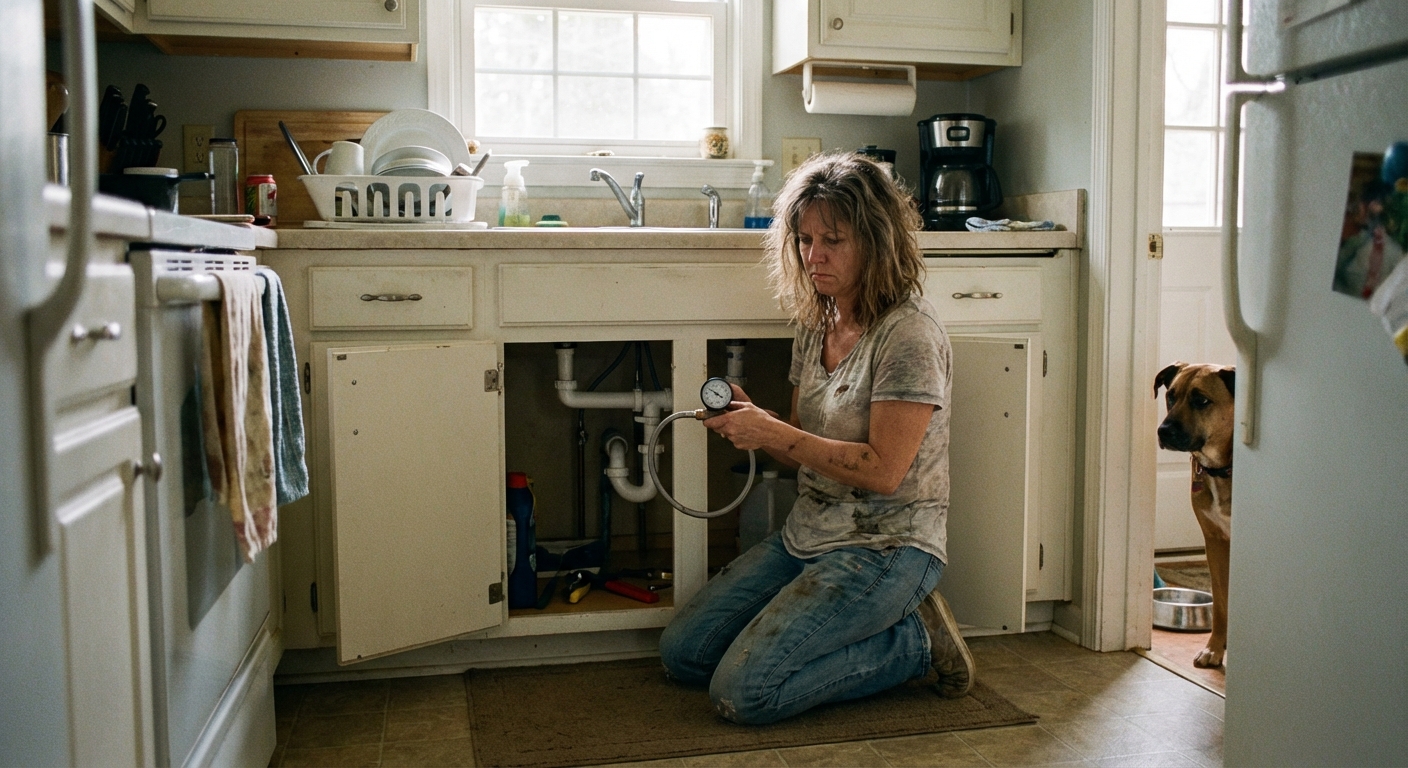
What Is Normal Water Pressure and Why Does It Matter?
The water pressure in your home is measured in pounds per square inch (PSI). Most plumbing experts agree that the ideal range for residential water pressure is 40 to 60 PSI, with anything up to 80 PSI still considered acceptable under most building codes. The International Plumbing Code (IPC) and International Residential Code (IRC) set a hard maximum of 80 PSI, and require a pressure-reducing valve (PRV) on any system where incoming pressure exceeds that limit. The EPA's WaterSense program goes further, recommending incoming service pressure between 45 and 60 PSI for efficient water use.
| Pressure Level | PSI Range | Status |
|---|---|---|
| Too Low | Below 40 PSI | Weak flow, inconvenient |
| Ideal | 40 to 60 PSI | Optimal performance |
| Acceptable | 60 to 80 PSI | Normal, monitor it |
| Too High | Above 80 PSI | Code violation, damaging |
Getting this range right isn't just a comfort issue, it directly affects your wallet. High pressure wastes water, accelerates appliance wear, and can blow out seals in your dishwasher, water heater, or washing machine. Low pressure makes daily tasks frustrating and could signal a hidden leak in your water line that's costing you money every month. Understanding where your home falls on this scale is the first step to fixing the problem.

Find Trusted & Licensed Plumbers in Ohio
Get matched with companies for your specific needs
Common Causes of Low Water Pressure
Low water pressure can be a nuisance at a single faucet or a symptom of something seriously wrong throughout your entire home. Here are the six most common culprits plumbers diagnose in 2026:
1. Clogged Aerators and Showerheads
The aerator is the small mesh screen at the tip of your faucet. Over time, mineral deposits, sediment, and debris build up inside it, restricting flow. This is one of the most frequent causes of low pressure at an individual fixture and the cheapest to fix. Simply unscrew the aerator, soak it in white vinegar overnight, scrub it clean, and reinstall. If pressure problems are limited to one or two fixtures, start here before doing anything else. Showerheads in hard-water areas often suffer the same fate and respond to the same treatment.
2. Hidden Leaks
A hidden leak anywhere in your supply lines can dramatically reduce pressure throughout the house. Warning signs include unexplained spikes in your water bill, damp spots on walls or ceilings, and pressure drops that seem to come out of nowhere. To check for a leak, turn off all fixtures and watch your water meter. If it continues to move, you have a leak somewhere in the system. Our high water bill troubleshooting guide walks through the full process.
3. Shut-Off Valve Issues
Your home has at least two main shut-off valves: one near the water meter and one where the main line enters the house. If either is only partially open, even slightly, it can choke the flow throughout your entire home. This is surprisingly common after plumbing work when valves aren't fully reopened. Check that both are turned fully counterclockwise (for gate valves) or parallel to the pipe (for ball valves).
4. Pressure Regulator Failure
A failing PRV is a common but often overlooked cause of sudden low water pressure throughout the whole house. The PRV is designed to step down the high pressure coming from the municipal supply to a safe residential level. When it fails, pressure can drop sharply or spike dangerously without warning. PRVs are also a leading culprit in homes that suddenly experience whole-house pressure changes with no other plumbing work performed.
5. Municipal Supply Issues
Sometimes the problem isn't in your home at all. Water utilities can experience temporary pressure drops due to high demand, main line repairs, or supply disruptions in your area. Some utilities have also begun reducing pressure system-wide to protect aging mains, which homeowners notice as a permanent drop at the tap. If your neighbors are experiencing the same issue simultaneously, contact your local water utility to check for service alerts before touching anything in your own home.
6. Corroded or Mineral-Clogged Pipes
Older homes, particularly those with galvanized steel or iron pipes, are susceptible to internal corrosion and scale buildup that narrows the pipe's interior diameter over time. Galvanized steel lines often start performing poorly around the 20-year mark. If your low pressure problem is gradual and affects multiple fixtures, aging pipes may be the root cause. This scenario often points to deeper issues that can also create noisy or banging pipes throughout the home.
Is It Localized or Whole-House? How to Troubleshoot
Knowing whether your pressure problem is isolated to one fixture or affecting the entire home is the key to diagnosing it efficiently. Here's how to tell the difference:
Step-by-Step Troubleshooting
Step 1: Test the outdoor spigot first. Attach a pressure gauge to an outdoor hose bib with all other water off. This gives you the most accurate whole-house baseline reading.
Step 2: Test multiple fixtures. Check pressure at the kitchen sink, a bathroom faucet, and the shower. If all are low, it's a whole-house issue. If only one or two fixtures are affected, the problem is localized.
Step 3: For localized issues. Check aerators, shutoff valves under the sink, and supply hose connections. Mineral buildup in showerheads is another common culprit, try soaking the showerhead in vinegar. Our shower pressure booster guide covers fixture-specific fixes in detail.
Step 4: For whole-house issues. Check that the main shut-off valves are fully open. Locate your PRV (usually near the main water entry point) and check its current setting. If you suspect a leak, use the water meter test described above.
If a whole-house pressure test reveals a reading below 30 PSI, or you can't identify the source yourself, it's time to call in a pro. Our full guide on how to fix low water pressure covers more advanced diagnostics.
The Pressure Regulator: How It Works and When to Adjust It
The pressure reducing valve (PRV) is one of the most important and most misunderstood components in your home's plumbing system. Located where the main water line enters the house, it uses a diaphragm, spring, and valve mechanism to step down the high-pressure municipal supply (which can exceed 100 PSI) to a safe residential level. A dedicated water pressure reducing valve guide covers selection and installation in depth.
How It Works
When high-pressure water enters the PRV's inlet port, it flows toward an internal poppet valve. The diaphragm senses downstream pressure and automatically adjusts the valve opening, widening it when demand increases and narrowing it when demand drops. This negative feedback loop keeps your home's pressure stable regardless of fluctuations from the street.
How to Adjust a PRV
- Locate the PRV. It looks like a bell-shaped brass fitting on your main line.
- Loosen the lock nut on the adjustment screw.
- Turn the screw clockwise to increase pressure, counterclockwise to decrease it.
- Make small adjustments (¼ turn at a time) and retest with your pressure gauge after each turn.
- Aim for a reading in the 50 to 60 PSI range, then retighten the lock nut.
When to Replace Your PRV
PRVs typically last 10 to 15 years. Signs that yours needs replacement include:
- Pressure that fluctuates unpredictably even without changes to demand
- Consistent readings outside the normal range despite adjustment
- Visible corrosion, leaks, or damage on the valve body
- A PRV that's been in place for over a decade in a hard-water area
PRV replacement costs in 2026 typically run $200 to $700, with a national average around $400. The valve itself costs $90 to $200 at most big-box stores, and licensed plumber labor adds the rest. Complex installations (buried valves at the meter, tight access, or permit-required jobs) can push costs above $1,000. This is a job most homeowners should leave to a licensed plumber. If your PRV is failing, the pressure buildup can also stress your water heater, which is why expansion tanks are often required alongside a new PRV.
High Water Pressure: The Silent Plumbing Killer
While low pressure is a daily annoyance, high water pressure is a genuine threat to your entire plumbing system. Pressure above 80 PSI forces water through your pipes at a rate that stresses joints, wears out washers and seals, and shortens the lifespan of every water-using appliance in your home. It's also one of the leading causes of water hammer and banging pipes.
Risks of High Water Pressure
- Pipe damage and burst joints, especially at elbows and connections
- Appliance failure: water heaters, dishwashers, and washing machines wear out faster
- Leaking fixtures: constant high pressure causes faucets and toilets to drip
- Higher water bills: more pressure means more water used per minute
- Voided warranties: many appliance manufacturers cite high water pressure as grounds to deny warranty claims, and smart pressure monitors now make it easy to prove a home ran outside the recommended 40 to 80 PSI range
Smart Monitors: A 2026 Upgrade Worth Considering
A new generation of smart water monitors and Wi-Fi-enabled shutoff valves now sits alongside the PRV on your main line, tracking pressure and flow in real time. These devices send phone alerts when pressure exceeds safe thresholds, detect unusual continuous flow (a sign of a leak), and can automatically close the main shutoff to prevent flooding. Mid-range systems start around $400 to $700 installed, and many insurance carriers now offer premium discounts for homes that install them.
Whole-House Water Pressure Booster Pumps
If your home consistently delivers low pressure despite everything being in working order, common in homes with well systems, top-floor units in multi-story homes, or properties at the end of a municipal supply line, a whole-house water pressure booster pump may be the right long-term solution.
Types of Booster Pumps
| Pump Type | Best For | Key Benefit |
|---|---|---|
| Centrifugal Booster Pump | Standard residential use | Reliable, low maintenance |
| Variable Frequency Drive (VFD) | Homes with fluctuating demand | Energy efficient, adjusts automatically |
| Automatic Booster with Pressure Tank | Inconsistent municipal pressure | Reduces pump cycling, extends lifespan |
| Multistage Centrifugal Pump | High-pressure needs, multi-story homes | Delivers high PSI consistently |
When Should You Install One?
Consider a booster pump if:
- Your pressure gauge reads consistently below 30 to 40 PSI after ruling out leaks and valve issues
- You live in a multi-story home and upper floors receive noticeably weaker flow
- Your home relies on a well system with insufficient natural pressure
- Peak usage times (mornings, evenings) cause simultaneous low pressure at multiple fixtures
What Does It Cost in 2026?
Residential booster pump systems generally range from $800 to $1,500 for the unit, with professional installation bringing the total project to $1,200 to $3,000. Costs vary based on pump capacity, plumbing complexity, electrical work, and local labor rates. While the upfront cost is real, a well-sized booster pump can eliminate years of pressure-related frustration and prevent costly plumbing failures down the line.
Frequently Asked Questions
What is normal water pressure for a house?
The ideal water pressure for a residential home is between 40 and 60 PSI, with anything up to 80 PSI considered acceptable under the International Plumbing Code. Pressure below 40 PSI is classified as low and can make everyday tasks like showering and running appliances frustrating. Pressure above 80 PSI is a code violation that strains pipes, fixtures, and appliances. You can check your home's pressure in minutes using a $10 to $15 gauge attached to an outdoor hose bib.
How do I fix low water pressure in one room?
If low pressure is isolated to one room or fixture, start by checking the aerator on the faucet, since mineral buildup and debris are the most common culprit. Also inspect the shutoff valve under the sink or behind the fixture to confirm it's fully open. If pressure is only low in the bathroom, check the showerhead for clogs and soak it in vinegar. Persistent single-room issues may indicate a partially closed supply valve or a localized pipe restriction that a plumber can resolve quickly.
What causes sudden low water pressure throughout the house?
Sudden whole-house low pressure is most often caused by a failing pressure reducing valve, a main shut-off valve that wasn't fully reopened after recent work, or a break in the main water supply line. It can also result from temporary municipal supply issues, so contact your water utility to rule that out first. If no service alerts are reported, check your main valves and test your PRV before calling a plumber, as these are the most common non-emergency causes.
How do I adjust a water pressure regulator?
Your PRV has an adjustment screw on top, secured by a lock nut. Loosen the lock nut, then turn the screw clockwise to increase pressure or counterclockwise to decrease it, one quarter turn at a time. Use a pressure gauge on a nearby fixture to monitor the reading after each adjustment. Once you hit your target (ideally 50 to 60 PSI), retighten the lock nut. If the PRV doesn't respond to adjustment or pressure is still unstable, it likely needs to be replaced by a licensed plumber.
When should I call a plumber for water pressure problems?
Call a plumber if your pressure gauge reads below 30 PSI or above 80 PSI and you cannot identify the cause, if you suspect a hidden leak or a broken main water line, or if adjusting the PRV doesn't stabilize pressure. You should also call a pro if your PRV is over 10 to 15 years old and may need replacement, or if low pressure is accompanied by discolored water. When in doubt, scheduling a professional diagnosis is a cost-effective way to get answers fast, as outlined in our plumbing emergency guide.