
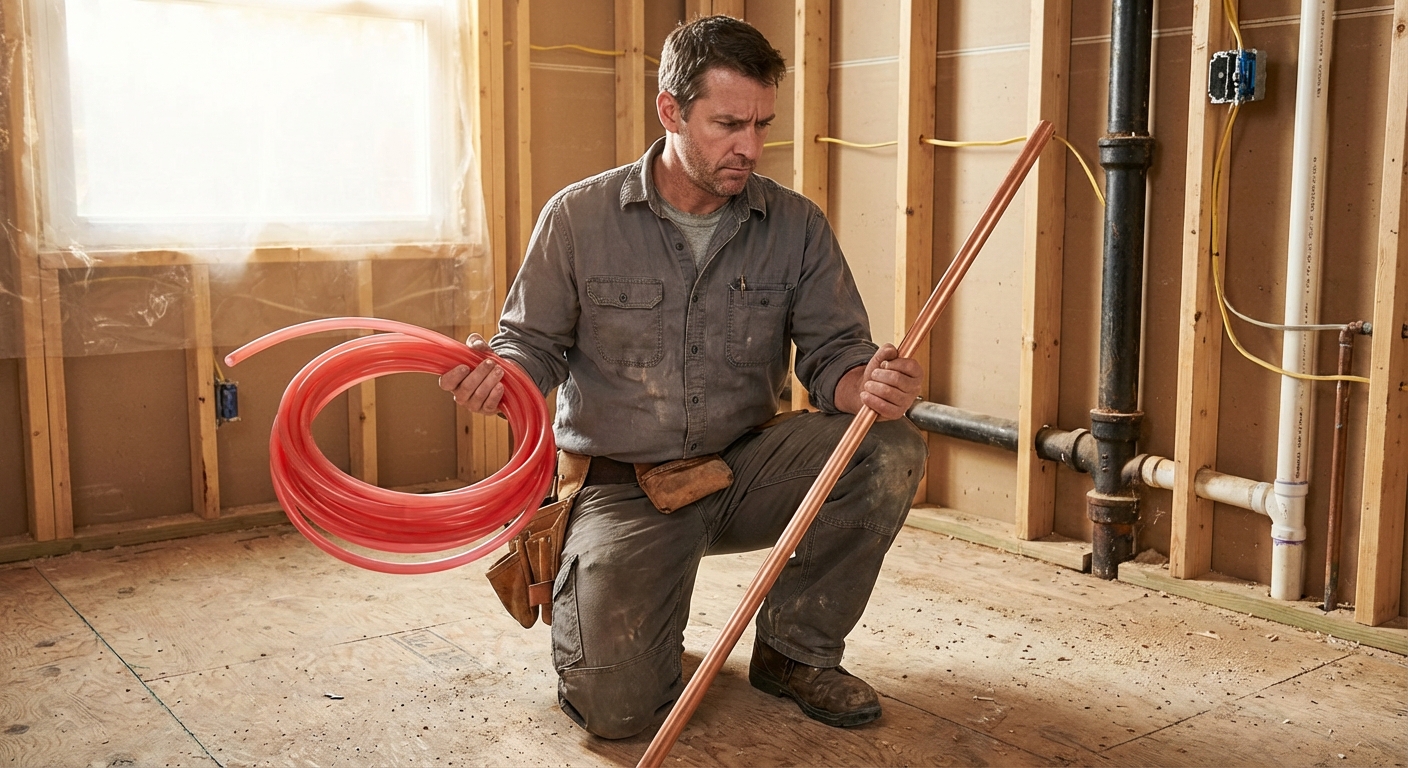
Copper vs PEX: Head-to-Head Pros and Cons
When it comes to residential plumbing, no debate is more common than copper vs PEX plumbing. Both materials are code-approved, widely used, and backed by decades of real-world performance, but they serve different needs, budgets, and climates. Here's a breakdown of the key strengths and weaknesses of each.
Copper Pipe: Pros and Cons
Copper has been the gold standard in residential plumbing for over 70 years. It's rigid, reliable, and built to last, though 2026 pricing has made it a much bigger investment.
PEX Pipe: Pros and Cons
PEX (cross-linked polyethylene) is the modern challenger. It's flexible, affordable, and increasingly dominant in new construction and repiping projects across all 50 states.

Find Trusted & Licensed Plumbers in Ohio
Get matched with companies for your specific needs
Cost Comparison: Copper vs PEX Plumbing in 2026
Understanding the copper vs PEX cost comparison is critical, especially for large projects like new construction or whole-home repiping. Copper prices surged to historic highs in early 2026, with copper wire and conduit indexes showing 18% year-over-year increases, making the price gap between materials wider than ever.
Material Cost Per Linear Foot (2026)
| Pipe Type | Cost Per Linear Foot | Relative Cost |
|---|---|---|
| PEX-A (expansion) | $0.50 to $2.00 | Lowest |
| PEX-B (crimp) | $0.40 to $1.50 | Lowest |
| Type M Copper | $2.00 to $4.00 | Moderate |
| Type L Copper | $3.00 to $6.00 | High |
| Type K Copper | $5.00 to $8.00+ | Highest |
Whole-House Repiping Cost Comparison (2026)
The real cost difference shows up on full-scale projects. Here's what homeowners can expect to pay for a complete whole house repiping project by home size in 2026:
| Home Size | Copper Total Cost | PEX Total Cost | Estimated Savings |
|---|---|---|---|
| 1,500 sq ft / 2 bath | $9,000 to $12,000+ | $4,500 to $8,500 | $3,000 to $5,000 |
| 2,000 sq ft / 3 bath | $10,000 to $15,000 | $5,000 to $9,000 | $4,000 to $6,000 |
| 2,500 sq ft / 3+ bath | $11,000 to $16,000+ | $6,000 to $11,000 | $4,000 to $6,000 |
Labor costs favor PEX as well. With plumbers charging $95-$175 per hour in 2026, the 40-60% faster installation time of PEX translates to hundreds, sometimes thousands, of dollars in labor savings. Labor typically accounts for about 70% of a repiping project's total cost, which is why the installation speed advantage of PEX matters so much. Copper's requirement for professional soldering, specialized tools, and more invasive wall access drives costs up considerably.
Which Is Better for Your Application?
The best pipe material depends heavily on the specific job at hand. Here's how copper vs PEX pipes stack up across the most common residential applications in 2026.
New Construction
Expert verdict for new construction: PEX dominates for labor efficiency and budget control in most residential builds. Copper remains a smart choice near water heaters and in upscale projects where material aesthetics or long-term longevity are priorities.
Whole-House Repiping
For whole house repiping projects, PEX is the clear frontrunner in 2026. Its flexibility allows plumbers to snake tubing through walls with minimal demolition, finishing jobs in days rather than weeks. PEX's 40 to 50 year lifespan and immunity to corrosion make it a strong long-term choice, particularly in homes with aggressive or acidic water chemistry that would degrade copper over time. This is especially valuable when replacing failing polybutylene piping, where insurance carriers now often require full replacement.
Copper repiping still makes sense when a homeowner prioritizes maximum lifespan, has water chemistry suited to copper, and is willing to invest more upfront. Learn more about the pros, cons, and cost of PEX installation to better understand what a repipe project involves.
Spot Repairs
PEX wins for repairs in tight or hard-to-reach spaces. Its flexibility and the fact that no soldering is required makes PEX the go-to for plumbers handling most residential repair jobs. Copper is still appropriate for precise, visible repairs in finished areas where a rigid, long-lasting fix is preferred. In older homes especially, it's worth reading up on old house plumbing problems before deciding whether to patch or repipe.
Climate Considerations
| Climate | Recommended Pipe |
|---|---|
| Cold / Freeze-prone regions | PEX, expands without bursting |
| Hot / High-temp environments | Copper, heat-tolerant and stable |
| Hard water / acidic water areas | PEX, immune to mineral buildup |
| Humid coastal climates | PEX, no corrosion risk |
| Outdoor / UV-exposed lines | Copper, UV and weather resistant |
For outdoor projects specifically, take a look at our outdoor plumbing installation guide to learn how PEX, copper, and PVC each perform in exterior applications.
Health, Safety, Code and Resale Value
Health and Safety Considerations
Copper has a natural edge when it comes to water purity. Its antimicrobial properties inhibit bacterial growth inside pipes, and it has a decades-long safety record for potable water. However, copper is susceptible to pinhole leaks over time, especially in homes with low-pH or acidic water, which can introduce copper particulates into drinking water. This is a growing concern for corrosion-prone plumbing systems in older homes.
PEX has raised some concerns around chemical leaching. Long-term studies (including a five-year PEX-A study published in Materials journal) have found that new PEX pipes, particularly when exposed to hot water or high temperatures, can release trace volatile organic compounds (VOCs) such as MTBE, ETBE, and toluene. These compounds diminish rapidly during the first months of use as antioxidants stabilize. Choosing NSF/ANSI 61-certified PEX from reputable manufacturers greatly reduces this risk. In 2025, advocacy groups also renewed attention to microplastic and chemical leaching from plastic plumbing, though no new peer-reviewed toxicity studies have changed the regulatory picture.
Building Code Acceptance in 2026
Both copper and PEX are accepted under the 2024 International Plumbing Code (IPC), the 2024 International Residential Code (IRC), and the 2024 Uniform Plumbing Code (UPC), and are approved for potable water in all 50 states. Many states are adopting these updated codes for 2026 effective dates, and some jurisdictions like Connecticut have added explicit provisions allowing compressed gas testing as an alternative for PEX systems. California's 2025 Plumbing Code took effect January 1, 2026, and continues to approve both materials.
The EPA's Lead and Copper Rule Improvements (LCRI) have also tightened rules on lead service lines, which can affect older copper installations with lead solder. See our full breakdown of plumbing code compliance and 2026 violations for details. Always verify with your local building department before starting a project.
Resale Value Impact
Neither material significantly hurts home resale value when professionally installed. However, there are nuances:
- Copper appeals to buyers in premium and luxury markets who value long-term durability and traditional materials
- PEX offers a stronger ROI for sellers, a full repipe costs thousands less, yet delivers comparable performance that home inspectors view favorably
- Buyers and home inspectors in 2026 increasingly accept PEX as the modern standard, with no resale penalty reported in most markets
For anyone flipping a property, our guide on plumbing decisions for house flipping walks through what actually pays back at resale.
The bottom line: quality of installation matters more than material choice when it comes to how a buyer or inspector perceives your plumbing system.
Frequently Asked Questions
Which lasts longer, copper or PEX?
Copper has the longer proven lifespan at 50 to 70+ years under ideal conditions, compared to PEX's rated lifespan of 40 to 50 years. However, in areas with acidic or hard water, copper can fail prematurely due to corrosion and pinhole leaks, while PEX remains unaffected. In many real-world conditions, PEX may actually outlast copper in those environments. The longevity of either material also depends heavily on installation quality and local water chemistry.
Is PEX safe for drinking water?
Yes, NSF-certified PEX is approved for potable water use in all 50 states. Studies have noted trace VOC leaching in new PEX pipes, particularly with hot or stagnant water, but these levels drop significantly after the first few months of regular use. Choosing NSF/ANSI 61-certified PEX from reputable manufacturers and flushing new lines thoroughly before use minimizes any health risk. Copper remains the traditional choice for those who prefer a material with a longer safety track record.
Can I mix copper and PEX in the same plumbing system?
Yes, copper and PEX can be used together in the same system using appropriate transition fittings. This is actually a common approach, for example, running PEX throughout the home for most supply lines while using copper for connections near the water heater or in areas requiring rigidity. Always use dielectric fittings where the two metals or dissimilar materials meet to prevent corrosion from galvanic reactions.
Is PEX or copper better for repiping an older home?
For most homeowners, PEX is the better choice for whole-house repiping due to its significantly lower cost, faster installation, and minimal wall damage. PEX can be snaked through existing wall cavities with fewer cutouts than copper requires, saving on drywall repair. That said, if your home has water chemistry well-suited to copper and you're planning to stay long-term, copper's 50 to 70 year lifespan may justify the higher investment. Get quotes for both materials before deciding.
Does copper plumbing increase home value more than PEX?
Not necessarily. Professional installation quality and overall plumbing function matter far more to buyers and inspectors than the pipe material itself. Copper may carry a slight premium perception in luxury markets, but PEX is now widely accepted and viewed as the modern standard. Because PEX repiping costs significantly less, homeowners often see a better return on investment by choosing PEX and using the savings elsewhere in the home.