
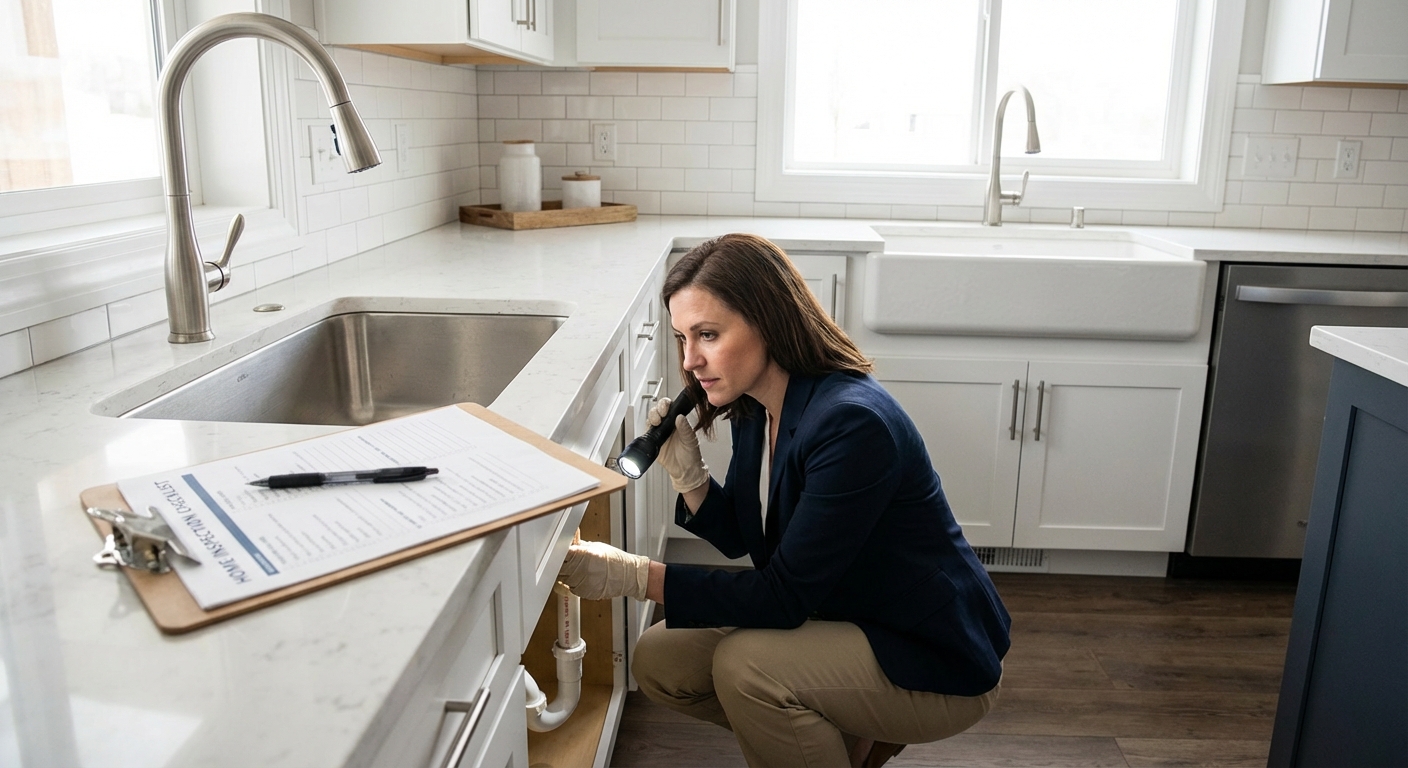
What a Plumbing Inspection Actually Covers
A standard general home inspection touches on plumbing, but only at the surface. A dedicated plumbing inspection goes far deeper, using specialized tools like pressure gauges and sewer cameras to evaluate the full water supply, drainage, and waste system. Here's what a licensed plumber checks during a pre-purchase inspection:
Key Systems and Components Examined
| Component | What Inspectors Check |
|---|---|
| Water Pressure | Measured at multiple fixtures; ideal range is 40-80 psi (optimal: 50-60 psi) |
| Pipe Materials | Copper, PEX, CPVC, galvanized steel, polybutylene, or lead. Each has different risk profiles |
| Sewer Lines | Camera scoped for cracks, root intrusion, blockages, or pipe separation |
| Water Heater | Age, rust, corrosion, proper venting, T&P relief valve function |
| Fixtures & Toilets | Leaks, stability, flushing performance, and wax seal condition |
| Drains | Flow speed at sinks, showers, and tubs. Slow drains signal deeper issues |
| Shutoff Valves | Main valve operability and accessibility |
| Sump Pump | Function and float switch condition (if present) |
Home Inspection vs. Dedicated Plumbing Inspection
A general home inspection provides a broad overview of the property, but it typically doesn't include detailed plumbing diagnostics. Home inspectors note visible issues but won't use cameras or pressure gauges or offer repair estimates. A licensed plumber performs a much more thorough evaluation, especially critical for sewer lines, pipe material identification, and water pressure testing.
For homes built before 1980, or any property with a slab foundation, adding a dedicated plumbing inspection is strongly recommended on top of your standard home inspection. Learn more about plumbing inspection costs before you budget for this step, and know the plumbing red flags you can spot yourself during a home tour.

Find Trusted & Licensed Plumbers in Ohio
Get matched with companies for your specific needs
How Much Does a Pre-Purchase Plumbing Inspection Cost in 2026?
Inspection costs vary depending on the type of evaluation, home size, and your location. According to 2026 Angi and HomeAdvisor data, professional plumbing inspections range from $100 to $1,375, with the average homeowner paying around $300. Here's a breakdown of what to expect:
Cost by Inspection Type
| Inspection Type | Typical 2026 Cost | Best For |
|---|---|---|
| Visual Only | $100 – $200 | New construction or recently repiped homes |
| Sewer Camera Scope | $250 – $1,175 | Older homes, slab foundations, recurring clogs |
| Combination (Visual + Camera) | $350 – $1,375 | Most home purchases, the gold standard |
| National Average | ~$300 | Benchmark for budgeting |
Regional pricing varies significantly. In 2026, plumbing inspections in New York City average around $530, while the same inspection in Billings, Montana averages closer to $350. In high-cost cities like Los Angeles or Seattle, expect quotes on the higher end, while markets like Orlando, Houston, or Hartford often come in under $500. Given that a failed sewer line alone can cost $2,000 to $10,000 or more to replace, this is one of the most cost-effective investments a buyer can make. Learn more about plumbing camera inspections and when they're worth the added expense.
Older Homes vs. New Construction: What to Expect
The age of a home dramatically changes what a plumbing inspection is likely to uncover. Understanding these differences helps you set realistic expectations and budget accordingly.
Common Issues in Older Homes (Pre-1980)
Older homes are far more likely to have systemic plumbing issues rooted in decades of use and outdated materials. The most frequently flagged problems in 2026 inspection reports include:
- Corroded galvanized steel or cast iron pipes. Prone to rust, mineral buildup, and eventual failure. Warning signs include brown or yellow water, a metallic taste, and sudden pressure drops
- Polybutylene piping (1978-1995). A notoriously failure-prone plastic pipe material that many insurers now refuse to cover
- Lead pipes or lead solder. A serious health risk in homes built before 1986, and now subject to the EPA's Lead and Copper Rule Improvements (LCRI) with a compliance date of November 1, 2027
- Pipe bellies. Sections of pipe that have shifted downward over time, creating pooling and clogs
- Deteriorated sewer lines. Cast iron or clay sewer pipes are highly susceptible to root intrusion, cracks, and collapse, though they can last 80 to 150 years if intact
- Low water pressure. Often caused by corrosion or mineral scale buildup restricting flow inside pipes
For a deeper look at what older homes typically hide, see our guide on old house plumbing problems.
Common Issues in New Construction
New builds benefit from modern materials like PEX and CPVC, but they're not immune to problems. Inspectors in new construction typically look for:
- Improper pipe slope or venting causing slow drains
- Loose or poorly soldered connections
- Code violations from rushed build timelines
- Incorrect fixture installation or missing shut-off valves
Even a brand-new home can hide surprises, so ask about plumbing code compliance and any recent inspection sign-offs. If you're buying a home currently under construction, our new construction plumbing guide walks through what to look for at each build phase.
Deal-Breakers vs. Negotiable Repairs (and How It Affects Your Offer)
Not all plumbing issues are created equal. Knowing the difference between a deal-breaker and a minor negotiable repair can save you thousands, or help you avoid a money pit entirely.
Deal-Breakers: Walk Away or Demand Major Concessions
These issues are costly, systemic, or both, and they often signal deeper hidden damage like mold, rot, or structural deterioration:
| Issue | Typical 2026 Repair Cost | Buyer Action |
|---|---|---|
| Full sewer line replacement (40 ft) | $2,000 – $10,000+ | Request major price reduction or walk away |
| Sewer line repair (crack or root intrusion) | $150 – $3,800 | Credit or seller-completed repair |
| Polybutylene pipes (whole house PEX repipe) | $6,000 – $12,000 | Demand full repipe credit before closing |
| Lead pipes (whole house) | $7,500 – $15,000+ | Request replacement credit, factor in LCRI timelines |
| Corroded water heater (rust + leaks) | $1,200 – $2,500 | Request replacement or credit |
| Severe water damage / mold from leaks | $1,000 – $10,000+ | Full inspection + price reduction |
According to 2026 Angi data, most homeowners pay around $7,500 for a full house repipe in a 1,500 to 2,000 sq ft home using PEX or CPVC, while copper repipes in the same home commonly run $9,000 to $12,000 or more. Labor makes up roughly 70% of any repipe cost. In high-cost states like California, whole-house repipes routinely land between $9,000 and $15,000, and larger two-story homes can exceed $18,000. If you inherit plumbing issues after purchase, a home warranty with plumbing coverage can help offset future repair costs, though sewer lines and pre-existing conditions are typically excluded. For larger jobs, our whole house repiping guide can help you decide between PEX and copper.
Negotiable Repairs: Credits and Minor Fixes
These issues are real but manageable, and they give you room to negotiate:
- Leaky faucets or showerheads ($50-$200 to fix)
- Running toilets ($100-$300)
- Slow drains or minor clogs ($100-$250)
- Outdated but functional water heater under 10 years old ($200-$500 credit)
In most cases, buyers request a seller credit at closing rather than asking the seller to make repairs. This gives you control over the quality of the fix, avoids closing delays, and lets you choose your own licensed plumber. According to 2026 Opendoor data, 46% of buyers used inspection findings to negotiate repairs or credits, and 83% of buyers used inspection reports to request some form of concession. Use the repair estimates from your plumber's report to justify the credit amount, and learn how to get an accurate plumbing estimate so your numbers hold up in negotiation.
How Inspection Findings Affect Home Value
Plumbing inspection results don't just help you negotiate repairs. They affect the perceived market value of the home. A buyer-commissioned report that documents systemic issues like aging pipes or a compromised sewer line provides concrete evidence to support a lower offer. Recent industry data shows buyers who negotiate based on inspection findings save an average of $14,000 off the sale price. Even minor plumbing deficiencies add up: a $2,000 water heater replacement plus $500 in faucet repairs is a reasonable basis for a $2,500 to $3,000 price reduction request.
For any issues you plan to address post-purchase, it's wise to understand plumbing permits. Some repairs require permits that affect resale value. To protect your investment long-term, look into preventive plumbing maintenance once you take ownership.
Frequently Asked Questions
Is a plumbing inspection required before buying a home?
No, a plumbing inspection is not legally required in most states, but it is strongly recommended. A general home inspection typically only covers visible plumbing at a surface level. A dedicated plumbing inspection by a licensed plumber can reveal hidden leaks, deteriorated sewer lines, unsafe pipe materials, and water pressure issues that could cost tens of thousands of dollars to repair after purchase.
Can I negotiate repairs after a plumbing inspection?
Yes, and the inspection report is your best negotiating tool. After receiving the results, you can ask the seller to fix specific issues before closing, request a credit toward closing costs, or negotiate a lower purchase price. In 2025 and 2026, buyers who used inspection findings to negotiate saved an average of $14,000 off the purchase price. For major issues like full sewer line failure or whole-house repiping, some buyers choose to walk away entirely rather than take on the financial burden.
What pipe materials are red flags during a home plumbing inspection?
The biggest red flags are polybutylene pipes (used from 1978-1995, known for failure and often uninsurable), lead pipes or lead solder (a health hazard in homes pre-1986 now covered by the EPA's LCRI taking effect November 2027), and heavily corroded galvanized steel pipes (common in pre-1960s homes). If any of these materials are present, budget for whole-house repiping, which typically costs $6,000 to $15,000 in 2026 depending on home size and material choice.
How long does a pre-purchase plumbing inspection take?
A visual plumbing inspection typically takes 1 to 2 hours for an average-sized home. A full combination inspection that includes a sewer camera scope can take 2 to 4 hours. The inspector will generally walk you through their findings at the end, and a written report is usually delivered within 24 hours. Having the report before your inspection contingency deadline (typically 2 to 3 business days in 2026) is critical for negotiation.
Should I hire the same plumber who does the inspection to do the repairs?
Not necessarily. While some companies offer to credit the inspection fee toward repairs, it's a good idea to get at least two or three repair quotes from independent plumbers. The inspection plumber has a financial incentive to recommend work, so comparing estimates protects you from overpaying. Look for a licensed, insured plumber with solid reviews, and check the plumbing service cost guide so you know what fair pricing looks like.