
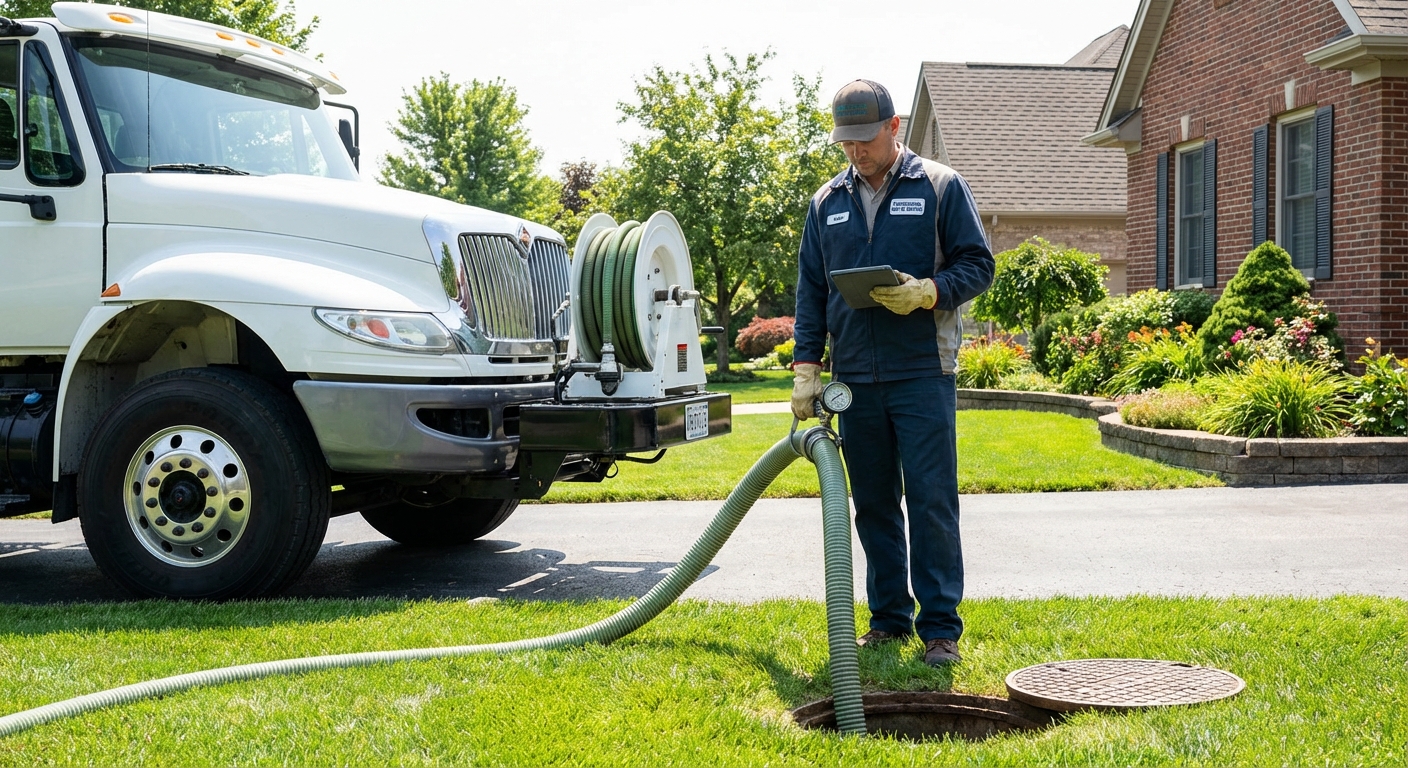
How Often Should You Pump Your Septic Tank?
Most residential septic tanks require pumping every 3 to 5 years, but the exact frequency depends on several critical factors. In general, a septic tank should be inspected every 1 to 3 years and pumped every 3 to 5 years, with the timing driven by tank size, household size, and daily water usage.
Pumping Frequency by Tank Size and Household
The size of your tank and the number of people in your household are the primary factors determining pumping frequency. Smaller households with larger tanks can go longer between services, while larger families with smaller tanks need more frequent attention.
| Septic Tank Size | 1-2 People | 3 People | 4 People | 5 People |
|---|---|---|---|---|
| 750 gallons | 4 years | 2.5 years | 1.5 years | 1 year |
| 1,000 gallons | 5.5 years | 3.5 years | 2.5 years | 2 years |
| 1,250 gallons | 7 years | 4 years | 3 years | 2.5 years |
| 1,500 gallons | 9 years | 5.5 years | 4 years | 3 years |
For a typical family of four using a 1,000-gallon tank, most professionals recommend pumping every 2 to 3 years. If the family uses a garbage disposal or does a lot of laundry, the interval should be shorter. A couple living alone with the same tank can often extend service to every 5 to 6 years, assuming normal water usage.
General Maintenance Schedule Guidelines
Conservative estimates from industry regulators suggest pumping every 2 to 3 years for most households. A professional plumbing camera inspection can also help technicians assess your specific needs based on actual sludge and scum accumulation rates. A good rule of thumb is the "one-third rule": pump when combined sludge and scum measures roughly one-third of the tank's liquid depth, even if the calendar interval has not been reached.

Find Trusted & Licensed Plumbers in Ohio
Get matched with companies for your specific needs
Signs Your Septic Tank Needs Pumping
Recognizing warning signs early prevents emergency situations and costly damage. Your septic system communicates its needs through several clear indicators both inside your home and in your yard.
Warning Signs Inside Your Home
Slow draining fixtures are often the first indicator. When sinks, showers, and toilets all drain slowly, not just one fixture, it often indicates the septic tank is near or at capacity rather than a simple local clog. If chemical drain cleaners do not help and several drains are affected, a full tank or septic problem is more likely than a simple plumbing blockage. If only one fixture is involved, you may instead be dealing with a clogged kitchen sink or a localized drain issue.
Foul sewage odors near drains, from toilets, or throughout your home indicate gases escaping from an overloaded system. These smells shouldn't be ignored, as they suggest wastewater isn't processing properly.
Gurgling sounds in your plumbing occur when air pockets develop due to improper flow. You might hear these noises when flushing toilets, running water in sinks, or using your shower drain.
Sewage backup represents the most serious indoor warning sign. Brown or black water coming up in toilets, showers, or floor drains is an emergency and usually means the tank is too full or the system is failing. Backups in lower-level fixtures (basement toilet/shower) are especially typical of a full tank or saturated drainfield.
Outdoor Indicators in Your Yard
Pooling water or soggy areas near your septic tank or drain field are unmistakable signs of trouble. Puddles or soggy spots near the septic tank or drainfield in dry weather often indicate the tank is overflowing and effluent is surfacing, requiring immediate service.
Unusually lush grass over your drain field seems like a benefit, but it actually signals nutrient-rich wastewater surfacing. If the grass above your septic system is greener and grows faster than surrounding areas, your tank likely needs pumping.
Sewage odors outdoors around your tank location or drain field area indicate the system is overwhelmed. These smells intensify after heavy water usage or during humid weather when gases don't dissipate quickly.
Septic Tank Pumping Cost in 2026
Understanding current pricing helps you budget for this essential maintenance. Septic pumping costs vary based on tank size, location, accessibility, and additional services required.
National Average Costs
The average cost to pump a septic tank in 2026 is about $427, with most people paying between $291 and $563. This price range covers standard service for residential tanks with straightforward access. The U.S. EPA estimates regular septic maintenance fees of $250 to $500 every three to five years, a bargain compared to the cost of repairing or replacing a malfunctioning system.
Detailed Cost Breakdown by Tank Size
Tank capacity directly affects pumping costs since larger tanks require more time, labor, and disposal fees. Here's what you can expect to pay based on your system size:
| Tank Size | Average Cost Range | Per Gallon Rate |
|---|---|---|
| 600 gallons | $225-$300 | $0.38-$0.50 |
| 750 gallons | $225-$550 | $0.30-$0.73 |
| 1,000 gallons | $250-$700 | $0.25-$0.70 |
| 1,250 gallons | $375-$900 | $0.30-$0.72 |
| 1,500 gallons | $350-$1,100 | $0.23-$0.73 |
| 2,000 gallons | $440-$700+ | $0.22-$0.35 |
For standard 1,000 to 1,500 gallon systems serving most three-bedroom homes, expect to pay $325 to $1,100 depending on your location and tank condition.
Regional Price Variations
Geographic location significantly impacts costs due to labor rates, demand, and local regulations:
Urban areas typically charge more due to access challenges, higher business costs, and increased demand. Rural locations often have lower base rates but may include travel fees if you're outside the standard service area. For a fuller picture of regional labor rates, see our plumbing service cost guide.
Additional Cost Factors
Several circumstances can increase your base pumping cost:
- Difficult access: Buried or hard-to-reach tanks may add $50 to $150
- Emergency service: After-hours or weekend calls typically cost 50 to 100% more
- Tank inspection: Professional assessment adds $75 to $150 but identifies problems early
- Tank repairs: Baffle replacement ($100 to $300) or filter changes ($200 to $300) are common add-ons
- Excessive sludge: Tanks not pumped regularly may require extended service time
Factors Affecting Pumping Frequency
Beyond tank size and household occupancy, several variables determine how often your septic system needs service. Understanding these factors helps you establish the most efficient maintenance schedule.
Household Size and Water Usage
The number of people in your home directly correlates with wastewater production. Each person typically uses 70 to 100 gallons of water daily through showers, toilets, laundry, and cooking. Larger households fill septic tanks faster, requiring more frequent pumping.
High water consumption accelerates tank filling regardless of household size. Frequent laundry loads, long showers, and regular hot water usage all contribute additional volume. Homes with hot tubs, swimming pools, or irrigation systems often need more frequent service.
Garbage Disposal Impact
Garbage disposal use dramatically affects septic pumping frequency. Garbage disposal use can double your pumping frequency. While most septic tanks need pumping every 3-5 years under normal conditions, households with heavy disposal use may need pumping every 1 to 2 years instead. Putting food through a garbage disposal adds extra solids to the septic tank that bacteria must break down. These solids increase sludge buildup and can reduce tank capacity and treatment efficiency.
If you use a garbage disposal sparingly, pumping every 2 to 3 years might suffice. For optimal septic health, many experts recommend composting food waste instead of using disposals at all.
Water Softener Considerations
Water softeners introduce additional water volume through their backwash cycles. A typical softener regenerates every few days, flushing 40 to 100 gallons of brine solution into your septic system. For a properly sized, code-compliant system, a standard residential softener usually does not significantly increase pumping frequency, but oversized or frequently regenerating units can stress smaller or older tanks.
If you have a water softener and notice plumbing problems alongside it, a preventive plumbing checkup can confirm your system is sized appropriately for the load.
System Age and Condition
Older septic systems (21+ years) often require more frequent pumping due to deteriorated components, reduced capacity from accumulated solids, or structural damage. Cracked tanks, failing baffles, or root intrusion can all reduce effective capacity. A pre-purchase plumbing inspection is especially valuable when buying an older home with an aging septic system.
The Professional Pumping Process
Understanding what happens during professional septic service helps you prepare and ensures you receive quality work. The process involves several important steps beyond simply removing waste.
Preparation Before Service
Before the pumping truck arrives, locate your septic tank access lids. Most systems have two to three covering the inlet, center, and outlet. Uncover these lids (they're typically buried a few inches underground) and clear the area of obstacles, vehicles, and debris to provide truck access within at least 2 feet of the openings.
If you're unsure where your tank is located, check property records or hire a professional to locate it. Some providers charge extra if they must search for or dig out access points.
Step-by-Step Service Procedure
Assessment and Access: The technician inspects the tank's condition, checking the location of sludge and scum layers. They access through proper central manholes rather than small inspection ports, which can damage internal baffles.
Pumping: Using powerful vacuum equipment, the technician pumps out liquids first, then breaks up the scum layer. Alternating between pumping and re-injecting liquid agitates the sludge at the bottom, ensuring complete removal.
Cleaning and Washing: After removing the bulk of material, the technician washes out remaining debris with water, restoring tank capacity and allowing better inspection.
Inspection: Quality service includes examining the tank's structural condition, checking baffles for damage, looking for cracks or leaks, inspecting filters, and assessing root intrusion. Many problems caught during inspection cost far less to repair than waiting until system failure.
Disposal and Restoration: Waste is transported to authorized treatment facilities according to environmental regulations. The technician cleans the work area and secures or reburies access lids.
What Professional Service Should Include
Quality septic pumping involves more than just removing waste. Reputable providers should:
- Pump through proper access ports, not inspection openings
- Remove all liquids and solids, not just surface material
- Inspect tank condition and report findings
- Check baffles, filters, and structural integrity
- Provide documentation of service date and findings
- Offer recommendations for optimal maintenance schedule
If a provider offers suspiciously low prices or rushes through service in 15 minutes, they're likely not performing thorough work. Quality pumping typically takes 30 to 60 minutes depending on tank size and condition.
Why Regular Maintenance Saves Money
Neglecting septic pumping creates a cascade of expensive problems. Understanding the consequences of poor maintenance motivates consistent service scheduling and protects your property value.
Consequences of Neglected Maintenance
When septic tanks aren't pumped regularly, sludge accumulates from the bottom upward while scum builds from the top downward. Eventually, these layers meet in the middle, allowing solid material to escape with the liquid effluent into your drain field.
Drain field failure is the most costly consequence. Septic drain or leach field replacement costs $3,000 to $15,000, depending on the size, slope, soil type, location, and accessibility. Some full replacements with newer system types or difficult sites can exceed $20,000. Learn more about drain field problems and replacement costs before issues arise.
System backup occurs when wastewater has nowhere to go. Sewage backs up into your home through toilets and drains, creating health hazards and requiring emergency cleanup that can cost thousands. Severe backups may also involve sewer line repair, and homeowners insurance often doesn't cover septic-related damage.
Environmental contamination from failing systems pollutes groundwater with pathogens, nitrates, and phosphates. Besides the environmental impact, contamination can result in regulatory fines and mandatory remediation that homeowners must fund.
Structural damage to the tank itself worsens over time. Excessive sludge creates corrosive conditions that deteriorate concrete tanks, while pressure from overfilling can crack walls. Root intrusion accelerates in poorly maintained systems, causing leaks that require expensive excavation.
Long-Term Financial Benefits
Regular pumping at $300 to $600 every 3 to 5 years totals roughly $60 to $200 annually, a minor expense compared to system replacement costs. Consistent maintenance extends system life from the typical 20 to 25 years to 30 to 40 years or more.
Beyond avoiding catastrophic failures, well-maintained septic systems protect property values. Home buyers increasingly request septic records, and documented regular maintenance provides assurance that the system is reliable.
Protecting Your Investment
Think of septic pumping as insurance for your wastewater system. The relatively small recurring cost prevents major capital expenditures and preserves your home's functionality. Combined with proper practices (avoiding garbage disposal overuse, not flushing non-biodegradable items, and managing water consumption), regular pumping ensures your septic system serves you reliably for decades. An annual plumbing maintenance routine makes it easy to track service dates alongside other home upkeep.
Frequently Asked Questions
How often does a 1,000 gallon septic tank need to be pumped?
For a standard 1,000 gallon tank, pumping frequency depends on household size. A two-person household can typically wait 5 to 6 years between services, while a family of four needs pumping every 2 to 3 years. Heavy water use, frequent laundry, or garbage disposal use can shorten that interval to every 1 to 2 years. Never go longer than 5 years between pumpings, regardless of tank size or household.
What are the most reliable warning signs that my septic tank is full?
The most dependable indicators are slow drains throughout your home (not just one fixture), persistent sewage odors indoors or near your tank, gurgling sounds in pipes, and sewage backup in toilets or drains. Outside, watch for pooling water or soggy areas near the tank or drain field, plus unusually lush, dark green grass above the system. If you notice multiple symptoms at once, your tank likely needs immediate pumping to prevent failure.
How much does septic tank pumping typically cost in 2026?
The 2026 national average for septic pumping is about $427, with most homeowners paying between $291 and $563 for standard service. A typical 1,000 gallon tank costs $250 to $700 depending on region, with urban areas charging more than rural locations. Larger 1,500 gallon tanks range from $350 to $1,100. Emergency or after-hours service typically costs 50 to 100% more than scheduled appointments.
Does using a garbage disposal require more frequent septic pumping?
Yes, garbage disposals can roughly double your pumping frequency because they send food waste directly into your tank as solids that decompose slowly. Households with regular disposal use often need pumping every 1 to 2 years instead of the standard 3 to 5 years. Coffee grounds, eggshells, grease, and fibrous vegetables are especially problematic and can damage your drain field. For longer pumping intervals, consider composting food waste instead.
What happens if I don't pump my septic tank on schedule?
Neglecting regular pumping causes sludge and scum to accumulate until solids escape into your drain field, clogging soil pores and creating an impermeable barrier that prevents wastewater absorption. This leads to drain field failure requiring replacement that typically costs $3,000 to $15,000 (and up to $20,000 or more for complex sites). You'll also risk sewage backups, environmental contamination of groundwater, regulatory fines, structural damage to your tank, and a significant reduction in property value.