
What Causes Shower Drains to Clog?
Hair is the number one culprit behind most shower drain clogs. Every time you shower, loose strands wash down the drain and accumulate along the pipe walls, creating a net that traps additional debris. Over time, this hair mass combines with soap residue, skin cells, and other particles to form dense blockages that restrict water flow.
Soap scum presents another major problem. Modern body washes, shampoos, conditioners, and bar soaps leave behind a sticky residue that coats your pipes. This layer doesn't just narrow the passage. It actively captures hair and dirt, accelerating the formation of clogs. The combination of soap scum and hair creates a particularly stubborn obstruction.
Hard water mineral deposits compound these issues in many regions. Water containing high levels of calcium and magnesium leaves behind mineral buildup on pipe interiors. These deposits gradually narrow your drain opening while providing additional surface area for soap and hair to stick to. In homes with hard water, this triple threat of hair, soap scum, and minerals creates especially persistent clogs.
Other common causes include foreign objects like razor caps, hair ties, or small toys accidentally dropped down the drain. Poor pipe installation or inadequate slope (which violates plumbing drain slope requirements) can also prevent proper drainage, causing water and debris to pool rather than flow freely. Similar issues occur in bathroom sink drains and kitchen sinks.

Find Trusted & Licensed Plumbers in Ohio
Get matched with companies for your specific needs
DIY Methods to Unclog Your Shower Drain
Plunging Technique
Plunging works as an effective first-line defense against shower drain clogs, especially when standing water is present. The key is creating a tight seal and using proper technique. Remove your drain cover or stopper completely, then seal off the overflow hole with a wet cloth stuffed in a plastic bag to prevent air escape.
Use a flange plunger for best results. Its extended rubber cup creates better suction than standard cup plungers. Position it firmly over the drain opening and fill the shower floor with enough water to cover the plunger cup. Push down once to release trapped air, then perform 15 to 20 quick, short strokes in rapid succession. The pulling motion actually dislodges clogs more effectively than pushing.
Using a Drain Snake
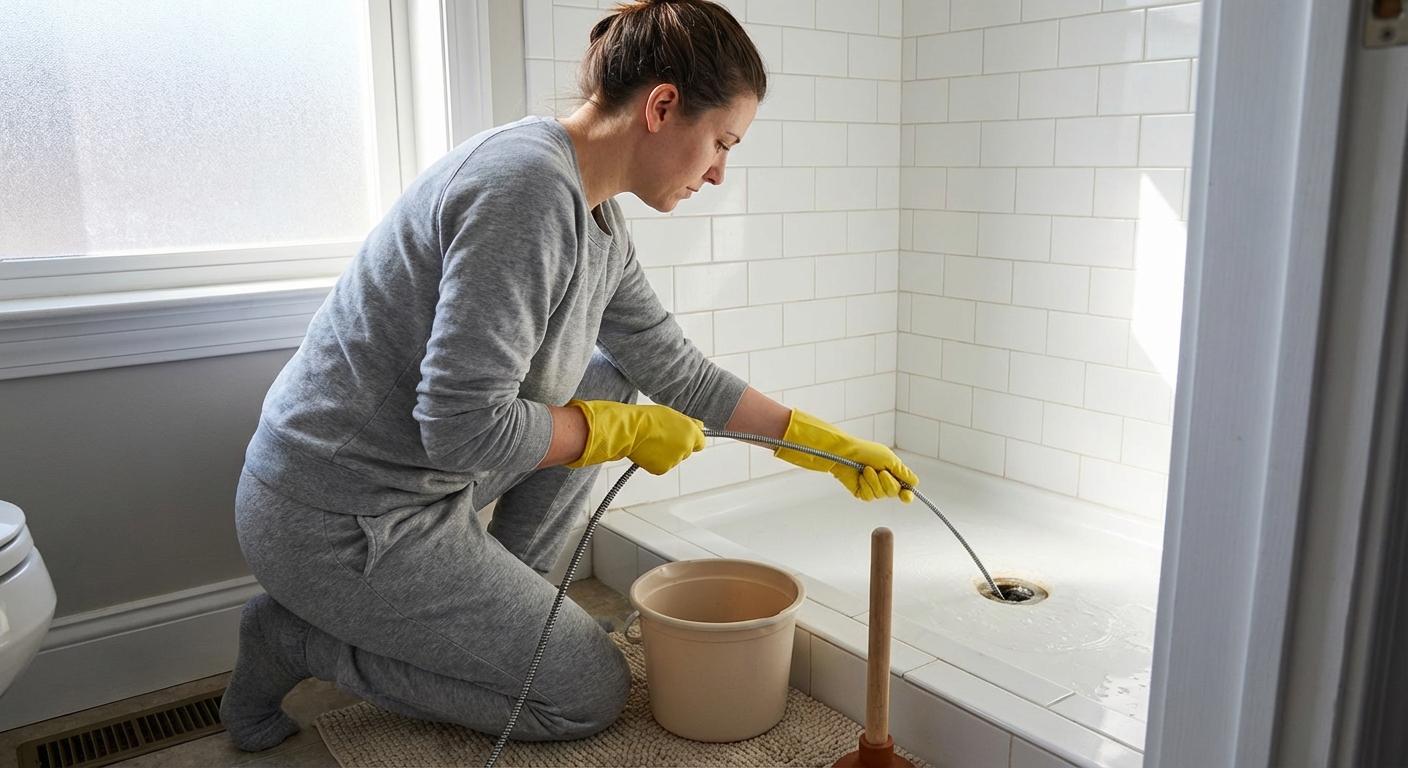
For clogs beyond your trap, a manual hand auger (drain snake) provides direct mechanical access to the blockage. These inexpensive tools cost $20 to $40 at any hardware store and work better than chemical solutions for hair clogs. Professional drain cleaning services use motorized versions of these tools that can reach 50 to 100 feet into your pipes.
Start by removing your drain cover. Feed 6 to 8 inches of the snake cable into the drain until you feel resistance. Tighten the set screw, then rotate the drum handle clockwise while applying light forward pressure. This spinning action either breaks apart the clog or hooks onto hair masses so you can pull them out. Continue advancing in 6-inch increments until water starts flowing freely.
Another popular 2026 option is the disposable plastic "zip" tool, a thin barbed strip designed specifically to hook hair clogs in shower drains without any cranking required. These cost around $3 to $5 and work well for shallow surface clogs. The same snaking technique works for bathtub drains, which experience similar hair and soap buildup issues.
Baking Soda and Vinegar Method
This natural cleaning approach works well for minor buildup of soap scum and organic matter. For metal pipes, pour a kettle of boiling water down the drain first to soften residue. Then add 1/2 cup of baking soda directly into the drain opening.
Follow with 1 cup of white vinegar and immediately cover the drain with a wet cloth. The fizzing reaction helps break down organic materials. Let it sit for 15 to 30 minutes, then flush with another kettle of boiling water. While gentler than chemical cleaners, this method proves less effective against solid hair clogs and may require multiple treatments.
Manual Hair Removal
For visible surface clogs, manual removal provides the fastest solution. After removing your drain cover (tape over screw holes first to prevent losing hardware), use needle-nose pliers or a bent wire hanger to pull out accumulated hair and debris.
Wear gloves for this unpleasant task. If you encounter black sludge or foul odors, stop and consult a professional, as this could indicate sewage issues or plumbing vent problems requiring expert attention.
When Chemical Drain Cleaners Are Appropriate
Chemical drain cleaners should only serve as a last resort for minor organic clogs when mechanical methods fail. Traditional products contain corrosive chemicals like sodium hydroxide (lye) or sulfuric acid that generate intense heat to dissolve organic matter. They work best on fresh, small clogs in modern PVC pipes where standing water is minimal.
Risks and Safety Concerns
The dangers of chemical cleaners often outweigh their benefits. The heat generated during the chemical reaction can warp or soften PVC pipes and corrode metal pipes, especially in older plumbing systems. This damage leads to leaks, bursts, and costly repairs that far exceed the original clog problem. In fact, overusing chemical drain cleaners is listed as one of the most common plumbing mistakes homeowners make.
Health hazards present equally serious concerns. Toxic fumes cause respiratory irritation, coughing, dizziness, and can trigger asthma attacks. Skin or eye contact results in chemical burns that may cause permanent damage or blindness. If the product splashes back due to a complete blockage, the results can be catastrophic.
Never use chemical cleaners if your drain is completely blocked, as back-splash risk increases dramatically. Avoid them entirely with septic systems, older pipes, or for hair-heavy shower clogs where they prove largely ineffective anyway. The same caution applies when dealing with low water pressure issues that might indicate pipe corrosion.
Safer Alternatives
Enzymatic and bacterial drain cleaners (like Bio-Clean and similar products) have grown significantly in popularity through 2025 and 2026 as a safer alternative. These products use natural enzymes and bacteria to digest hair, soap, and organic buildup rather than burning through them with corrosive chemicals. They're non-toxic, septic-safe, and won't damage PVC or older metal pipes.
The trade-off is speed. Enzyme cleaners work slowly, which makes them best used preventatively on a monthly basis rather than for emergency unclogging. Look for products labeled "safe for PVC," "non-corrosive," or carrying EPA Safer Choice certification.
Prevention Strategies to Keep Drains Flowing
Install a Hair Catcher
Drain catchers are your first line of defense against clogs, and the in-drain "mushroom" style (popularized by TubShroom) has become the go-to 2026 recommendation. These devices sit inside the drain rather than on top, catching hair around a central stem before it enters the pipe. Manufacturers and plumbers report they prevent up to 99% of hair clogs when cleaned regularly.
Other options include fine-mesh stainless steel screens (durable and rust-resistant) and flexible silicone covers that fit irregular drain shapes. All three styles typically cost $8 to $20 and last for years.
Clean your drain catcher after every shower or at minimum once weekly by removing accumulated hair and rinsing it under running water. This 30-second task prevents the majority of potential clogs. Replace catchers annually or when they show signs of deterioration.
Regular Maintenance Schedule
Establish a weekly maintenance routine to address buildup before it becomes problematic. Start by removing your drain cover and inspecting for visible debris. Pull out any hair or soap accumulation by hand using gloves.
Flush your drain with hot water weekly to dissolve soap scum and oils. Pour half a kettle down, wait 10 minutes, then pour the remainder. For a deeper clean, use the baking soda and vinegar method or an enzyme cleaner monthly as preventive maintenance rather than emergency treatment. A consistent preventive plumbing maintenance routine can extend the life of your entire plumbing system.
Brush or comb your hair before showering to remove loose strands that would otherwise wash down the drain. This simple habit significantly reduces hair accumulation in your pipes.
Hard Water Solutions
If you live in a hard water area, mineral deposits require additional attention. Use a limescale remover product quarterly to dissolve calcium and magnesium buildup. These acid-based cleaners target mineral deposits specifically without harming pipes when used as directed.
Consider installing a whole-house water softener for long-term protection. While this represents a larger investment, it prevents mineral buildup throughout your entire plumbing system while providing additional benefits like softer skin and longer-lasting appliances.
When to Call a Professional Plumber
Warning Signs of Serious Problems
Recognize when DIY methods have reached their limit. If plunging and snaking fail to clear your drain after 30 minutes of effort, the blockage likely sits deeper in your plumbing system than household tools can reach. Multiple drains backing up simultaneously indicates a main sewer line issue that requires professional equipment like motorized augers or hydro jetting.
Persistent foul odors resembling sewage suggest problems beyond simple hair clogs. This could indicate sewer gas escaping through damaged pipes or blockages in your vent system. Gurgling sounds coming from your drain when running other fixtures also point to venting problems or main line restrictions.
Recurring clogs that return within days or weeks of clearing indicate underlying issues like deteriorating pipes, root intrusion, or improper slope. These systemic problems won't resolve with temporary fixes and require professional diagnosis, often through a plumbing camera inspection that can pinpoint the exact problem.
What Professionals Offer
Licensed plumbers bring specialized tools and expertise that homeowners can't replicate. They use video camera inspections to pinpoint exact blockage locations and identify pipe damage without destructive excavation. Motorized augers reach clogs up to 100 feet into your drain lines, while hydro-jetting uses high-pressure water to thoroughly clean pipe interiors.
According to 2026 industry data, professional drain cleaning costs average around $200 to $300 for a standard service call, with most jobs falling in the $186 to $549 range. Traditional snaking typically runs $150 to $400, while hydro jetting is $350 to $1,200 depending on severity. Complex main sewer line issues can exceed $1,000.
Call a professional immediately if water backs up into other fixtures when you use your shower, if you notice water stains or moisture around drain pipes, or if multiple DIY attempts have failed. Acting quickly prevents minor clogs from escalating into major plumbing emergencies. Consider emergency plumber costs (which can run 1.5 to 3 times standard rates after hours) when evaluating whether to wait until business hours.
Frequently Asked Questions
How often should I clean my shower drain to prevent clogs?
Perform basic maintenance weekly by removing your drain cover and pulling out visible hair and debris. Flush with hot water once a week and use either the baking soda and vinegar treatment or an enzyme cleaner monthly for preventive care. Empty your drain catcher after every shower or at least twice weekly depending on household size and hair length. This consistent schedule prevents most clogs from forming.
Can I use a plunger on a completely clogged shower drain?
Yes, plungers work well on complete clogs if standing water is present. The water creates necessary pressure for the plunging action to work effectively. Remove the drain cover, seal the overflow hole, and use quick, short strokes rather than slow pushes. If 20 to 30 plunges don't improve drainage, move to a drain snake or call a professional to avoid worsening the problem.
Why does my shower drain keep clogging even after I clear it?
Recurring clogs indicate underlying problems beyond simple hair accumulation. Possible causes include mineral buildup from hard water narrowing your pipes, deteriorating pipe interiors creating rough surfaces where debris catches, inadequate pipe slope preventing proper drainage, or main sewer line issues affecting multiple fixtures. If clogs return within two weeks of clearing, schedule a professional camera inspection to identify and address the root cause rather than continuing temporary fixes.
Are chemical drain cleaners safe for shower drains?
Traditional caustic and acidic chemical drain cleaners pose significant risks and should only be used as a last resort. They generate intense heat that can damage both PVC and metal pipes, release toxic fumes, and cause severe burns if they splash on skin or eyes. Enzyme-based and bacterial cleaners labeled "safe for PVC" are a much safer alternative for routine maintenance. For active hair clogs, mechanical methods like plunging or snaking work better anyway.
What's the difference between a drain snake and hydro jetting?
A drain snake (hand auger) is a manual tool with a flexible cable you rotate by hand, typically reaching 15 to 25 feet into pipes. These cost $20 to $40 and handle most shower clogs. Hydro jetting is a professional service that uses high-pressure water (up to 4,000 PSI) to scour pipe interiors clean, reaching 100+ feet. In 2026, snaking runs $150 to $400 while hydro jetting costs $350 to $1,200, but jetting often lasts longer for chronic problems.