
Compare Home Insurance Plans in Ohio
Find your best options in less than 2 minutes



Why Home Insurance Doesn't Cover Termite Damage
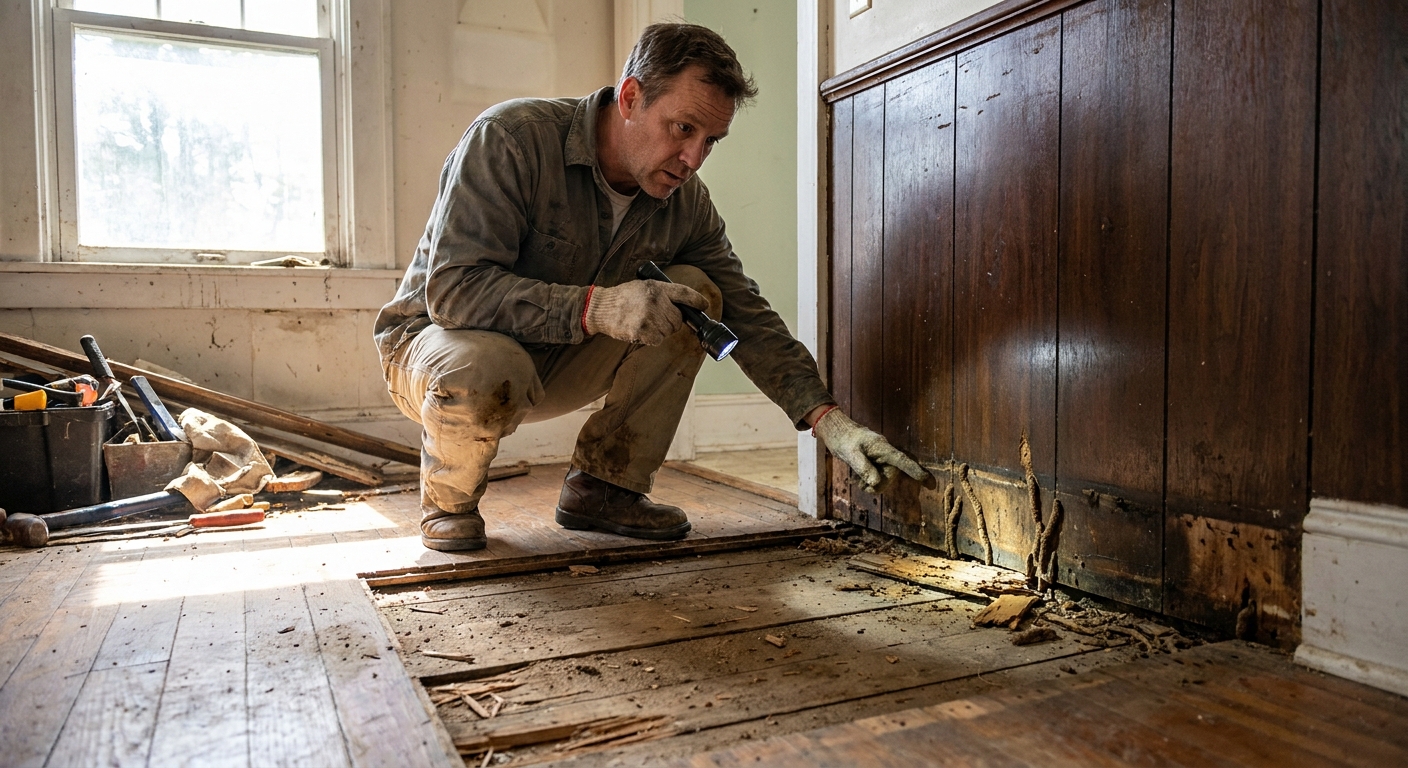
Termites are one of the most destructive forces a home can face, yet standard homeowners insurance policies uniformly exclude them. This isn't an oversight or a loophole. It comes down to how insurance companies define what is, and what isn't, a coverable loss. As of mid-2026, major carriers including Allstate, State Farm, GEICO, Nationwide, Progressive, and Farmers have all reaffirmed in updated policy guidance that termite damage and removal remain excluded, and no broad industry shift has added termites as a covered peril.
The "Sudden and Accidental" Rule
Homeowners insurance is designed to cover events that are sudden, unexpected, and accidental, like a tree falling on your roof or a fire from a lightning strike. Termite infestations don't qualify because insurers classify them as a gradual, preventable maintenance issue. In other words, the damage didn't happen overnight. It built up over months or years while the infestation went undetected or unaddressed.
Insurance companies hold homeowners responsible for routine upkeep and pest prevention. Just as a policy won't pay for a roof that was never maintained, it won't pay for a structural beam hollowed out by termites. The logic: if you had inspected and treated regularly, the damage could have been avoided. This ties directly into broader home insurance maintenance requirements that insurers increasingly enforce with drones and AI imaging.
The "Maintenance Exclusion" in Plain English
Most standard HO-3 and HO-5 policies contain language excluding damage caused by:
- Insects, rodents, vermin, and other pests
- Gradual deterioration or wear and tear
- Neglect or failure to maintain the property
Termite damage falls squarely under all three categories. This is one of the most consistent home insurance exclusions across every major carrier, and it has not changed in 2026.
Rare Exceptions: When Coverage Might Apply
While coverage is almost never available for termite damage itself, there are two narrow scenarios where your policy might respond:
1. Termites Trigger a Covered Peril If termites chew through electrical wiring and the damaged wiring causes a fire, your insurer may cover the fire damage, not the termite damage. The key is what the "proximate cause" of the loss is determined to be. The same logic can apply if termite-weakened framing causes a pressurized pipe to snap, potentially triggering covered water damage.
2. Sudden Structural Collapse Some policies include coverage for sudden structural collapse caused by hidden insect damage, provided the homeowner had no prior knowledge of the infestation. If you knew about the problem and didn't act, this exception will not apply. Cracked, sagging, or bulging wood without a full collapse is typically not enough to trigger coverage. This narrow carve-out sits alongside the broader rules for structural damage coverage.
These exceptions are narrow and heavily scrutinized by adjusters. Do not rely on them as a financial safety net.

Compare Home Insurance Plans in Ohio
Find your best options in less than 2 minutes
What Termite Damage Actually Costs
According to the National Pest Management Association, termites cause an estimated $6.8 billion in property damage across the U.S. each year, with roughly 600,000 homes affected annually. Based on updated 2026 data from Angi, HomeGuide, and industry cost trackers, the national average termite damage repair costs around $3,000, but individual repairs range widely, from a few hundred dollars for cosmetic fixes up to $35,000 or more for major structural reconstruction.
2026 Repair Cost Breakdown
| Damage Level | Estimated Cost | Common Repairs |
|---|---|---|
| Minor / Cosmetic | $300 – $2,000 | Drywall patching, baseboards, trim, minor flooring |
| Moderate | $2,000 – $10,000 | Floor joists, subfloor, framing sections |
| Major | $5,000 – $15,000+ | Load-bearing walls, multiple beams, extensive flooring |
| Severe / Structural | $15,000 – $35,000+ | Full structural remediation, sill and beam replacement |
Specific line items in 2026 can include:
- Support beams: $3,000 – $10,000 each
- Sagging floors and joists: $2,000 – $7,000
- Sill plate replacement: $2,500 – $8,000
- Wall framing repair: $2,000 – $8,000
These figures do not include the cost of termite treatment itself. In 2026, most U.S. homeowners pay $500 to $3,500 for termite treatment, with chemical liquid barriers running $1,000 to $3,000 for a typical home, bait station systems averaging $1,500 to $3,500 plus $300 to $500 in annual monitoring, and full tent fumigation for severe drywood infestations reaching $4,000 to $8,000+.

Protect your home with State Farm
Average Rate:
Homeowners who bundle and save with State Farm save an average of $1,000 per year!

You're in Good Hands® with Allstate
Average Rate:
Get comprehensive home coverage with flexible policy options.

Customize your home coverage
Average Rate:
Only pay for the coverage you need with personalized home insurance.

Smart coverage for your home
Average Rate:
Protect what matters most with award-winning home insurance.
Alternatives to Insurance for Termite Protection
Since homeowners insurance won't protect you, there are purpose-built financial tools designed specifically for termite risk. These are your real options. For a broader look at how these products differ from a standard policy, see how coverage compares to other pest issues like rodent and wildlife damage and bat, bee, and raccoon removal.
Termite Bonds vs. Termite Warranties
These two terms are often used interchangeably, but they work differently:
2026 Termite Bond Costs:
- Initial bond (with first treatment): $500 – $2,500 (average around $1,500)
- Basic retreat-only annual renewal: $150 – $300/year
- Mid-tier with capped repair: $300 – $525/year
- Premium repair-inclusive renewal: $525 – $750/year in high-risk regions
- Formosan-eligible coastal bonds (FL, LA, coastal GA/SC): $450 – $900/year
A retreat-only bond covers inspections and retreatment but not structural repair costs. A repair bond extends that coverage to include new termite damage, and is worth the premium if you live in a high-risk area. According to 2026 industry data, a standard retreat-only bond runs about $150 to $300 per year, while comprehensive repair warranties average $300 to $525 annually, with premium plans reaching $700 or more in states with heavy Formosan termite pressure. In Florida specifically, annual bond renewals now commonly run $400 to $650 for native subterranean coverage and $450 to $750 for Formosan-eligible bonds.
A termite warranty is backed by the pest control company's own insurance policy and guarantees the outcome of a treatment. Some premium warranties include aggregate damage-repair caps ranging from $100,000 up to $500,000 or more for covered structural damage discovered during the warranty period.
Home Warranties: Limited Help
Most home warranty plans do not cover termite damage as a standard benefit. A small number of providers offer it as an add-on with strict limits. Some cap termite damage repairs as low as $1,000 aggregate and require a clean inspection report showing no prior infestation. This may help with minor repairs but won't cover major structural loss. If you're comparing pest-related coverage more broadly, understanding how insurers treat accidental damage can help you spot the same maintenance-vs-peril logic at work.
How to Detect Termite Damage Early and Budget Smart
Catching termites before they do serious damage is the single most effective financial strategy available to homeowners. Here's what to look for.
Early Warning Signs of Termites
| Sign | What to Look For | Where to Check |
|---|---|---|
| Mud tubes | Pencil-thin brown tunnels along surfaces | Foundation walls, crawl spaces |
| Hollow-sounding wood | Papery or empty sound when tapped | Baseboards, floors, door frames |
| Discarded wings | Small translucent wings in piles | Windowsills, doorways, decks |
| Frass (droppings) | Sawdust-like pellets near wood | Attics, near furniture, floors |
| Blistered or bubbling paint | Bubbles, sagging, or sunken lines on walls | Walls, ceilings, wood surfaces |
| Sticking doors/windows | Hard to open due to swollen or weakened wood | Entry doors, windows, cabinets |
| Clicking noises in walls | Faint clicking or rattling sounds | Interior walls, wooden areas |
The Tap Test
Use your knuckles to knock on baseboards, floor joists, and wooden structural elements. Solid wood has a firm sound; termite-damaged wood sounds hollow or papery. This is something any homeowner can do during a routine walkthrough. If you find hollow spots near the base of walls, also check for foundation damage warning signs, as the two can co-exist.
Budgeting for Termite Protection
Since insurance won't cover it, termite protection needs to be treated like any other home maintenance expense. Here's a practical 2026 framework:
| Expense | Frequency | Estimated Cost |
|---|---|---|
| Annual professional termite inspection | Yearly | $75 – $325 |
| Termite bond (initial + annual renewal) | Initial + annual | $1,500 + $150–$525/yr |
| Spot treatment (if early infestation caught) | As needed | $300 – $800 |
| Tenting/fumigation (if advanced) | As needed | $4,000 – $8,000+ |
| Structural repair reserve fund | Ongoing | $50 – $100/month |
Building a small dedicated savings reserve for home maintenance, including potential pest damage, is a smart financial move that most advisors recommend. Even setting aside $600 to $1,200 per year creates a meaningful buffer against unexpected repair costs. This is especially critical now that the five largest U.S. home insurers fail to pay more than 44% of resolved claims, making coverage gaps for issues like sewer line failures and gradual damage more painful than ever.
Frequently Asked Questions
Does homeowners insurance ever cover termite damage?
No. In virtually all cases in 2026, standard homeowners insurance excludes termite damage, and no major carrier (Allstate, State Farm, GEICO, Nationwide, Progressive, or Farmers) has added it as a covered peril. The rare exception is if termites cause a secondary covered peril, such as a house fire from chewed electrical wiring, where the fire damage itself (not the termite damage) may be covered. Another narrow exception involves sudden structural collapse from hidden termite damage the homeowner was unaware of, though this is heavily scrutinized by adjusters and rarely paid out.
What is a termite bond and is it worth it?
A termite bond is a legal contract between you and a pest control company, often backed by a third-party surety bond provider. In 2026, basic retreat-only annual renewals run $150 to $300, mid-tier plans with capped repair coverage cost $300 to $525, and premium repair-inclusive plans reach $525 to $750 per year, with an initial bond averaging around $1,500. For homeowners in high-risk areas, a repair bond is generally well worth the cost compared to the potential for $5,000 to $35,000+ in uncovered repair bills.
How much does termite damage repair cost on average?
According to 2026 data from Angi, HomeGuide, and industry cost trackers, the national average termite damage repair sits around $3,000, but the full range spans from $300 for minor cosmetic fixes up to $35,000 or more for severe load-bearing framing replacement. Moderate structural repairs typically fall in the $2,000 to $10,000 range, while major damage involving multiple beams or load-bearing walls runs $5,000 to $15,000. These costs are entirely out-of-pocket since no standard insurance policy covers them, similar to how plumbing wear-and-tear repairs are also excluded.
Can I add termite coverage to my homeowners policy?
No. Termite coverage cannot be added as a rider or endorsement to a standard homeowners insurance policy in 2026. It is a categorical exclusion, similar to how tree damage from neglect is treated when a dead tree falls. Your alternatives are a dedicated termite bond or warranty from a licensed pest control company, or in limited cases, a home warranty add-on with a very low coverage cap. These are separate products from insurance and should be budgeted for independently.
How often should I get a termite inspection?
Most pest control professionals and housing experts recommend a professional termite inspection at least once per year, particularly in warm, humid climates where subterranean and Formosan termites are most active. Basic inspections in 2026 average $100 to $150 (with a typical range of $75 to $325), and many pest companies offer them free when tied to a service quote. If you have an active termite bond, annual inspections are typically included, and if you've never had an inspection, scheduling one is a smart first step regardless of where you live.