
Compare Home Insurance Plans in Ohio
Find your best options in less than 2 minutes



What Each Product Actually Covers
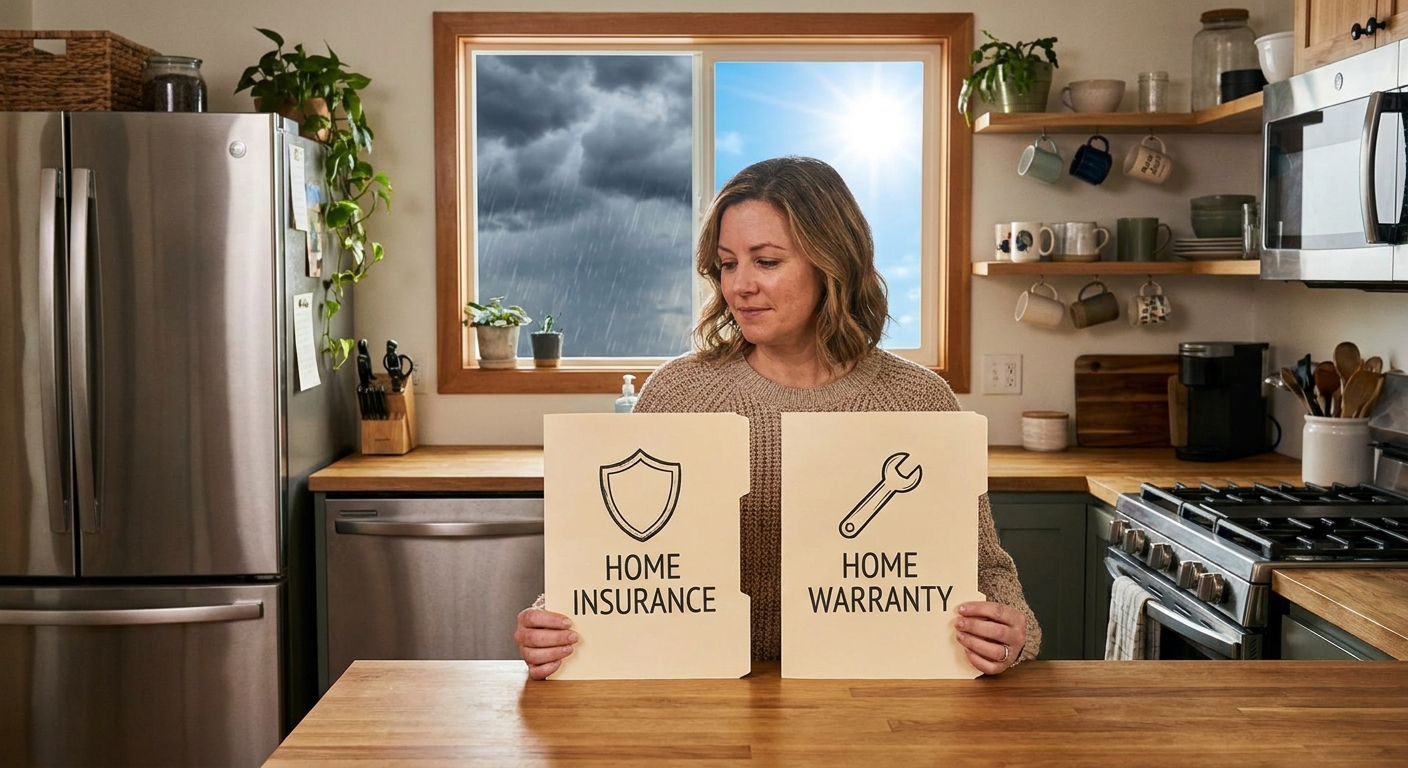
Home insurance and a home warranty sound like they could be the same thing, but they protect your home in fundamentally different ways, and confusing the two can leave you with a very expensive gap in coverage. Home insurance responds to sudden, catastrophic, or accidental events. A home warranty kicks in when something simply wears out over time. Knowing exactly what falls under each is the foundation of smart homeownership.
Home Insurance: Sudden Damage & Liability
A standard homeowners insurance policy (typically an HO-3) covers four core areas:
| Coverage Area | What It Includes |
|---|---|
| Dwelling | Structural damage to your home from covered perils (fire, wind, hail, lightning) |
| Personal Property | Theft or damage to belongings like electronics, furniture, and clothing |
| Liability | Legal costs and medical bills if someone is injured on your property |
| Additional Living Expenses | Hotel and meal costs if your home becomes uninhabitable after a covered loss |
The key trigger for home insurance is a covered peril, a sudden, unexpected event outside your control. If a storm tears off your roof, insurance pays. If your HVAC slowly deteriorates over 15 years and stops working, insurance does not pay. This is a distinction that trips up many homeowners.
Learn more about what home insurance doesn't cover before assuming you're protected.
Home Warranty: Wear-and-Tear & Mechanical Breakdown
A home warranty is a service contract, not an insurance policy. It covers the repair or replacement of specific home systems and appliances that fail due to normal wear and tear. Covered items typically include:
- Systems: HVAC, electrical, plumbing, water heater, ductwork
- Appliances: Built-in dishwasher, oven/range, garbage disposal, refrigerator (plan-dependent)
- Optional add-ons: Pool equipment, septic systems, well pumps, washer/dryer
When a covered item breaks down, you call the warranty company, pay a service fee, and they send a technician. No storm required, just normal aging and use.

Compare Home Insurance Plans in Ohio
Find your best options in less than 2 minutes
Cost Breakdown: What You'll Actually Pay
Home Insurance Costs in 2026
The national average cost of homeowners insurance has climbed sharply, with 2026 estimates ranging from roughly $2,395 to $3,086 per year depending on the data source and coverage assumptions. The Zebra reports the average homeowner is now paying $2,966 a year for home insurance, NerdWallet puts it at about $2,490 a year (roughly $208 a month) for $400,000 of dwelling coverage, and LendingTree's 2026 State of Home Insurance puts the national average at $2,395. Insurify projects the average will rise another 4% in 2026 to $3,057, after jumping 12% in 2025 to $2,948. Rates vary dramatically by state. In Florida, the average homeowners insurance premium hit $8,292 in 2025 and is projected at $8,458 by year-end 2026, roughly 2.8x the U.S. average. California is heading the other direction: Insurify projects California's average will rise 15.8% to $2,843 in 2026, from $2,455 in 2025, roughly four times the projected national increase. Your deductible (typically $500 to $2,500) is what you pay out-of-pocket before coverage kicks in on any claim.
If you're overwhelmed by these price swings, review our coverages A through F breakdown to understand what you're actually paying for.
Home Warranty Costs in 2026
| Cost Type | Typical Range |
|---|---|
| Annual Premium (Basic Plan) | $360 – $700/year |
| Annual Premium (Comprehensive Plan) | $700 – $1,400/year |
| Service Fee Per Visit | $75 – $125 |
| Optional Add-Ons (pool, well pump, etc.) | $40 – $250/year extra |
Home warranty premiums average roughly $67 to $73 per month in 2026 (about $800 to $900 per year) according to NerdWallet and ConsumerAffairs, though plans can run as low as $28 or as high as $191 per month depending on coverage scope and provider, with service fees averaging $108.45 per service call. Most service call fees fall between $75 and $125. Unlike home insurance, there is no large deductible. You simply pay the service call fee each time a technician visits.

Protect your home with State Farm
Average Rate:
Homeowners who bundle and save with State Farm save an average of $1,000 per year!

You're in Good Hands® with Allstate
Average Rate:
Get comprehensive home coverage with flexible policy options.

Customize your home coverage
Average Rate:
Only pay for the coverage you need with personalized home insurance.

Smart coverage for your home
Average Rate:
Protect what matters most with award-winning home insurance.
What's Excluded and Why It Matters
Common Home Insurance Exclusions
Standard home insurance policies do not cover:
- Flooding (requires a separate NFIP or private flood policy)
- Earthquakes (separate endorsement or policy required)
- Normal wear and tear or gradual deterioration
- Pest infestations (termites, rodents)
- Mold unless caused by a sudden covered event
- Intentional damage
Understanding accidental damage and home insurance exclusions is especially important. There's a meaningful difference between a pipe that suddenly bursts and one that slowly corrodes over years. Only the former is typically covered. The same distinction applies to water damage claims under home insurance, and it matters at scale: according to Triple-I data (2019 to 2023), water damage and freezing account for 22.6% of all homeowners claims, with roughly 1 in every 67 insured homes filing a water damage or freezing claim each year, and the average U.S. water damage and freezing claim is now $15,400 based on ISO/Verisk data.
Common Home Warranty Exclusions
Home warranties come with their own extensive exclusion lists that catch homeowners off guard. A 2026 PropertyPundit analysis of 15,000 home warranty claims found an average denial rate of 42%, tied mostly to disputes over pre-existing conditions and improper maintenance. Based on VolBuild's 2026 breakdown, pre-existing conditions account for roughly 32% of all claim denials, making them the single biggest reason claims are refused:
- Pre-existing conditions: the single biggest denial category across every provider, coded when a technician finds evidence the failure started before your coverage began (about 32% of denials)
- Improper maintenance: now around 24% of denials, and in 2026, warranty companies are getting much more aggressive about demanding proof of professional maintenance before approving a claim
- Items or components not covered: entire systems or specific sub-parts (like ice makers, smart controls, or electronic display panels) may be excluded
- Improper installation or code violations: about 18% of denials, including work done without permits
- Cosmetic damage: scratches, dents, and finishes (about 14% of denials)
- Structural components: walls, roof, windows, and foundation are generally excluded
- Secondary damage: if a broken appliance causes water damage, the warranty typically won't cover the downstream damage
- Exceeding coverage caps: a Consumer Reports survey found 44% of home warranty holders had claims denied or only partially paid, often because repair costs exceeded plan limits
Do You Need Both? A Practical Cost-Benefit Analysis
Home Insurance: Non-Negotiable
If you have a mortgage, home insurance is legally required by your lender. Even if you own your home outright, going without it exposes you to financial ruin. A single house fire can cause $50,000 to $500,000+ in damage. Home insurance is not optional for the financially responsible homeowner. If you're unsure how your policy is structured, our named perils vs all-risk home insurance guide walks through exactly what each part of your policy protects.
Home Warranty: Situational
Whether a home warranty is worth it depends heavily on your home's age and condition:
When a home warranty makes strong financial sense:
- Older homes (15+ years): Systems like HVAC, water heaters, and electrical panels are nearing the end of their service lives. A single HVAC replacement ($7,500 to $14,000) can exceed several years of warranty premiums.
- Recently purchased resale home: You may not know the full maintenance history of major systems.
- Budget-conscious homeowners: A warranty converts unpredictable large repair bills into a manageable monthly cost.
When a home warranty may not be worth it:
- New construction homes: Builders typically provide a 1-year workmanship warranty, 4-year systems warranty, and 10-year structural warranty, making a third-party home warranty largely redundant in the early years.
- Homes with newer appliances under active manufacturer warranties.
- Highly maintenance-savvy homeowners who regularly service their own systems and have a dedicated emergency fund. Learn more about meeting home insurance maintenance requirements to keep both your coverage and your systems in good shape.
The Smart Alternative: Equipment Breakdown Coverage
If you want appliance and system protection but don't want to pay for a full home warranty, consider adding an equipment breakdown endorsement to your existing home insurance policy. This add-on:
- Costs about $25 to $50 per year for a standard plan that provides $100,000 of coverage (some carriers go higher for expanded limits)
- Covers sudden, accidental mechanical and electrical failures (not wear and tear)
- Typically includes HVAC, water heaters, electrical panels, smart home devices, solar panels, and built-in appliances
- Most equipment breakdown endorsements provide up to $50,000 in coverage (up to $100,000 with some preferred carriers), with a deductible usually around $500 or lower
- Some carriers, like Mutual Benefit Group, include a "green" coverage allowance of up to 150% of the cost to replace Energy Star equipment
It's not a full replacement for a home warranty (it won't cover gradual wear and tear), but for newer homes with equipment still in good shape, it's a cost-effective gap-filler. Learn more about equipment breakdown coverage and whether it's worth adding to your policy. You can also read about how home insurance covers appliances and review the broader equipment breakdown vs warranty comparison to understand where standard coverage ends.
If you're still building your overall home protection strategy, check out our HVAC coverage guide and learn how water damage is treated under home insurance to make sure you're not underinsured. You can also review the difference between hazard insurance and homeowners insurance if a lender is asking about "hazard insurance" and you're worried about gaps in your policy.
Frequently Asked Questions
Is a home warranty the same as home insurance?
No, they are completely different products. Home insurance is a regulated insurance policy that covers sudden and accidental damage from events like fires, storms, and theft. A home warranty is a private service contract that covers the mechanical breakdown and wear-and-tear of systems and appliances. They serve different purposes and neither replaces the other.
Does home insurance cover appliance breakdowns?
Standard home insurance does not cover appliances that break down due to age or wear and tear. It only covers appliances if they are damaged by a covered peril, such as fire or a power surge in some cases. To cover mechanical breakdowns, you would need either a home warranty or an equipment breakdown endorsement on your insurance policy. You can learn more about appliance coverage under home insurance here.
Do I need both home insurance and a home warranty?
Home insurance is required if you have a mortgage and strongly recommended for all homeowners. A home warranty is optional, but it can be a smart addition, especially for homes over 15 years old with aging systems. Whether both make financial sense depends on your home's age, the condition of major systems, and how much financial risk you're comfortable absorbing out of pocket.
What happens when I file a home warranty claim vs. a home insurance claim?
For a home warranty claim, you contact the provider, pay a service fee (averaging about $108 per visit in 2026, typically $75 to $125), and a pre-approved contractor is dispatched to diagnose and repair the problem. For a home insurance claim, you report the loss to your insurer, an adjuster inspects the damage, and the company issues a payment (minus your deductible) toward repairs or replacement. Insurance claims involve more documentation and can take longer to resolve.
Can I get a home warranty on an older home?
Yes, and it's generally more beneficial for older homes than new ones. Older homes (15 to 40+ years) have systems that are closer to the end of their service lives, making unexpected breakdowns far more likely. Some providers may require a home inspection before issuing coverage on very old systems, and pre-existing conditions at the time of purchase are typically excluded, which is the number one reason claims are denied (about 32% of all denials in 2026). Always keep maintenance receipts and review the contract carefully before signing.