
Compare Home Insurance Plans in Ohio
Find your best options in less than 2 minutes



Why Home Insurance Excludes Rodent Damage
Standard homeowners insurance policies (typically the HO-3 form) contain a specific ISO exclusion for damage caused by "birds, vermin, rodents, or insects," and the exclusion is often extended to nesting, infestation, and waste or secretions from those animals. That short phrase is one of the most misunderstood clauses in the entire policy, and it is the reason the vast majority of pest damage claims are denied on the spot in 2026.
Insurers view rodent problems as preventable maintenance issues rather than sudden, accidental events. The logic is straightforward: rodents don't move in overnight. They enter through gaps you could have sealed, they leave droppings and scratching sounds you could have noticed, and they cause gradual damage that builds over weeks or months. Because homeowners are expected to inspect and maintain their property, insurers argue that any resulting damage is your responsibility, not theirs.
The exclusion is broad and typically covers:
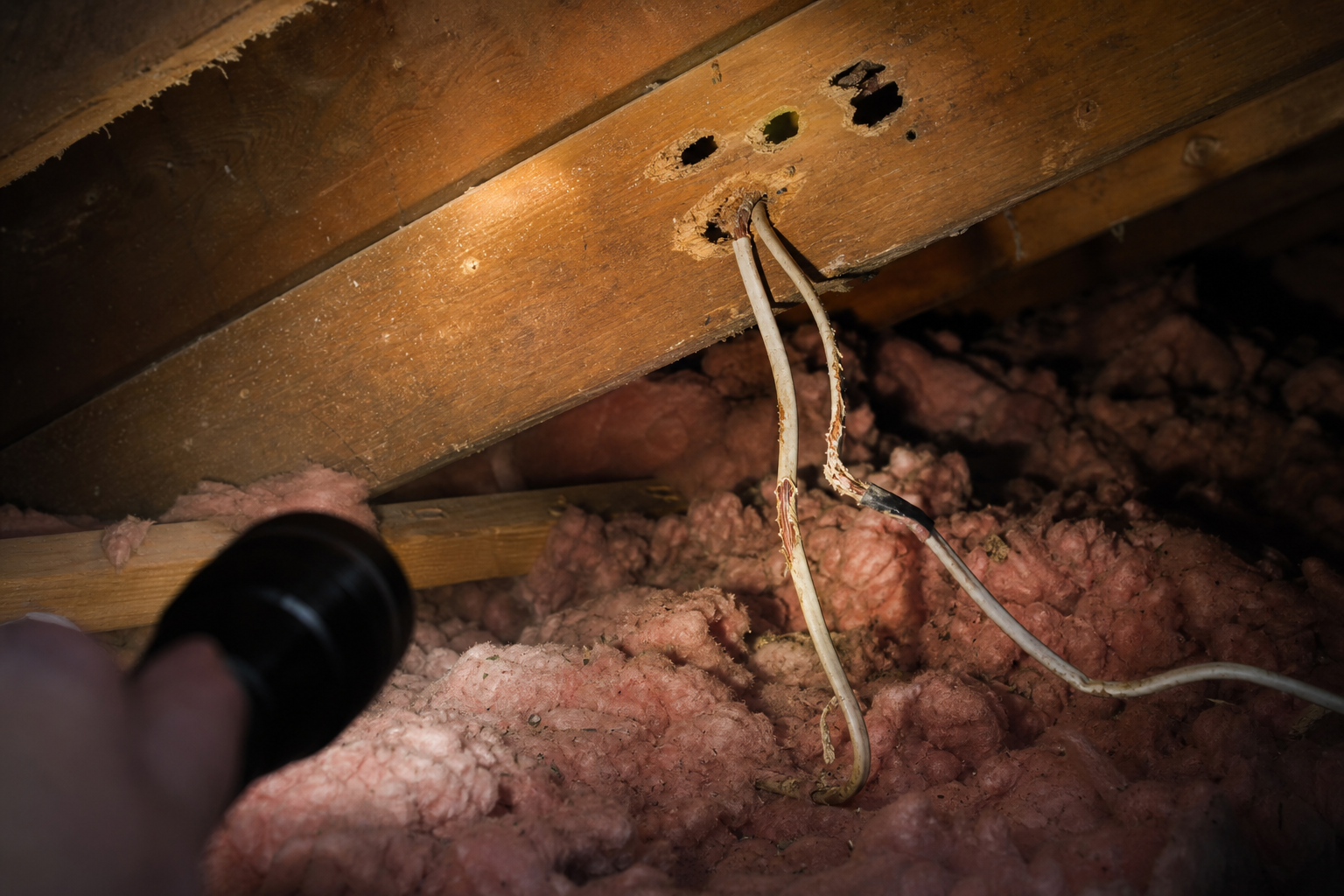
- Chewing damage to wiring, pipes, insulation, and drywall
- Nesting damage and contamination
- Droppings, urine, and other biological cleanup
- Extermination and removal costs
- Damage to personal belongings (electronics, stored items, appliances)
What "vermin" means in your policy
Insurers rely on the common dictionary definition to decide what counts as a rodent. Rats, mice, squirrels, chipmunks, opossums, and bats all fall into the "vermin" bucket in most standard policies. Raccoons are more complicated. The American Association of Insurance Services amended its Vermin Exclusion back in 2007 to specifically define vermin as animals that enter or burrow into structures "including raccoons," after courts previously found the term ambiguous. Many carriers have since followed suit, though others still treat raccoons as non-rodent mammals that can qualify for dwelling coverage.

Compare Home Insurance Plans in Ohio
Find your best options in less than 2 minutes
The Rare Exceptions: When Rodent Damage Is Covered
Even though direct rodent damage is excluded, there is one important loophole known as ensuing loss or resulting damage. If a rodent triggers a separate covered peril, your policy may pay for that secondary damage, even though it will not pay for the rodent damage itself.
Fire from chewed electrical wires
This is the classic example, and it is far from rare. Contrary to the widely repeated "20% to 25% of all house fires" figure (which actually refers only to fires of undetermined cause), NFPA does not publish a verified rodent-specific count. What is well documented is that rodent-chewed wiring is a real ignition pathway, and industry estimates place rodent-related electrical fires somewhere between 5,000 and 30,000 U.S. incidents per year depending on methodology.
If a mouse chews through wiring hidden inside a wall and that damaged wire later sparks a fire, your policy will typically pay for the fire and smoke damage to the dwelling and your belongings under standard dwelling coverage, subject to your deductible. Fire is a named peril, so the insurer treats the fire (not the rodent) as the proximate cause. The chewed wire itself is not repaired under the claim, but the burned drywall, framing, and contents usually are. Learn more about how home insurance handles fire claims to understand payout limits, which now average roughly $83,500 to $89,500 per fire and lightning claim in 2026.
Sudden water damage from chewed pipes
Similarly, if rats chew through a water supply line and cause a sudden burst that floods your kitchen, the water damage to floors, cabinets, and walls is often covered under the "accidental discharge or overflow of water" peril. The pipe repair itself may be excluded as rodent damage, but the water cleanup and restoration usually is not. Water and freezing claims account for roughly 23% to 27% of all homeowners claims in 2026, so adjusters see this scenario often. Our water damage coverage guide breaks down the nuances.
Rodents entering through a covered peril
If a windstorm rips off part of your roof and rodents then enter through the opening, the wind damage is covered because wind is a named peril. In some cases, insurers will even pay for the rodent removal, because the infestation is directly attributable to the storm.

Protect your home with State Farm
Average Rate:
Homeowners who bundle and save with State Farm save an average of $1,000 per year!

You're in Good Hands® with Allstate
Average Rate:
Get comprehensive home coverage with flexible policy options.

Customize your home coverage
Average Rate:
Only pay for the coverage you need with personalized home insurance.

Smart coverage for your home
Average Rate:
Protect what matters most with award-winning home insurance.
Rodents vs. Larger Wildlife: A Critical Distinction
Not all animal damage is treated equally. Insurers draw a clear line between small "vermin" (excluded) and larger wild animals (often covered). Understanding where your critter falls determines whether you have a claim at all. Our guide on wildlife removal and home insurance covers the species-by-species breakdown in detail.
Why raccoons are a gray area
Raccoons sit awkwardly in the middle. Scientifically they are procyonids, not rodents, and many insurers still classify them as wild animals whose sudden structural damage (torn soffits, damaged roofs, ripped-open attic vents) is covered under open-peril dwelling protection. Others have rewritten their policies (following the 2007 AAIS amendment) to explicitly include raccoons in the vermin exclusion. Court rulings in states like Texas and Louisiana have gone in different directions on whether raccoons qualify as "vermin." A general rule of thumb: the bigger the animal, the more likely damage will be covered, especially when the loss is sudden rather than gradual.
Even when structural damage from a covered wild animal is paid, personal property inside is a different story. If a raccoon tears open your attic and damages the drywall, the repair may be covered. But if it also destroys stored furniture, boxes of clothes, or a lawnmower engine, those items are almost always excluded.
Realistic 2026 Repair Costs You Might Face
Because rodent damage typically comes out of your own pocket, it helps to know what you could be on the hook for in 2026. Costs vary widely based on severity and how long the infestation went unnoticed.
| Type of Rodent Work | 2026 Cost Range |
|---|---|
| Rodent extermination (national average) | $150 to $600 (avg around $395) |
| Rat exterminator range | $189 to $655 |
| Attic cleanup and sanitization (basic) | $600 to $1,000 |
| Heavy attic contamination cleanup | $1,500 to $8,000+ |
| Rodent exclusion (sealing entry points) | $300 to $1,500 |
| Insulation replacement | $2,000 to $4,500 |
| Electrical rewiring | $600 to $5,000 |
| Full attic remediation | $3,000 to $10,000+ |
| Severe multi-year infestation (all-in) | $8,000 to $15,000+ |
A moderate rodent problem that has been active for 6 to 12 months typically runs $3,000 to $8,000 to fully remediate in 2026. Severe multi-year infestations with wiring and duct damage can easily exceed $12,000. These are numbers that would sting far less if insurance stepped in, but almost always, they don't.
For context on other common exclusions, see our guide on termite damage and homeowners insurance, which covers a similar maintenance-based exclusion where average repairs run $3,000 and severe structural cases exceed $37,500.
How to Prevent Claim Denials and Protect Yourself
You cannot force your insurer to cover rodent damage, but you can position yourself to win when a legitimate ensuing-loss claim comes up, and you can dramatically reduce out-of-pocket risk in the first place. This matters more than ever in 2026: Weiss Ratings found 15 large insurers denied more than 50% of claims filed, with an industry weighted average denial rate of 41.3%.
Prevention is the real "coverage"
Document everything
If rodents do eventually cause a covered secondary loss (like a fire), your insurer will look for any excuse to deny the claim on grounds of neglect. Protect yourself by keeping:
- Pest control invoices and inspection reports
- Photos of sealed entry points and completed repairs
- Records of annual maintenance and roof inspections
- Dated evidence showing you acted quickly at the first sign of trouble
File the right kind of claim
If a rodent causes a fire or sudden water damage, do not lead with "we had mice." Report the covered event first (the fire, the burst pipe, the sudden collapse) and let the adjuster's investigation determine the proximate cause. Insurers pay for perils, not for pests.
Alternatives to Insurance for Rodent Protection
Since traditional homeowners policies won't help, savvy homeowners rely on other tools to manage rodent risk. These aren't insurance in the strict sense, but they function as risk management.
Pest control service contracts
An ongoing quarterly or monthly plan with a licensed exterminator is usually the most cost-effective approach, typically running $500 to $900 per year in 2026, or roughly $44 to $55 per month. Many companies offer service guarantees, meaning if rodents return within a set period they retreat at no additional charge. For high-risk areas, this predictability beats hoping for a payout that will never come.
Home warranty add-ons
Standard home warranties do not cover pest control or rodent damage in 2026, but a handful of providers offer optional pest control endorsements. Liberty Home Guard, for example, sells a pest control add-on at $149.99 per year, and several other providers include pest control on upgraded or regional plans. Coverage is highly contract-specific: most riders cover the treatment itself but still exclude the repair of chewed wiring, insulation, or ductwork. Review our breakdown of home warranty add-ons and optional coverage and our list of home warranty exclusions before purchasing.
DIY prevention
Basic rodent-proofing (metal mesh over vents, hardware cloth around foundation gaps, door sweeps, sealed food storage) costs a few hundred dollars and prevents the vast majority of intrusions. Combined with annual inspections, this is the cheapest and most effective "coverage" available.
What to Do If Rodents Cause Secondary Damage Right Now
If you have already discovered damage that goes beyond simple gnawing (a fire, a flood, a collapsed ceiling), act fast. Time and documentation are everything, especially given how aggressively carriers are closing claims without payment in 2026.
- Stop further damage. Shut off water, cover openings with tarps, and remove valuable items from the affected area.
- Photograph everything. Take wide shots and close-ups before you clean up or repair anything.
- Call a licensed exterminator. Have them document the infestation with a written report.
- Report the covered peril to your insurer. Emphasize the sudden event (fire, water discharge, structural collapse), not the rodent activity.
- Get contractor estimates. Independent estimates strengthen your position if the insurer tries to minimize the loss.
- Keep a communication log. Note every phone call, email, and adjuster visit with dates and names.
If your claim is denied and you believe the ensuing-loss provision applies, request the denial in writing, review your policy language carefully, and consider filing a complaint with your state's insurance department or consulting a public adjuster. For losses involving foundations, framing, or ceilings, our structural damage coverage guide explains which sudden events trigger dwelling protection.
Frequently Asked Questions
Does homeowners insurance cover squirrel damage?
In most cases, no. Squirrels are classified as rodents in nearly every standard homeowners policy in 2026, so damage from chewing, nesting, and gradual destruction is excluded. The only real exception is when squirrel activity causes a separate covered peril, like a fire started by chewed wiring. In that case the fire damage is typically covered, though the wiring itself and the squirrel removal are not.
Will my insurance pay to remove mice or rats from my attic?
Almost never. Rodent extermination and cleanup are considered routine home maintenance, not an insurable loss, and expect to pay $150 to $600 out of pocket for a typical job. The one narrow exception is when rodents entered as a direct result of a covered peril, such as a windstorm that tore open your roof. In that specific scenario, some insurers will pay for both the roof repair and the resulting rodent removal.
Is raccoon damage treated differently than mouse damage?
Yes, often. Many insurers still classify raccoons as wild animals rather than vermin, which means sudden structural damage (torn soffits, ripped attic vents, damaged roofing) may be covered under dwelling protection. However, policies using the 2007 AAIS-amended vermin exclusion explicitly include raccoons, and personal property damage is excluded regardless of the animal. Always check your specific policy wording before assuming coverage.
What if rodents chew through wires and start a fire?
The fire damage is usually covered because fire is a named peril in every standard 2026 policy. Your insurer will pay to repair the smoke and fire damage to your home and belongings, treating the fire as the proximate cause of the loss. The chewed wiring itself and any pre-existing rodent damage will not be reimbursed, but the fire restoration typically will be, provided you can show you were not aware of the infestation.
Can I buy an endorsement or rider that covers rodent damage?
Most major carriers do not offer rodent-specific endorsements for residential policies in 2026. The industry considers pest control a maintenance responsibility, so extra coverage is rarely available at any price. The practical alternatives are ongoing pest control service contracts ($500 to $900 per year), home warranty pest add-ons (around $150 per year with Liberty Home Guard), and diligent DIY prevention. If rodents are a chronic issue in your area, budgeting for professional pest management is the most reliable "coverage" you can buy.