
What Plumbing Vents Do (And Why They Matter)
Your home's plumbing vent system is the unsung hero behind every free-flowing drain. Vent pipes, part of the drain-waste-vent (DWV) system, run vertically from your drainpipes, through the walls or attic, and exit through the roof. They serve two primary jobs:
- Allow air in to replace the vacuum created as water flows down the drain
- Route sewer gases out safely above the roofline and away from living spaces
Here's the science: every drain has a U-shaped P-trap filled with water that blocks sewer gases from entering your home. As water flows through the pipe, it creates negative pressure (a partial vacuum) behind it. Without a vent to introduce fresh air, that suction pulls water right out of the trap, leaving a direct pathway for dangerous sewer gases like hydrogen sulfide and methane.
Think of it like placing your thumb over a straw: the liquid won't flow freely until you release the pressure. Your plumbing vent is what "releases the thumb."

Find Trusted & Licensed Plumbers in Ohio
Get matched with companies for your specific needs
Warning Signs Your Plumbing Vent Is Blocked
Vent problems often masquerade as simple drain clogs. The key difference: a blocked vent affects multiple fixtures at once, while a standard clog typically affects just one drain. Watch for these red flags:
Slow Drains Across Multiple Fixtures
When more than one sink, tub, or toilet drains slowly, especially on different floors, it strongly suggests a vent problem rather than a single drain clog. Single-drain slowdowns usually point to localized clogs, so drain cleaning service techniques may not be enough to fix the issue.
Gurgling or Bubbling Sounds
That hollow, glug-glug sound from your drain or toilet after flushing is air struggling to push through an obstructed vent pipe. You may also see bubbling in a nearby fixture when another is used, such as bubbles in a tub when the toilet is flushed. If your toilet bubbles when you run the bathroom sink, that's a classic sign of a clogged plumbing vent stack.
Persistent Sewer Odors Indoors
A foul smell, often described as rotten eggs or ammonia, inside your home signals that sewer gases are bypassing dried-out P-traps. These gases can cause headaches, nausea, and dizziness if exposure is significant.
Toilet Bubbling or Fluctuating Water Levels
Notice the water level in your toilet bowl rising and falling on its own, or bubbles appearing without flushing? Common patterns include weak or incomplete flushes, water level in the bowl rising and then slowly draining, and water in the bowl or nearby fixtures moving up and down when another fixture is used. Left unchecked, this can leave your toilet flange and seal under undue stress.
Common Plumbing Vent Problems & Their Causes
Debris and Leaf Clogs
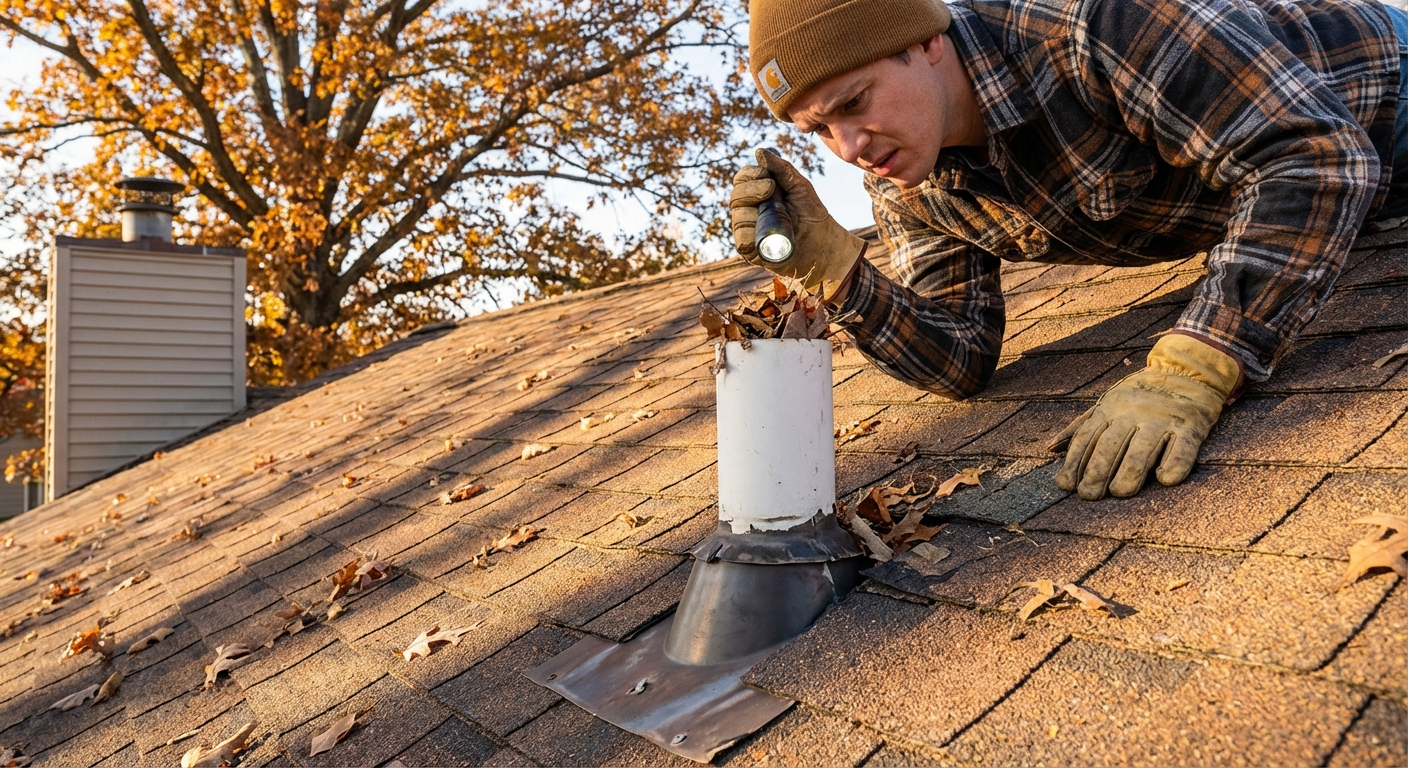
Falling leaves, twigs, seed pods, and dirt are the most frequent vent blockers, especially in autumn. Debris accumulates in the opening of the vent stack on the roof and gradually builds into a compacted blockage. Over time, aging or rough pipe interiors only make debris accumulation worse.
Bird Nests and Animal Intrusions
Birds see vent pipe openings as prime nesting real estate. Birds, squirrels, and other small animals can build nests or get stuck in vent pipes, especially in climates with active wildlife and limited vent screens. A nest can completely seal a 2 to 3 inch vent opening within days.
Frozen Vent Pipes in Winter
In cold climates, warm humid air from the drain system rises into the cool vent pipe and condenses. That moisture freezes and gradually seals the pipe shut. A frozen outdoor faucet situation shares many winter pipe-care principles, and the same insulation strategies apply to vent stacks running through unconditioned attics.
Corroded or Collapsed Older Vent Pipes
Older galvanized or metal vent pipes can corrode, flake, or collapse internally, narrowing the vent and obstructing airflow. This is a growing issue in homes built before the 1980s where original metal DWV piping has reached the end of its service life.
Improper Installation
Some contractors cut corners by sizing vents too small, running them too far from the fixture trap, or failing to pitch horizontal vent runs correctly. Under the 2021 International Plumbing Code (the standard most jurisdictions enforce in 2026), vent pipes shall be not less than 1¼ inches (32 mm) in diameter, and vents exceeding 40 feet in developed length must be increased by one nominal pipe size for the entire developed length. Individual vents must also connect at least 6 inches above the flood-level rim of the highest fixture served.
Roof Vent Pipe Leaks
A leaky roof boot or flashing around the vent isn't strictly a vent function issue, but it can cause serious water damage to your attic and ceilings. The most common culprit is a deteriorated rubber boot collar that cracks with age and sun exposure. Improperly installed flashing that was simply caulked around the pipe (rather than integrated under shingles) is especially prone to failure.
| Cause | Common Symptom | DIY Fix? |
|---|---|---|
| Leaf/debris clog | Slow drains, gurgling | ✅ Yes |
| Bird/animal nest | Complete drain stoppage | ✅ Yes (with care) |
| Frozen vent pipe | Winter slow drains | ✅ Warm water flush |
| Corroded older pipe | Chronic odors, narrowing | ❌ Call a plumber |
| Improper installation | Chronic drainage issues | ❌ Call a plumber |
| Roof boot leak | Water stains on ceiling | ⚠️ DIY or roofer |
How to Clear a Clogged Plumbing Vent
DIY Roof Access Method (Most Effective)
Before climbing onto your roof, confirm the vent is the problem: have someone flush a toilet while you listen at the vent opening for a strong suction sound. No suction equals a likely clog.
What you'll need:
- Plumber's snake (drain auger)
- Garden hose
- Flashlight
- Screwdriver
- Shop vacuum (optional)
- Inspection camera (optional, rentable)
Steps:
- Safely access your roof, only proceed if conditions are dry and the pitch is manageable
- Locate the vent pipe, it usually sits above a bathroom or kitchen
- Remove the vent cap and use a flashlight to look for visible blockages
- Feed the plumber's snake into the vent, twisting and pushing until you break through the resistance
- Flush with a garden hose at full pressure to wash debris down and out
- Verify airflow, have someone flush the toilet while you hold your hand over the vent opening to feel for suction
- Reinstall the vent cap securely
If your drain issues are tied to slow-draining washing machine lines or a clogged kitchen sink that persists after snaking, check the vent stack. It's frequently the overlooked cause.
Thawing a Frozen Vent Safely
For winter freeze-ups, work from inside the home whenever possible. From a safe position, pour warm (not boiling) water down the vent in a steady stream to gently melt the ice plug without thermal-shocking PVC or cast iron. If you have attic access, wrap the exposed vent pipe in fiberglass insulation and use a hair dryer or small space heater to warm it from below.
Fixing a Roof Vent Pipe Leak
If the issue is water intrusion around the vent penetration rather than a clog, here's how to address it:
- Flashing tape method: Apply butyl adhesive-backed EPDM flashing tape around the damaged rubber collar and aluminum flashing, stretching it over the pipe to create a new seal
- Boot-over-boot method: Slide a new vent boot flashing over the existing one, positioning the top edge under the overlying shingle course for a semi-permanent fix
- Full replacement: Strip back shingles and install new flashing properly integrated beneath the shingle course, the most durable but time-consuming option
2026 Professional Repair Costs
If you're hiring a plumber, here's what to budget based on the latest national pricing data:
| Service | Typical 2026 Cost |
|---|---|
| Simple vent clog clearing | $100 to $300 |
| Deep or complex vent clog | $300 to $800+ |
| Sewer/vent camera inspection | $125 to $500 (avg $280) |
| Roof boot/flashing repair | $75 to $600 |
| Vent pipe replacement | $500 to $5,000 (avg $1,500) |
| Full plumbing stack replacement | $1,500 to $15,000 |
On average, homeowners can expect to pay anywhere from $100 to $300 for a straightforward vent clearing, but if the clog is deep in the system or caused by structural damage, tree roots, or frozen sections, the repair could run between $300 and $800 or more. Camera diagnostics typically run $125 to $500 for most residential properties, with a national average of $280.
When to Call a Professional Plumber
Some plumbing vent problems go beyond a weekend DIY project. Call a licensed plumber when:
- Sewer odors persist after you've cleared the vent (may indicate a cracked vent pipe)
- Drainage issues are house-wide and chronic, suggesting an installation or pipe sizing error
- The vent clog is located deep in the pipe and can't be reached from the roof
- You notice water stains on ceilings or attic decking around the vent penetration
- You need a plumbing camera inspection to pinpoint the exact location of a blockage or crack, a camera inspection can save you from unnecessary demolition
A full plumbing inspection may also be worth scheduling if your home is older or if you're buying a house where the drainage history is unknown. If the problem is a hidden crack or leak in the line, a leak detection service can pinpoint it without tearing into walls unnecessarily. You can also address recurring drain slowdowns tied to the vent with professional drain cleaning as a complement to vent clearing.
Frequently Asked Questions
What happens if a plumbing vent is blocked?
A blocked plumbing vent disrupts air pressure in the drain system, creating a vacuum effect that slows or stops drainage. Water gets siphoned out of P-traps, allowing toxic sewer gases like hydrogen sulfide and methane to enter your home. You'll typically notice gurgling drains, slow drainage across multiple fixtures, sewer odors indoors, and bubbling toilets.
Can I clear a plumbing vent myself?
Yes, in many cases a homeowner can clear a simple vent blockage from the roof using a plumber's snake and a garden hose. The process works best for leaf, debris, or animal nest clogs near the top of the vent. However, if the clog is deep in the pipe, you're uncomfortable working on a roof, or the problem keeps coming back, call a licensed plumber.
How do I know if it's a vent problem vs. a drain clog?
The main distinction is scope: a regular drain clog affects one fixture, while a vent problem affects multiple drains throughout the house at the same time. If gurgling, slow drains, or sewer odors persist after you've addressed individual fixture clogs, the vent stack is likely the issue.
Why does my plumbing vent freeze in winter?
Warm, moist air from the drain system rises into the cold vent pipe, condenses, and freezes, gradually sealing the pipe. Smaller-diameter pipes and short roof penetrations are most vulnerable. Insulating the attic portion of the stack and installing a frost-resistant insert or insulated vent cap can prevent repeat freeze-ups.
How much does it cost to fix a plumbing vent problem in 2026?
Simple DIY vent clearing (tools plus a vent cap) can cost as little as $20 to $50. A professional plumber will typically charge $100 to $300 to clear an accessible vent, and $300 to $800 or more for deep or complex clogs. If a cracked vent pipe requires replacement in the wall or attic, costs can climb to $500 to $5,000 depending on accessibility. Roof boot flashing repair is usually a separate roofing cost of $75 to $600.