
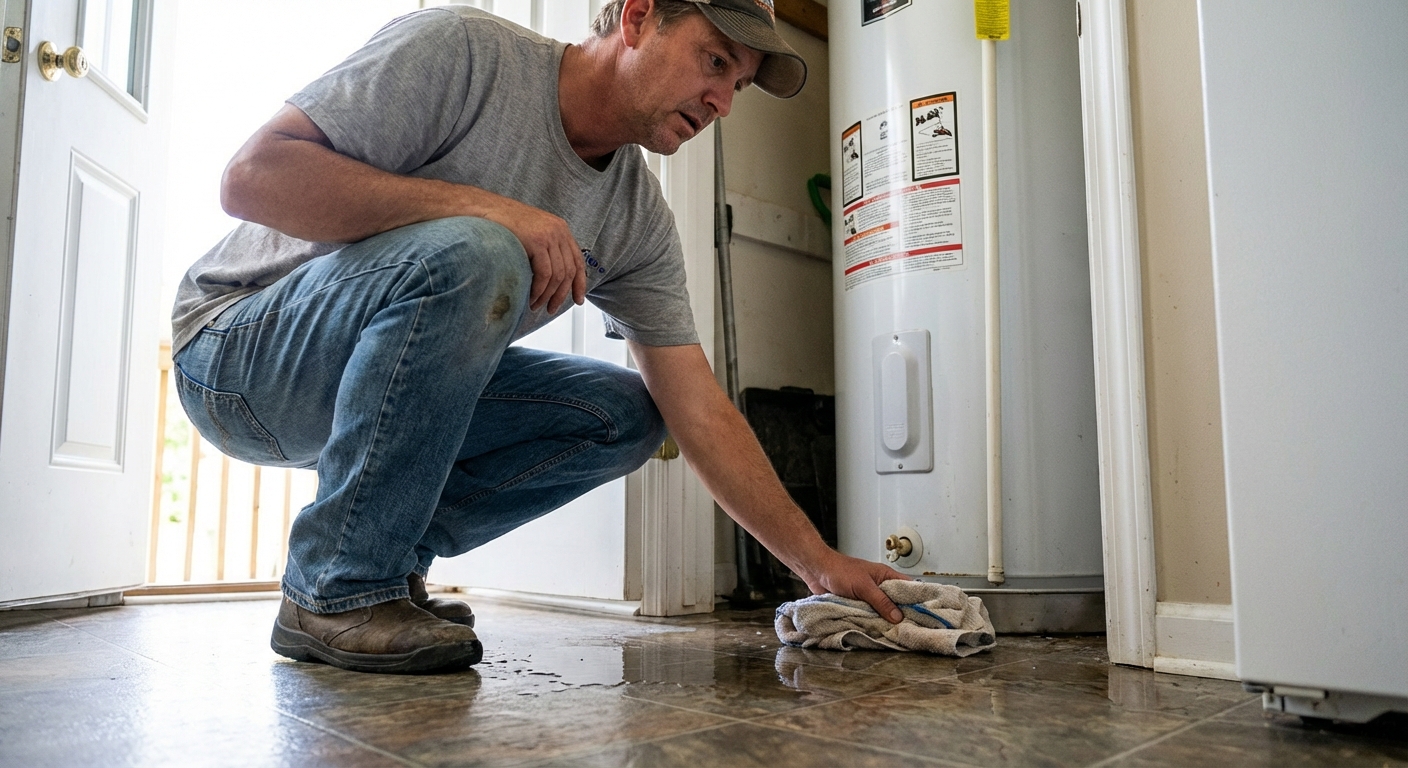
Why Is My Water Heater Leaking?
A water heater leaking is one of the most common and urgent plumbing problems homeowners face. Whether you have a traditional tank or a modern tankless model, a leak can range from a minor nuisance to a serious emergency. Understanding the root cause is the first step toward fixing it and protecting your home from water damage.
Most Common Causes of Water Heater Leaks
Both tank and tankless water heaters can develop leaks, though the causes differ somewhat between the two types. Industry data from 2026 shows that the leading culprits are tank corrosion (typically from age and sediment), high water pressure or a failing T&P relief valve, loose plumbing connections, and worn drain valves.
Tank Water Heater Causes:
- Sediment buildup. Minerals from hard water settle at the bottom of the tank, causing overheating, metal fatigue, and stress fractures that lead to leaks. Learn more about sediment buildup signs and how to remove it.
- Corroded or depleted anode rod. The anode rod protects the tank lining by sacrificing itself to corrosion. Once depleted (typically every 3 to 5 years), the tank walls become vulnerable to rust and cracking.
- Faulty T&P (temperature and pressure) relief valve. This safety valve opens when pressure or temperature exceeds safe limits. A worn or malfunctioning valve will drip or stream water.
- Loose inlet or outlet pipe connections. Repeated heating and cooling cycles cause fittings to vibrate loose over time, creating slow drips.
- Tank age and thermal stress. Tanks older than 10 years are prone to stress fractures from constant expansion and contraction cycles.
- High water pressure. Household water pressure above 80 PSI stresses all components. Learn more about high water pressure causes and what it means for your plumbing.
Tankless Water Heater Causes:
- Loose or corroded pipe fittings at the inlet or outlet connections
- Faulty isolation or pressure relief valves
- Mineral scale buildup in the heat exchanger (especially in hard water areas), which is why tankless water heater maintenance like annual descaling is so important

Find Trusted & Licensed Plumbers in Ohio
Get matched with companies for your specific needs
What Your Leak Location Is Telling You
The location of a water heater leak is one of the best diagnostic clues you have. Different areas point to very different problems. Some are minor fixes, others signal it's time for a replacement.
Water Heater Leaking From the Top
Top leaks are typically the least severe and are usually caused by connection issues rather than tank failure. Common culprits include:
- Loose cold water inlet or hot water outlet fittings. Vibration and temperature cycling can loosen these over time.
- Loose or corroded T&P valve. If the threaded connection to the tank is failing, water seeps from the seal.
- Anode rod port. A loose or deteriorating anode rod port fitting can drip.
Top leaks are generally DIY-friendly. Tightening fittings or replacing a valve often resolves the issue entirely.
Water Heater Leaking From the Bottom
Bottom leaks are more serious and frequently signal internal tank damage. Possible causes include:
- Sediment-induced corrosion. Mineral deposits insulate the tank floor, causing overheating that cracks the glass lining and exposes steel to rust.
- Failed drain valve. The drain valve at the bottom can loosen or corrode over time. A simple tightening may fix a loose connection, but a cracked valve needs replacing.
- Internal tank corrosion. A tank leaking from the bottom due to rust is typically beyond repair and needs full replacement.
Water Heater Leaking From the Pressure Relief Valve
The T&P valve is a critical safety device designed to open when pressure exceeds 150 PSI or temperature reaches 210°F. If it's leaking, take it seriously. Causes include:
- A stuck-open or defective valve that won't fully close
- Excessive water pressure in your home's supply line (ideal range: 40 to 60 PSI)
- Thermal expansion pressure, which is common in closed plumbing systems without an expansion tank
If your T&P valve is dripping frequently, this is often a sign of water heater thermal expansion issues. Installing a water heater expansion tank may be required to bring pressure under control.
Leak Location Summary
| Leak Location | Likely Cause | Severity | Typical Fix |
|---|---|---|---|
| Top | Loose fittings, T&P valve connection | Low | Tighten or replace fittings/valve |
| Bottom (drain valve) | Loose or corroded drain valve | Low to Medium | Tighten or replace valve |
| Bottom (tank) | Internal corrosion, tank failure | High | Replace unit |
| T&P Valve | Excessive pressure or faulty valve | Medium to High | Valve replacement + pressure check |
| Side connections | Loose pipe fittings | Low | Tighten or re-seal fittings |
| Tankless connections | Corrosion, loose fittings | Low to Medium | Tighten, re-seal, or descale |
Hot Water Heater Leaking: What To Do Immediately
Discovering a water heater leaking is no time to wait and see. Follow these steps in order to minimize damage and stay safe.
Step-by-Step Emergency Response
Step 1. Shut off the water supply. Locate the cold water shutoff valve at the top or side of the unit and turn it clockwise until it stops. If you can't access it or it's stuck, shut off your home's main water supply valve instead.
Step 2. Cut power to the unit. For electric water heaters, flip the dedicated breaker in your electrical panel. For gas water heaters, turn the gas control valve (located near the bottom of the unit) to the "off" position. This eliminates the risk of electrical hazards and gas-related fires.
Step 3. Contain the water. Place towels and buckets around the leak. If water has pooled, use a wet/dry shop vac to extract it, working from the outer edges toward the drain.
Step 4. Document everything. Take photos and videos of the leak and any water damage for your homeowner's insurance claim.
Step 5. Call a licensed plumber. A professional can accurately diagnose whether the leak is from the tank itself, a valve, or a supply line, and tell you whether repair or replacement is necessary.
Is a Leaking Water Heater Dangerous?
Yes, a water heater leaking can absolutely be dangerous, depending on the severity and type. Key risks include:
If you smell gas near your water heater at any point, leave immediately and call your gas company from outside. Do not use any light switches, phones, or appliances inside the home.
If you're unsure where the leak is coming from, professional leak detection services can pinpoint the source without guesswork.
Repair vs. Replacement: Making the Right Call
Once you've stabilized the situation, you'll need to decide whether to repair or replace your water heater. Here's how to make that decision wisely.
The Key Decision Factors
Unit Age is the most important factor. For units under 6 to 8 years old with a minor component failure (thermostat, heating element, drain valve), repair is usually the smart move and can extend life by several years. For units 10+ years old, replacement is almost always the better investment because the unit is nearing end-of-life regardless.
The 50% Rule. If the repair cost exceeds 50% of the cost of a new unit, replace it. For example, if a new water heater costs $2,500 installed and you're quoted $1,400 for a repair, you're better off putting that money toward a new unit.
Tank leaks mean replace. A water heater leaking from the tank itself indicates structural failure. Patching may offer a temporary fix, but a full replacement is the only reliable long-term solution.
2026 Cost Comparison
Industry surveys from Angi, Homewyse, and Home Depot put 2026 average tank water heater replacement at roughly $1,300 to $1,800 installed, with tankless installations averaging $2,500 to $3,200 nationally and reaching $5,000+ for complex jobs.
| Option | Typical 2026 Cost Range | Notes |
|---|---|---|
| Minor repair (valve, element, thermostat) | $150 to $400 | Good option for newer units |
| Medium repair (gas valve, non-tank leak) | $250 to $850 | Evaluate against unit age |
| Tank-style replacement (40 to 50 gal) | $1,300 to $2,500 installed | Includes labor and haul-away |
| Tankless replacement | $2,500 to $4,500 installed | Up to $5,400 in high-cost regions |
| Hidden costs (permits, expansion tank, code upgrades) | $500 to $1,500 | Factor into total budget |
If you're considering going tankless, review our full tankless water heater installation guide to understand costs, requirements, and long-term savings potential before making a decision.
Prevention Tips to Avoid Future Leaks
The best leak is the one that never happens. These maintenance habits apply to both tank and tankless water heaters and can extend unit life dramatically.
Annual and Routine Maintenance Checklist
- Flush your tank annually to clear sediment that causes corrosion and overheating. For tankless models, descaling every 1 to 2 years is equally important.
- Inspect and replace the anode rod every 3 to 5 years. This one small component can triple your tank's lifespan. Learn more about anode rod replacement and why it matters.
- Test the T&P relief valve yearly by lifting the lever briefly. Water should flow and stop cleanly. A valve that doesn't open or won't reseat properly needs immediate replacement.
- Check water pressure with an inexpensive gauge. Residential pressure should stay between 40 and 80 PSI. If it's consistently high, install a pressure-reducing valve.
- Install a water heater drain pan with a drain line if you don't already have one. A water heater leaking into a pan gives you time to respond before water spreads to flooring and walls.
- Add a smart leak detector with auto-shutoff. In 2026, whole-home systems like Flo by Moen and Phyn Plus 2nd Gen (typically $450 to $650 for hardware, plus $200 to $400 for installation) can detect leaks and automatically close your main water valve. Small spot sensors run $30 to $60 each and are ideal for placing right under your water heater.
- Schedule professional inspections every 6 to 12 months, especially for units over 7 years old. A plumber can catch early signs of corrosion, loose fittings, and pressure issues before they become emergencies.
- Insulate pipes in unheated areas to prevent freezing and cracking, which can cause sudden, severe leaks. Learn how to respond if a pipe bursts so you're prepared.
If a hidden water line leak is suspected anywhere in your home alongside water heater issues, don't delay. The two problems can compound damage quickly.
Frequently Asked Questions
Is a leaking water heater an emergency?
Yes, in most cases a water heater leaking should be treated as an emergency. Even a slow leak can escalate quickly, flooding a utility room, damaging flooring and walls, or creating electrical and gas hazards. Shut off the water supply and power immediately, contain the leak, and call a licensed plumber as soon as possible. Don't assume a slow drip is harmless because it almost always gets worse over time.
Can I still use hot water if my water heater is leaking?
It's best to avoid using hot water until the leak has been diagnosed and stopped. Running the unit while it's leaking can worsen the damage, deplete the tank faster, and in some cases create pressure or safety issues. Turn off the water supply and power source, then wait for a plumber to assess the situation before restoring normal operation.
How do I know if my water heater leak is from the tank or a valve?
Carefully dry the area around your water heater and observe where moisture reappears first. If water comes from the top fittings or the T&P valve pipe, the issue is likely a component, not the tank, and may be repairable. If water appears at the very bottom of the tank with no visible drain valve involvement, it strongly suggests internal tank failure, which requires replacement.
How long does a water heater typically last before leaking?
Tank-style water heaters last an average of 8 to 12 years before they begin showing signs of corrosion, sediment damage, or component failure. Tankless models can last 15 to 20 years with proper maintenance. Regular upkeep like flushing, anode rod replacement, and annual inspections can push these timelines significantly further. If your tank is approaching or past 10 years and leaking, replacement is almost always the smarter financial choice.
Does homeowner's insurance cover a leaking water heater?
Homeowner's insurance in 2026 typically covers water damage caused by a sudden and accidental water heater failure, such as a burst tank, but it generally does not cover the cost of repairing or replacing the water heater itself. Insurers will likely deny claims tied to wear and tear, lack of maintenance, or slow leaks that went unaddressed over months. Document the damage immediately with photos and contact your insurer right away to understand your specific coverage before making repairs.