
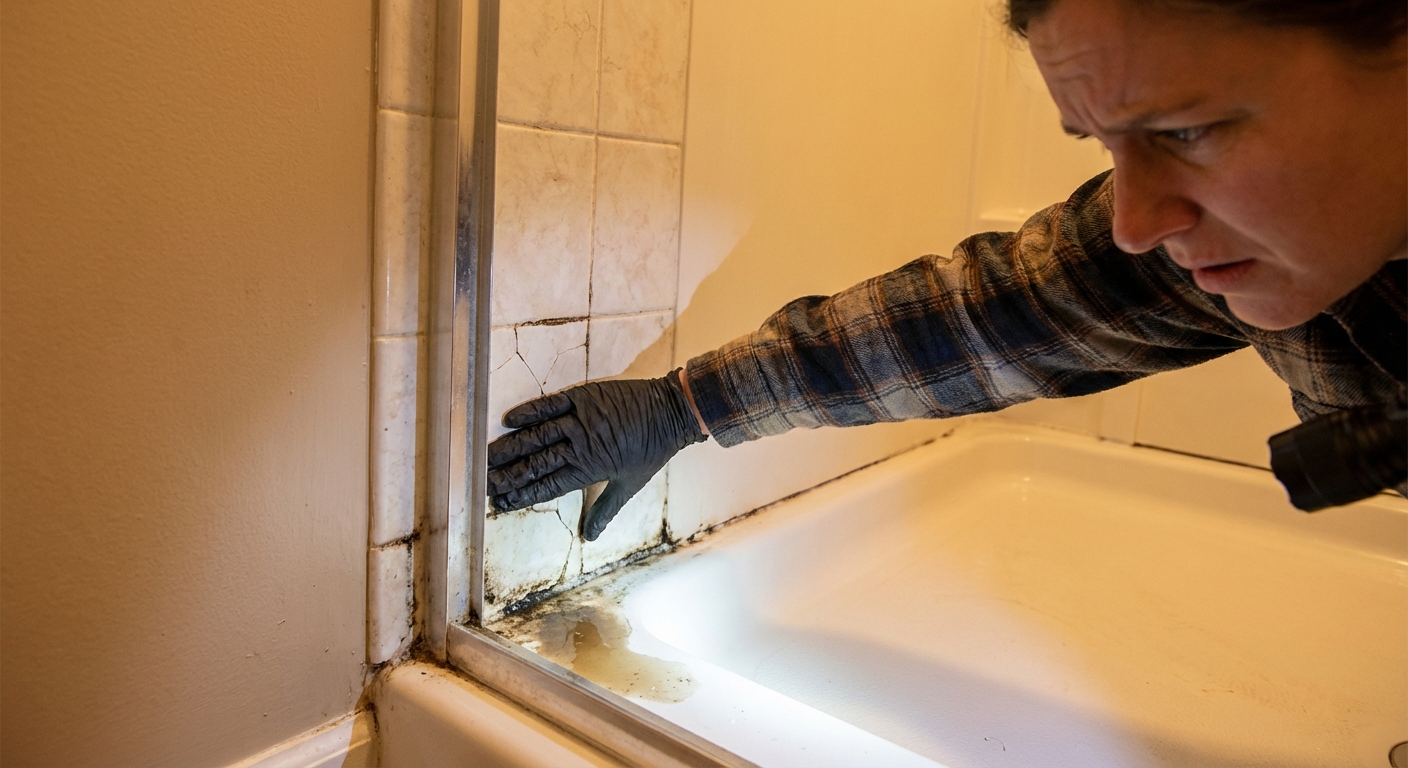
How Shower Pan Leaks Develop
A shower pan is the waterproof base beneath your shower floor, and when it fails, the damage spreads silently into your subfloor, walls, and even the ceiling of the room below. Leaks develop when water bypasses the pan's waterproof liner or base, seeping through cracks, gaps, or failed seals. Over time, the constant moisture erodes surrounding materials, enlarges cracks, and promotes mold growth.
The Most Common Causes
Understanding what causes a shower pan to fail is the first step toward preventing costly repairs.
| Cause | What Happens |
|---|---|
| Cracked Pan or Tiles | Impacts, house settling, or material fatigue create fissures that allow unnoticed water passage |
| Failed Waterproofing Liner | Improper installation or post-install damage breaks the membrane's watertight seal |
| Loose Drain Assembly | Gaps between the pan and drain create a direct leak point |
| Degraded Grout & Caulk | Porous or cracked grout absorbs water; deteriorated silicone lets water seep behind the walls |
| Subfloor Movement | House settling or a weakened subfloor causes the pan to shift and crack |
| Poor Drainage Slope | Inadequate pitch causes water to pool, prolonging moisture exposure and accelerating wear |
Lifespan varies dramatically by material. Fiberglass pans typically last 5 to 10 years and are prone to scratching, dulling, and flexing or cracking when poorly supported, while acrylic pans last 10 to 15 years (sometimes up to 20) with good care. Tile shower bases built over a mortar bed with proper waterproofing can last 20 to 50 years or more, but the grout and caulk typically need renewal every 5 to 10 years. A well-installed shower pan liner itself averages around 45 years of service life.

Find Trusted & Licensed Plumbers in Ohio
Get matched with companies for your specific needs
Warning Signs of a Leaking Shower Pan
A shower pan leak often goes undetected for months because the damage hides beneath the surface. Knowing what to look for can save you thousands in structural repairs.
Signs Inside the Shower
- Movement or deflection when you step in. A shower pan that moves or shifts underfoot signals that water damage has already loosened the securing materials below.
- Visible cracks in the pan material, tiles, or grout lines
- Loose or hollow-sounding tiles that have separated from the substrate beneath
- Persistent mold or mildew that returns even after regular cleaning
- Standing water that doesn't drain toward the center
Signs Outside the Shower
- Water stains or bubbling paint on the ceiling below. This is a clear indicator that water has migrated through the subfloor.
- Soft, spongy flooring adjacent to the shower base
- Damp or discolored baseboards near the bathroom
- A musty odor similar to an old basement, indicating water accumulation without evaporation
- Peeling paint or wallpaper on adjacent walls
- Staining on nearby carpet or walls
How to Test for a Shower Pan Leak
The shower pan flood test is the gold-standard method for confirming whether your pan, not the drain, grout, or valve, is the source of a leak. It's simple, requires no special tools, and can be done in a weekend.
Step-by-Step Flood Test
- Seal the drain. Use duct tape layered several times, a rubber drain plug, or a 2-inch inflatable test plug inserted 2 to 3 inches into the drain pipe.
- Fill the pan. Add water until you have about 2 inches of standing water covering the full floor surface. For curbed showers, fill just below the curb threshold.
- Mark the water level. Use a pencil or piece of tape on the side of the pan to record the exact water height.
- Wait 8 to 24 hours. Leave the water undisturbed. Some plumbers recommend checking after about 8 hours, while a 24-hour flood test is the standard used before tile installation. If possible, check the ceiling below periodically for dripping.
- Check the results. Compare the water level to your mark.
Interpreting Your Results
| Outcome | What It Means | What to Do |
|---|---|---|
| Water level unchanged | Pan is watertight, no leak | Check drain, grout, or valve as alternate sources |
| Water level dropped | Pan or liner is leaking | Proceed with repair or call a professional |
| Water drips at drain area only | Drain connection issue | Replace or reseal the drain assembly |
If you want professional help confirming the source, a leak detection service can use moisture meters and thermal imaging to pinpoint the exact problem without any guesswork. You can also explore water line leak detection methods for a broader look at how hidden leaks are found.
Repair Options, Costs & When to Replace
Once you've confirmed the leak is coming from the shower pan, your next decision is whether to repair or replace. The right choice depends on the severity of the damage and the material of your pan.
Repair Options
Cost Breakdown: Repair vs. Replace (2026)
Recent 2026 data shows that professional shower pan replacement typically costs $900 to $2,300, with a national average around $1,620. However, total project costs can vary widely based on materials and scope.
| Option | Scope of Work | Estimated Cost |
|---|---|---|
| DIY Patch or Kit | Basic shower repair kit, caulk, regrout, or sealant | $10 – $200 |
| Professional Minor Repair | Reseal drain, patch cracks, localized fix | $200 – $800 |
| Professional Pan Replacement (Standard) | New prefab pan, drain assembly, basic install | $900 – $2,300 |
| High-End / Custom Replacement | Custom tile or stone pan, subfloor repair, mold remediation | $2,700 – $4,600+ |
| DIY Pan Replacement (Fiberglass) | New pan, drain assembly, mortar, plumber's putty | $220 – $520 |
Labor alone for a straightforward pan replacement is typically about 4 hours, running $350 to $570. More complex work (subfloor repair, moving drains, custom tile) pushes totals toward the high end.
An acrylic pan is widely recommended in 2026 as the best all-around durable, low-maintenance choice, while cast iron and stone offer the longest service life at a premium price.
When Full Replacement Is Necessary
While re-sealing and partial repairs work well for early-stage leaks, there are clear situations where full shower pan replacement is the only responsible option:
- The pan itself is visibly cracked, common in aging fiberglass and acrylic
- There is extensive rot or structural damage in the subfloor or wall framing
- The pan moves or deflects when you step in, indicating a compromised foundation
- The original installation had improper slope or drainage that can't be corrected without a full demo
- Damage has spread to the ceiling below, signaling long-term water infiltration
In those cases, the cost of full replacement is far less than the cost of unaddressed structural damage and mold remediation down the line. If you're dealing with related drain issues alongside a pan replacement, reviewing bathtub drain repair and clogged shower drain guides can help you address everything in one project.
The Real Cost of Ignoring a Shower Pan Leak
Delaying shower pan leak repair is one of the most expensive mistakes a homeowner can make. Here's what can happen when water is left to seep unchecked:
- Subfloor and framing rot. Water infiltrates wood, sheetrock, insulation, and support beams, leading to decay and compromised structural stability
- Mold growth. Persistent moisture fosters mold colonies that degrade air quality and can cause respiratory problems
- Insurance complications. Insurers may deny claims if the leak is classified as gradual or due to deferred maintenance, since most policies exclude damage from wear, deterioration, or repeated seepage over time.
- Ceiling damage in rooms below. Staining, bubbling, or sagging ceilings are a direct result of prolonged pan leaks
- Escalating repair costs. What starts as a $10 to $50 DIY kit can become a $4,600+ structural overhaul
A plumbing inspection is a smart investment if you've noticed any warning signs. Catching issues early through a plumbing camera inspection can reveal hidden damage before it escalates.
Frequently Asked Questions
How do I know if my shower pan is leaking or if it's just condensation?
Condensation typically appears on the outside of the shower enclosure and evaporates quickly. A shower pan leak, however, causes persistent moisture under the floor, soft tiles, or water stains on the ceiling below the bathroom. Perform the flood test (seal the drain, fill 2 inches of water, wait 8 to 24 hours) to confirm. If the water level drops, you have a pan leak, not condensation.
Can I repair a shower pan leak myself?
Minor leaks caused by deteriorated caulk, cracked grout, or a loose drain can often be fixed DIY with a basic shower repair kit for as little as $10 to $30, plus materials. However, if the pan itself is cracked, the liner is compromised, or there is subfloor damage, professional repair or full replacement is necessary. Attempting a DIY fix on a serious leak can mask the problem temporarily while damage continues to worsen beneath the surface.
How long does a shower pan repair take?
A simple DIY re-seal or regrout job can be completed in a few hours and requires 24 to 48 hours of curing time before use. A professional partial repair, including removing floor tile, replacing the liner, and retiling, typically takes 2 to 5 days depending on the scope. A full pan replacement, including drying time for mortar and waterproofing layers, can take 1 to 2 weeks from start to finish.
Does homeowners insurance cover shower pan leak damage?
Most homeowners policies cover sudden and accidental water damage but exclude damage from wear, deterioration, or repeated seepage over time, so the failed pan itself is typically not covered while the resulting water damage to floors, subfloors, and walls often is. If the damage is extensive, file a claim promptly and document everything. A home insurance review can help you understand exactly what your policy covers for water damage scenarios.
How much does it cost to have a plumber fix a shower pan leak?
A professional minor shower pan repair typically runs $200 to $800, while a full pan replacement averages around $1,600, with most jobs falling between $900 and $2,300. Custom tile or stone work, subfloor repair, or mold remediation can push the total to $4,600 or more. Getting multiple quotes and using a leak detection service to pinpoint the problem first can help you avoid overpaying.