
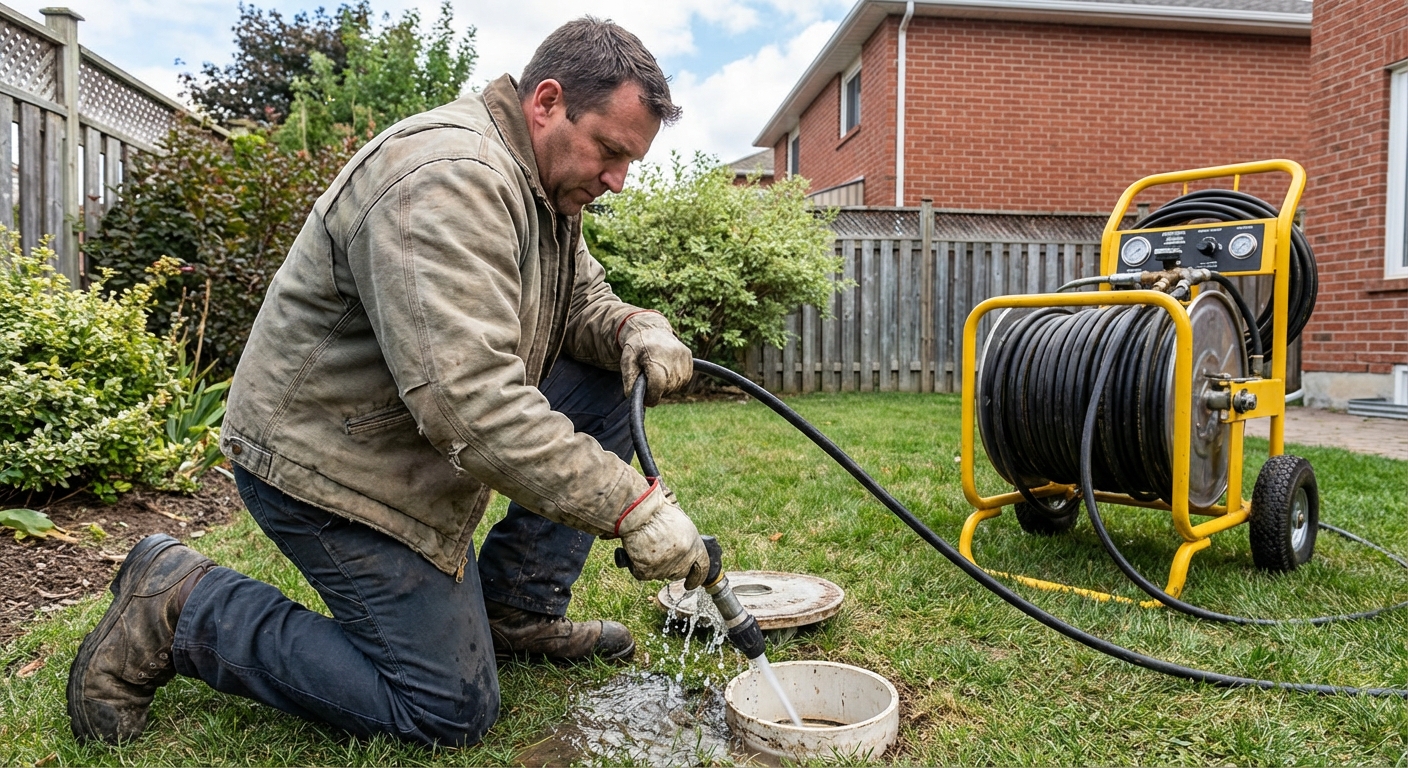
What Is Hydro Jetting and How Does It Work?
Hydro jetting is a professional drain and sewer cleaning method that uses high-pressure water (typically up to about 4,000 PSI for residential and light commercial work) to scour the interior walls of pipes and flush out blockages. Unlike chemical drain cleaners or mechanical snaking, hydro jetting delivers a true 360-degree clean, removing grease, mineral scale, tree roots, sludge, and bacteria from your plumbing system without a single drop of harsh chemicals. While snaking typically restores about 60% to 80% of pipe capacity, hydro jetting can return a line to 95% to 100% of its original flow.
Here's how a professional hydro jetting service works from start to finish:
| Step | What Happens |
|---|---|
| 1. Video Inspection | A camera is fed through the pipe to locate the clog, assess pipe condition, and confirm the system can safely handle high pressure |
| 2. Nozzle & Pressure Selection | Technicians choose the right nozzle (root-cutting, scale-busting, or standard) and set the appropriate PSI for the pipe material and blockage type |
| 3. High-Pressure Cleaning | The hose is inserted through a cleanout access. Forward jets pulverize debris while rear-facing jets propel the hose and scour pipe walls clean |
| 4. Final Flush & Inspection | A follow-up camera pass confirms the pipe has been fully cleared and restored to near its original diameter |
The process is chemical-free, environmentally safe, and (when performed by a licensed plumber) safe for most pipe materials in good condition. In 2026, modern jetters increasingly use IoT sensors, AI-assisted pressure control, and improved nozzle geometry to clean more precisely while reducing the risk of pipe damage. Before any hydro jetting service begins, a plumbing camera inspection is typically required to ensure there are no cracks, collapses, or pre-existing damage that high pressure could worsen.

Find Trusted & Licensed Plumbers in Ohio
Get matched with companies for your specific needs
Hydro Jetting vs. Traditional Drain Snaking
Many homeowners start with drain snaking because it's quick and inexpensive. But snaking only pokes a hole through a clog. It doesn't remove the buildup coating your pipe walls. Hydro jetting is the difference between clearing a path and actually cleaning the pipe.
When snaking makes sense: Minor hair or soap clogs near a drain opening, older or fragile pipes that can't handle high pressure, or when you simply need a quick, temporary fix on a tight budget.
When hydro jetting is worth it: Recurring clogs, heavy grease buildup (especially in kitchen drains), tree root intrusions, or any main sewer line blockage. If you've had a plumber snake a drain more than once in the past year for the same issue, hydro jetting is almost certainly the more cost-effective long-term solution.
Hydro Jetting Costs, Best Use Cases & Pipe Safety
How Much Does Hydro Jetting Cost in 2026?
Hydro jetting costs vary based on the severity of the blockage, pipe length, accessibility, and your location. Here's an updated 2026 breakdown:
| Service Type | Typical Cost Range (2026) |
|---|---|
| Residential drain line (minor to moderate) | $350 – $900 |
| Residential (severe blockages) | Up to $2,000 |
| Main sewer line | $600 – $1,800 |
| Commercial properties | $500 – $2,500 |
| Professional labor rate | $45 – $200/hour |
According to current 2026 industry data, the average homeowner pays around $475 for a standard residential hydro jetting service, with most quotes falling in the $350 to $800 range. Larger or more complex residential sewer line cleanings commonly land in the $450 to $1,000 range. Commercial properties (such as restaurants with heavy grease accumulation) sit at the higher end due to larger pipe networks and more intensive cleaning requirements. Urban areas tend to cost more due to higher labor rates, while rural jobs may include a travel fee. Emergency or after-hours service can also push the price significantly higher.
Always ask your plumber if a video inspection is included in the quote. Many companies offer it bundled, but others charge $125 to $500 separately. Learn more in our plumbing camera inspection guide before booking a service.
When Is Hydro Jetting Recommended?
Hydro jetting is the right call in several specific scenarios:
- Grease and FOG (Fats, Oils & Grease) buildup. High pressure emulsifies and scours hardened grease from kitchen and commercial drain lines. Snaking punches a hole through it; hydro jetting removes it entirely. This makes it ideal for kitchen sink clogs that keep coming back.
- Tree root intrusions. Hydro jetting cuts and flushes roots completely from sewer pipes, outperforming mechanical rooting machines. However, it's a temporary fix. Roots regrow within 1 to 3 years if the entry crack isn't repaired. Pair it with sewer line repair or trenchless pipe lining for a permanent solution.
- Recurring clogs and slow drains. If you're dealing with persistent slow drains throughout your home, scale, sludge, or deep sewer line buildup may be the root cause.
- Commercial drain systems. Restaurants, apartment buildings, and industrial facilities benefit greatly from scheduled hydro jetting to stay ahead of heavy buildup.
- Pre-sale or move-in pipe cleaning. Clearing pipes before buying or selling a home ensures a clean system and prevents post-purchase surprises.
Is Hydro Jetting Safe for All Pipe Materials?
Industry guidance in 2026 emphasizes that pipe safety depends more on structural condition than age alone. A sound older pipe can often tolerate controlled hydro jetting, while a weakened or corroded pipe of any age should not be jetted. That said, material type still matters:
| Pipe Material | Safety Level | Key Notes |
|---|---|---|
| PVC / ABS | ✅ Generally Safe | Handles pressure well when intact; inspect for brittleness or cracks first |
| Cast Iron | ⚠️ Conditional | Durable when walls are thick; corrosion makes it brittle and risky under high pressure |
| Clay / Terracotta | ❌ Risky | Brittle and prone to crumbling; often has cracks or separated joints that high pressure can worsen |
| Orangeburg | ❌ Not Recommended | Bituminous fiber pipe degrades easily; treat as high-risk and avoid high pressure |
| Copper | ✅ Generally Safe | Adjustable pressure makes it viable; watch for existing corrosion |
Pre-1970s homes are more likely to have clay, Orangeburg, or severely corroded cast iron pipes, making a plumbing camera inspection even more critical before proceeding. A licensed plumber can adjust the PSI and nozzle selection to accommodate different pipe conditions, and modern jetters with real-time pressure control make it easier to clean safely.
How Often Should You Schedule Hydro Jetting?
For most residential properties, hydro jetting every 1 to 2 years remains the standard 2026 recommendation for preventive maintenance, with some plumbers suggesting routine sewer cleaning roughly every 18 months for a typical household. The right schedule depends on several factors unique to your home and lifestyle.
Schedule more frequently (every 6 to 12 months) if you have:
- Older plumbing with clay or cast iron pipes
- A large household with high water usage
- A habit of pouring grease or food scraps down drains
- Recurring slow drains or backups
- Large trees near your sewer line
- A history of clogged shower drains or bathroom sink backups
You may be fine with every 2 to 3 years if you have:
- A smaller household with newer PVC plumbing
- Careful disposal habits and minimal drainage stress
- No history of recurring clogs
Regardless of your maintenance schedule, schedule service immediately if you notice persistent slow drains, sewer odors, gurgling toilets, or backups in tubs and floor drains.
If your home connects to a septic system, coordinate your hydro jetting schedule alongside your septic tank pumping appointments, since both services work together to maintain a healthy wastewater system. Combining hydro jetting with broader preventive plumbing maintenance is one of the best ways to avoid surprise repair bills.
Frequently Asked Questions About Hydro Jetting
What is hydro jetting and is it worth it?
Hydro jetting is a professional drain cleaning method that uses high-pressure water (up to about 4,000 PSI for typical residential work) to scour pipe walls and flush out blockages. It's worth it for homeowners dealing with recurring clogs, grease buildup, tree root intrusions, or any slow drain that snaking hasn't permanently resolved. Because results typically last 2 to 4 years, it's often more cost-effective than repeated snaking visits.
How much does hydro jetting a sewer line cost in 2026?
The average residential hydro jetting service in 2026 runs about $475, with most homeowners paying between $350 and $900 for standard drain lines and $600 to $1,800 for a main sewer line. Severe residential blockages can reach $2,000, while commercial sewer line hydro jetting typically runs $500 to $2,500. Always get at least two quotes and confirm whether a video inspection is included.
Is hydro jetting safe for older pipes?
Hydro jetting is generally safe for older pipes only if they are structurally sound. It is not recommended for cracked, severely corroded, or fragile materials like Orangeburg, deteriorated clay, or thin-walled cast iron. A camera inspection is essential before service so the plumber can confirm the pipe's condition and adjust pressure settings accordingly.
Can hydro jetting remove tree roots permanently?
Hydro jetting is highly effective at cutting and flushing tree roots from sewer lines, but it does not provide a permanent solution on its own. Roots typically grow back within 1 to 3 years through the same entry cracks. For a lasting fix, pair hydro jetting with pipe lining, root barriers, or a targeted sewer repair to seal the entry points.
How is hydro jetting different from drain snaking?
Drain snaking uses a rotating metal cable to mechanically punch through a clog, restoring about 60% to 80% of pipe capacity, while hydro jetting uses high-pressure water to scour pipe walls clean and can restore 95% to 100% of the line's flow. Snaking is faster and cheaper but leaves residue behind, causing clogs to return quickly. Hydro jetting delivers a thorough clean that lasts significantly longer and is far more effective for grease, roots, and scale buildup.