
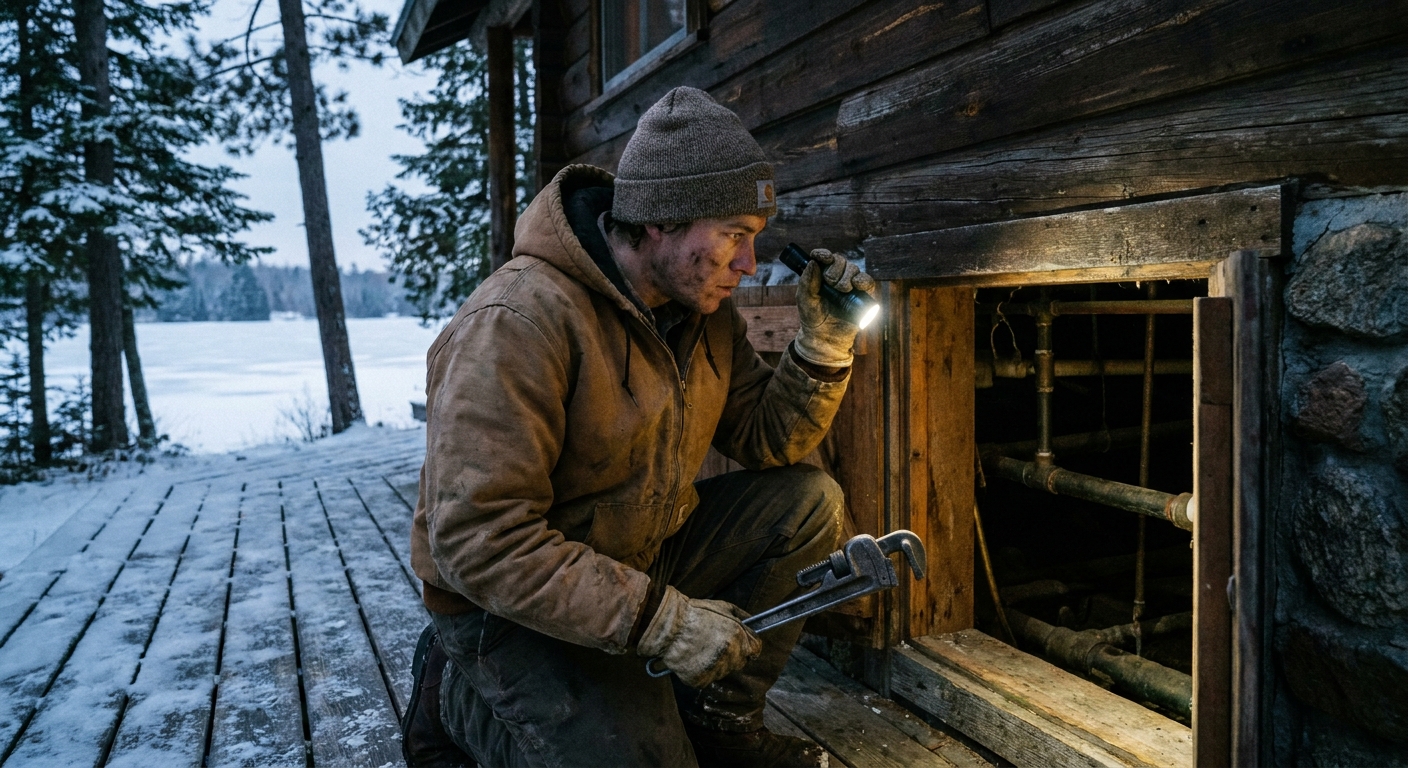
Winterization: Drain System vs. Antifreeze Method
The most important decision every vacation homeowner faces each fall is how to protect their plumbing from freezing temps during months of vacancy. The good news: you don't have to choose one approach — the best strategy combines both.
Draining the System
Shutting off the main water supply and fully draining all pipes, fixtures, and appliances is the gold standard. With no water left in the lines, there's nothing to freeze and nothing to burst. Here's the sequence:
- Turn off the main water shutoff (and well pump if applicable)
- Open all faucets from the top floor down to allow air in and water out
- Flush all toilets repeatedly to empty tanks and bowls
- Drain the water heater by attaching a hose to the drain valve
- Drain exterior hose bibs, irrigation lines, and outdoor showers
- Run a short drain/spin cycle on the washing machine and dishwasher
For complex plumbing layouts, many homeowners hire a plumber to blow out the lines with a compressor at 35–50 PSI, which forces out water trapped in low points and horizontal runs.
Antifreeze as Backup Protection
Draining alone won't protect P-traps, toilet bowls, and floor drains — these fixtures naturally hold standing water. That's where non-toxic RV/marine propylene glycol antifreeze comes in. Pour about 1 gallon into each toilet tank (then flush once so it flows through the trap), and add 1–2 cups down every sink, tub, and shower drain.
Bottom line: Drain the system to remove bulk water, then use RV antifreeze in all traps and toilets as your safety net. For a full step-by-step breakdown, see our plumbing winterization service guide.
Water Heaters & Smart Leak Monitoring for Vacant Homes
Best Water Heater Options for Seasonal Properties
Not all water heaters are created equal when your home sits empty for months. Here's how the main options stack up:
Tankless water heaters are the top choice for most vacation properties. With no large reservoir of water, the catastrophic "came-home-to-a-flooded-house" scenario is far less likely. They use energy only on demand, so you pay nothing to heat water during your absence. Many gas condensing tankless models also qualify for federal 25C energy tax credits, making the higher upfront cost more manageable.
If you have an existing tank heater, the smart move is to shut it off, drain it completely during vacancy, and install a drain pan with a discharge line to minimize damage if a slow leak develops.
Smart Leak Detection for Remote Monitoring
A water leak left undetected in a vacant vacation home can cause $20,000–$100,000+ in damage — especially if mold sets in over weeks or months. Modern smart leak detection systems give you eyes on your property from anywhere.
The top options in 2025 for seasonal homes include:
| System | Best For | Key Feature |
|---|---|---|
| Phyn Plus 2nd Gen | Most vacation homes | Auto main shutoff + whole-home flow analysis |
| Flo by Moen | Smart home integration | Away mode + remote on/off control |
| LeakSmart | Multi-sensor redundancy | Fast mechanical shutoff triggered by any sensor |
| Flume 2 + Smart Valve | DIY / no pipe cutting | Clamp-on meter monitoring, pairs with smart valve |
For remote properties, prioritize systems with automatic main shutoff, a dedicated "vacation/away mode," and freeze-alert capability. Place individual sensors under every sink, near the water heater, behind the washing machine, and under the fridge's ice maker line.
Keep your router and device hub on a small UPS (uninterruptible power supply) so the system stays online during brief power outages. Learn more about the latest smart plumbing systems that can save you money and prevent disasters.
Vacation Rental Plumbing: Special Considerations & Insurance
Plumbing for High-Turnover Vacation Rentals
If your seasonal property doubles as a short-term rental on Airbnb or Vrbo, your plumbing takes on additional wear — and additional legal responsibility. Most jurisdictions require that rentals maintain running hot and cold water at all times, working fixtures and drains, and no leaks that create health or safety hazards.
Between-guest plumbing checks should include:
- Inspect under all sinks, around toilets, and near appliances for moisture
- Confirm all fixtures drain properly — clear slow drains before they worsen
- Verify toilet flappers aren't running (a silent toilet can waste 200+ gallons/day)
- Check caulking around tubs, showers, and toilet bases for cracks or gaps
- Confirm water pressure is in the 40–60 PSI range
Replace rubber washing machine hoses with braided stainless steel lines — they're far more resistant to the sudden blowouts that are a leading cause of vacation rental water damage.
Insurance Requirements for Vacation Home Plumbing
This is where many vacation homeowners get caught off guard. Standard homeowners insurance policies typically cover sudden and accidental water damage — like a pipe that bursts without warning. However, insurers regularly deny or reduce claims for:
- Gradual or slow leaks showing evidence of long-term seepage
- Freeze damage when the home wasn't properly winterized or heated
- Damage discovered weeks later in a vacant property
- Properties insured as owner-occupied but operating as a commercial rental
In 2025, insurers are much stricter about matching policy type to actual use. If you rent your property on platforms like Airbnb or Vrbo, you likely need a short-term rental (STR) policy or endorsement — not a standard second-home policy. Using the wrong policy type gives the insurer grounds to deny a plumbing damage claim entirely.
Keep written maintenance records: plumber invoices, annual inspection notes, photos of plumbing areas, and any guest or cleaning staff messages reporting moisture. This documentation is your best defense in the event of a disputed claim. Understand what's typically covered and excluded in home warranty plumbing coverage as well.
Seasonal Maintenance Checklist & FAQ
Complete Seasonal Plumbing Checklist
Use this checklist each time you open or close your vacation property:
🍂 Fall / Closing Checklist (Winterization)
- Shut off main water supply (and well pump if applicable)
- Open all faucets top-to-bottom to drain supply lines
- Flush all toilets until tanks/bowls are as empty as possible
- Drain water heater completely (turn off power/gas first)
- Blow out irrigation and sprinkler lines with a compressor
- Run drain cycle on washing machine and dishwasher
- Pour RV propylene glycol antifreeze into all toilet bowls, tanks, and P-traps
- Disconnect and drain all garden hoses; install insulated faucet covers
- Insulate exposed pipes in crawlspaces, garages, and exterior walls
- Set thermostat to 50–55°F if power remains on (backup protection)
- Enable "away/vacation mode" on your smart leak detection system
- Label all fixtures: "WINTERIZED — DO NOT USE"
- Confirm with your insurer that your winterization satisfies policy requirements
🌸 Spring / Opening Checklist (De-Winterization)
- Inspect all exposed pipes for cracks or damage before turning water on
- Close all faucets and valves opened during winterization
- Slowly turn the main water supply back on and listen for hissing or drips
- Check each fixture one by one for proper flow and no leaks
- Flush antifreeze from all traps by running water for 2–3 minutes per drain
- Restore power/gas to water heater; allow full reheat before use
- Check water heater anode rod; flush tank to remove sediment
- Test all shut-off valves under sinks and behind toilets for smooth operation
- Inspect washing machine hoses, dishwasher lines, and fridge water line
- Test smoke, CO, and leak detectors; replace batteries as needed
- Disable away mode on smart leak detection and walk the property
For a deeper dive into year-round maintenance tasks, explore our annual plumbing maintenance guide and our guide to seasonal plumbing problems.
Frequently Asked Questions
Should I leave the heat on or shut off the water when I close my vacation home for winter?
Ideally, do both. Shutting off and draining the water supply is the most reliable way to prevent burst pipes — with no water in the lines, there's nothing to freeze. Keeping the thermostat at 50–55°F provides a secondary layer of protection for finishes, furniture, and any residual moisture, and it also protects against heating system failures. If you only do one, draining the system is the more critical step for unoccupied properties.
How often should I check on my vacant vacation home during winter?
Most insurance policies require an interior inspection every 30 to 60 days during vacancy — and some require even more frequent checks. Beyond the insurance requirement, a monthly walkthrough (or having a local property manager or trusted neighbor check in) allows you to catch a slow leak, HVAC failure, or plumbing issue before it becomes a catastrophic loss. Smart leak detectors and remote temperature monitors are excellent supplements but shouldn't replace physical check-ins entirely.
Is tankless always better than a tank water heater for a vacation property?
For most vacation homes — especially those in cold climates or left vacant for months at a time — tankless water heaters are the better choice. They hold virtually no stored water (reducing flood risk dramatically), waste zero energy on standby, and provide instant hot water when you arrive. However, they cost more upfront and require adequate gas lines or electrical capacity. For mild climates or tight budgets, a modern high-efficiency tank heater with a smart shutoff valve and drain pan can still work well.
Can I use regular automotive antifreeze to protect my vacation home's pipes and drains?
No — and this is a critical distinction. Only non-toxic RV/marine propylene glycol antifreeze should ever be used in residential plumbing systems. Automotive antifreeze (ethylene glycol) is highly toxic to humans, pets, and the environment, and it can contaminate your water supply and damage plumbing fixtures. RV propylene glycol antifreeze is specifically formulated to be safe for potable water systems and is available at most hardware and RV supply stores.
What happens if my vacation home has a water leak and I'm not there to catch it?
The financial consequences escalate quickly with time. A minor leak caught within hours might cost $1,000–$3,000 in drying and repairs. A significant leak running for days can produce $3,000–$8,000 in professional water mitigation costs alone, plus $5,000–$15,000+ in structural repairs. A catastrophic leak left for weeks — common in truly vacant properties — can easily exceed $50,000 once mold remediation and rebuilding are factored in. This is exactly why smart leak detectors with automatic main shutoffs and local emergency contacts are so valuable for seasonal properties. Review our full plumbing emergency guide so you're prepared to act fast when you get that alert.