
How a Septic Drain Field Works
A septic drain field (also called a leach field) is the final stage of your home's wastewater treatment process. After solids settle in the septic tank, liquid effluent flows through a distribution box and into a network of perforated pipes buried in gravel-filled trenches, typically 36 to 48 inches deep. As the effluent slowly trickles into the surrounding soil, naturally occurring bacteria break down pathogens, organic matter, and nutrients before the water reaches the groundwater table.
The key to a healthy drain field is soil permeability. A layer called the biomat, a thin gelatinous layer of microbial activity, forms on the walls of the trenches and plays a vital role in treating the effluent. When this system is balanced, it works silently for decades. When it's not, the problems become very visible, very fast.
It's worth noting that at the federal level, EPA does not regulate single family home septic systems. In most states, local health departments issue construction and operating permits to install septic systems under state laws that govern public health protection. That means repair rules, permit requirements, and design standards vary by state and county. Some states are also tightening the rules. Washington State rolled out significant updates to septic compliance rules in 2025 after environmental data showed increasing nitrogen pollution from aging systems, and other coastal and nitrogen-sensitive states are following suit. Always check local regulations before starting work.

Find Trusted & Licensed Plumbers in Ohio
Get matched with companies for your specific needs
Warning Signs Your Drain Field Is Failing
Catching drain field failure early can save you thousands of dollars. Here are the most common symptoms homeowners notice in 2026:
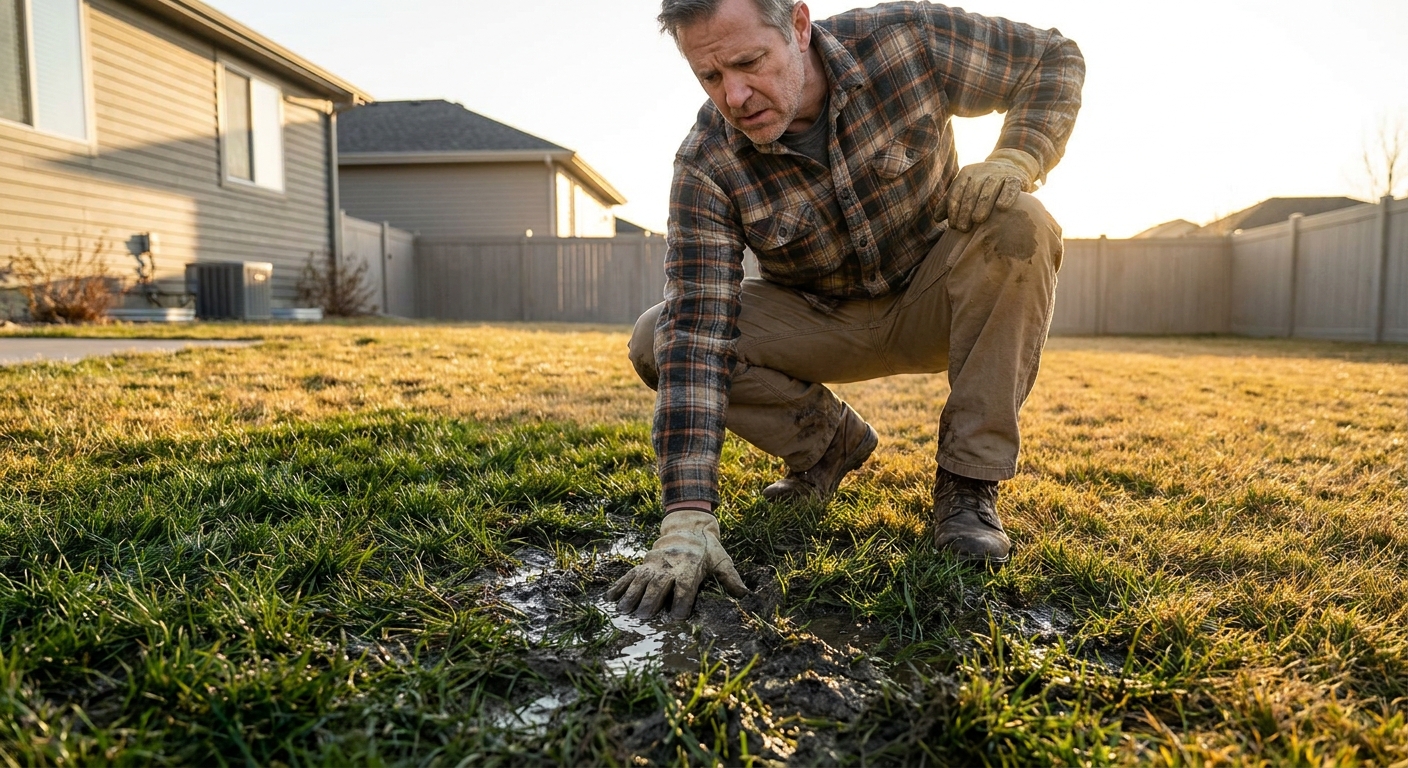
Standing Water or Soggy Grass Over the Field
One of the most obvious signs is pooling water or a persistently wet, spongy area in your yard directly above the drain field, even without recent rainfall. A failing septic system shows warning signs including sewage backups, slow drains throughout the house, foul odors indoors or outdoors, standing water over the drain field, unusually green grass patches, gurgling plumbing sounds, high nitrate levels in well water, and sewage surfacing in the yard. This happens because the saturated soil can no longer absorb effluent, which then rises to the surface.
Sewage Odors Indoors or Outdoors
A foul, rotten egg smell near the drain field or inside the home is a serious warning sign. It typically means wastewater gases are escaping through the soil or backing up into the home's plumbing. If you're smelling something similar inside, check our guide on the sewer gas smell in your house to rule out plumbing venting issues first.
Slow Drains and Gurgling Noises
When multiple fixtures (toilets, sinks, showers) drain slowly at the same time, it's rarely a simple clog. Simultaneous slow drains across the house often indicate the drain field can no longer handle the volume of effluent being sent to it. Gurgling or bubbling sounds in pipes and toilets are common alongside this. If only one fixture is affected, the issue is more likely internal plumbing, which our sewer line repair cost guide can help you diagnose.
Frequent Backups and Well Water Contamination
If sewage keeps backing up into your home even after the tank has been pumped, the field itself is the problem. Homeowners on private wells should also watch for water quality changes. High nitrate levels in well water and sewage surfacing in the yard can indicate that effluent is reaching the groundwater table instead of being properly treated.
What Causes Drain Field Failure?
Understanding the root cause of your drain field's problems determines whether repair or replacement is the right call.
| Cause | What Happens | How to Address It |
|---|---|---|
| Biomat Overgrowth | Microbial layer becomes too thick, blocking soil absorption | Aeration, jetting, rest periods |
| Hydraulic Overload | Too much water overwhelms the field's capacity | Water conservation, repair leaks, spread laundry loads |
| Solid Accumulation | Solids escape the tank and clog soil pores | Increase pumping frequency |
| Root Intrusion | Tree/shrub roots invade and crack pipes | Root removal, pipe replacement |
| Soil Compaction | Heavy vehicles or structures compress the soil | Avoid driving over field; aeration may help |
| Age | System naturally degrades after 20 to 30+ years | Replacement may be unavoidable |
| Poor Soil Conditions | Clay or high water tables limit absorption | System redesign or alternative system type |
Conventional gravity drain fields typically last 20 to 30 years, though clay soils can shorten this to 15 to 25 years while sandy or well-draining soils can extend life to 30 to 40 years or more. The most common early-failure culprit is neglected tank pumping, which lets solids escape into the field.
Repair vs. Replacement: 2026 Options and Costs
Drain Field Repair and Rejuvenation Options
If the damage is isolated or caught early, repair is often the most cost-effective route. Modern drain field rejuvenation (non-replacement) typically costs about $1,000 to $5,000, while a full drain field replacement usually runs $5,000 to $20,000 or more depending on system type and location.
Common 2026 repair approaches include:
- Hydro-jetting the laterals: High-pressure water scours the inside of the perforated pipes to remove silt, sludge, and biomat buildup. Typical 2026 cost is $500 to $1,500 for hydro-jetting of field pipes, with some broader jetting/rejuvenation packages running $1,000 to $3,000 in regional markets.
- Soil aeration / Terralift: Compressed air is injected into the soil to fracture compacted layers. Soil aeration/fracturing runs $1,000 to $3,000, while Terralift generally costs $1,500 to $3,500 as a specialized service.
- Bio-remediation / additives: Beneficial bacteria and enzyme treatments target biomat and organic clogs. Bio-remediation and biological treatments typically cost $500 to $2,000, though they will not fix crushed pipes, severe root intrusion, or fully sealed soil.
- Rest periods: Temporarily diverting wastewater to a secondary field (if available) allows saturated soil to dry out and recover.
- Spot line and distribution box repair: Distribution box repair or replacement typically runs $600 to $1,500, while partial trench repair (1 to 2 lines) runs $2,000 to $5,000.
2026 Drain Field Replacement Costs
When repair isn't enough, full replacement becomes necessary. Here's what to budget in 2026:
| Replacement Type | 2026 Cost Range |
|---|---|
| Drain Field Only (conventional) | $5,000 – $15,000 |
| Mound System (poor drainage soils) | $10,000 – $20,000+ |
| Pressure-Dosed System | $15,000 – $25,000 |
| Sand Filter System | $12,000 – $20,000 |
| Full System (tank + field) | $8,000 – $20,000 |
| Inspection / Perc Test | $150 – $2,000 |
| Permits | $250 – $2,000 |
The average cost to replace a septic drain field in the United States in 2026 is about $8,000 to $12,000, with most typical residential projects landing around that range for a conventional system. Mound systems and alternative designs including drip, aerobic, or sand filter systems generally run $15,000 to $30,000 or more on complex sites.
Note: Labor typically accounts for around 60% of the total replacement cost. Regional pricing, soil conditions, and system type all significantly impact your final bill. Always get 2 to 3 quotes.
Drain Field Lifespan and Maintenance Tips
How Long Does a Drain Field Last?
Most conventional septic drain fields last about 20 to 30 years, though real-world ranges run from 15 up to 40 to 50 years depending on soil, design, usage, and maintenance. Soil type plays a major role. Sandy soils allow better drainage and longer service life, while clay-heavy soils shorten it considerably. Poor installation, excessive water use, and infrequent tank pumping are the biggest culprits behind premature failure.
The Septic Tank / Drain Field Connection
Your drain field's health is directly tied to how well you maintain your septic tank. When solids accumulate past 25% to 50% of the tank's capacity, they begin escaping into the drain field, clogging soil pores and thickening the biomat. The result is a field that fails years before it should. Learn more about proper septic tank pumping schedules and costs to protect your investment.
Recent 2026 cost data shows the national average septic tank pumping cost lands around $425, with most homeowners paying between $290 and $650 for a standard residential pump-out.
Recommended pumping frequency by household size (2026 EPA guidance):
| Household Size | Tank Size | Pumping Frequency |
|---|---|---|
| 1–2 people | 750–1,000 gal | Every 5 years |
| 3 people | 1,000 gal | Every 3 years |
| 4 people | 1,250 gal | Every 3 years |
| 5 people | 1,500 gal | Every 2 years |
| 6+ people / garbage disposal | 1,750+ gal | Every 1–2 years |
Regular pumping is the single most important maintenance task for any septic system. The tank should be pumped every 3 to 5 years to remove accumulated solids before they overflow into the drain field and cause clogging. A $425 pump-out is cheap insurance against a $15,000 field replacement.
Top Maintenance Tips to Extend Drain Field Life
- Pump your septic tank on schedule. This is the single most impactful thing you can do
- Spread out water usage. Avoid running the dishwasher, washing machine, and multiple showers in the same few hours
- Use low-flow fixtures to reduce the volume of water entering the system daily
- Never flush wipes (even "flushable" ones), grease, medications, or harsh chemicals. These kill beneficial bacteria and clog pipes
- Keep the drain field clear. No trees, shrubs, heavy structures, or vehicles over the field area
- Divert surface water. Ensure gutters route water away from the drain field to prevent hydraulic overload
- Address plumbing leaks quickly since even small leaks add gallons per day to your field's load. Our guide on high water bill troubleshooting can help you find hidden leaks fast
If you're troubleshooting adjacent plumbing issues, our guide to common plumbing mistakes homeowners make covers many bad habits that quietly overload septic systems. Homeowners buying property with a septic system should also review the plumbing red flags when house hunting to avoid inheriting an expensive problem.
Frequently Asked Questions
Can a failing drain field be repaired without replacement? Yes, in many cases. If the damage is localized (a clogged pipe, damaged distribution box, or early-stage biomat overgrowth) repair options like hydro-jetting, aeration, Terralift, or rest periods can restore function for $1,000 to $5,000. The key is catching the problem early. Once the soil has been permanently damaged by years of saturation, full replacement is typically the only viable solution.
How much does it cost to replace a septic drain field in 2026? A standard conventional drain field replacement costs between $5,000 and $15,000 in 2026, with a national average of about $8,000 to $12,000. More complex situations, such as poor drainage soils requiring a mound system, can push costs to $20,000 to $30,000 or higher. Getting multiple quotes and starting with a professional inspection ($150 to $500) is always recommended.
Why is there lush green grass growing over my drain field? Unusually green or fast-growing grass over the drain field is a classic sign of a problem. It means nutrient-rich effluent is surfacing or accumulating close to the surface instead of properly percolating deep into the soil. While it might look harmless, it indicates the field is saturated and no longer treating wastewater effectively. This should be evaluated by a septic professional promptly.
How long does a septic drain field last? Most drain fields last between 20 and 30 years, though well-maintained systems in sandy soil can reach 40 to 50 years. Lifespan depends heavily on soil type, installation quality, water usage habits, and how consistently the septic tank is pumped. Neglecting tank pumping is the number one cause of premature drain field failure, as solids escape into the field and permanently clog the soil.
What should I avoid doing to protect my drain field? Never park vehicles, store heavy equipment, or build structures over the drain field since compaction destroys soil permeability. Avoid flushing harsh chemicals, wipes, grease, or medications that disrupt the bacterial balance. Don't plant trees or large shrubs near the field, as roots can invade and crack the pipes. Conserve water daily, and have your tank pumped on a regular schedule based on your household size and usage.