
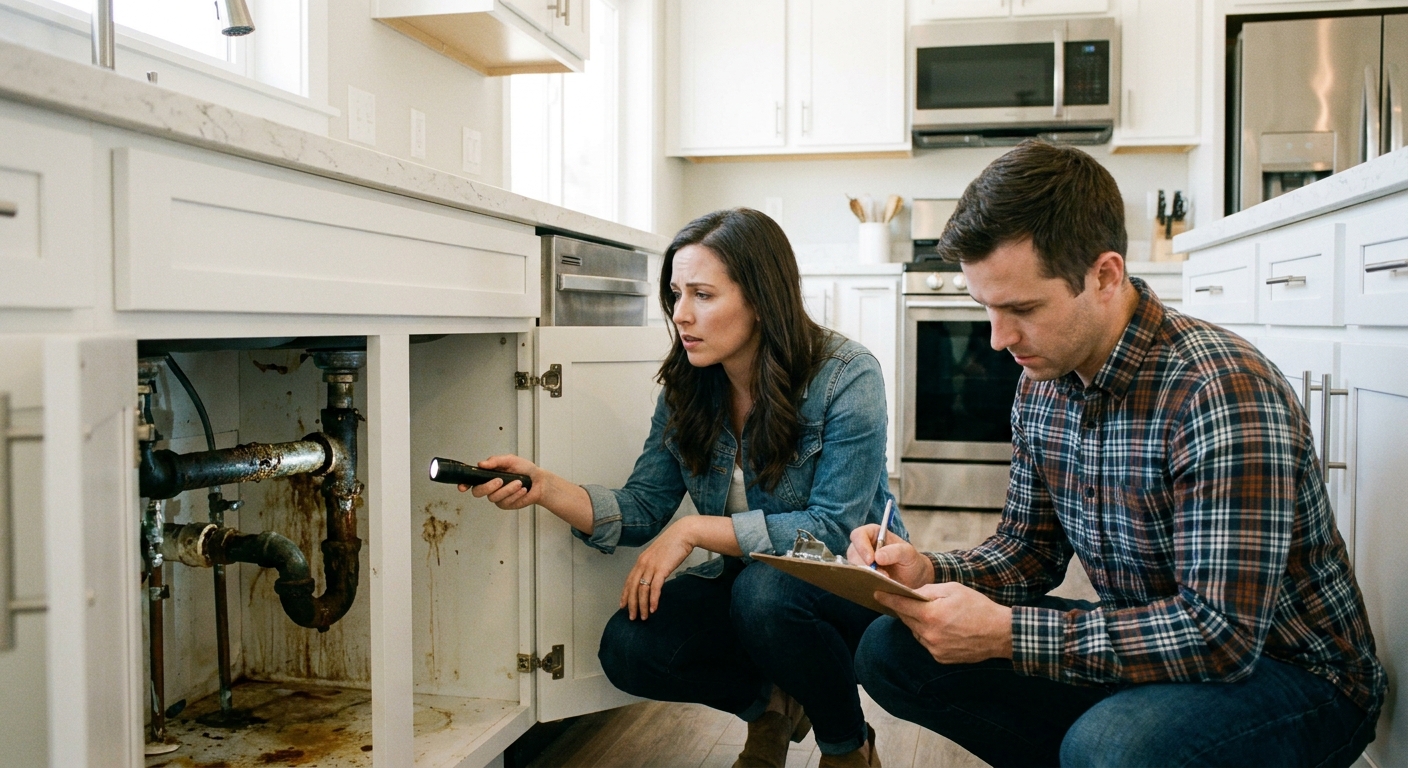
Visible Plumbing Red Flags to Spot on Your Walk-Through
You don't need to be a licensed plumber to catch major warning signs. Many of the costliest plumbing problems leave clues that any attentive buyer can spot during a home tour — if you know where to look.
Water Stains, Damage & Musty Odors
Brown or yellow ceiling stains, bubbling paint, and warped flooring near bathrooms or kitchens are among the most telling signs of an active or past leak. Don't dismiss "old" stains — they can signal a recurring problem that was never fully resolved. A musty or mildew smell in a basement is also a red flag, often pointing to persistent moisture intrusion.
Low Water Pressure & Slow Drains
Turn on faucets and flush toilets while touring. A sharp pressure drop when a toilet is flushed or a second fixture is turned on can indicate corroded galvanized pipes, heavy scale buildup, or a system that simply isn't sized for modern use. Similarly, water that pools in sinks or tubs before draining slowly — especially across multiple fixtures — may point to main sewer line damage, root intrusion, or poor pipe slope. Listen for gurgling sounds, which can also signal a venting problem.
Outdated or Problematic Pipe Materials
Knowing what pipe materials are present is one of the most important things you can do as a buyer. The two biggest red flags are:
- Galvanized steel (common pre-1960s): Corrodes from the inside, causing low pressure, rust-colored water, and eventual leaks. Full re-piping can cost $10,000–$20,000+.
- Polybutylene (PB) pipes (installed from the late 1970s through the mid-1990s): Gray or off-white flexible plastic that is known to fail suddenly. Many insurers charge higher premiums or refuse coverage for homes with PB pipes.
Favorable materials include copper, PEX, and PVC/ABS drains. Learn more about signs of old pipe materials and how they affect your home's long-term health.
Corrosion, DIY Patches & Amateur Work
Check under every sink, in the basement, and around the water heater. Green or white crusty buildup on fittings, rubber-patch repairs, hose clamps, or mismatched pipe materials are signs of deferred maintenance or unpermitted DIY work. These visible shortcuts often hint at bigger hidden problems behind the walls. For more on code-related issues, see our guide on plumbing code violations and what they cost to fix.

Find Trusted & Licensed Plumbers in Ohio
Get matched with companies for your specific needs
Hidden Plumbing Warning Signs Buyers Often Miss
Some of the most expensive plumbing problems are completely invisible during a tour. These are the issues that don't reveal themselves until after you've signed on the dotted line — unless you know what to ask and what to test.
Sewer Line Problems
A standard home inspection almost never includes a sewer camera. Yet sewer line failures — including root intrusion, collapsed pipes, or sagging "bellies" — are among the most expensive plumbing repairs a homeowner can face. A full sewer line replacement can run $3,000–$15,000 or more. Homes built before 1980, or any home with mature trees nearby, should have a dedicated sewer scope inspection before closing.
Watch for these clues that a sewer issue may be lurking:
- Gurgling sounds from toilets or drains
- Foul odors near floor drains or in the basement
- Unusually lush or soggy patches of grass along the sewer route
Water Heater Age & Condition
Most tank-style water heaters last 8–12 years. A unit that's near or past this range is a ticking clock. Look for rust stains running down the side of the tank, moisture around the base, or improper pressure relief valve piping. Replacement costs in 2026 typically range from $900–$3,200 depending on the type and size. A pre-purchase plumbing inspection should always include a thorough water heater evaluation.
Foundation Issues Linked to Plumbing
Persistent slab leaks or long-term sewer leaks can erode the soil beneath a foundation, causing structural shifts. If you notice sticking doors, uneven floors, gaps in trim, or cracks in foundation walls, don't assume they're purely structural — a plumbing leak may be the underlying cause. In slab homes specifically, a hot spot on the floor or an unusually high water bill can point to an active slab leak that can cost $1,000–$4,500+ to repair.
Lack of Maintenance Records
If a seller can't produce receipts, permits, or any service history for the plumbing system, treat that as a risk factor. No documentation could mean unrecorded leaks, unpermitted repairs, or a system that hasn't seen professional attention in decades.
Questions to Ask Sellers + What a Pro Inspection Should Cover
7 Questions Every Buyer Should Ask the Seller
Before making an offer — and certainly before waiving inspection contingencies — ask these targeted questions:
- What year was the plumbing last updated or repiped?
- Has the sewer line ever been scoped, repaired, or cleaned?
- Has the home ever experienced sewer backups, slab leaks, or flooding?
- What pipe materials are used for supply lines and drains?
- How old is the water heater, and has it been serviced?
- Were any plumbing repairs or additions done with permits?
- Has the home ever had recurring clogs, low pressure, or unexplained high water bills?
Vague answers or an inability to provide documentation should increase your level of scrutiny.
What a Professional Plumbing Inspection Should Include
A standard home inspection provides only a surface-level overview. A licensed plumber goes much deeper. Here's what a dedicated plumbing inspection before buying should cover:
Deal-Breakers vs. Negotiable Repairs — Plus Cost Estimates
Not every plumbing problem should kill a deal, but some absolutely should give you serious pause. Here's how to categorize what you find.
Plumbing Cost Estimates at a Glance (2026)
| Problem | Estimated Cost Range |
|---|---|
| Whole-house repiping | $10,000 – $20,000+ |
| Sewer line replacement | $3,000 – $15,000 |
| Slab leak repair | $1,000 – $4,500+ |
| Water heater replacement (tank) | $900 – $3,200 |
| Water heater replacement (tankless) | $1,500 – $5,600 |
| Pipe repair (accessible leak) | $150 – $600 |
| Pipe repair (in-wall or slab) | $400 – $1,500+ |
| Drain snaking / hydro jetting | $100 – $1,000 |
| Toilet repair or replacement | $150 – $600 |
| Faucet repair or replacement | $100 – $350 |
Deal-Breaker Plumbing Issues
These problems warrant either strong negotiation, a substantial price reduction, or walking away entirely:
- Major sewer line failure (collapsed pipe, extensive root intrusion, Orangeburg pipe)
- Widespread galvanized or polybutylene supply lines requiring full repiping
- Active slab leaks causing foundation or structural concerns
- Hidden mold or rot from long-term plumbing leaks
- Non-functional plumbing that will fail lender appraisal requirements
Negotiable Plumbing Repairs
These are legitimate repair requests but rarely deal-killers in a reasonable transaction:
- Aging but functional water heater (ask for a credit)
- Minor sewer root intrusion (request professional cleaning + camera proof)
- Isolated slow drains or non-code drain configurations
- Dripping faucets, running toilets, corroded shutoff valves
- Improper but non-dangerous DIY plumbing work
How to Negotiate Using Plumbing Findings
Get written estimates from a licensed plumber for any major items. Then present a targeted request to the seller — either repairs completed by a licensed professional before closing, a credit at closing equal to the repair estimate (plus a 10–20% buffer), or a price reduction. Focus your negotiation on safety issues and big-ticket items. Asking for credits on every minor flaw can frustrate sellers and jeopardize the deal. For old house plumbing issues, it's especially important to get a full picture before making any concessions.
Your Buyer Walk-Through Plumbing Checklist
Use this checklist on every home tour:
- Check ceilings and walls for water stains (especially below bathrooms and kitchens)
- Open all under-sink cabinets and look for stains, swelling, or odors
- Run all faucets and test water pressure — note any weak or inconsistent flow
- Flush every toilet and rock it gently to check for movement at the base
- Run showers and check for slow drainage or gurgling
- Identify visible pipe materials (galvanized, PB, copper, PEX)
- Inspect the water heater — note age, rust, and moisture around the base
- Check the basement or crawlspace for corrosion, DIY patches, or moisture
- Look at the exterior — soggy soil near the foundation or poor grading are red flags
- Ask about sewer scope history, pipe materials, and any prior water damage
Frequently Asked Questions
What are the biggest plumbing red flags when buying a house?
The most serious red flags include evidence of active or past leaks (water stains, musty odors, soft flooring), outdated pipe materials like galvanized steel or polybutylene, low water pressure across multiple fixtures, and slow or gurgling drains. Any of these can point to expensive repairs ranging from a few hundred to tens of thousands of dollars. A dedicated plumbing inspection before closing is the best way to get a complete picture.
Should I walk away from a house with plumbing issues?
Not necessarily — it depends on the severity and the seller's willingness to negotiate. Minor issues like a dripping faucet or an aging water heater are normal in older homes and can easily be addressed through a credit or price reduction. However, widespread pipe failure, major sewer line problems, or active leaks causing structural damage are serious enough to walk away from if the seller won't meaningfully negotiate.
How much does it cost to fix plumbing problems found during inspection?
Costs vary widely. Small, accessible leaks and fixture repairs typically run $150–$600. A water heater replacement costs $900–$3,200. Whole-house repiping ranges from $10,000–$20,000+, and a full sewer line replacement can cost $3,000–$15,000 or more. Getting licensed plumber estimates in writing gives you real numbers to use in negotiations.
What plumbing questions should I ask when buying a house?
Ask the seller about the age and material of the supply pipes, whether the sewer line has ever been scoped or repaired, the age and condition of the water heater, and whether any plumbing work was done with permits. Also ask whether the home has ever had sewer backups, slab leaks, flooding, or recurring clogs. Lack of documentation is itself a warning sign worth taking seriously.
What does a professional plumbing inspection include that a home inspection doesn't?
A professional plumbing inspection goes far beyond what a general home inspector covers. It typically includes a sewer camera scope, water pressure testing with a gauge, leak detection in walls or the slab, a detailed assessment of pipe materials and condition, and a code compliance review. These add-on inspections cost $250–$1,375 but can uncover problems worth tens of thousands of dollars in hidden repairs.