
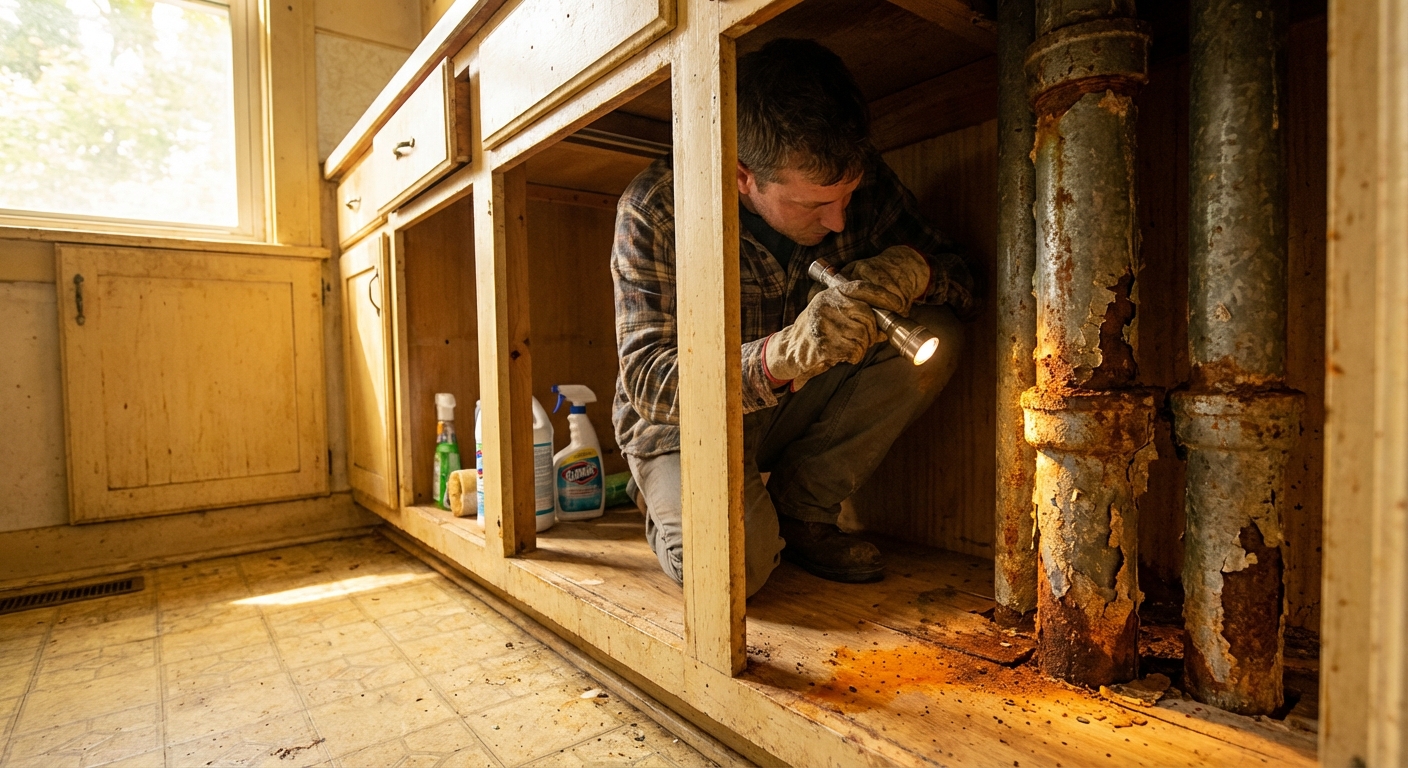
The Most Common Old House Plumbing Problems
Homes built before 1980 carry a certain charm with original hardwood floors, solid construction, and timeless character. But beneath the surface, the plumbing is often a ticking time bomb. Most of these homes were built with galvanized steel pipes, cast iron drain lines, and fixtures that are now decades past their useful life expectancy.
Here's a breakdown of the most common plumbing problems found in older homes:
Galvanized Steel Water Supply Pipes
Galvanized pipes were the standard in American homes from the 1930s through the early 1970s. They were coated in zinc to resist rust, but that coating degrades over time, typically within 40 to 50 years. Once the zinc erodes, the underlying steel begins to rust from the inside out. In areas with aggressive water chemistry, failure can happen in as little as 25 to 30 years.
What happens when galvanized pipes fail:
- Interior corrosion dramatically narrows the pipe diameter, causing low water pressure throughout the home
- Rust particles are released into the water supply, turning tap water brown or yellow
- Corroded sections develop pinhole leaks that can quietly cause major damage behind walls
- Repeated patching becomes a money pit, and full whole-house repiping is almost always more cost-effective
Cast Iron Drain Lines
Cast iron was the go-to material for drain and sewer lines in pre-1980 construction. While cast iron is incredibly durable, it has a lifespan of roughly 50 to 75 years, meaning most original cast iron in older homes is already at or past end of life. Learn more in our cast iron pipe replacement guide.
Common issues include:
- Scaling and buildup that restricts flow and causes recurring clogs
- Rust-through holes that create slow leaks inside walls and under floors
- Root intrusion in underground sections
- Cracked joints from decades of ground movement
Lead Pipes and Lead Solder
Homes built before 1986 may contain lead pipes, lead-lined fixtures, or lead solder connecting copper pipes. Lead was officially banned from plumbing in 1986 under the Safe Drinking Water Act, but millions of homes still contain it. Under the EPA's Lead and Copper Rule Improvements (effective December 29, 2024), water utilities must now identify and replace all lead service lines within 10 years, and the federal lead action level drops from 15 ppb to 10 ppb on November 1, 2027.
Outdated Fixtures and Code Violations
Pre-1980 plumbing wasn't designed around modern water efficiency or today's building codes. Common issues include:
- Toilets that use 3.5 to 7 gallons per flush (modern low-flow toilets use 1.28 gpf)
- Missing pressure-balancing valves in showers, creating dangerous temperature swings
- No backflow prevention on outdoor spigots
- Improper venting that allows sewer gas into the home
- Lack of shutoff valves at individual fixtures
For a full breakdown of typical issues, see our guide on plumbing code compliance violations.

Find Trusted & Licensed Plumbers in Ohio
Get matched with companies for your specific needs
Health and Safety Concerns With Old Pipes
The risks of old plumbing go well beyond inconvenience. Several materials common in pre-1980 homes pose direct health hazards.
Lead Contamination
Lead is a potent neurotoxin with no safe level of exposure, particularly for children and pregnant women. In older homes, lead can enter the water supply through:
- Original lead service lines (now subject to mandatory utility replacement under federal rules)
- Lead solder used on copper pipe joints
- Galvanized pipes connected to lead supply lines (galvanic corrosion can trap and re-release lead)
Bacterial Growth in Corroded Pipes
Rust buildup and pipe corrosion create rough internal surfaces known as tuberculation, which are ideal environments for bacteria including Legionella and E. coli to form biofilms. These bacteria can be inhaled from shower steam or consumed through drinking water, causing respiratory infections and gastrointestinal illness.
Cadmium in Galvanized Pipe Coatings
The zinc coating on galvanized pipes often contained cadmium as an impurity during manufacturing. As the coating erodes over decades, cadmium can leach into drinking water, accumulating in the kidneys and causing long-term organ damage.
Structural and Fire Risk From Hidden Leaks
Old pipes under pressure don't fail gracefully. Pinhole leaks and burst sections can remain hidden for months or years, silently rotting floor joists, drywall, and subfloors. Prolonged moisture exposure also creates a mold and mildew risk, and if water reaches electrical systems, it can become a fire hazard. See our burst pipe repair guide for emergency steps.
Signs Your Old Plumbing Needs Updating and What to Fix First
Knowing the warning signs can help you prioritize repairs before a minor issue turns into a $20,000 disaster. Here's how to read the signals and where to start.
Top Warning Signs
| Warning Sign | What It Likely Means |
|---|---|
| Brown or rusty tap water | Internal corrosion in galvanized supply pipes |
| Low water pressure throughout home | Severe pipe scaling or narrowing |
| Recurring leaks in same area | End-of-life pipe wall thinning |
| Slow drains in multiple fixtures | Cast iron scaling or partial collapse |
| Sewage smell indoors | Failed venting or drain line crack |
| Banging or rattling pipes | Water hammer or loose aging fittings |
| Water stains on ceilings or walls | Hidden active leak |
| Home built before 1980 with original pipes | Pipes are at or past expected lifespan |
For a more detailed walkthrough, see our list of common plumbing mistakes homeowners make that turn minor issues into expensive repairs.
Prioritization: What to Fix First
Not every old plumbing issue demands immediate action, but some absolutely do. Here's how to triage:
1. Active Leaks and Burst Risk. Fix first. Even a slow drip behind a wall causes exponential damage over time.
2. Lead or Contaminated Water. Address immediately, especially in homes with children. This is a non-negotiable health priority.
3. Sewer Backups and Drain Failures. Sewage exposure creates serious sanitation and health hazards.
4. Low Pressure and Rust-Colored Water. These signal broad system-wide deterioration. A full whole-house repiping evaluation is warranted.
5. Outdated Fixtures and Code Issues. Lower urgency but should be addressed during any major plumbing project. Check the plumbing fixture lifespan guide to plan replacements.
Repair vs. Replacement: Costs for Old House Plumbing
Understanding the true cost difference between patching old pipes and replacing them is key to making a smart financial decision.
Partial Repair vs. Whole-House Repiping
Typical Costs in 2026
| Project | Estimated Cost Range |
|---|---|
| Single pipe repair (spot fix) | $150 to $5,800 |
| Galvanized pipe section replacement | $500 to $2,000 |
| Cast iron drain line repair | $800 to $3,500 |
| Full repipe (1,500 sq ft home, PEX) | $4,500 to $8,500 |
| Full repipe (1,500 sq ft home, copper) | $9,000 to $12,000+ |
| Whole-house repipe (national average) | ~$7,500 |
| PEX material (per linear ft) | $0.40 to $2.00 |
| Copper material (per linear ft) | $2.00 to $8.00 |
For a typical 1,500 sq ft home with two bathrooms, expect a PEX whole-house repipe to run $4,500 to $8,500 in 2026, with the national average around $7,500. Copper costs roughly double but offers a 50+ year lifespan. Labor accounts for 40 to 70% of total project costs, making it critical to get multiple quotes. Compare materials further in our corrosion-resistant plumbing pipes guide.
If your home has polybutylene pipes (installed in some homes between 1978 and 1995), those carry their own set of serious failure risks and should be replaced as a priority. For underground supply problems, see our main water line repair guide.
Inspecting Old Plumbing When Buying a Home
Buying an older home without a thorough plumbing inspection is one of the most expensive mistakes a homebuyer can make. Our complete pre-purchase plumbing inspection guide walks through exactly what to expect.
What to Look for During a Walkthrough
Even before hiring an inspector, do your own visual sweep. Use this list of plumbing red flags when house hunting as a starting point:
- Check under every sink for rust stains, moisture, soft cabinet flooring, or visible corrosion on pipes
- Run all faucets and observe water color, pressure, and consistency
- Flush every toilet and check for rocking, staining at the base, or slow drainage
- Look at exposed pipes in the basement or crawl space and note material, color, and any visible rust
- Smell test: sewer gas odors indicate vent or drain line failures
Hire a Specialized Inspector
A standard home inspector will flag obvious issues, but for pre-1980 homes, also consider:
- Plumbing-specific inspector who can identify pipe materials and evaluate system-wide health
- Sewer scope camera inspection. A camera is inserted into the main drain line to detect root intrusion, cracks, and partial collapse. Most cost $125 to $500 when added to a standard home inspection, and they can save you from inheriting a $5,000+ sewer repair
- Water quality test for lead, bacteria, and heavy metals (especially important if the home has original supply pipes)
Red Flags That Should Change Your Offer
| Finding | Recommended Action |
|---|---|
| Original galvanized supply pipes | Request seller credit for full repipe ($4,500 to $15,000) |
| Evidence of lead pipes or solder | Demand water test; price in replacement cost |
| Polybutylene pipes present | Understand the full replacement cost before closing |
| Cast iron drains over 60 years old | Get sewer scope and factor in replacement |
| Multiple active leaks or water stains | Walk away or negotiate heavily |
| No permits for past plumbing work | Verify code compliance before purchase |
Frequently Asked Questions
How long do galvanized pipes last in an old house?
Galvanized steel pipes have a typical lifespan of 40 to 50 years, though in areas with aggressive water chemistry they can fail in as little as 25 to 30 years. Most homes built before 1980 that still have original galvanized supply pipes are already beyond this range. Even if you haven't experienced obvious symptoms yet, corrosion is likely occurring internally. A plumber can assess the condition by measuring your water pressure and inspecting exposed sections.
Is it safe to drink water from a home with galvanized pipes?
It depends on the severity of corrosion and whether the pipes were ever connected to lead service lines or lead solder. Rust-colored water is an obvious warning sign. More concerning is when galvanized pipes are connected to old lead lines, because galvanic corrosion can trap and re-release lead particles into the water supply. If your home has original galvanized or lead plumbing, have your water professionally tested before drinking from the tap.
What's the difference between repiping and replacing just a section of pipe?
A section replacement, or spot repair, addresses one failing section of pipe while leaving the rest of the aging system intact. Whole-house repiping replaces all supply lines from the main shutoff to every fixture. For homes with systemically corroded or aged pipes, spot repairs are typically a short-term fix because the next section will likely fail soon after. Whole-house repiping costs more upfront but eliminates recurring repair calls and often improves home insurability and resale value.
Will old plumbing problems affect my home insurance?
Yes. Many insurance companies are reluctant to insure (or will charge higher premiums for) homes with galvanized, lead, or polybutylene pipes. Some insurers now decline new policies on homes with galvanized plumbing entirely, while others require an inspection and may demand repiping as a condition of coverage. Standard policies typically cover sudden water damage but not gradual leaks from corrosion or the cost of replacing the pipes themselves. Always disclose known plumbing issues and shop multiple carriers, since underwriting standards vary widely.
How do I know if my old house has lead pipes?
Lead pipes are dull gray in color and are soft enough to scratch with a key or coin, revealing shiny silver metal underneath. They're sometimes found as the service line from the street to your home or as short connecting sections near the water meter. Lead solder (used until 1986) appears as a dull, silver-gray material at pipe joints. Under the EPA's 2024 Lead and Copper Rule Improvements, your water utility is now required to inventory all service lines and notify you if yours contains lead, so contact them directly if you're uncertain.