
What Causes Sewer Gas Smell in Your Home?
That rotten egg odor drifting through your home isn't just unpleasant. It's a signal that sewer gases are escaping into your living space. Sewer gas is a mixture of compounds produced by decomposing organic waste in your drain and sewer lines. Understanding the most common culprits is the first step toward eliminating the smell for good.
The Most Common Causes
| Cause | Description | Affected Area |
|---|---|---|
| Dry P-Trap | Water seal evaporated, gas enters freely | Any drain, especially unused ones |
| Broken Wax Ring | Toilet seal fails, gas escapes at base | Toilet / bathroom floor |
| Blocked Vent Pipe | Roof vent clogged, gases back up indoors | Whole house / multiple fixtures |
| Cracked Sewer Pipe | Pipe damage leaks gas into walls/floors | Walls, basement, foundation |
| Biofilm Buildup | Bacteria in drain creates ongoing odor | Kitchen sink, shower drains |
| Loose Cleanout Cap | Missing or damaged cap on sewer line | Basement, utility areas |
Dry P-Traps
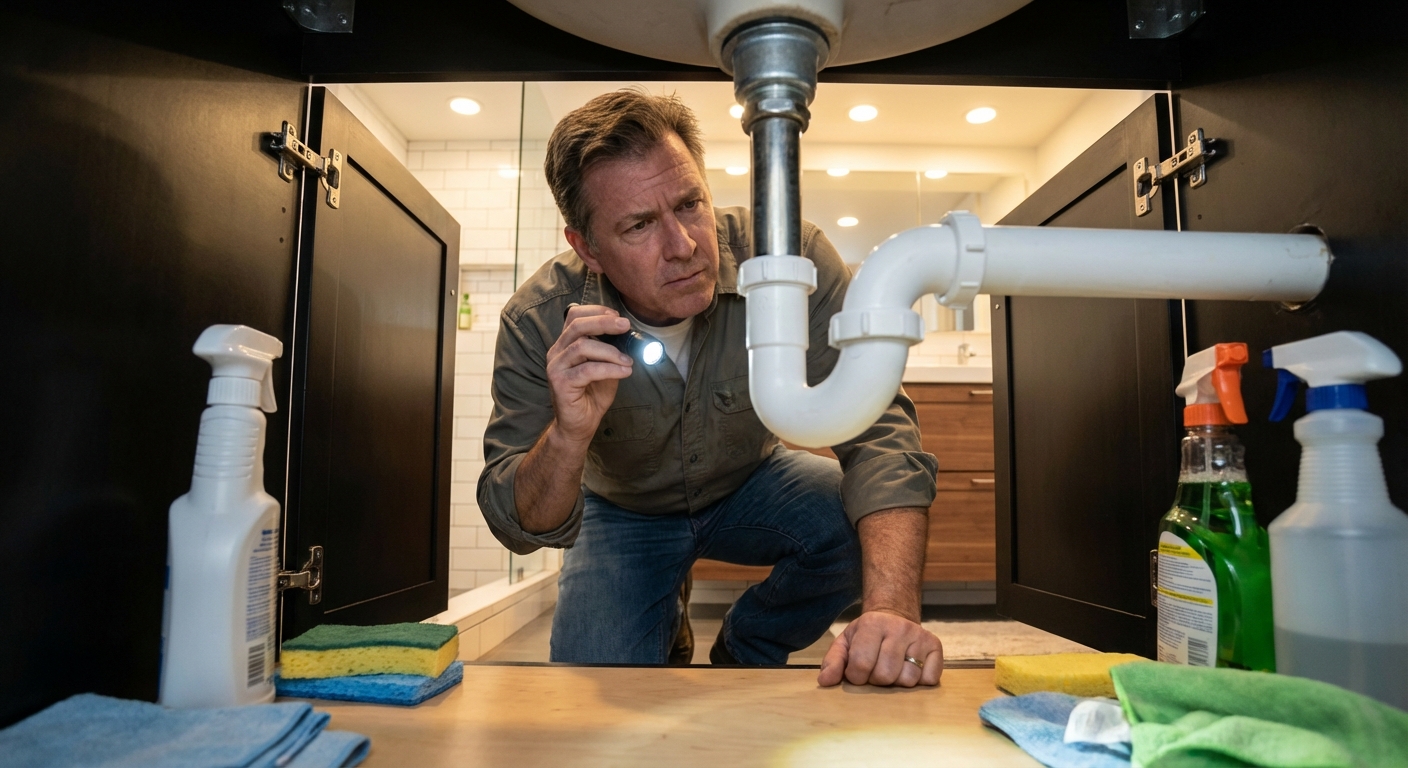
P-traps are the U-shaped pipe sections beneath every sink, shower, and floor drain. They hold a small amount of water that acts as a barrier against sewer gases. When a drain goes unused for weeks or months (think a guest bathroom or basement floor drain), that water evaporates, and sewer gas has a clear path into your home. This is the single most common cause of sewer odor indoors.
Broken or Deteriorated Wax Ring
The wax ring beneath your toilet creates an airtight seal between the toilet base and the drain flange. Over time, or if the toilet wobbles, this seal can crack or compress unevenly, allowing sewer gas to seep out around the toilet base. If the smell is strongest near a specific toilet, a failed wax ring is a strong suspect. For a deeper look, see our guide on broken toilet flange repair.
Blocked or Damaged Vent Pipes
Your plumbing system relies on vent pipes running through the roof to regulate air pressure and expel sewer gases safely outside. Blockages from debris, bird nests, leaves, or ice, as well as cracks or corrosion in the pipe itself, can force gases back down into the home. Gurgling drains and slow drainage often accompany a blocked vent, and are covered in our plumbing noise diagnosis guide.
Cracked or Damaged Sewer Lines
Physical damage to drain or sewer pipes, from shifting soil, tree roots, corrosion, or age, can leak sewer gas directly into walls, floors, or your basement. Cold weather can worsen existing cracks, which is why sewer odors are sometimes more noticeable in winter months. Learn more about sewer line repair options if you suspect a cracked line.

Find Trusted & Licensed Plumbers in Ohio
Get matched with companies for your specific needs
Sewer Gas Health Risks: What You Need to Know
Sewer gas is not just a nuisance. It can be genuinely hazardous. It's a complex mixture of gases including hydrogen sulfide, methane, ammonia, and other toxic and nontoxic gases. Understanding the risks helps you know when to act fast.
What's in Sewer Gas?
| Gas | Odor | Risk Level |
|---|---|---|
| Hydrogen Sulfide (H₂S) | Rotten eggs | High, toxic even at moderate levels |
| Methane (CH₄) | Odorless | High, flammable and displaces oxygen |
| Ammonia (NH₃) | Sharp/pungent | Moderate, respiratory irritant |
| Carbon Dioxide (CO₂) | Odorless | Moderate, asphyxiant at high levels |
Current 2026 Exposure Limits (Hydrogen Sulfide)
Federal agencies set specific thresholds for hydrogen sulfide exposure. These occupational limits are useful benchmarks for understanding when home levels become dangerous:
- OSHA General Industry Ceiling: 20 ppm, with a peak limit of 50 ppm allowed for up to 10 minutes per shift only if no other exposure occurs
- NIOSH Recommended Ceiling: 10 ppm for a 10-minute period, not to be exceeded
- NIOSH IDLH (Immediately Dangerous to Life or Health): 100 ppm, at which point exposure interferes with the ability to escape
Symptoms by Exposure Level
Exposure effects vary significantly depending on concentration and duration:
Inhalation of high concentrations of hydrogen sulfide can produce extremely rapid unconsciousness and death, and after a serious exposure symptoms usually begin immediately. Hydrogen sulfide is particularly deceptive: at high concentrations, it actually deadens your sense of smell, meaning you can no longer detect the gas even as levels become life-threatening. Methane adds an additional hazard because it is highly flammable and can cause explosion risk in enclosed spaces.
Identifying the Source Room by Room
Tracking down a sewer smell requires a systematic approach. Start by identifying where the smell is strongest, then work through each room methodically.
Bathroom
- Toilet base: Rock the toilet gently. Movement or a smell concentrated right at the base usually points to a failed wax ring.
- Sink and shower drains: Rarely used guest bathrooms are prime candidates for dry P-traps. Run water for 30 to 60 seconds and see if the smell improves.
- Shower floor drain: Biofilm from soap scum and hair can cause persistent odors even when the trap has water in it.
Kitchen
- Sink drain: Kitchen sinks are used daily so dry P-traps are less common, but biofilm inside the pipes is a frequent cause of odor here. Also check the sink overflow port near the top of the basin. It can harbor bacteria and gunk.
- Dishwasher drain connection: A poorly connected or missing high-loop drain hose can allow sewer gas to back up through the dishwasher.
Basement & Laundry Room
- Floor drains: These are among the most frequently dry P-traps in a home since they rarely receive water. Pour a gallon of water in and check again in a day.
- Washing machine standpipe: If the standpipe drain isn't properly trapped or the trap dries out, odors can emerge during or after laundry cycles.
- Sewage ejector pit: Homes with basement bathrooms often have an ejector pump pit. A cracked or missing pit cover is a direct source of sewer gas.
Whole-House or Multiple Room Odor
If the smell isn't isolated to one fixture but permeates multiple rooms, the problem is likely systemic, pointing to a blocked vent pipe, a cracked main sewer line, or a compromised septic system. Gurgling sounds from multiple drains reinforce this diagnosis. Our seasonal plumbing problems guide covers weather-related patterns that often accompany these systemic issues.
Why Does Sewer Smell Get Worse After Rain?
Heavy rainfall increases pressure inside municipal sewer systems, which can push sewer gases back through weak points in your home's plumbing. Rain can also siphon water out of P-traps through pressure changes, leaving them dry. If you consistently notice the smell after storms, there's a good chance a deeper structural issue (like a cracked sewer line, a blocked vent, or a loose cleanout cap) is allowing that pressure to find a path into your home.
DIY Fixes, When to Call a Pro & Preventive Maintenance
DIY Fixes You Can Do Today
Many sewer gas situations are easy and free to resolve without any tools at all. If you plan to tackle these yourself, our list of essential plumbing tools covers what to have on hand.
1. Refill Dry P-Traps Run water for 30 to 60 seconds in every drain you haven't used recently. For basement and garage floor drains, pour a full gallon of water directly into the drain. Adding a small amount of mineral oil after filling can slow evaporation and help the seal last longer between uses.
2. Clean Drains with Baking Soda & Vinegar For biofilm-related odors, pour ¼ cup of baking soda into the drain, let it sit for 10 minutes, then follow with one cup of white vinegar. Allow the mixture to fizz for a few minutes, then flush with hot water. This breaks down the bacterial film clinging to pipe walls.
3. Check the Toilet Wax Ring If you suspect the toilet is the source, look for water stains or dampness around the toilet base and try gently rocking the toilet. If it moves or the smell clearly originates there, the wax ring likely needs replacement. This is a manageable DIY project but requires removing and resetting the toilet.
4. Inspect Roof Vent Openings From the ground or safely from a ladder, look at your plumbing vent stack on the roof. Debris, leaves, or a bird nest can block airflow and cause gases to back up. Clear any visible obstructions if it's safe to do so.
5. Consider a Home Sewer Gas Detector (New for 2026) Multi-gas home detectors have become far more accessible in 2025 to 2026. These portable units monitor H₂S, methane, carbon monoxide, and oxygen levels simultaneously, and newer models offer real-time monitoring with audible, visual, and vibrating alarms, plus wireless connectivity for data retrieval. Placing one in a basement or utility room provides an early warning long before you can smell trouble.
When to Call a Professional Plumber
Some sewer gas situations go beyond what a homeowner can address safely or effectively. Call a licensed plumber if:
- The smell persists after all DIY attempts
- The odor comes from multiple fixtures or rooms simultaneously
- You notice slow drains, gurgling sounds, or sewage backups
- There are wet spots, mold growth, or soft flooring near plumbing
- You suspect a cracked sewer line under the slab or in the yard
- Symptoms like headaches or nausea occur while indoors
Professionals use tools like video camera pipe inspections and smoke testing, where non-toxic smoke is pumped into sewer lines to reveal exactly where it escapes, to pinpoint the source precisely. Our detailed plumbing camera inspection guide covers what to expect. Not sure who to hire? See our comparison of plumber vs handyman for plumbing work.
2026 Professional Repair Costs
Updated pricing reflects current 2026 labor and material costs:
| Service | Typical 2026 Cost |
|---|---|
| Plumber diagnostic / service call | $100 to $250 |
| Wax ring replacement | $150 to $450 |
| Standard drain snaking | $150 to $350 |
| Video sewer camera inspection | $125 to $500 |
| Hydro jetting | $350 to $1,000 |
| Sewer line repair (spot) | $1,000 to $4,000 |
| Sewer line replacement | $3,000 to $7,000+ |
| Septic tank pump-out | $300 to $600 |
Emergency plumbing services in 2026 typically cost $150 to $500 per hour, often reflecting a 1.5x to 2x multiplier on standard rates, so schedule non-urgent repairs during regular hours. For more, review our full plumbing service cost guide and tips on getting an accurate plumbing estimate.
Preventive Maintenance to Keep Sewer Gas Out
A consistent maintenance routine is the most cost-effective way to prevent sewer gas problems before they start. See our preventive plumbing maintenance guide for a full home checklist.
| Maintenance Task | Frequency |
|---|---|
| Run water in unused drains | Weekly |
| Flush floor drains with water + mineral oil | Monthly |
| Clean drains with enzymatic cleaner | Monthly |
| Inspect roof vent openings for blockages | Twice yearly |
| Check toilet bases for movement or dampness | Twice yearly |
| Professional drain inspection | Every 3 to 4 years |
| Septic tank pump-out (if applicable) | Every 3 to 5 years |
Consistent habits, especially keeping all P-traps primed with water, eliminate the vast majority of sewer gas incidents before they ever become a noticeable odor. Avoiding common plumbing mistakes also protects against the water damage that often accompanies serious sewer issues.
Frequently Asked Questions
Q: Is sewer gas smell in my house dangerous? Sewer gas is a mixture of compounds including hydrogen sulfide, methane, and ammonia. At low levels, it's primarily an unpleasant nuisance that can cause headaches or nausea. At higher concentrations, however, it poses serious risks including respiratory distress, loss of consciousness, and in extreme cases, death. If the smell is sudden, strong, and accompanied by dizziness or difficulty breathing, evacuate and call emergency services immediately.
Q: What does sewer gas smell like? The signature scent of sewer gas is most often described as a rotten egg smell, which comes from hydrogen sulfide, a gas naturally produced when organic material decomposes in the absence of oxygen. You may also detect a musty, sulfuric, or damp smell depending on what gases are present. The odor can range from faint and occasional to strong and persistent, depending on the severity of the plumbing issue.
Q: Why does my house smell like sewer after it rains? Rain increases pressure inside municipal sewer systems, pushing sewer gases back toward your home through weak points in your plumbing. This pressure can also siphon water out of P-traps, removing the seal that keeps gases out. A sewer smell that consistently appears or worsens after rainstorms is a sign of an underlying plumbing issue, such as a blocked vent, a cracked line, or a dry trap, that needs to be addressed.
Q: Can a dry P-trap really cause that much smell? Yes, a dry P-trap is actually the most common cause of sewer gas smell indoors. The water seal in a P-trap is the primary barrier between your living space and the sewer system. When that water evaporates from an unused drain, there is nothing stopping sewer gas from flowing freely into the room. The good news is this is also the easiest fix: simply run water through the drain for 30 to 60 seconds to restore the seal.
Q: How much does it cost to fix a sewer gas smell professionally in 2026? Costs vary widely depending on the cause. A plumber diagnostic visit typically costs $100 to $250 in 2026, and replacing a wax ring generally runs $150 to $450 including labor. A residential sewer camera inspection commonly costs $125 to $500. If a cracked sewer line or vent pipe replacement is needed, costs can range from $1,000 to $7,000 or more depending on location and extent of the damage. Starting with DIY fixes can help you avoid a service call entirely for simple cases.