
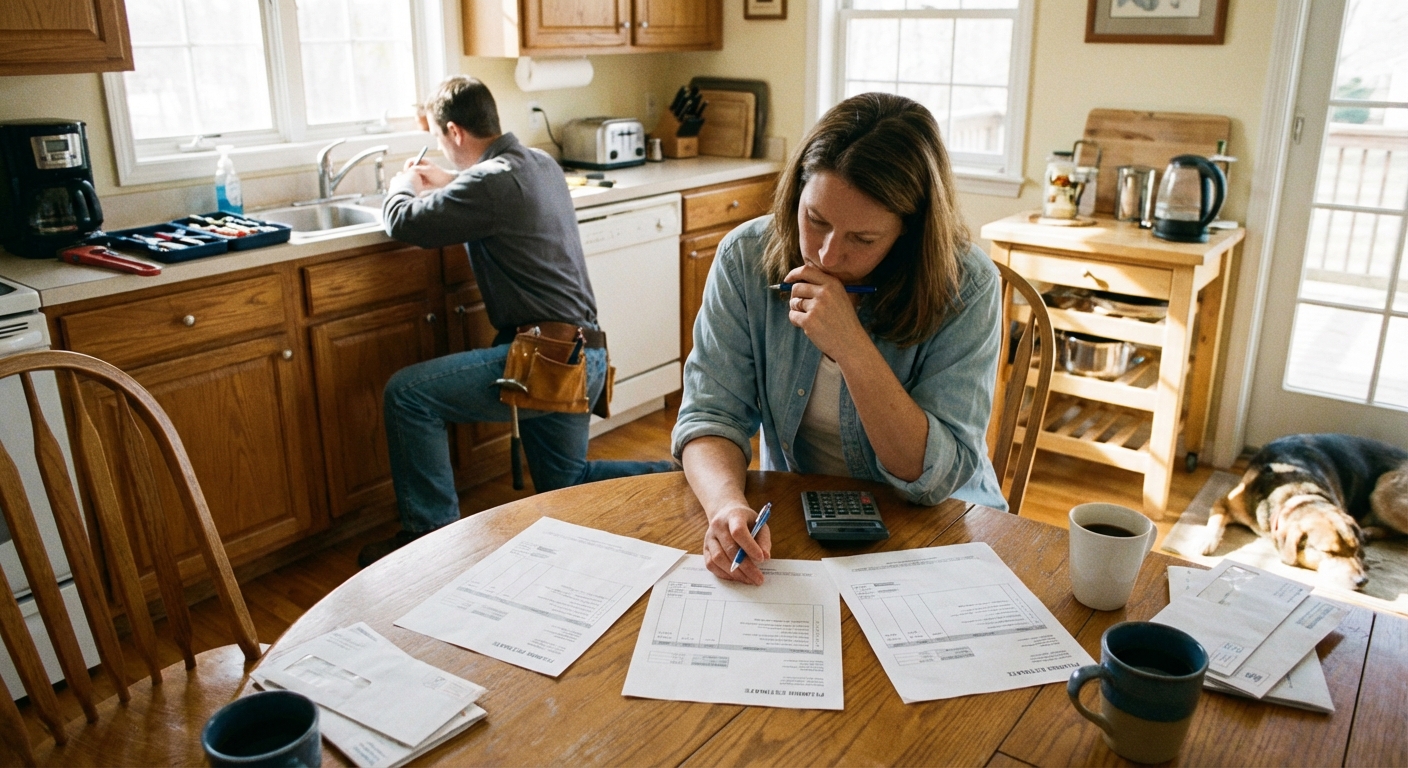
Estimate vs. Quote vs. Bid: Know the Difference
Before you call a plumber, it helps to understand exactly what you're asking for, because estimate, quote, and bid are not the same thing, even though they're often used interchangeably.
- Estimate: An approximate, non-binding projection of costs based on limited information. It can change once the plumber gets a closer look at the job.
- Quote: A detailed, fixed-price offer that becomes legally binding once accepted and signed. Quotes are typically tied to a specific scope of work and often expire within 30 days due to shifting material prices.
- Bid: A competitive, formal submission used when multiple contractors are vying for the same job. It emphasizes scope, timeline, and total cost for easy comparison, and it can become a contract if the homeowner signs it.
| Feature | Estimate | Quote | Bid |
|---|---|---|---|
| Binding? | ❌ No | ✅ Yes (once signed) | ✅ Yes (if selected) |
| Detail Level | Low to Medium | High | High |
| Best For | Early budgeting | Locking in a price | Comparing contractors |
| Risk | May change | Expires if delayed | Scope disputes |
Courts tend to look at the substance of the document, not the title. If your document has a fixed price, line-item detail, and a signature line, that's a quote and not an estimate. Calling it an "estimate" doesn't protect either party from liability once the client signs it.
For smaller jobs, most plumbers will provide a flat-rate quote after a brief assessment. For larger projects like repiping or sewer work, a detailed written estimate broken into line items is the standard, and what you should insist on. Reviewing a full plumbing service cost guide before anyone arrives helps you set realistic expectations, and comparing a plumbing quote vs. estimate side by side helps you spot which document you actually have in hand.

Find Trusted & Licensed Plumbers in Ohio
Get matched with companies for your specific needs
What a Professional Plumbing Estimate Should Include
A well-prepared estimate isn't just a dollar amount on a sticky note. It should give you a complete picture of the project so there are no surprises once the work begins. Here's what every legitimate 2026 plumbing estimate should contain:
Labor
Labor is often the largest single line on a plumbing bill and can account for 40 to 60% of the total on mid-sized jobs. Your estimate should break down:
- Hours or days per task (e.g., rough-in, fixture connections, pressure testing)
- Hourly rate per worker. Most residential plumbers charge $80 to $130 per hour, while commercial plumbing work often starts at $100 or more per hour. The national average lands around $90 per hour, with a broader market range of $45 to $200 per hour.
- Any surcharges for difficult access or job complexity (typically 10 to 20% for slabs, crawlspaces, and tight walls)
- After-hours or emergency premiums (typically 1.5 to 3x standard rates, often reaching $150 to $300 per hour)
Rates vary significantly by region and license level, so it helps to understand plumber hourly rates in 2026 before you start requesting estimates. Master plumbers commonly bill $100 to $200 per hour, with many markets clustering around $135 per hour.
Materials
Materials typically account for the remaining portion of the total project cost. Look for itemized line items including:
- Pipe type and length (PEX, copper, PVC), noting that pipe material can change cost per linear foot by 40 to 60%
- Fittings, valves, connectors, hangers, and fasteners
- Fixtures (toilets, sinks, showers) if applicable, with brand and model listed
- Unit costs and quantities for each item
- Any material markups (most plumbers add 40 to 60% on parts to cover truck stock, warranty risk, and overhead)
Permits & Fees
Permits and miscellaneous fees generally add another layer of cost. The estimate should list:
- Permit fees for residential plumbing typically fall in the $30 to $500 range, with many jurisdictions calculating them based on project valuation or fixture counts. Small fixture jobs often land in the $50 to $150 range once base fees and per-fixture charges are added.
- Plan-review, filing, and inspection fees
- Equipment rental or tool charges
- Service call or diagnostic fee (commonly $50 to $300, sometimes credited toward the final repair)
- Overhead and profit margin
Project Timeline
A phased timeline helps you understand the scope of disruption. A professional estimate should outline stages such as:
- Plan review and material takeoff
- Demo and underground work
- Rough-in (pipes, drains, vents before walls close)
- Trim-out (fixture connections)
- Pressure testing, inspection, and closeout
Average Plumbing Estimate Costs in 2026
Understanding typical price ranges puts you in a stronger position to evaluate any estimate you receive. Here's what homeowners are paying nationally in 2026:
| Job Type | Average Cost Range | Notes |
|---|---|---|
| Drain snaking / clearing | $150–$350 | Simple fixture clogs $100 to $275; main line $175 to $600 |
| Hydro-jetting (severe clogs) | $300–$1,000 | Roots or heavy buildup |
| Leaking pipe repair | $175–$550 | Access and pipe type affect price |
| Main line water leak repair | $600–$4,500 | Excavation adds significantly |
| Burst pipe repair | $1,000–$4,000 | Often includes water damage cleanup |
| Sewer line repair | $1,600–$7,200 | $50 to $250 per linear foot |
| Sewer line replacement | $2,000–$10,000+ | Trenchless methods trend higher |
| Faucet replacement | $150–$450 | Costs vary by fixture type |
| Toilet installation | $250–$800 | Full toilet cost breakdown |
| Tank water heater install | $1,000–$2,500 | Includes unit cost |
| Tankless water heater install | $2,500–$5,600 | Higher upfront, lower long-term |
| Whole-house repipe | $4,000–$20,000+ | Varies by size and material |
| Service call / diagnostic | $50–$300 | Average is $100 to $150 |
| Emergency / after-hours | $150–$350/hr | Usually 1.5 to 3x standard rates plus a $150 to $350 dispatch fee |
For urgent situations where you need help right away, our guide on same-day plumber service covers how to vet a plumber quickly without paying scam rates. For true after-hours crises, see our full breakdown of emergency plumber cost so you know what's fair. If you're dealing with an active leak or burst pipe right now, our plumbing emergency guide walks you through what to do before the plumber arrives.
How to Request, Compare, and Protect Yourself
How to Request Estimates the Right Way
Follow these steps to get the most useful estimates possible:
- Describe the problem clearly. The more detail you provide, the more accurate the initial estimate.
- Request an in-person assessment. Phone guesses are unreliable and often low-ball to hook you in.
- Ask for itemized, written estimates. Line-by-line breakdowns are essential for fair comparison.
- Contact at least 3 licensed plumbers. This gives you a realistic price range and reveals outliers.
- Note the estimate's expiration date. Most quotes expire in 30 days due to fluctuating material costs.
Need help finding and vetting the right professional? Our guide on how to choose a plumber walks you through the entire process step by step.
How to Compare Estimates Fairly
Don't just pick the cheapest number. Use this framework to compare apples to apples:
When reviewing estimates side by side, verify that each one covers the exact same scope of work. Check for differences in pipe materials (PEX vs. copper), fixture brands and models, number of fixtures, and whether finish plumbing is included or quoted separately. Also compare whether each bid handles drywall patching, cleanup, and code-upgrade work the same way. These are the line items most commonly excluded from cheaper estimates.
Pricing structure matters too. Some plumbers use flat-rate books, others bill hourly. Learn the tradeoffs in our guide on flat rate vs. hourly plumbing pricing before you compare. And for smaller repairs, know when to hire a plumber vs. handyman so you're not overpaying for basic fixture work.
Red Flags to Watch For
If a plumber shows up without a branded vehicle, uniform, or verifiable business address, proceed with extreme caution. These are classic signs of a fly-by-night operation.
Questions to Ask Before Accepting an Estimate
Before signing anything, ask every plumber these key questions:
- Are you licensed, bonded, and insured? Request proof, don't just take their word for it.
- What exactly is included and excluded? Clarify scope boundaries to prevent surprise charges.
- Are permits and inspection fees included in this price?
- What pipe materials and fixture brands will you use? And why that choice over alternatives?
- If you cut walls, floors, or ceilings, who patches, paints, and cleans up?
- How are change orders handled? Get the policy in writing before work begins.
- Is the diagnostic fee credited toward the repair if I hire you?
- What warranty do you offer on labor and parts?
- What's the payment schedule? Avoid any contractor demanding full payment upfront.
For older properties, unexpected code upgrades and hidden corrosion often surface mid-project. If the job turns out to be more than you expected, explore your plumbing financing options to spread the cost. A plumbing service plan can also cut future estimate totals by 10 to 20% through member discounts.
Frequently Asked Questions
What is a plumbing estimate and is it binding?
A plumbing estimate is a non-binding, approximate projection of what a plumbing job will cost, based on an initial assessment of the project. Because it's not binding, the final cost can change once the plumber begins work and uncovers additional issues. To protect yourself, always ask for a written quote once the scope of work is fully defined, which becomes legally binding once signed. Even a document labeled "estimate" can function as a contract if it has a fixed price, itemized scope, and signature line.
How many plumbing estimates should I get?
You should get at least three written estimates from licensed plumbers before committing to any job that costs $500 or more. Getting multiple estimates helps you identify the market rate for your specific job and reveals outliers like suspiciously low bids or inflated prices. When comparing, make sure each estimate covers the same scope, materials, and timeline. A gap of 25 to 30% between the lowest and highest estimate often signals that something is missing from one of them.
What's a fair average plumbing estimate cost in 2026?
In 2026, average plumbing costs range from about $150 for a basic drain snaking to $5,600 or more for a tankless water heater installation. Service call and diagnostic fees typically run $50 to $300, and residential hourly rates average around $90 per hour, with most standard jobs falling between $80 and $130 per hour. Major work like main line repair or sewer line replacement can run $1,600 to $10,000 or higher, depending on access and excavation needs. Location, job complexity, and the license level of the plumber all affect your final plumbing estimate cost.
Should I always get a written plumbing estimate?
Yes, always. A verbal estimate offers no legal protection if the final bill doesn't match what you were told. A written estimate documents the agreed-upon scope of work, materials, labor rates, and any exclusions, giving you a paper trail if disputes arise. For any job beyond a minor repair, request a formal written document with itemized line items before any work begins.
What are the biggest hidden charges to watch for in a plumbing estimate?
Common hidden charges include permit fees not listed upfront (typically $30 to $500), drywall repair and paint after walls are opened ($300 to $1,500), surcharges for difficult access like crawl spaces or slab foundations (adding 10 to 20%), code compliance upgrades in older homes, and municipal connection fees on main line work. Some contractors also charge separate diagnostic fees that aren't rolled into the estimate total or credited toward the repair. An itemized written estimate that spells out inclusions and exclusions is your best defense against surprise charges.