
Compare Home Insurance Plans in Ohio
Find your best options in less than 2 minutes



How Solar Panels Affect Your Home Insurance
Installing solar panels is one of the most significant upgrades a homeowner can make, and it directly impacts your homeowners insurance in ways that catch many people off guard. Because solar panels raise your home's overall replacement cost, your existing dwelling coverage limits may no longer be sufficient to fully protect your investment. In 2026, a typical 12 kW residential solar system now costs around $30,505 before incentives (roughly $2.58 per watt), and smaller 8 to 10 kW systems commonly run $18,400 to $35,000 gross, meaning leaving your policy unchanged could leave you seriously underinsured after a covered loss. With the federal Section 25D Residential Clean Energy Credit terminated for expenditures made after December 31, 2025, homeowners now pay the full sticker price out of pocket, which makes protecting that investment with the right insurance even more critical.
The good news: most standard homeowners insurance policies do cover solar panels, but only if you notify your insurer and update your coverage limits. Where the panels are mounted, whether you own or lease them, and what caused the damage all play a role in how a claim is handled. Understanding these details before installation can save you from costly surprises later.
Coverage Basics: How Solar Panels Fit Into Your Policy
How your solar panels are classified under your policy depends largely on how and where they are installed.
Roof-Mounted Panels
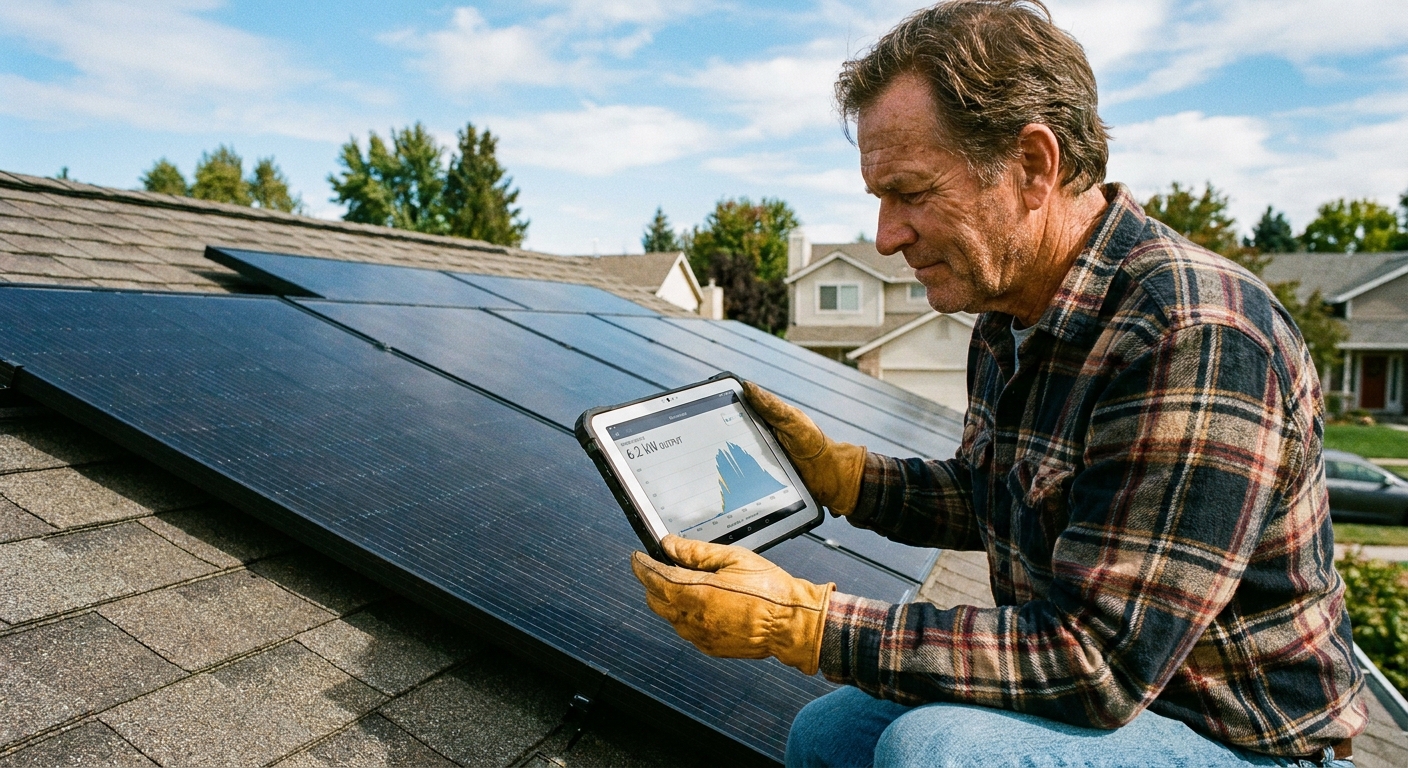
Solar panels that are permanently attached to your roof are treated as part of the home's structure. This means they fall under your dwelling coverage (Coverage A), the same part of your policy that covers your walls, roof, and built-in fixtures. Covered perils typically include fire, lightning, hail, wind, falling objects, vandalism, and theft.
Ground-Mounted Panels
Panels installed on a separate structure in your yard (not attached to the home) are categorized under other structures coverage (Coverage B), which is typically capped at 10% of your dwelling limit. For example, if your home is insured for $350,000, other structures coverage maxes out at $35,000, which may not be enough to cover a full ground-mounted solar array.
Inverter Coverage
Your solar inverter (the device that converts DC energy from the panels into usable AC electricity) is generally covered under the same policy as your panels. Damage from covered perils like lightning, fire, or hail would typically be included. However, inverter failures from manufacturing defects or normal wear and tear are not covered by insurance. Those situations fall under manufacturer warranties, which typically last 10 to 25 years. Consider filing a lightning damage claim if a strike takes out your inverter or connected electronics, since 2025 saw a record $1.65 billion in insured lightning losses across nearly 62,000 claims. A power surge endorsement at $25 to $50 per year can also help close gaps for surge-related inverter damage.

Compare Home Insurance Plans in Ohio
Find your best options in less than 2 minutes
Owned vs. Leased Solar Panels: A Critical Distinction
One of the most important, and most overlooked, factors in solar panel insurance is whether you own or lease your system. The difference determines who is responsible for insuring the equipment and who files a claim if something goes wrong.
Owned Solar Panels
If you purchased your solar system outright or financed it through a loan, you own the panels and they are your responsibility to insure. Your homeowners insurance policy should be updated to reflect their value. This may require increasing your dwelling coverage limit, which will typically raise your annual premium by $120 to $300 per year ($10 to $25 per month), calculated at roughly 1% to 3% of the added coverage. Larger systems in wildfire, hurricane, and hail-belt regions can push that even higher, and one 2026 industry analysis reported average increases as high as $420 per year for solar-equipped homes in the highest-risk zip codes, a 23% jump from 2024 levels.
Learn more about how dwelling coverage limits interact with your solar investment to avoid being underinsured.
Leased Solar Panels
If you are leasing your solar panels through a third-party company, the leasing company owns the equipment, and in most cases, their insurance policy covers the panels themselves. As a homeowner, you are generally not responsible for insuring the hardware. Under 2026 rules following the One Big Beautiful Bill Act, the third-party owner is the taxpayer that claims the 30% Section 48E credit. Projects that began construction on or before the July 4, 2026 safe harbor locked in the longer completion window (as late as December 31, 2029), while new lease and PPA projects starting after that date generally must be placed in service by December 31, 2027 to qualify.
That said, you are still on the hook for:
- Roof damage related to the installation or removal of leased panels
- Electrical damage caused by the panels to your home's systems
- Liability claims if someone is injured due to the panels on your property
- Emergency removal costs if the panels need to come off your roof for repairs

Protect your home with State Farm
Average Rate:
Homeowners who bundle and save with State Farm save an average of $1,000 per year!

You're in Good Hands® with Allstate
Average Rate:
Get comprehensive home coverage with flexible policy options.

Customize your home coverage
Average Rate:
Only pay for the coverage you need with personalized home insurance.

Smart coverage for your home
Average Rate:
Protect what matters most with award-winning home insurance.
Common Claim Scenarios & What's Covered
Understanding how different types of damage are handled can help you respond quickly and correctly when something goes wrong.
Hail Damage to Solar Panels
Hail is one of the most common causes of solar panel damage. Most standard policies cover hail damage for rooftop systems under dwelling coverage. However, in 2026, more insurers (especially in hail-prone states like Texas, Colorado, Oklahoma, Kansas, and Nebraska) are applying percentage-based wind/hail deductibles of 1% to 5% of dwelling coverage instead of a flat dollar deductible. In Texas specifically, a 2% wind/hail deductible has become the de facto 2026 standard across most of the state, with some West Texas carriers moving to 3%. In hurricane-exposed states like Florida and Louisiana, wind/hail deductibles can run 5% to 10%, and California FAIR Plan policies now cover solar at actual cash value only. Always confirm your policy's hail coverage before and after installation.
Learn more about how hail damage claims work under standard home insurance policies, and how climate-related risks are reshaping deductibles nationwide. In Colorado home insurance specifically, hail accounts for 50 to 60% of all claims, and wind and hail deductible rules can push out-of-pocket costs above $7,000 on a typical policy.
Roof Leaks Caused by Solar Installation
If solar panels are improperly installed and cause a roof leak, your homeowners insurance will likely not cover the damage. Most policies exclude losses caused by faulty workmanship or improper installation, and this is one of the top reasons for claim denial in a market where the 13 largest carriers now close nearly 48% of claims without payment. Your best option is to file a claim against the solar installer's liability insurance, which is exactly why you should obtain a Certificate of Insurance from your contractor before work begins.
Understanding when home insurance covers roof replacement is essential for solar panel homeowners, especially if your roof is close to the 15 to 20-year age threshold that many carriers now enforce.
Roof Access During Repairs
If your roof needs to be repaired or replaced after a storm, your insurer may require the solar panels to be temporarily removed and reinstalled. In 2026, this detach-and-reset cost typically runs $275 to $400 per panel on a standard roof, adding up to about $2,800 to $6,000 for a typical 15 to 20-panel system, according to industry benchmarks and installer surveys. Complex roofs, tile roofing, or steep pitches can push per-panel costs to $500 or more (some markets like Minnesota report $350 to $850 per panel), and total project cost can exceed $8,000. Whether it's covered depends on your policy, so check if your insurer includes this in your dwelling coverage or if you need an endorsement. Homeowners with older roofs should plan for this cost proactively, and roof age rules can also affect whether reinstallation is covered at replacement cost or actual cash value.
Fire Involving Solar Panels
Fires involving solar panels, whether caused by an electrical fault, lightning strike, or inverter malfunction, are generally covered under standard fire and smoke perils. This includes both damage to the panels themselves and any resulting structural damage to your home.
Documentation Checklist for Solar Panel Claims
| Document | Why It's Needed |
|---|---|
| Photos/videos of damage | Visual evidence before cleanup begins |
| Energy production logs | Proves performance loss tied to the event |
| Weather reports | Confirms covered peril (e.g., hailstorm date/size) |
| Professional inspection report | Links damage to covered cause, not defect |
| Original purchase invoice | Confirms system value for replacement cost |
| Policy documents | Identifies covered perils and deductible amounts |
Because home insurance underwriting now leans heavily on AI and aerial imagery, keeping strong documentation is more important than ever to avoid a claim denial tied to maintenance.
Notifying Your Insurer: What You Need to Do
Failing to notify your insurance company about a solar installation is one of the most costly mistakes homeowners make. If you never update your policy, your insurer has no obligation to cover the panels, and you could face a claim denial after a loss.
Notify Your Insurer Before Installation
Most insurers strongly recommend contacting your agent before signing your installation contract. This gives you time to:
- Confirm your current policy covers solar panels
- Determine whether you need to increase your dwelling coverage limit
- Ask about any exclusions (especially for hail/wind in your region)
- Obtain the installer's Certificate of Insurance
Should You Increase Dwelling Coverage or Schedule Panels Separately?
For most homeowners with owned panels, the simplest and most cost-effective approach is to increase your dwelling coverage limit to account for the added replacement value of the solar system. Premium increases are typically calculated at 1% to 3% of the added coverage amount per year. For example, adding $30,000 in dwelling coverage at 2% adds roughly $600 per year.
However, if you have a large or high-value system (over $40,000), or if your insurer has exclusions for solar-related perils, scheduling the panels as a separate endorsement may provide broader protection and a lower deductible specific to the panels.
Typical Premium Increases (2026)
| System Value | Estimated Annual Premium Increase |
|---|---|
| Under $17,000 (6 kW) | $95 – $180/year |
| $17,000 – $26,000 (6–8 kW) | $120 – $215/year |
| $26,000 – $33,000 (8–10 kW) | $145 – $265/year |
| $33,000 – $40,000+ (12 kW+) | $180 – $300+/year |
Frequently Asked Questions
Do solar panels automatically get covered by homeowners insurance?
Not automatically. You must notify your insurer after installation and confirm that your coverage limits are high enough to include the value of the panels. If your existing dwelling limit already exceeds your home's replacement cost plus the panel value, you may not need to make changes. However, most homeowners will need to increase their coverage limit to avoid being underinsured.
Will my home insurance premium go up if I add solar panels?
Yes, in most cases. Because solar panels increase your home's replacement cost, you will likely need to raise your dwelling coverage limit, which raises your premium. The typical 2026 increase ranges from $120 to $300 per year, calculated at roughly 1% to 3% of the added coverage amount. Larger systems and homes in hail-prone or hurricane-exposed states can push premiums higher, with some 2026 industry data showing averages of $420 per year in the highest-risk zip codes.
Are leased solar panels covered by my homeowners insurance?
Generally, no, and that's actually in your favor. When you lease solar panels, the leasing company owns the equipment and is responsible for insuring it. However, you are still responsible for any roof damage, electrical damage, or liability claims connected to the panels on your property. Always review your lease agreement and share it with your insurance agent.
What happens if hail damages my solar panels?
Hail damage to rooftop-mounted solar panels is typically covered under your dwelling coverage as a standard peril. However, in 2026, more insurers (particularly in Texas, Colorado, Oklahoma, Kansas, and Nebraska) are applying percentage-based wind/hail deductibles of 1% to 5% of dwelling coverage rather than a flat dollar amount, with 2% now the de facto standard in Texas. Check your policy before installation and ask your insurer specifically about hail coverage, then file with photos, a professional inspection report, and weather data confirming the event.
Does homeowners insurance cover the cost to remove and reinstall solar panels for roof repairs?
This depends on your insurer and policy language. Some policies include the cost of panel removal and reinstallation as part of a covered roof repair claim, while others do not. Given that this detach-and-reset cost typically runs $2,800 to $6,000 in 2026 (roughly $275 to $400 per panel on a standard roof), it's worth asking your insurer directly or looking for a policy endorsement that explicitly covers this scenario.