
Compare Home Insurance Plans in Ohio
Find your best options in less than 2 minutes


Who Offers Green Home Insurance Discounts in 2026?
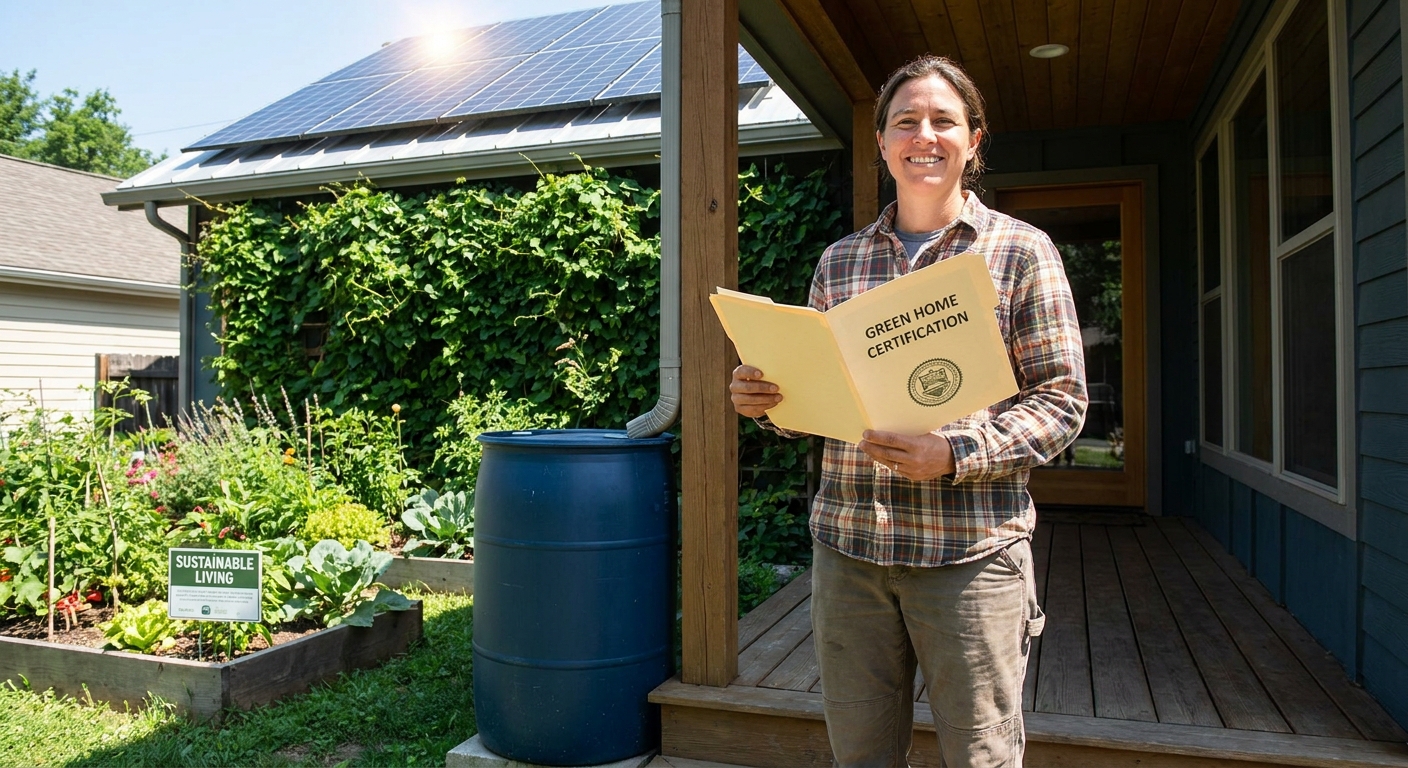
Not every insurer rewards eco-friendly homeowners, but a growing number do, and the savings can add up faster than you might expect. If your home carries a recognized green certification or features qualifying upgrades, you could be leaving money on the table every year.
The Top Carriers for Green Home Discounts
Here's how the most commonly cited insurers approach green home savings in 2026:
| Insurer | Green Discount | Notable Eco Feature |
|---|---|---|
| Travelers | Up to 5% for LEED-certified homes | Explicit "Green Home" discount plus green rebuild endorsement |
| Farmers | Around 5% (varies by state) | Eco-Rebuild endorsement, ~$25/year, up to $25,000 extra coverage |
| Fireman's Fund | 5% for LEED-certified homes | Green Upgrade add-on ($70 per $1M of dwelling value) |
| Kin Insurance | 5% for LEED homes (California) | State-specific green program |
| Chubb | Coverage-based (Masterpiece GreenWise) | GreenWise Upgrade up to 100% of dwelling value |
| Nationwide / Allstate / The Hartford / Liberty Mutual | Not publicly listed | Green rebuilding coverage or reimbursement |
Travelers remains one of the most explicitly recognized carriers for LEED-related green home perks, and its 5% discount applies to homes certified at any LEED level (Certified, Silver, Gold, or Platinum). Fireman's Fund was one of the first insurers to launch an eco-friendly home program and continues to offer a 5% discount for LEED-certified homes, historically saving policyholders around $100 per year. Farmers is best known for its Eco-Rebuild endorsement, an affordable add-on rather than a flat premium discount, that provides up to $25,000 in extra costs for green rebuilding. Chubb's GreenWise Upgrade Coverage helps policyholders renovate or rebuild using energy-efficient appliances and eco-friendly materials, with limits available up to 10%, 25%, 50%, or 100% of your home's insured value.
What Discount Percentage Can You Expect?
Explicit green home discounts in 2026 are almost uniformly around 5% of your annual premium at carriers like Travelers, Farmers, Fireman's Fund, and Kin. Broader "green policyholder" or resilience programs can push combined savings toward 5% to 10%, but those wider ranges typically require stacking multiple credits (safety devices, impact-resistant roofing, wildfire hardening) on top of a base green discount. Recent state-level activity in Arizona, for example, has documented premium discounts of up to 10% for buildings certified by ENERGY STAR or LEED.
With the national average homeowners premium projected to reach roughly $3,057 per year in 2026 (up 4% from 2025 and 46% since 2021, nearly three times the rate of inflation), a 5% discount saves roughly $150 annually. Meaningful on its own, but far more impactful when combined with other discounts. Learn more about ways to lower your home insurance premium to compound your savings.

Compare Home Insurance Plans in Ohio
Find your best options in less than 2 minutes
What Qualifies for a Green Home Insurance Discount?
Not all eco-friendly features are treated equally by insurers. Understanding what qualifies helps you make targeted improvements that pay off both in energy savings and lower premiums.
Common Qualifying Features
LEED Certification
The Leadership in Energy and Environmental Design (LEED) certification from the U.S. Green Building Council remains the gold standard for green home discounts. There are four levels (Certified, Silver, Gold, and Platinum), and a home must earn at least 40 points across categories like energy, water efficiency, and indoor environmental quality to qualify. Most carriers offering LEED discounts apply the same 5% credit regardless of tier.
ENERGY STAR Appliances and Certification
Homes or appliances certified under the EPA's ENERGY STAR program are frequently recognized by insurers. ENERGY STAR appliances alone may not always trigger a standalone discount, but they can contribute to a broader green home discount or qualify you for extra funds under a green rebuild endorsement after a loss.
Smart Home Devices
Smart home technology, including water leak detectors, smart thermostats, and energy monitoring systems, can qualify for discounts, though these are often categorized as safety or risk-reduction discounts rather than strictly "green" credits. In 2026, insurers increasingly use IoT integrations to reward verified use of leak sensors, smart shutoff valves, and energy monitors with ongoing premium credits. Programs like Nationwide's Ting (electrical fire prevention) illustrate how carriers now bundle IoT devices with mitigation incentives. Learn more about smart home insurance discounts and how they can complement green home savings.

Protect your home with State Farm
Average Rate:
Homeowners who bundle and save with State Farm save an average of $1,000 per year!

You're in Good Hands® with Allstate
Average Rate:
Get comprehensive home coverage with flexible policy options.

Customize your home coverage
Average Rate:
Only pay for the coverage you need with personalized home insurance.
Smart coverage for your home
Average Rate:
Protect what matters most with award-winning home insurance.
Green Rebuild Endorsements: Coverage for Eco-Friendly Rebuilding
One of the most valuable and most overlooked benefits of eco-friendly home insurance is the green rebuild endorsement (also called green upgrade, eco-rebuild, or eco-friendly material replacement coverage). This is a policy add-on that allows you to repair or rebuild with sustainable, energy-efficient materials after a covered loss, even if your original home didn't have all of those features.
How Green Rebuild Endorsements Work
Without an endorsement, a standard homeowners policy pays to restore your home using like kind and quality materials, not necessarily eco-friendly ones. With a green rebuild endorsement, the policy covers the additional cost of upgrading to greener alternatives, typically providing 10% to 25% extra coverage above your standard dwelling limit. Some high-value policies (like Chubb Masterpiece GreenWise) allow limits up to 50% or even 100% of your home's insured value.
What these endorsements typically cover:
- Eco-friendly building materials including recycled-content wood, low-VOC paints, and high-R-value insulation
- ENERGY STAR-rated systems such as windows, doors, HVAC, and qualifying appliances damaged in the loss
- Water-saving fixtures like low-flow toilets and WaterSense-labeled faucets
- Green certification fees to re-certify your home to LEED or ENERGY STAR after repairs
- Debris recycling to responsibly sort and dispose of construction waste
Farmers' Eco-Rebuild endorsement typically costs around $25 per year (or 2% of the annual premium) and pays extra after a covered loss to replace damaged items with ENERGY STAR appliances plus eco-friendly debris recycling, providing up to $25,000 in extra green rebuilding costs. Fireman's Fund's Green Upgrade costs about $70 per year per $1 million of insured dwelling value. Liberty Mutual, Nationwide, and The Hartford now offer similar green rebuilding endorsements as well. Realistically, expect $25 to $100+ annually depending on carrier, coverage limit, and how much extra green coverage you select.
Solar Panels and Geothermal: How They Affect Coverage
Rooftop solar panels that are permanently attached to your home are generally treated as part of the dwelling and covered under Coverage A, meaning no separate solar policy is needed. However, because a typical residential solar system adds $20,000 to $40,000 in value (with average 2026 installations costing around $30,505), you should increase your Coverage A limit by the full installed cost to avoid being underinsured in a total loss. Ground-mounted systems typically fall under Coverage B (Other Structures) and may only be covered up to 10% of your dwelling limit unless you increase it. Learn more about solar panel home insurance coverage rules and hail restrictions in high-risk states.
Also be aware of coverage gaps that standard homeowners policies rarely address, including gradual panel performance degradation, inverter and microinverter failures, and the cost to remove and reinstall panels during a roof replacement (typically $250 to $350 per panel in 2026). If any of these matter to you, consider a supplemental equipment policy or extended manufacturer warranty. Homeowners in Texas, Colorado, Nebraska, Kansas, and Oklahoma should also verify hail coverage, since these states account for about 85% of solar hail losses and many carriers now restrict panel coverage there.
Geothermal systems are generally covered as part of your home's HVAC and plumbing infrastructure. Their above-average replacement cost (often $20,000 to $40,000 or more) should also be reflected in your dwelling replacement cost estimate. Consider adding equipment breakdown coverage to protect against sudden mechanical failure, which is typically excluded from standard homeowners policies.
Bottom line: Green homes often cost slightly more to insure, but this is due to higher replacement values, not a penalty for being eco-friendly. The premium increase is usually modest and far outweighed by long-term energy savings.
Proving Your Green Status: Documentation Checklist
To qualify for green home insurance discounts or endorsements, you'll need to provide documented proof of your certifications and upgrades. Insurers most commonly ask for:
What to Gather Before Contacting Your Insurer
| Document | What It Proves |
|---|---|
| LEED Certificate (PDF from USGBC/GBCI) | Certification level, address, and project ID |
| LEED Scorecard / Rating Summary | Points earned in each sustainability category |
| ENERGY STAR Certificate or HERS Report | Home or appliance energy performance rating |
| Contractor Invoices | Solar, HVAC, insulation, or window installation costs |
| Equipment Spec Sheets | SEER/AFUE ratings, panel wattage, system efficiency specs |
| Commissioning or Inspection Reports | Final building inspection, solar interconnection approval |
| Manufacturer Warranty Documents | Solar panels, geothermal systems, specialty roofing |
2026 Trends in Green Home Insurance
The insurance industry is rapidly adapting to sustainable homes. Key trends to watch this year include:
- AI-assisted underwriting where insurers use satellite imagery, drones, permit data, and predictive analytics to detect solar panels, roof type, EV chargers, and other green features (even without an inspection). AI-driven eco-friendly home insurance platforms were commercialized in late 2025 and are being expanded by major carriers this year.
- Climate-ready rebuild endorsements that combine green materials with resilience upgrades like impact-resistant roofing and fire-resistant siding
- State-mandated mitigation discounts, with at least 18 states in 2026 introducing legislation that requires insurers to share risk-reduction information with policyholders and mandate discounts for household risk reduction
- IoT and performance-based pricing where verified use of leak sensors, smart shutoff valves, and energy monitors earns ongoing premium credits, with insurers integrating IoT data directly into underwriting rather than treating it as a marketing add-on
- Dedicated battery storage and EV charger coverage as home batteries and EV infrastructure move mainstream, with insurers introducing new safety requirements and coverage limits
- Low-carbon material coverage for mass timber, hempcrete, and similar novel building materials that were previously hard to insure due to limited loss data
As home insurance premiums continue to climb (Insurify projects a 4% national increase to around $3,057 in 2026, on top of a 46% cumulative jump since 2021), green home discounts and eco-friendly endorsements are becoming a meaningful tool for cost-conscious homeowners who've already invested in sustainability. For a broader view of how homeowners insurance works, including the 80% rule and coverage types, review our complete guide.
Frequently Asked Questions
What is a green home insurance discount?
A green home insurance discount is a reduction in your homeowners insurance premium offered by certain insurers when your home meets recognized eco-friendly standards, such as LEED certification or ENERGY STAR ratings. In 2026, most explicit green discounts land around 5% of your annual premium, with broader eco-plus-resilience programs sometimes reaching 10%. Eligibility and availability vary by insurer and state, so it's important to ask your carrier directly. When combined with other discounts, total savings can be substantially higher.
Does LEED certification lower homeowners insurance?
Yes, several insurers offer discounts specifically for LEED-certified homes, with savings almost uniformly around 5% off your annual premium at Travelers, Farmers, Fireman's Fund, and Kin (in California). The LEED certificate issued by the U.S. Green Building Council is the primary document you'll need to present to your insurer. Not all carriers offer this discount in all states, so confirm availability when shopping for coverage. Travelers remains one of the most recognized carriers for explicitly offering a LEED-based home insurance discount.
Are solar panels covered by standard homeowners insurance?
Yes, rooftop solar panels that are permanently attached to your home are generally covered under your standard homeowners policy as part of Coverage A (dwelling). You do not typically need a separate solar policy. However, you should notify your insurer after installation and increase your Coverage A limit by the full installed cost ($20,000 to $40,000 for a typical 2026 system) to reflect the added replacement value. Ground-mounted panels usually fall under Coverage B (Other Structures), which is often capped at 10% of your dwelling limit.
What is a green rebuild endorsement and is it worth it?
A green rebuild endorsement is an optional add-on that covers the extra cost of rebuilding with eco-friendly, energy-efficient materials and systems after a covered loss. It typically adds 10% to 25% of extra coverage above your standard dwelling limit and can cover LEED or ENERGY STAR re-certification fees. The cost is generally low, often around $25 per year at Farmers or roughly $70 per $1 million of dwelling value at Fireman's Fund. For homeowners who have already invested significantly in green features, it's usually well worth adding.
Do green homes cost more to insure?
Green homes can cost slightly more to insure, but this is because sustainable features like solar panels, geothermal systems, and specialty building materials increase your home's replacement value, not because insurers penalize eco-friendly construction. To avoid being underinsured, make sure your dwelling coverage limit accurately reflects the full replacement cost of all your green upgrades. Available green home discounts (around 5%) can partially or fully offset the premium increase from a higher coverage limit. Shopping around and comparing carriers is the best way to find the right balance of coverage and cost.