
Compare Home Insurance Plans in Ohio
Find your best options in less than 2 minutes



What Are Home Insurance Mitigation Credits?
Home insurance mitigation credits are premium discounts insurers reward you for making structural upgrades or safety improvements that reduce the likelihood or severity of a covered loss. Rather than simply penalizing homeowners in high-risk areas with higher rates, many insurers now offer meaningful financial incentives for proactive protection. The more you harden your home against the risks most relevant to your region (hurricanes, wildfires, earthquakes, or water damage), the more you can potentially save.
Many of these upgrades can lower your premium by 10% to 35%, and they often pay for themselves within 3 to 5 years through cumulative savings. In high-risk hurricane zones, a FORTIFIED Gold designation can reduce the wind portion of your premium by up to 55% in states like Alabama and Mississippi, while Louisiana insurers routinely offer 20% to 52% off the wind and hail portion of premiums for FORTIFIED-designated homes.
Most mitigation discounts are applied specifically to the peril they address. A hurricane shutter discount reduces the wind/hurricane portion of your premium, not necessarily your full policy cost. That said, even targeted savings can translate to hundreds of dollars annually. If you're already dealing with rising home insurance costs, mitigation is one of the most powerful tools at your disposal.

Compare Home Insurance Plans in Ohio
Find your best options in less than 2 minutes
Types of Mitigation & How Much You Can Save
Here's a breakdown of the most common mitigation improvements, their typical costs, and the insurance savings they can generate.
Wind & Hurricane Mitigation
Fortified Roofs & FORTIFIED Home Certification
The FORTIFIED program, developed by the Insurance Institute for Business & Home Safety (IBHS), sets building standards for wind-resistant construction. There are three tiers (Roof, Silver, and Gold), with each level adding more structural protections.
- FORTIFIED Roof: Stronger roof deck attachment, sealed roof deck, and improved edge sealing
- FORTIFIED Silver: Adds reinforced walls and connections
- FORTIFIED Gold: Full structural hardening from roof to foundation
Premium discounts for FORTIFIED-certified homes typically range between 20% and 60% on the wind portion of a policy, depending on your location and insurer. Louisiana's Fortify Homes Program provides grants of up to $10,000 to owners of existing homes to upgrade to the FORTIFIED Roof standard, and a nonrefundable state income tax credit of up to $10,000 (100% of qualified expenses) is available for projects completed on or after July 1, 2025, subject to a $10 million annual statewide cap. In Alabama, most insurers offer wind-portion discounts of roughly 25% to 35% for FORTIFIED Roof, 35% to 45% for FORTIFIED Silver, and 45% to 55% for FORTIFIED Gold designations, and the Strengthen Alabama Homes program pays up to $10,000 toward the FORTIFIED upgrade. Learn more about how hurricane coverage and deductibles tie into FORTIFIED standards.
Impact-Resistant Shingles & Roofing
Class 4 impact-resistant roofing materials can qualify you for a wind/hail discount of 10% to 35% in most states. In the Midwest and Great Plains, where severe convective storms drive significant losses, these discounts are especially valuable. State Farm, for example, offers roofing discounts in 26+ states for impact-resistant products and IBHS FORTIFIED-designated homes.
Hurricane Shutters & Storm-Resistant Garage Doors
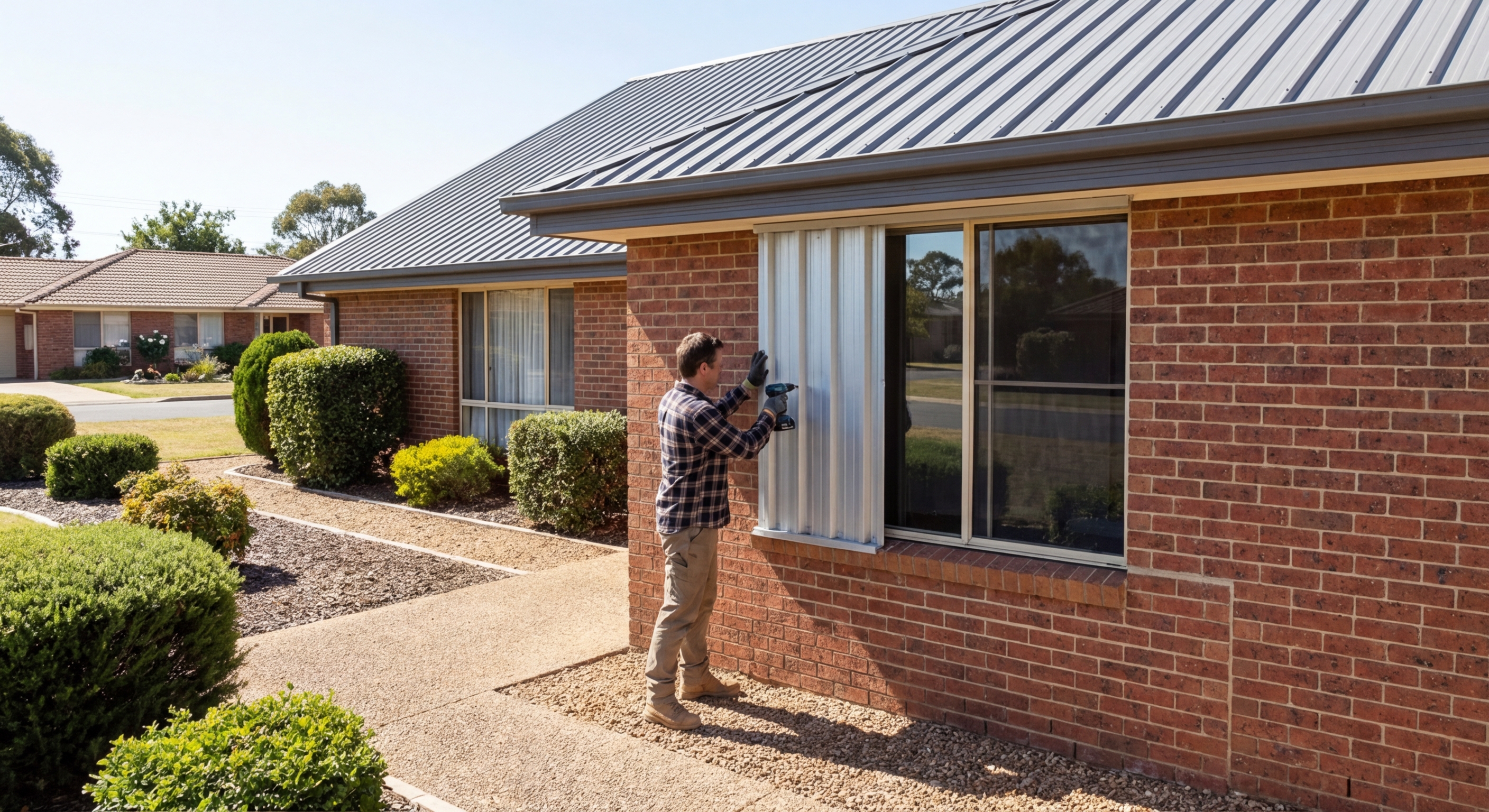
Accordion, roll-down, or panel shutters that meet ASTM E1996 testing standards qualify for "opening protection" credits in coastal states. Verified opening protection (impact-rated shutters or windows) typically earns about 5% to 25% off the wind portion of your premium, while documented roof-system upgrades verified through IBHS FORTIFIED can yield roughly 15% to 35% off that wind portion. Storm-resistant garage doors also qualify, since garage doors are one of the most common failure points during high-wind events.
Wildfire Mitigation
Defensible Space
California mandates clearing vegetation around your home per Public Resources Code Section 4291, but going beyond the minimum qualifies you for wildfire mitigation discounts. The California FAIR Plan now offers Wildfire Hardening Discounts to Dwelling Fire and Commercial policyholders who take measurable steps to reduce their wildfire risk. Available for policies with an effective date of November 15, 2025 or later, the program allows policyholders to qualify for up to 12 separate discounts applied to the wildfire portion of their premium. Dwelling Fire policyholders who earn all 12 discounts can see savings of up to 13.8%, while Commercial policyholders may save up to 16.4%. These discounts are not automatic and require broker verification before renewal.
- Zone 0 (0 to 5 feet): Noncombustible materials, no flammable vegetation
- Zone 1 (5 to 30 feet): Reduced fuel loads, trimmed trees
- Zone 2 (30 to 100 feet): Thinned vegetation, horizontal and vertical spacing
California's Department of Insurance also states that every action under its "Safer from Wildfires" framework qualifies for an insurance discount from admitted carriers, making California the first state to mandate wildfire mitigation discounts across the board. Under AB 1 (the Insurance and Wildfire Safety Act), chaptered October 2025, the Department of Insurance must now periodically review and update the Safer from Wildfires framework to reflect new science and mitigation methods. Explore the full picture in our wildfire insurance coverage guide.
Home Hardening Retrofits
Home hardening refers to structural upgrades that reduce a building's ignition vulnerability. Think Class A fire-resistant roofing, ember-resistant vents, multi-pane windows, enclosed eaves, and 6 inches of noncombustible material at the base of exterior walls. Hardening a single-family home in California can cost between $2,000 and $87,000 depending on scope, but grants and insurance savings help offset those costs significantly.
Earthquake Mitigation
Foundation Bolting for Older Homes
California's Earthquake Brace + Bolt (EBB) program offers a base grant of up to $3,000 for a qualifying seismic retrofit. Income-eligible households (annual income of $94,480 or less for 2026, defined as 80% of California median income) can stack an additional supplemental grant of up to $7,000, for a combined maximum of $10,000. Supplemental amounts vary by retrofit type and region: up to $2,800 for a bolt-only retrofit in Northern California, and up to $7,000 for a brace + bolt retrofit. The program covers pre-1980 wood-framed homes with raised foundations in over 1,100 eligible ZIP codes and has expanded to include rentals and non-owner-occupied residential properties. The base grant has no income requirement.
Water Damage Mitigation
Water Leak Detection Systems
Automatic water shutoff systems such as Moen Flo, Phyn Plus, or Leak Defense can earn you a premium discount of 3% to 15% annually, depending on your carrier. Moen and Stand Insurance launched a new program in July 2026 that directly links Moen Flo activation and maintenance to homeowners premium discounts, and PEMCO Mutual partnered with Moen in June 2026 to offer up to $1,000 annually toward covered plumbing repairs on eligible policies. Mercury Insurance's California program continues to subsidize Flo by Moen installation with a 10% policy discount, and Farmers now requires leak-detection devices for many older or higher-risk California homes as a condition of renewal.
| Insurer | Discount Type | Notes |
|---|---|---|
| Amica | Premium discount | Recognizes Phyn Plus and Moen Flo |
| State Farm | Premium discount / CA requirement | Phyn Plus recognized; required in many CA ZIPs |
| Farmers | Premium/deductible reduction | Required for some CA homes with older plumbing |
| Chubb | Rebate + premium discount | Phyn Plus, Moen Flo, Leak Defense |
| Liberty Mutual | Premium discount + install program | Recognizes Moen Flo and Phyn Plus |
| Mercury (CA) | 10% policy discount + Flo subsidy | Long-running Flo by Moen program |
| PEMCO Mutual | Preferred pricing + $1,000 repair credit | New 2026 Moen partnership |
| Travelers | Premium discount | Phyn Plus and Moen Flo |
| Stand Insurance | Direct premium discount | New 2026 Moen Flo activation program |
Insurers take "automatic shutoff" most seriously. Basic beeping detectors may not qualify. Moen's FloProtect plan even reimburses your deductible up to $5,000 on a qualifying water damage claim. Learn more about how smart home technology can lower premiums alongside other stackable discounts.

Protect your home with State Farm
Average Rate:
Homeowners who bundle and save with State Farm save an average of $1,000 per year!

You're in Good Hands® with Allstate
Average Rate:
Get comprehensive home coverage with flexible policy options.

Customize your home coverage
Average Rate:
Only pay for the coverage you need with personalized home insurance.

Smart coverage for your home
Average Rate:
Protect what matters most with award-winning home insurance.
State-Specific Mitigation Programs
Florida: Wind Mitigation Inspections
Florida leads the nation in wind mitigation credits. Under Florida Statute §627.0629, all insurers are required to offer discounts when homeowners submit a completed Uniform Mitigation Verification Inspection Form (OIR-B1-1802), filled out by a licensed professional. Florida's revised form, OIR-B1-1802 Rev. 04/26, took effect on April 1, 2026, and the Florida Office of Insurance Regulation adopted it under Rule 69O-170.0155, Florida Administrative Code. The form is valid for up to five years if no material changes are made to the structure and no inaccuracies are found.
- Who can inspect: Licensed general contractors, engineers, architects, or certified home inspectors
- Cost: Typically $75 to $175 for the inspection in 2026
- Validity: 5 years (as long as no material structural changes are made)
- What's evaluated: Roof shape (hip roofs score best), roof-to-wall connections, opening protection, secondary water barrier, roof deck attachment, new roof slope and design wind speed region fields
The revised 2026 form is more comprehensive than the prior 2012 version. It adds new categories, expands definitions, introduces performance-based options for roof-to-wall attachments, and now recognizes FORTIFIED Home Roof, Silver, and Gold certificates as eligible documentation to validate specific mitigation features. It also expands documentation requirements for opening protection, requiring product-approval or NOA-type paperwork in several cases. Florida's My Safe Florida Home (MSFH) program continues to complement the credits system, providing free wind mitigation inspections and matching grants of up to $10,000 for approved hardening upgrades. The 2025-2026 cycle reopened August 4, 2025 with $352 million in funding, and eligibility narrowed to low-income and moderate-income homesteaded owners. Our Florida home insurance guide covers the full market outlook.
California: Wildfire + Earthquake Programs
California offers a dual-track mitigation approach:
- Wildfire: All admitted insurers must offer discounts for documented home hardening and defensible space under the state's Safer from Wildfires regulation. The FAIR Plan's Wildfire Hardening Discount program is effective for policies dated November 15, 2025 or later, capping at 13.8% for Dwelling Fire and 16.4% for Commercial. State Farm, Allstate, USAA, and other major insurers also offer wildfire mitigation discounts for verified upgrades.
- Earthquake: The EBB program provides grants of up to $3,000 standard plus up to $7,000 supplemental for seismic retrofits, for a combined maximum of $10,000.
For homeowners caught in California's shrinking private insurance market, these mitigation steps can be the difference between keeping coverage and being forced onto the FAIR Plan, which received a 29.1% rate hike effective October 15, 2026.
Louisiana: Fortify Homes Program
Louisiana has become one of the most aggressive states for FORTIFIED incentives. The Louisiana Fortify Homes Program (LFHP) offers grants of up to $10,000 to eligible homeowners who replace their roof with a storm-resistant system built to the FORTIFIED Roof standard. The 2026 lottery round (June 1 to June 19, 2026) awarded 3,000 grants, and the state added roughly $50 million in additional funding to expand the program this year, bringing total 2026 funding to about $80 million when combined with the $30 million already budgeted. Louisiana also created a more permanent funding stream by directing certain insurance-related taxes and fees into the LFHP Fund starting July 1, 2026. On top of the grant, homeowners who complete installations after July 1, 2025 can claim a nonrefundable state income tax credit equal to 100% of qualified expenses, up to $10,000 per primary residence (subject to a $10 million annual statewide cap, and it cannot be combined with LFHP grant funds for the same expenses). Grants received on or after January 1, 2025 are also fully exempt from Louisiana state income tax. Louisiana's Regulation 136 requires many insurers in the state to offer discounts to homeowners who earn a FORTIFIED designation, applied to the wind and hail portion of your coverage.
Alabama: Strengthen Alabama Homes Program
Alabama's Strengthen Alabama Homes (SAH) program pays up to $10,000 toward FORTIFIED Roof mitigation costs, funded by the state's insurance industry through licensing fees rather than general revenue. The Alabama Department of Insurance updated its SAH regulation effective January 1, 2026, refining rules for contractor and evaluator requirements as well as the grant application process. Under Alabama law (Act 2019-240, Code of Alabama §27-31D-2.1), admitted insurers must offer a wind-premium discount when a home earns IBHS FORTIFIED certification, and 2026 applications open quarterly (Mobile County opened April 7, 2026 and Baldwin County opened April 9, 2026). In coastal Mobile and Baldwin counties, benchmark discounts run higher than inland Alabama, with FORTIFIED Roof around 25% to 35%, FORTIFIED Silver around 35% to 45%, and FORTIFIED Gold around 45% to 55%. Alabama residents may also deduct 50% of mitigation costs (up to $3,000) from state gross income when retrofitting to FORTIFIED standards. Learn how these stack with other home insurance discounts to reduce your total bill.
Texas: Windstorm Inspections for Coastal Properties
Texas focuses windstorm mitigation primarily on designated catastrophe areas along the Gulf Coast. Homeowners and builders in these zones must obtain a WPI-8 Certificate of Compliance from the Texas Department of Insurance (TDI) to qualify for coverage through the Texas Windstorm Insurance Association (TWIA). Unlike Florida's discount-focused system, Texas windstorm inspections are primarily about insurability in high-risk coastal zones rather than premium discounts statewide. See our full breakdown in the wind damage and deductibles guide for more on Texas-specific rules.
Upfront Costs vs. Long-Term Savings
The biggest barrier to mitigation upgrades is upfront cost, but the math often works strongly in your favor, especially in high-risk regions.
| Upgrade | Estimated Cost | Annual Insurance Savings | Est. Break-Even |
|---|---|---|---|
| FORTIFIED Roof | $10,000 to $40,000 | $500 to $2,000 | 5 to 10 years |
| Impact Windows | $8,000 to $25,000 | $1,000 to $3,000 | 5 to 8 years |
| Hurricane Shutters | $2,000 to $15,000 | $300 to $1,000 | 5 to 10 years |
| Home Hardening (CA) | $2,000 to $87,000 | $200 to $1,500+ | 4 to 15 years |
| Foundation Bolting | $3,000 to $10,000 | Varies | 5 to 10 years (with EBB grant) |
| Water Shutoff System | $300 to $1,000 | $50 to $400 | 1 to 3 years |
Federal research has consistently shown that every $1 invested in disaster preparedness saves $6 or more in future losses. Beyond insurance savings, these upgrades also reduce out-of-pocket repair costs, potentially avoiding tens of thousands in storm damage.
The affordability squeeze on homeowners is real, but mitigation is one of the few levers homeowners actually control. Even modest upgrades can stack with other home insurance discounts to meaningfully reduce your bill year over year. If you're in a coastal or hard-to-insure area, these credits become even more valuable, and stacking them with other premium-lowering strategies can make a real difference.
Frequently Asked Questions
What are mitigation credits in home insurance?
Mitigation credits are premium discounts that insurers offer when homeowners make improvements that reduce the risk or severity of covered losses. Common examples include installing hurricane shutters, upgrading to a FORTIFIED roof, clearing defensible space around a wildfire-prone home, or adding an automatic water shutoff system. These credits are typically applied to the portion of your premium associated with the specific peril being mitigated. Savings can range from 3% to 55% depending on the upgrade, your location, and your insurer.
How do I get a wind mitigation inspection in Florida?
In Florida, you hire a licensed professional (a general contractor, engineer, architect, or certified home inspector) to complete the Uniform Mitigation Verification Inspection Form. Inspections performed on or after April 1, 2026 must use the new OIR-B1-1802 Rev. 04/26 form, which adds performance-based options for roof-to-wall attachments, new roof slope and region fields, and FORTIFIED Home recognition. The inspection typically costs $75 to $175 and is valid for five years, provided no material structural changes are made. Once completed, you submit the form to your insurer, who is legally required to apply applicable credits.
Which insurance companies offer the best FORTIFIED home discounts?
In Louisiana, Alabama, and Mississippi, discounts can reach 45% to 55% off the wind portion of premiums for FORTIFIED Silver or Gold-certified homes. State Farm offers FORTIFIED-related discounts in 26+ states, and specialty coastal carriers advertise premium discounts of 20% to 60% for FORTIFIED homes. Because rating filings are state-specific, always verify the exact percentage with your insurer and check Louisiana's Regulation 136 or the Alabama Department of Insurance discount schedule for benchmarks.
Can I get a discount for defensible space in California?
Yes. California now requires all admitted insurers to offer discounts for documented wildfire mitigation under the "Safer from Wildfires" framework, and the California FAIR Plan's Wildfire Hardening Discount program (effective November 15, 2025) allows Dwelling Fire policyholders to qualify for up to 12 separate discounts totaling 13.8% off the wildfire portion of their premium (Commercial policies can reach 16.4%). Discounts apply for defensible space, Class A roofing, ember-resistant vents, enclosed eaves, upgraded windows, and noncombustible base material. Community-level Firewise USA participation can add additional savings.
Is the upfront cost of home mitigation really worth it?
In most cases, yes, especially in high-risk regions. Federal research shows that every $1 invested in disaster mitigation saves approximately $6 in future losses. Water shutoff devices often break even in under 3 years, while larger projects like FORTIFIED roofs or impact windows can take 5 to 10 years to recoup through insurance savings alone. Grants like California's EBB program (up to $10,000 combined), Louisiana's Fortify Homes Program (up to $10,000 plus a matching state tax credit), and Florida's My Safe Florida Home matching grant (up to $10,000) can significantly shorten the payback period.