
Compare Home Insurance Plans in Ohio
Find your best options in less than 2 minutes



How Roof Age Affects Home Insurance Eligibility
Your roof is one of the most important factors insurers evaluate when issuing or renewing a homeowners policy, and its age can mean the difference between full coverage and no coverage at all. In 2026, insurers are more aggressive than ever about scrutinizing roof age due to the rising frequency of climate-related claims. Many carriers are now using aerial imagery and AI to flag aging roofs, with some homeowners receiving non-renewal notices triggered automatically by algorithms before a human ever reviews the file.
The Age Thresholds That Matter Most
Insurers don't treat every aging roof the same way. Most carriers use a tiered system tied to specific age milestones:
| Roof Age | What Insurers Typically Do |
|---|---|
| Under 10 years | Full Replacement Cost Value (RCV) coverage; lowest premiums |
| 10-15 years | May switch to Actual Cash Value (ACV); inspections may be required; premiums rise |
| 15-20 years | ACV-only coverage common; mandatory inspections; higher denial risk for new policies |
| 20-25 years | Frequent non-renewals, coverage denials, or removal of wind/hail protection |
| Over 25 years | New coverage rare; surplus lines or FAIR plans often the only option |
The "15-Year Rule" has emerged as a new standard in 2025 and 2026, where roofs 15 to 18 years old face non-renewal or limited coverage, especially in storm-prone states. Allstate typically shifts wind and hail coverage to ACV at 10 years under its House & Home program, State Farm's threshold sits closer to 15 to 20 years with inspection, Nationwide may go up to 25 years with a favorable inspection, and Farmers commonly requires inspection or replacement in the 15 to 20 year range. These thresholds shift based on your location, roofing material, and claims history, so always confirm directly with your insurer or agent. Learn more about how home insurance underwriting factors in roof age.
Actual Cash Value vs. Replacement Cost: What Changes With Age
One of the biggest financial consequences of an aging roof is the shift from Replacement Cost Value (RCV) to Actual Cash Value (ACV) coverage. Understanding the difference is critical before you ever need to file a claim. Learn more about ACV vs RCV coverage and how each affects your payout.
- Replacement Cost Value (RCV): Pays the full current cost to repair or replace your roof with similar materials, minus your deductible. No depreciation applied.
- Actual Cash Value (ACV): Pays the depreciated value of your roof at the time of loss. The older your roof, the less you receive.
Allstate's House & Home program applies ACV coverage for wind and hail claims on roofs older than 10 years, with coverage dropping to approximately 60% of replacement cost at 10 years and 20% by age 25. A newer wrinkle came in March 2026: Fannie Mae and Freddie Mac now accept ACV-only roof coverage on federally backed mortgages, which has accelerated the shift among insurers to depreciated roof coverage. Here's how dramatically this difference plays out on a $14,000 roof replacement:
| Roof Age | ACV Payout (after $4,000 deductible) | RCV Payout (after $4,000 deductible) |
|---|---|---|
| 5 years | ~$7,200 | $10,000 |
| 10 years | ~$4,400 | $10,000 |
| 20 years | $0 | $10,000 |
A 20-year-old roof under ACV coverage can leave you with nothing after your deductible, forcing you to pay the full replacement cost out of pocket. This is why understanding your actual cash value coverage before a storm hits is so important.
How Roofing Materials Age Differently
Not all roofs age at the same rate, and insurers know it. The material your roof is made of directly affects the coverage terms and premiums you're offered.
Asphalt shingles are the most common roofing material in the U.S. but face the strictest insurance scrutiny because of their shorter lifespan and higher claims exposure. Installing Class 4 impact-resistant shingles can slash homeowners insurance premiums by 10-35% depending on your state and insurance carrier. In hail-prone states like Texas, Colorado, and Oklahoma, those discounts can pay for the upgrade within a few years.
Metal roofs are the gold standard for insurers in storm-prone regions. With lifespans of 40 to 70 years, standing seam metal qualifies for meaningful discounts similar to Class 4 shingles. Note that total roof-related discounts typically max out around 35% regardless of material cost.
Tile and slate offer exceptional durability and fire resistance. A well-maintained tile roof can be insurable for 25 to 40+ years, though the underlying materials may degrade sooner. Higher replacement costs are factored into your premiums, but the long lifespan makes them attractive to insurers.
Wood shake typically carries the highest premiums due to fire risk, mold susceptibility in humid climates, and a relatively shorter effective lifespan without consistent upkeep. For more on how these features affect coverage, see our guide on older home insurance challenges.

Compare Home Insurance Plans in Ohio
Find your best options in less than 2 minutes
State-Specific Rules: Florida's 15-Year Roof Law
Florida has one of the most consumer-protective (yet complex) roof age rules in the country. Under Florida Statute 627.7011(5), insurers are prohibited from denying or non-renewing a homeowners policy solely because of roof age if the roof is less than 15 years old. For roofs 15 years or older, insurers may require a licensed inspection to confirm the roof has at least 5 years of remaining useful life.
How Florida's Rule Works in Practice
- If the inspection passes, the insurer cannot refuse to issue or renew coverage solely due to roof age.
- If the inspection fails, the insurer may non-renew the policy, switch to ACV coverage, raise premiums and deductibles, or deny new applications.
- As of 2024, House Bill 1611 expanded the definition of "authorized inspector" to include licensed roofing contractors, making inspections easier and cheaper to obtain.
Important 2026 Update: SB 808 Did Not Pass
A detailed legislative analysis confirms that SB 808 and HB 815 both died in committee on March 13, 2026, and neither became law. The line stating the act would take effect July 1, 2026 is only a proposed effective date and has no legal force because the bill never passed.
The bills would have extended roof-age protection from just homeowner's policies to all property insurance policies on residential structures, distinguished low-slope from steep-slope roofs, and allowed coating restoration as an alternative to replacement. None of those changes are currently in force.
What actually applies in 2026 remains the existing statute: for a roof less than 15 years old, an insurer cannot refuse to issue or renew a homeowner's policy solely because of the roof's age. For a roof 15 years or older, before an insurer can require roof replacement as a condition of coverage, the homeowner must be given the opportunity to obtain an inspection by an authorized inspector, and if that inspection documents at least five years of remaining useful life, the insurer cannot refuse to issue or renew coverage solely because of the roof's age.
Florida's volatile insurance market continues to put pressure on homeowners with older roofs. For broader context on the state's insurance landscape, see our Florida home insurance guide.

Protect your home with State Farm
Average Rate:
Homeowners who bundle and save with State Farm save an average of $1,000 per year!

You're in Good Hands® with Allstate
Average Rate:
Get comprehensive home coverage with flexible policy options.

Customize your home coverage
Average Rate:
Only pay for the coverage you need with personalized home insurance.

Smart coverage for your home
Average Rate:
Protect what matters most with award-winning home insurance.
Options for Homeowners With an Old Roof
Having a roof that's aging out of standard coverage doesn't mean you're without options. Here's what you can do:
1. Get a Professional Inspection First
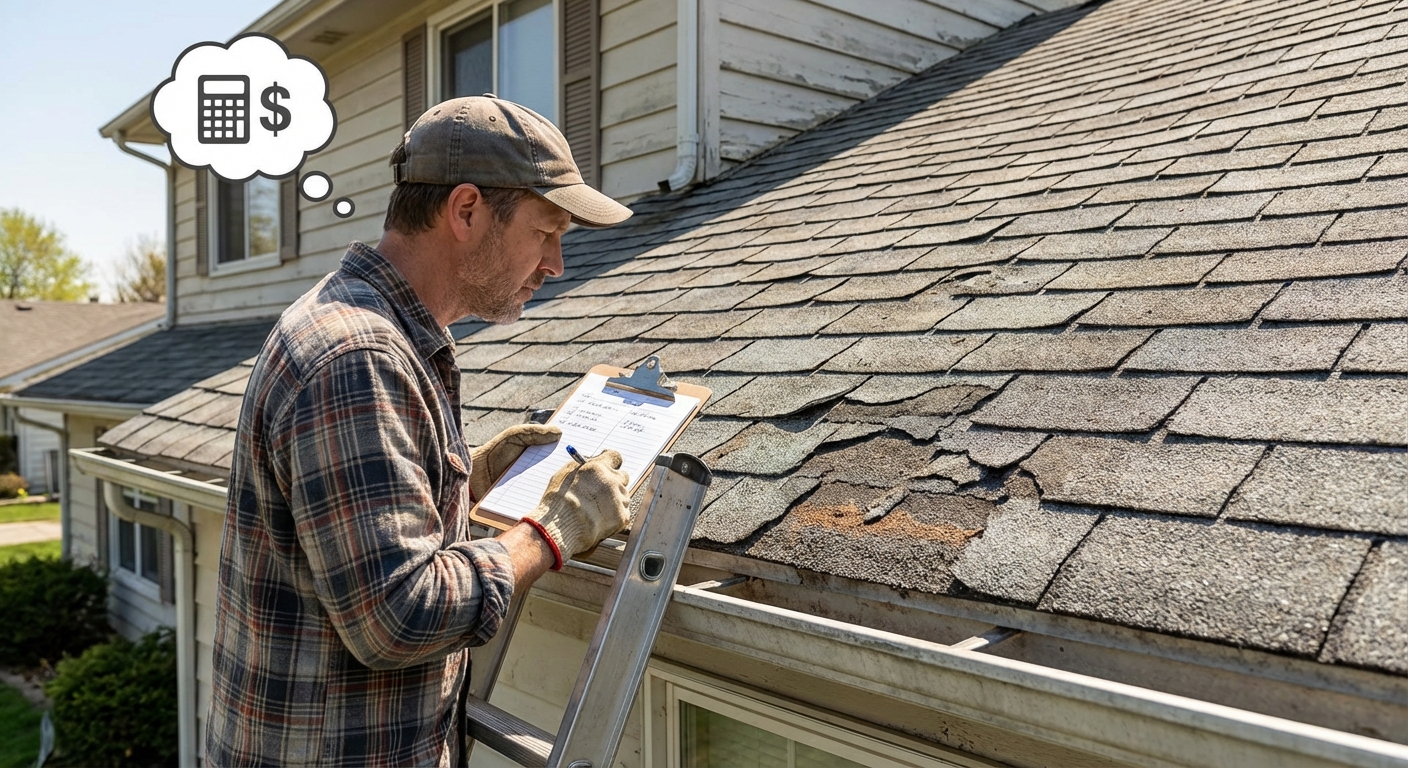
A certified roof inspection by an NRCA-affiliated inspector or licensed roofing contractor can document your roof's actual condition rather than its age on paper. The report should include time-stamped photos, documented wear, and a remaining lifespan estimate. Learn more about what to expect during a home insurance inspection and how to prepare.
During the inspection, expect the professional to assess:
- Exterior: Shingles (curling, cracking, granule loss), flashing, gutters, ridge caps, soffits, and vents
- Interior/Attic: Moisture levels, insulation, water stains, and structural decking
- Overall condition: Drainage, ventilation, and estimated years of remaining useful life
2. Make Targeted Repairs and Maintenance
If your roof is in reasonably good condition but has isolated problem areas, targeted repairs (resealing flashing, replacing damaged shingles, clearing debris) can extend its serviceable life. Trim overhanging tree branches, since aerial imagery underwriting can flag shadows or limbs as structural hazards. Maintaining a paper trail of repairs strengthens your case with insurers and helps you meet home insurance maintenance requirements.
3. Accept ACV Coverage as a Bridge
If full RCV coverage isn't available, accepting an ACV policy may be the most practical short-term solution to maintain coverage while you plan for replacement. Just understand the financial exposure before signing. This is even more critical now that federally backed lenders accept ACV-only roof coverage, so insurers face less pressure to preserve RCV as roofs age.
4. Replace the Roof
A new roof is the most reliable way to reset the clock with insurers. In 2026, a typical 2,000 sq ft asphalt shingle roof replacement runs about $9,000 to $15,000 nationally, while metal roofs run about $16,000 to $30,000 and tile runs $22,000 to $45,000. Installing Class 4 impact-resistant shingles or metal roofing can restore full RCV eligibility and qualify you for significant premium discounts. See our guide on when home insurance covers roof replacement before you file a related claim.
5. Shop Specialty or High-Risk Insurers
Some insurers specialize in non-standard or high-risk properties and may offer coverage for older roofs under specific conditions. Independent insurance agents with access to Excess & Surplus (E&S) markets or state FAIR plans can help you find options that standard carriers won't provide. If you've been turned down, review our guide on what to do when home insurance is denied for a step-by-step path back to coverage.
Frequently Asked Questions
Will insurance cover a 20-year-old roof?
It depends on the insurer, your location, and the roof's condition. Many standard carriers will decline new policies or non-renew existing ones for roofs over 20 years old, though carriers like Nationwide may still write coverage up to 25 years with a favorable inspection. Some insurers may offer coverage under ACV terms rather than full replacement cost, especially if a professional inspection shows the roof has remaining useful life. In states like Florida, a passing inspection report can legally compel an insurer to continue coverage.
What are home insurance roof age requirements by carrier?
Requirements vary widely. Allstate commonly shifts to ACV around 10 years under its House & Home program; State Farm applies scrutiny around 15 to 20 years with inspection; Nationwide may allow up to 25 years with inspection; Farmers typically requires inspection or replacement at 15 to 20 years. These thresholds also differ by roofing material, with metal and tile roofs receiving more favorable treatment due to their longer lifespans. These rules tie into broader home insurance underwriting factors that carriers use to evaluate risk.
Can my home insurance be canceled because of my roof's age?
Yes. Insurers can issue non-renewal notices based on roof age, particularly when a roof exceeds 20 years or fails an inspection. This is increasingly common in 2026 as insurers face greater exposure from climate-driven weather events, and homeowners with older homes face especially tight requirements. Non-renewal is not the same as cancellation mid-term, but it leaves you without coverage at renewal unless you take action.
How old can a roof be for home insurance?
Most standard insurers prefer roofs under 15 to 20 years old for new policies. Some carriers will insure older roofs under ACV coverage or with a satisfactory inspection report. Metal, tile, and slate roofs often receive higher age allowances (sometimes up to 30 to 40+ years) due to their superior durability compared to standard asphalt shingles.
How do I prove my roof's condition to an insurance company?
The most effective method is a professional roof inspection by a certified or licensed roofing contractor. The report should include time-stamped photographs, a written condition assessment, documentation of any repairs, and an estimate of remaining useful life. Keeping a maintenance log over the years (receipts for repairs, contractor notes) adds further credibility and helps demonstrate that the roof has been properly maintained.